

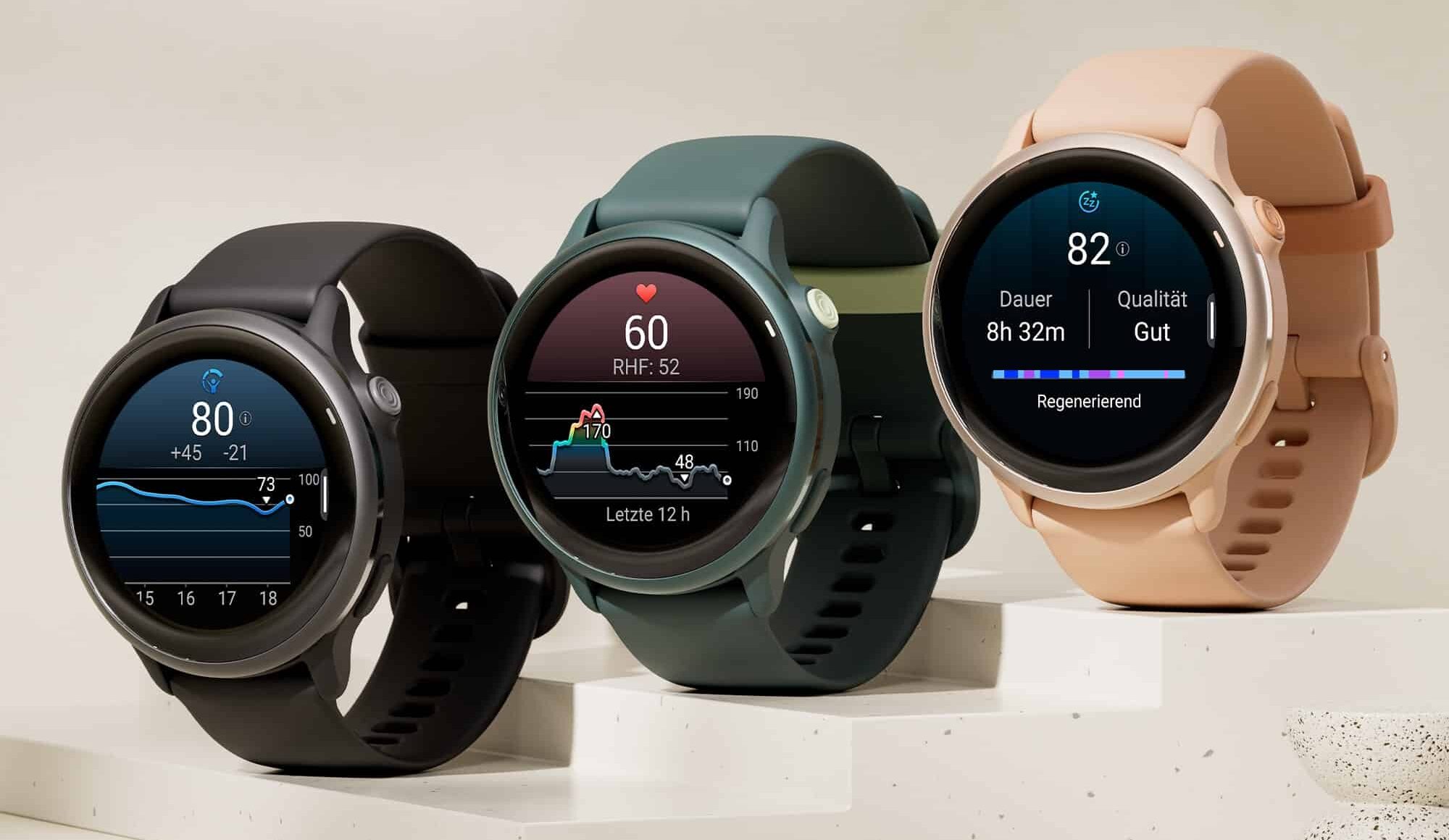
In a remarkable anecdote, a user reported on Reddit that her Garmin smartwatch was supposed to have detected a pregnancy – before she herself realized it. The case has since caused a stir in technology and health circles, as it raises questions about how sensitive modern wearables can actually be when it comes to biological signals. Although it is only an isolated case so far, the implications are exciting.
The case report on Reddit: Garmin “knew it first”
According to the Reddit post, the smartwatch used certain data patterns to indicate that a pregnancy was present – even before the wearer herself noticed any symptoms. In particular, the user cites falling heart rate variability (HRV) values and a continuously decreasing body battery (a measure of energy and recovery developed by Garmin) as indicators.
Nevertheless, the Notebookcheck article clearly states: ‘This report remains an isolated case and does not allow any general conclusions to be drawn. A direct causality – i.e. that the smartwatch could have clearly diagnosed a pregnancy – cannot be proven.
Measured values, circumstantial evidence & possible alternative explanations
Both values – the heart rate variability and the body battery value – are considered sensitive indicators of physical strain, stress and recovery. If they drop noticeably, this could indicate changes in health. In this case, the user interprets these trends as an indication of early pregnancy.
However, other causes are also conceivable. Notebookcheck rightly points out possible alternative explanations: infections, sleep disorders, hormonal fluctuations or other health problems could cause the measured changes – without pregnancy.
Such a superimposition of effects makes a clear interpretation difficult. The article also emphasizes that smartwatches generally do not have a built-in sensor that directly measures pregnancy. Instead, they are indirect conclusions from several parameters.
The reactions of the community
On Reddit, there are skeptical voices as well as those who have had similar experiences. Some users report that their smartwatches displayed unusual values in the early stages of pregnancy. In particular, reference is made to the decrease in HRV, an effect that is observed in many pregnant women. Such reports bring the topic of “women as customers in the tech sector” more into focus.
Significance for wearables and health technology
This individual case raises interesting questions: Could wearables such as smartwatches provide indications of pregnancy or other hormonal conditions in the future? Would this help users – or rather cause confusion? The development of special algorithms for the early detection of pregnancy or hormonal changes would be technically challenging, as it requires a solid data basis and long, controlled studies.
So far, this evidence is lacking. In the current case, it remains unclear whether the smartwatch really “knew” or just showed random values that were interpreted retrospectively.
There are also ethical and data protection issues: can a wearable proactively give users an indication of a possible pregnancy? Would such a function have to be explicitly activated?
Conclusion
The Reddit report about the Garmin smartwatch, which is said to have “noticed” a pregnancy before the woman herself did, is fascinating – but remains an isolated case. However, the underlying measurements such as HRV or body battery provide indications that wearables could be able to detect subtle physiological changes in the future. Until such a function is reliable and validated, such reports should be viewed with caution. It remains an exciting field for interested users and developers: technology that could address women’s health more sensitively and earlier.


