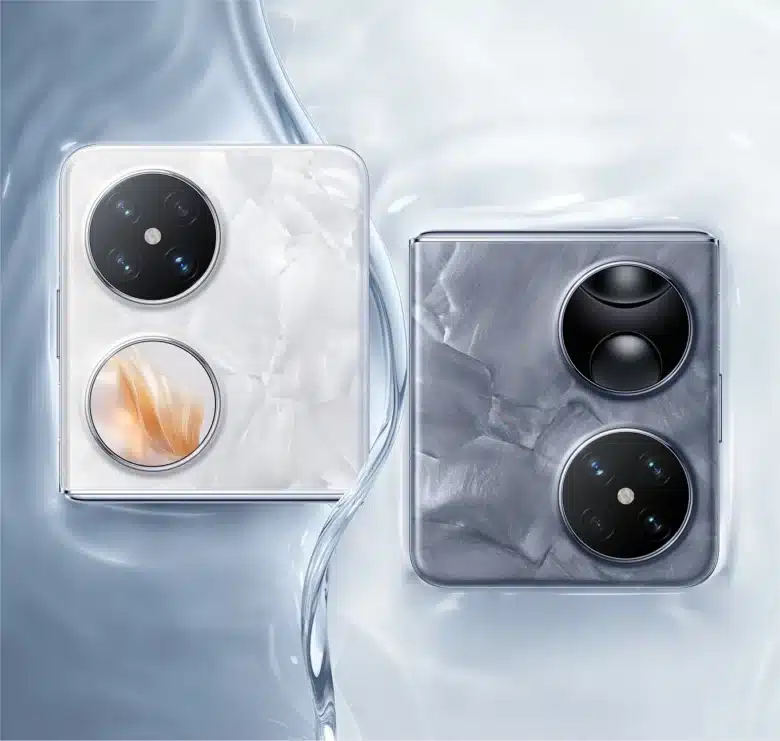
With the Huawei Pura 80, the Chinese manufacturer presents an interesting alternative within its current smartphone series. The model combines a strikingly different design with powerful features without claiming the premium status of the Ultra version. The new, angular look is particularly striking and differs significantly from the previous Huawei style. The Pura 80 also offers many modern technical features – at a price that is lower than its predecessor.
Key features at a glance:
- Flat 6.6-inch OLED with up to 2,800 nits brightness and variable 120 Hz frame rate
- Kirin 9010S chip with increased performance compared to its predecessor
- Triple camera with spectral sensor, 5,600 mAh battery with 66 W wired charging
- Available from the equivalent of approx. 560 euros (12 GB RAM, 256 GB storage)
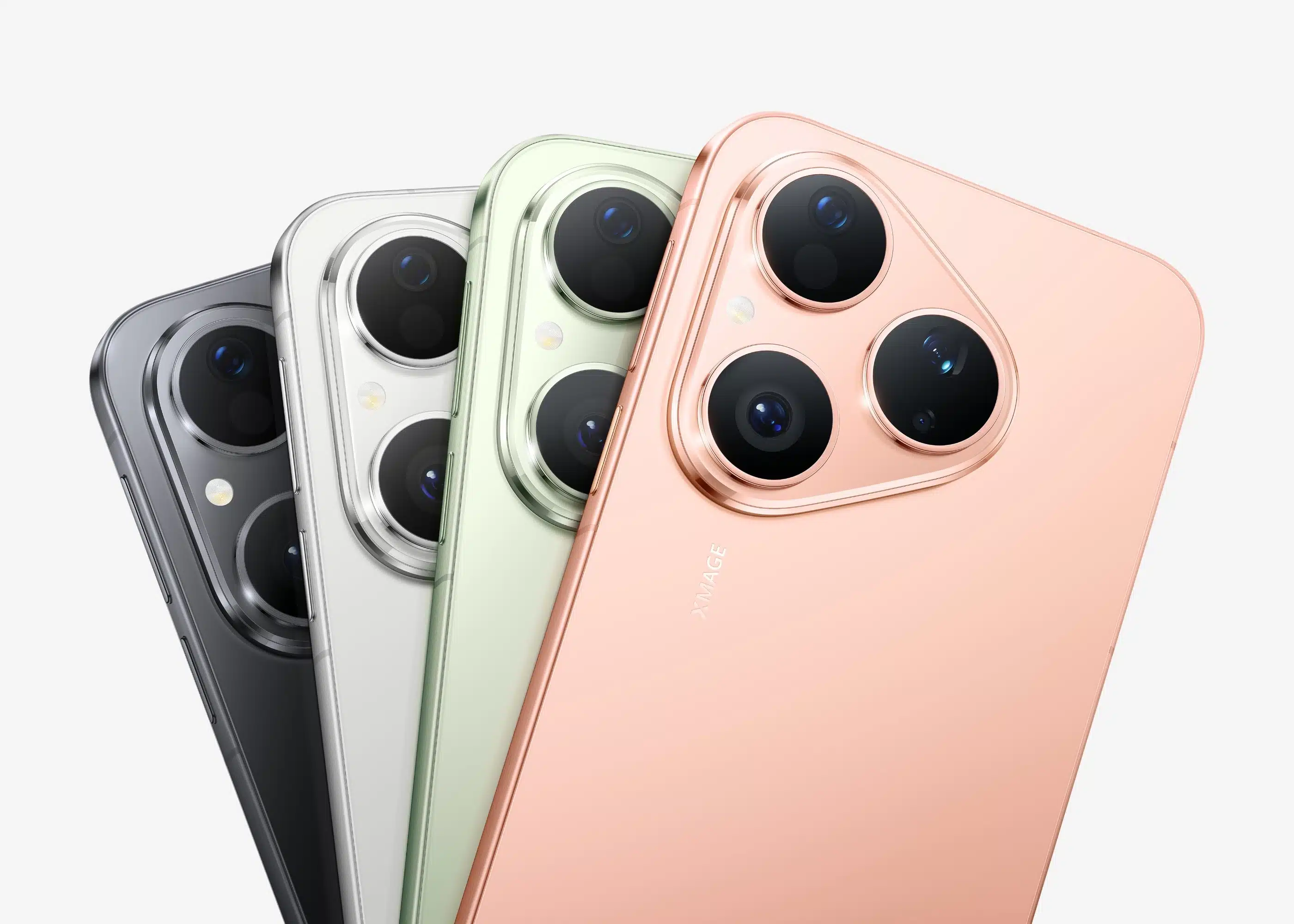
New design with iPhone references
Visually, Huawei is breaking new ground with the Pura 80. Instead of the previously typical rounded edges, the device features a flat display and an angular frame that is reminiscent of Apple’s current iPhone design language. The housing is made of a high-quality composite material and measures 157.7 × 74.4 × 8.2 mm with a weight of 211 g – a solid size for a 6.6-inch smartphone. The IP68 certification ensures that the device is fully protected against dust and temporary submersion.

The OLED display offers a high resolution of 2,760 × 1,256 pixels (460 ppi) and an adaptive refresh rate of 1 to 120 Hz. With a maximum brightness of up to 2,800 nits, the panel is also very easy to read in sunlight. In addition to black, white and green, copper gold is a new color that is already being rumored for future iPhone models.
Revised hardware with a focus on efficiency
The Pura 80 is powered by the Kirin 9010S, a slightly optimized SoC compared to the familiar Kirin 9010, which offers a combination of eight cores (1+3+4 clusters) and clocks at up to 2.50 GHz. Compared to the regular 9010, the CPU performance increases by around 33%, which should be noticeable in smoother multitasking and shorter loading times.

The built-in battery has a capacity of 5,600 mAh and supports wired charging with 66 watts and wireless charging with up to 50 watts. This puts the device in the upper range of current standards. On the software side, HarmonyOS 5.1 is delivered in China – a global version with EMUI or an Android derivative is likely, but has not yet been confirmed.
The camera equipment includes three sensors on the back: a 50 MP main camera, a 12 MP telephoto lens and a 13 MP ultra-wide-angle camera. An additional spectral sensor is designed to capture colors and lighting conditions with particular precision – a feature that Huawei also uses in its foldables such as the Mate X6. Compared to the Ultra version, the camera is significantly less sophisticated, but offers more than solid everyday quality for photos and videos.
Pricing and market launch
Huawei offers the Pura 80 in several memory variants. In China, the price starts at the equivalent of around 560 euros for the variant with 12 GB RAM and 256 GB memory. Other configurations with 512 GB (approx. 620 euros) and 1 TB (approx. 740 euros) are also available. This puts the model below the launch price of its predecessor, the Pura 70, which cost around 650 euros.
The market launch in China is scheduled for July 30, 2025. Whether and when the device will come to Europe has not yet been confirmed – although this is not out of the question given the imminent launch of the Pura 80 Ultra in Germany.
Conclusion
The Huawei Pura 80 presents itself as a modern smartphone with a new design approach, powerful display technology and an improved SoC. Despite a slimmed-down camera compared to the Ultra model, the device should offer a convincing overall package for many users – especially in view of the attractive entry-level price. It remains to be seen whether Huawei will also launch the model on the international market.