


In July 2022, the Korean automaker unveiled the Hyundai RN22e electric sports car. Now they revealed more details about the car, which will combine technology from motorsports with the E-GMP platform.
Hyundai RN22e: More details revealed
The Hyundai RN22e serves as a rolling laboratory to verify high-performance technologies from the WRC, WTCR and ETCR racing series before they are incorporated into the manufacturer’s N-series models.
In this regard, the Hyundai RN22e marks the latest model and uses an electronic limited-slip differential (E-LSD) and the eight-speed N DCT dual-clutch transmission used in the i30 N and KONA N.
With the RN22e, Hyundai also wants to inspire motorsport fans who are not yet convinced by electric mobility. Hyundai wants to make the high-performance N brand fit for everyday sports cars with three product pillars:
“cornering predator” (tight, perfectly balanced cornering machine), “track-ready” (all N models are built for track use) and “everyday sports car” (for everyone and every need, not just for racetracks and highways).
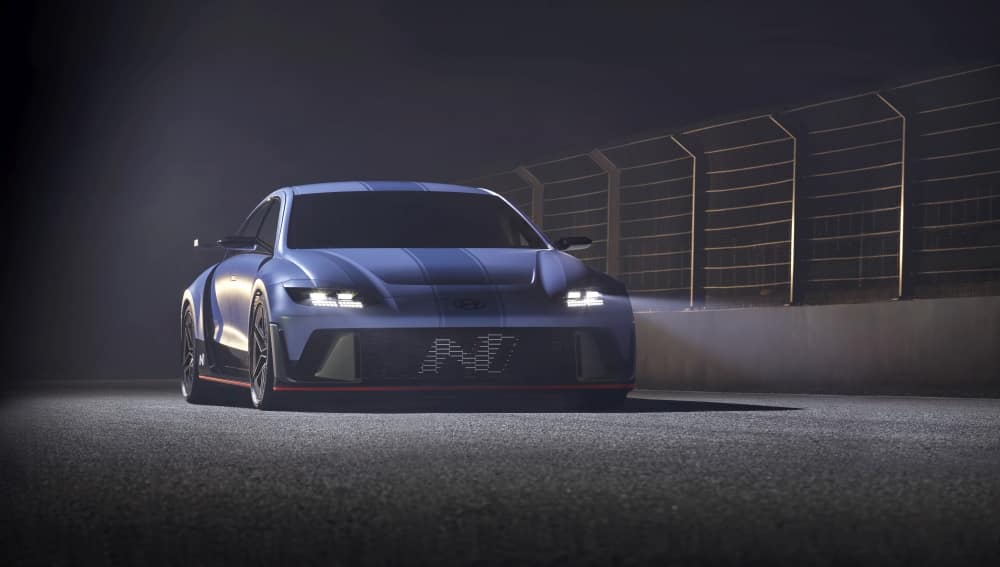
RN22e serves as basis for IONIQ 5 N
The RN22e study represents a first step in that direction, while the Hyundai IONIQ 5 N will mark the automaker’s first all-electric high-performance model starting in 2023. It is based on Hyundai’s E-GMP (Electric-Global Modular) platform and, like all models on the platform, features innovative technologies such as 800V fast charging and a transmission disconnect switch for all-wheel drive.
It builds on the design and aerodynamics of the IONIQ 6. With its single-cambered profile and carefully crafted contours, the IONIQ 6 offers Hyundai’s lowest-ever drag coefficient of 0.21.
In doing so, it comes in at 4,915 mm in length, 2,023 mm in width, 1,479 mm in height and a wheelbase of 2,950 mm, which you combine with low ground clearance, accentuated shoulders, a rear spoiler and large rear diffuser.
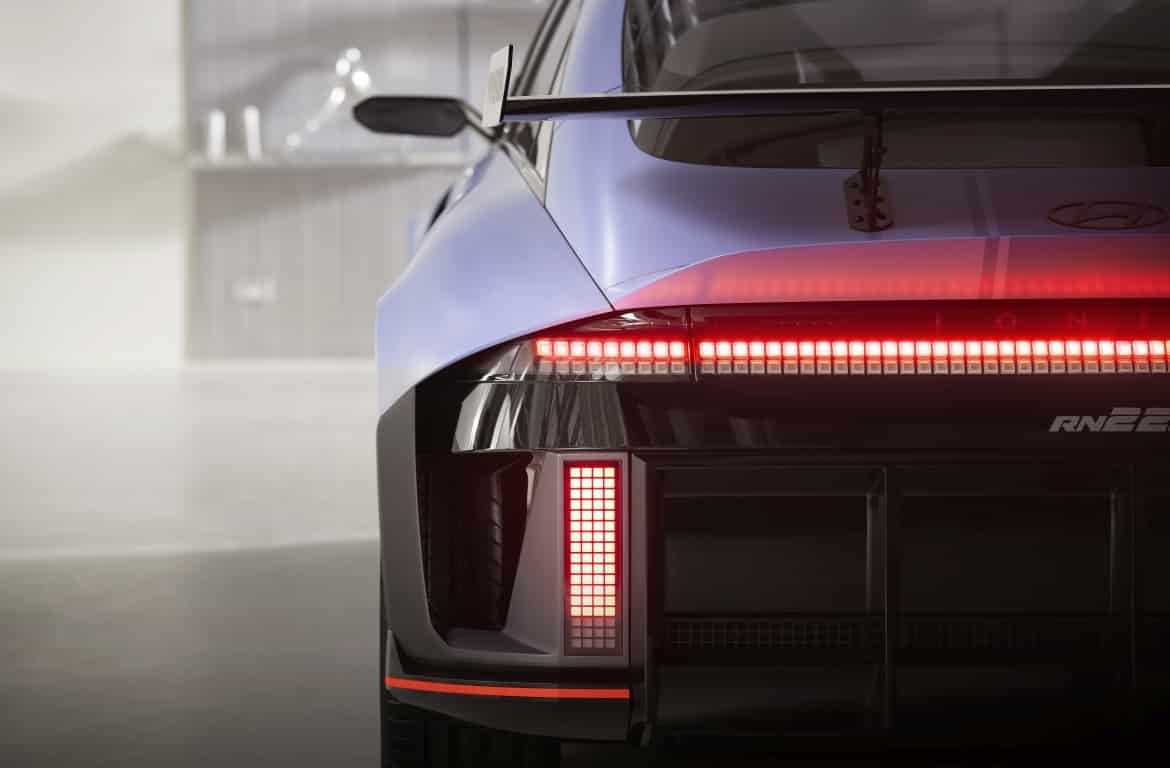
The all-wheel drive system offers optimized torque distribution in different driving modes. Torque at the front and rear axles can be adjusted according to the driver’s own preferences. The maximum output of the front electric motor is 160 kW, that of the rear 270 kW, for a total of 430 kW. The maximum torque is 740 Nm.
Innovative technologies
Thanks to the switchable power distribution between the front and rear wheels, it is possible to switch quickly between all-wheel and rear-wheel drive for more thrills, depending on the driving situation, and to deactivate the front-wheel engine.
The Hyundai RN22e also uses a technology called Torque Vectoring (e-TVTC). It distributes drive power to the rear wheels by engaging and disengaging the dual clutch of the rear electric motor.
This allows all the drive power to be transferred to only the left or right rear wheel when cornering, providing an effect similar to that of the e-LSD electronically controlled limited-slip differential on Hyundai N’s internal combustion engine models.
Hyundai has also not ignored the aerodynamics and cooling performance of the battery. It is based on the knowledge gained from motorsport with the VELOSTER N ETCR and the RM20e, which means that the high performance remains available even over longer distances.
At the same time, battery preconditioning optimizes the state of the battery before and after driving on the race track to achieve maximum performance. This function raises the battery temperature to an optimal level beforehand and lowers the battery temperature afterwards to enable E-GMP’s ultra-fast 800 V charging. As a result, the RN22e charges its 77.4 kWh battery from 10 to 80 percent in just 18 minutes.
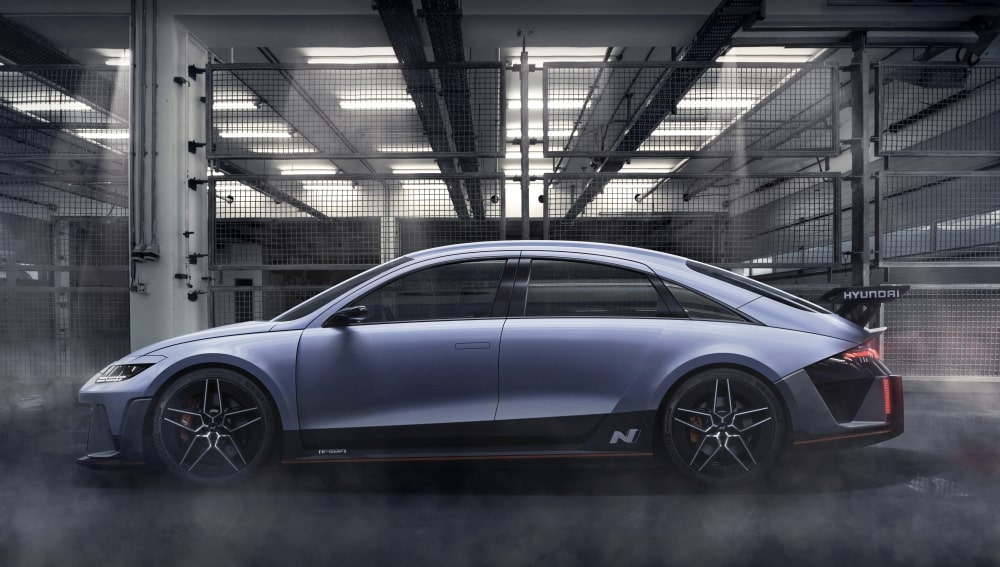
Large 4-piston monobloc calipers and 400-mm hybrid brake discs provide excellent braking performance. There’s also what’s known as “N Sound+,” which is reproduced through interior and exterior speakers and is said to mimic engine and exhaust noises.
There’s also an intelligent leveling system with air suspension, which normally improves ride comfort in luxury vehicles. In the Hyundai RN22e, it has been adapted to also enable dynamic driving on the race track. It can raise the body to prevent damage to the underbody on ramps or bumps, and lower it to improve aerodynamics and lower the vehicle’s center of gravity on the track.
Many of these technologies are expected to be used in future electrified high-performance Hyundai N models, according to Hyundai.


