The gaming version of the Opera browser is expanding its repertoire with an unusual but highly interesting feature: smart home integration. With this new function, Opera GX connects the browser directly to smart home systems, making it an interactive part of your own home. This symbiosis of web browser and smart home hub opens up new possibilities that go far beyond classic scenarios such as controlling lights or temperature.
- Opera GX becomes part of the smart home system via an open MQTT API connection
- Use with common hubs such as Home Assistant, Homebridge and Node Red
- Intelligent automation between browser and room environment possible
- Open source character allows community extensions and creative workflows
Browser and living environment merge
The new smart home function shifts the role of the browser from pure software to a physical control and reaction center. The key difference is that control works both ways. Users can address lamps, sockets or sensors via Opera GX, but at the same time they can also have the browser itself controlled by signals from the smart home system. If a door sensor registers that someone is entering the room, for example, the browser automatically switches to panic mode to hide tabs from view.
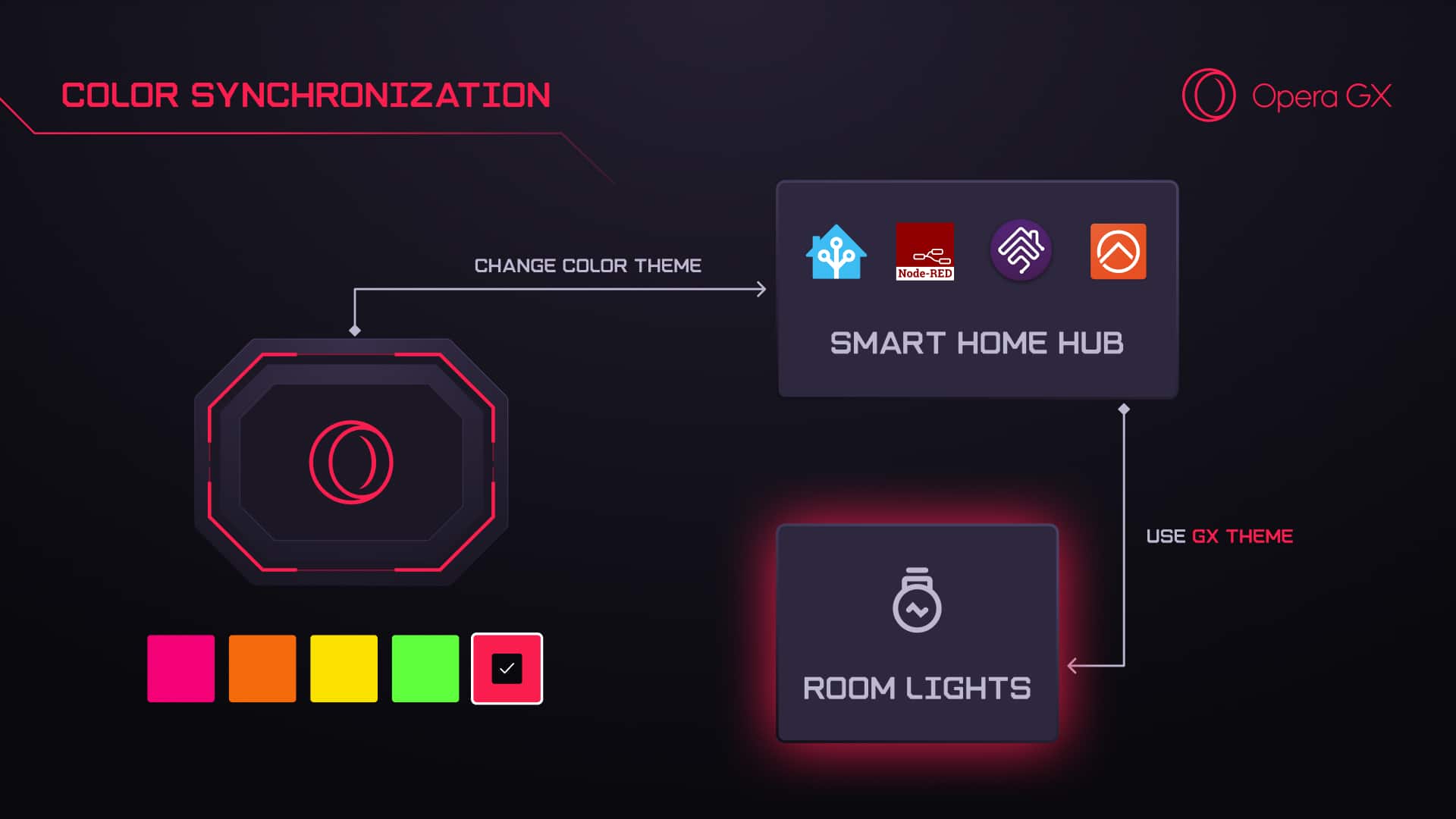
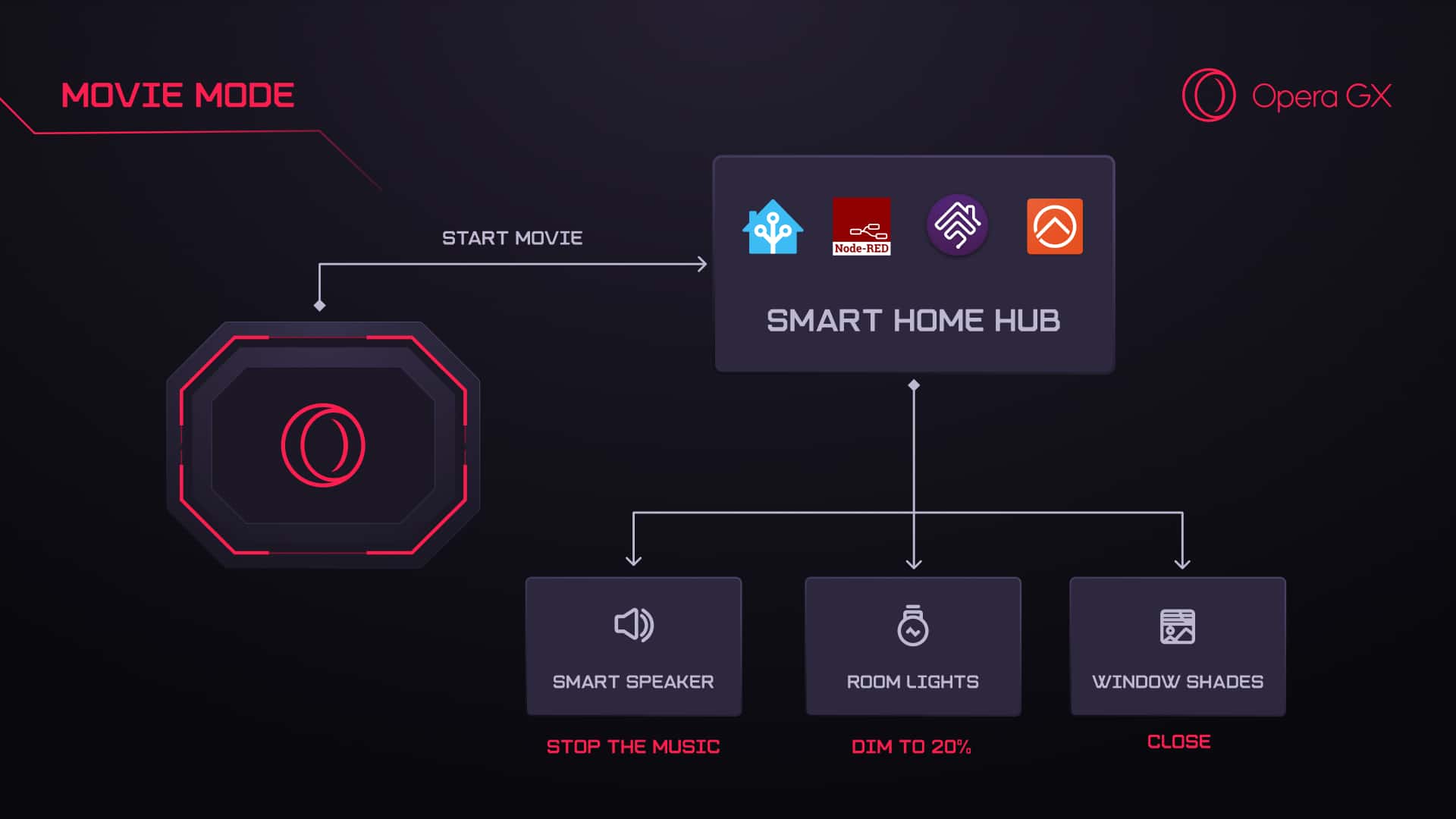
Visual synergies are also possible: colour changes of LED strips or lamps can be synchronized with the Opera GX designs, creating a combination of aesthetics and function. Practical scenarios such as automatic dimming of lights and lowering of blinds when a movie starts make the browser an integral part of home entertainment systems.
Open source as a driver of innovation
Technically, the whole thing is implemented via a new MQTT interface and corresponding browser extensions. Users who already have a smart home setup can easily integrate the browser into their infrastructure. The open approach is particularly worth mentioning: Opera GX developers provide the extensions as open source, allowing an active community to contribute new automations and features. The first examples already sound creative – for example, a signal can be configured that activates a red status light in the room if too many tabs are open.

Thanks to this openness, the bandwidth is almost unlimited. The browser functions less as a self-contained product and more as a platform. Community plug-ins tailored to specific gaming or streaming scenarios are conceivable in the future, so that users can decide for themselves how deeply the browser and home merge in everyday life.
Simple setup for everyone
Although the technology behind the scenes appears complex, the setup is designed to be user-friendly. Users with Home Assistant can find the browser directly as a device in their configuration, while others with their own MQTT instance only need to enter a few manual details such as server address and port. Several computers can be integrated at the same time, so that even a household with different work or gaming stations can integrate its entire browser landscape.

Particularly exciting: As Opera GX continues to rely on its gaming-oriented features, such as resource management for CPU and RAM consumption, the link to smart home devices creates an extended ecosystem. This makes it possible to visualize the status of the browser in the room – for example through lighting effects during high usage – without having to be directly at the screen.
Conclusion
Opera GX dares to take a step that no one has consistently pursued before: merging the browser with the physical environment. This could redefine the role of the browser – away from being a mere window to the Internet and towards becoming the interactive control center of the digital home. The open source approach in particular means that creative extensions can be expected that will greatly enhance the classic smart home. Opera GX is available free of charge via the official website, bringing an innovation into the home that affects gaming, work and everyday life in equal measure.