


Video doorbells are now one of the most popular smart home products. They not only offer the convenience of being able to see who is at the door at any time, but also contribute to increased security. While the first generation of the Blink Video Doorbell (€ 54.99 *) was already an affordable and uncomplicated solution, the second generation now aims to impress with better image quality, a larger field of view and a longer battery life. Blink, as part of the Amazon Group, is clearly positioning itself with its strong price-performance ratio against competitor products such as the Ring Battery Doorbell (Review | € 59.99 *). Read the Blink Video Doorbell (Gen 2) test to find out whether the new generation can deliver on its promises and where its strengths and weaknesses lie.
Technical data
| Model | Blink Video Doorbell (2nd generation) |
| Dimensions | 47 mm × 130 mm × 36.6 mm |
| weight | 113 g |
| Power supply | – 3x AA batteries – Bell wiring |
| Battery life | up to 2 years |
| Camera | – 1440p HD in color – Aspect ratio 1:1 (“square”, head-to-foot) – Frame rate up to 30 FPS – Field of view 150° horizontal & 150° vertical |
| Motion detector | – Maximum range approx. 7 m (when mounted 122 cm above the ground) – effective range for lower objects/knee height approx. 3.6 m |
| audio | Two-way communication possible |
| Connectivity | WLAN 802.11 b/g/n at 2.4 GHz; an upload speed of at least 2 Mbps recommended; high-speed Internet required |
| Weatherproof | – Weatherproof according to IP-65 – Ambient temperatures between -5 °C and +45 °C |
| Price | € 64.99 * |
Scope of delivery

- Blink video doorbell
- Blink Sync base module
- 3x AA 1.5 V lithium batteries
- Wall plate
- Wall mounting kit
- Removal tool for doorbells
- Wire extensions
- Corner bracket
- Drilling template
- Power supply unit (for Sync base module)
- USB-C cable (for Sync base module)
Blink Video Doorbell (Gen 2) test: design and workmanship
At first glance, the Blink Video Doorbell Gen 2 looks unspectacular, but functional. Compared to the first generation, the shape has become somewhat chunkier, which is mainly due to the additional battery. Nevertheless, the design remains slim enough to look inconspicuous next to a front door. The front is available in either black or white and gives a modern, neutral impression.

The build quality is solid, the housing is robust and weatherproof. Thanks to protection class IP-65, the doorbell can withstand rain and dust without any problems. The bell button is oval and larger than on the previous model, which should be an advantage in everyday use if you have rather fat fingers. It is noticeable that the status display is much more discreet than before.
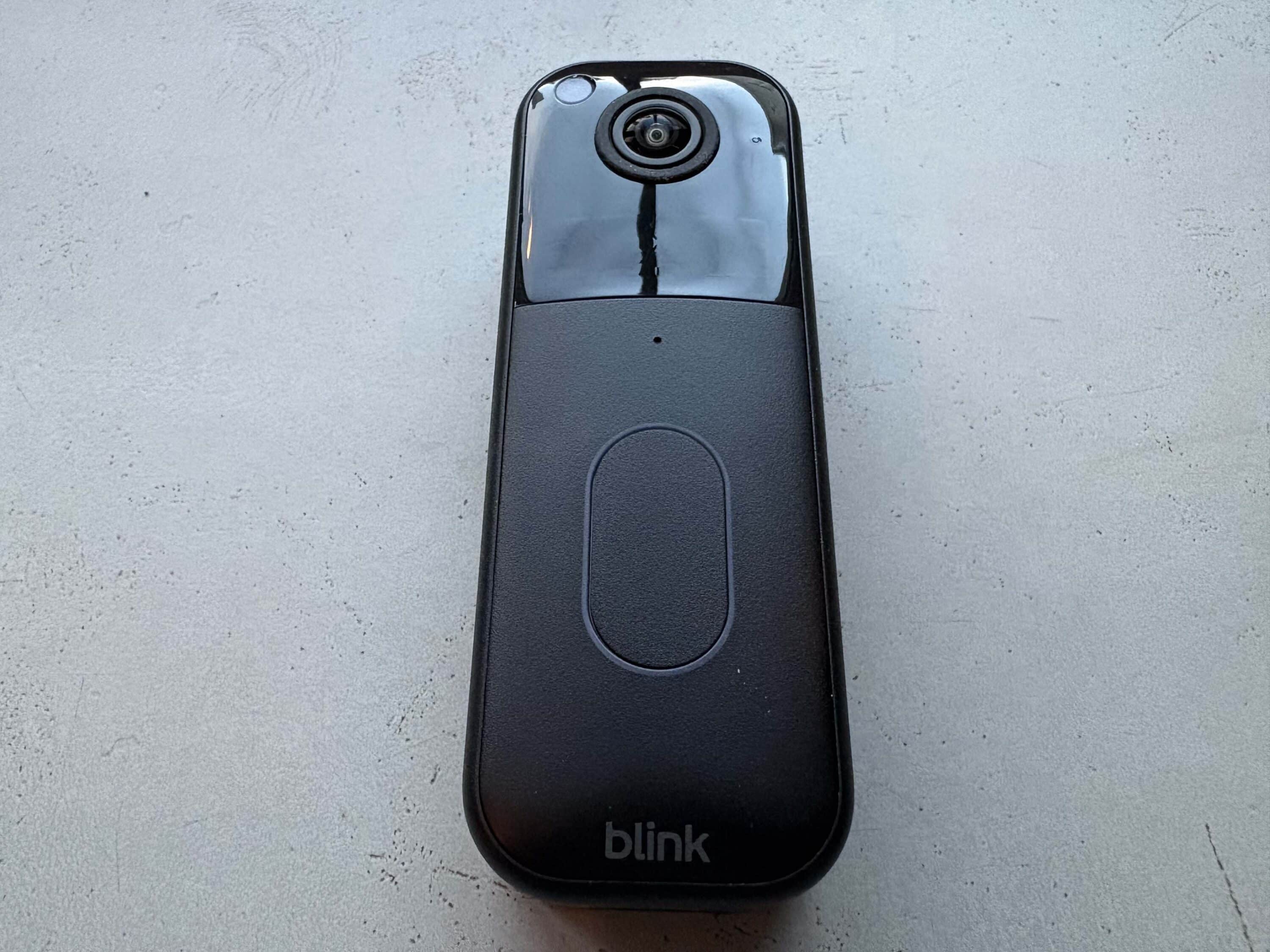
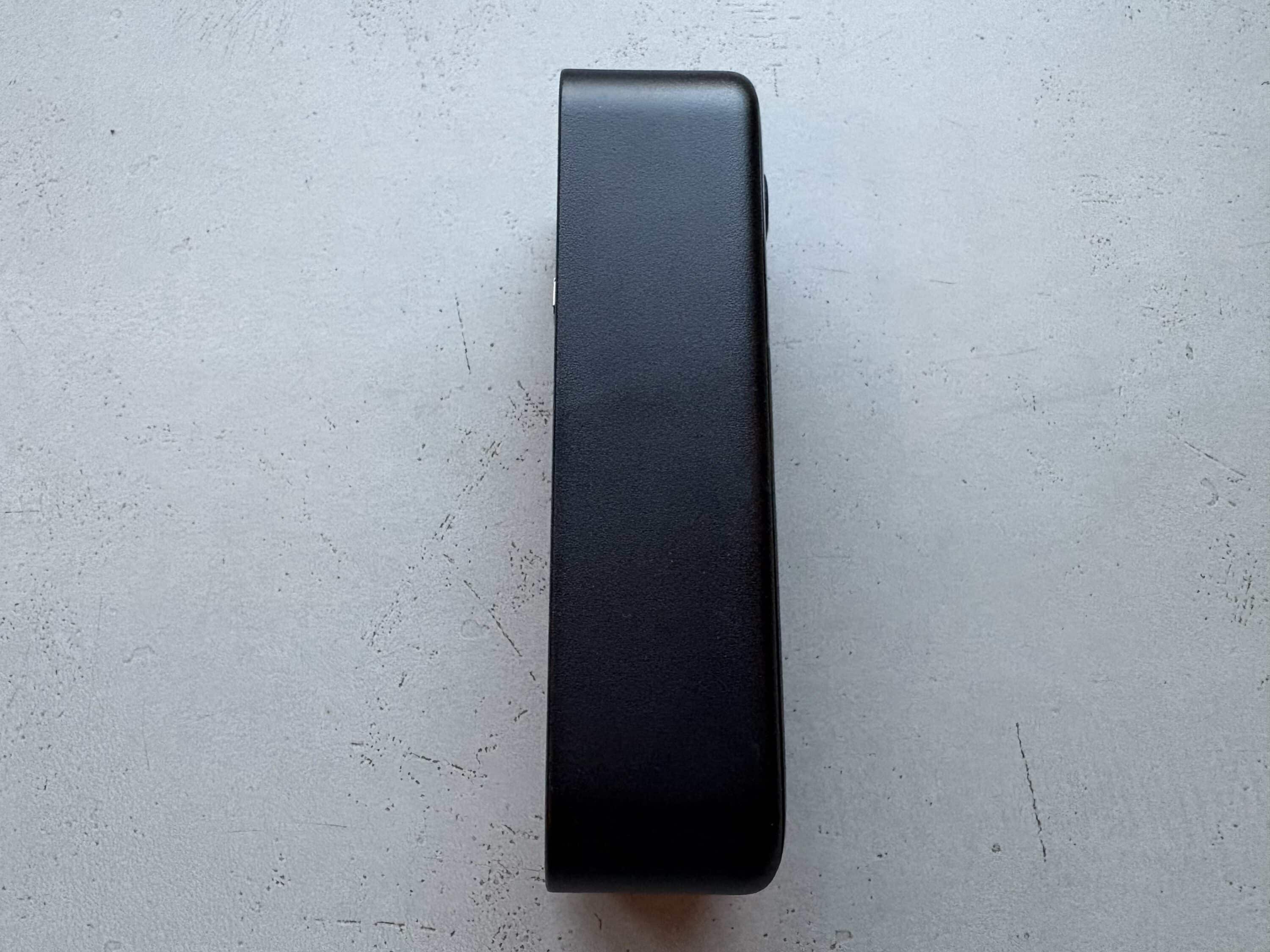
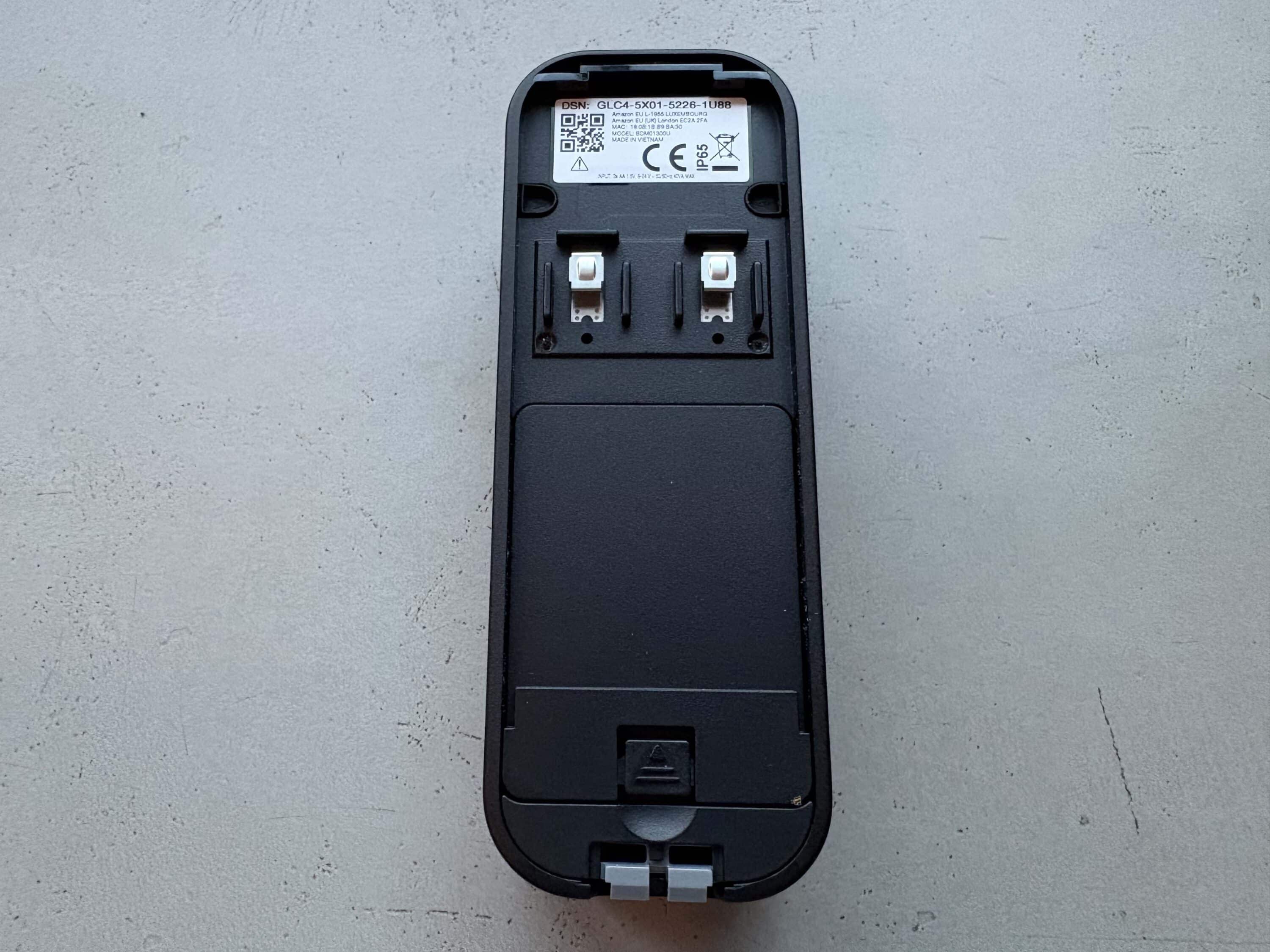
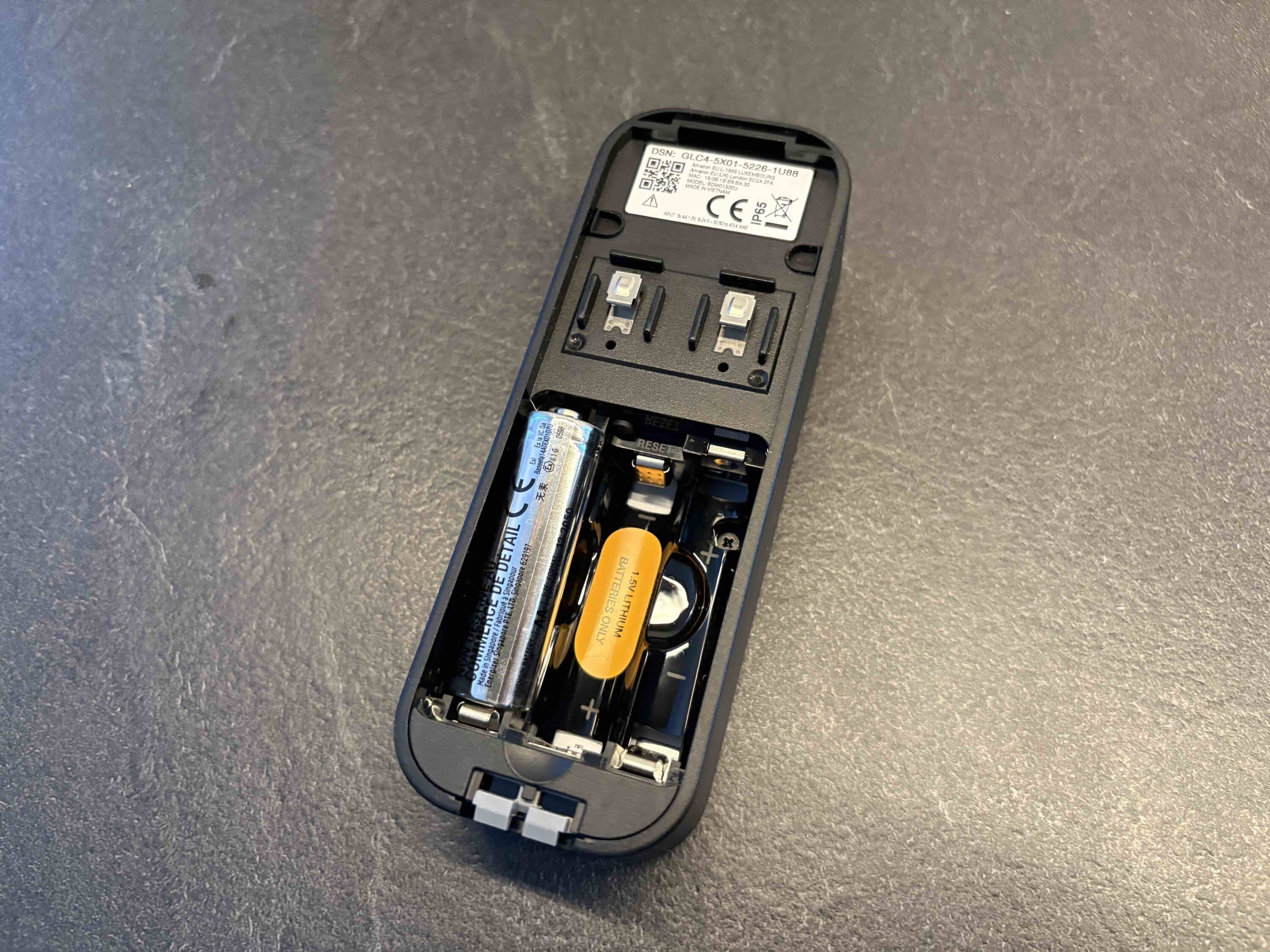
While the first generation had a bright ring that lit up when the camera was active, the Gen 2 only shows a small status LED in the top corner. This makes for a more inconspicuous appearance. Another practical feature is the ability to remove the bell from its holder using a key. This makes it easy to change the batteries without having to dismantle the entire installation. Overall, the workmanship leaves a thoroughly positive impression.
Blink Video Doorbell (Gen 2) test: Installation and commissioning
Installation is pleasantly uncomplicated. After unpacking, insert the supplied batteries, attach the bracket to the house wall and plug in the doorbell. Blink includes suitable screws and wall plugs. In combination with the practical drilling template, even beginners can quickly attach the bracket to the house wall.
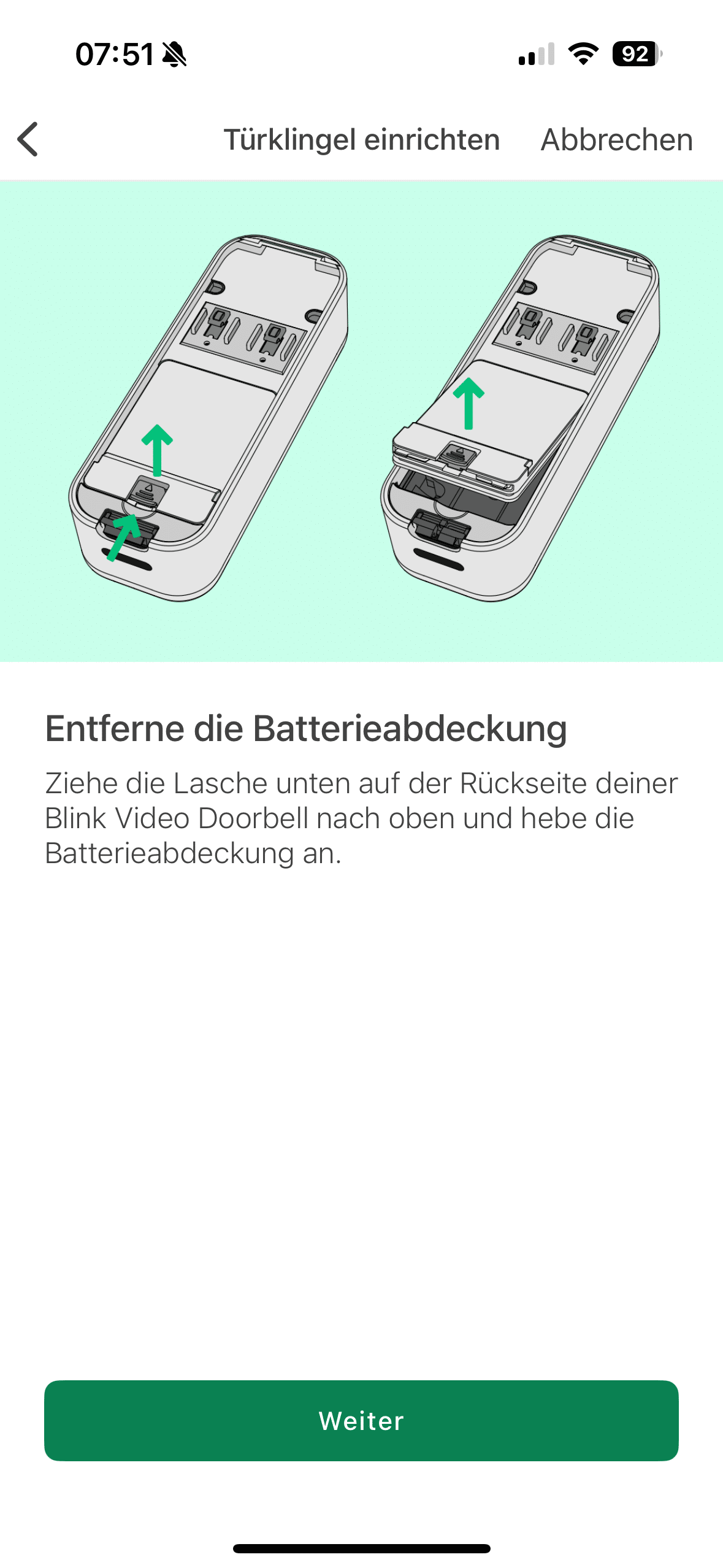
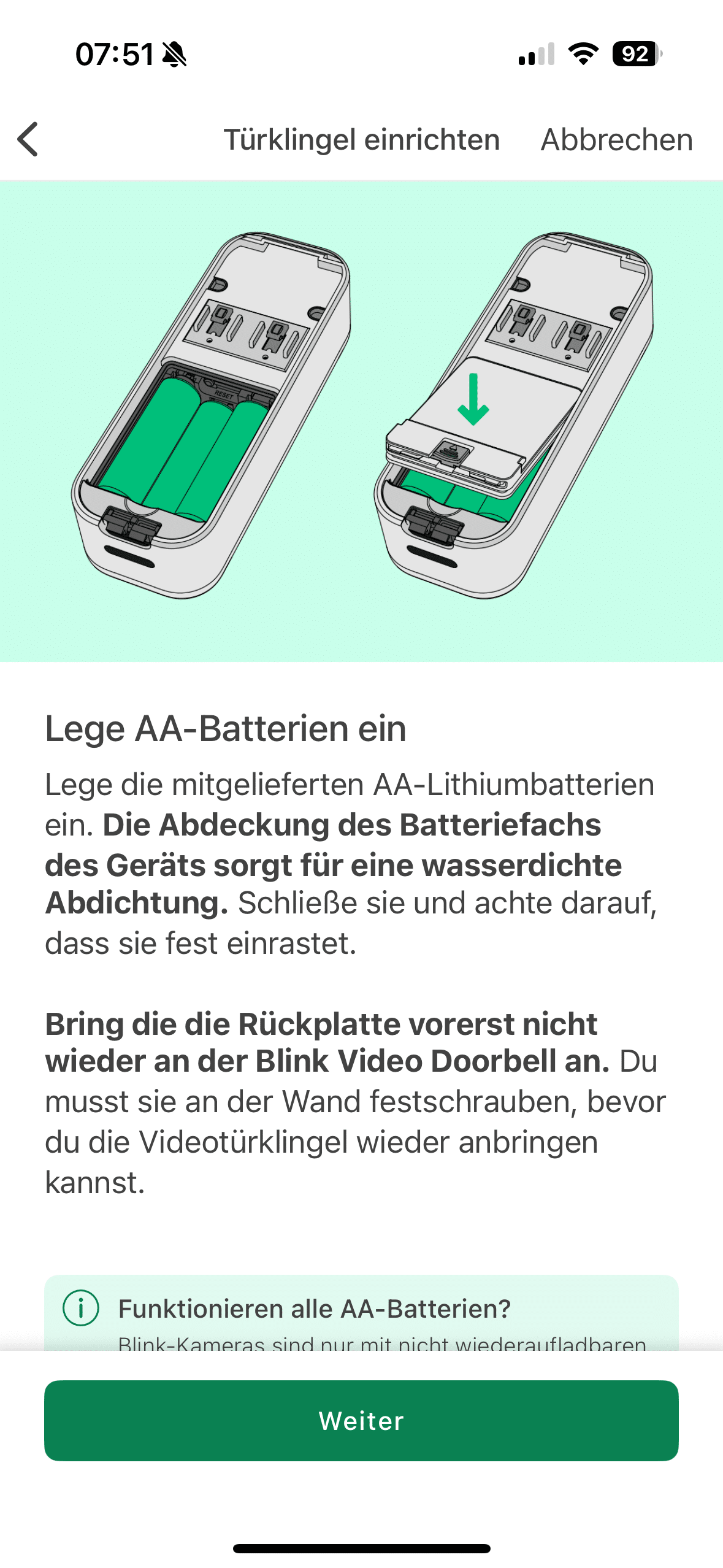
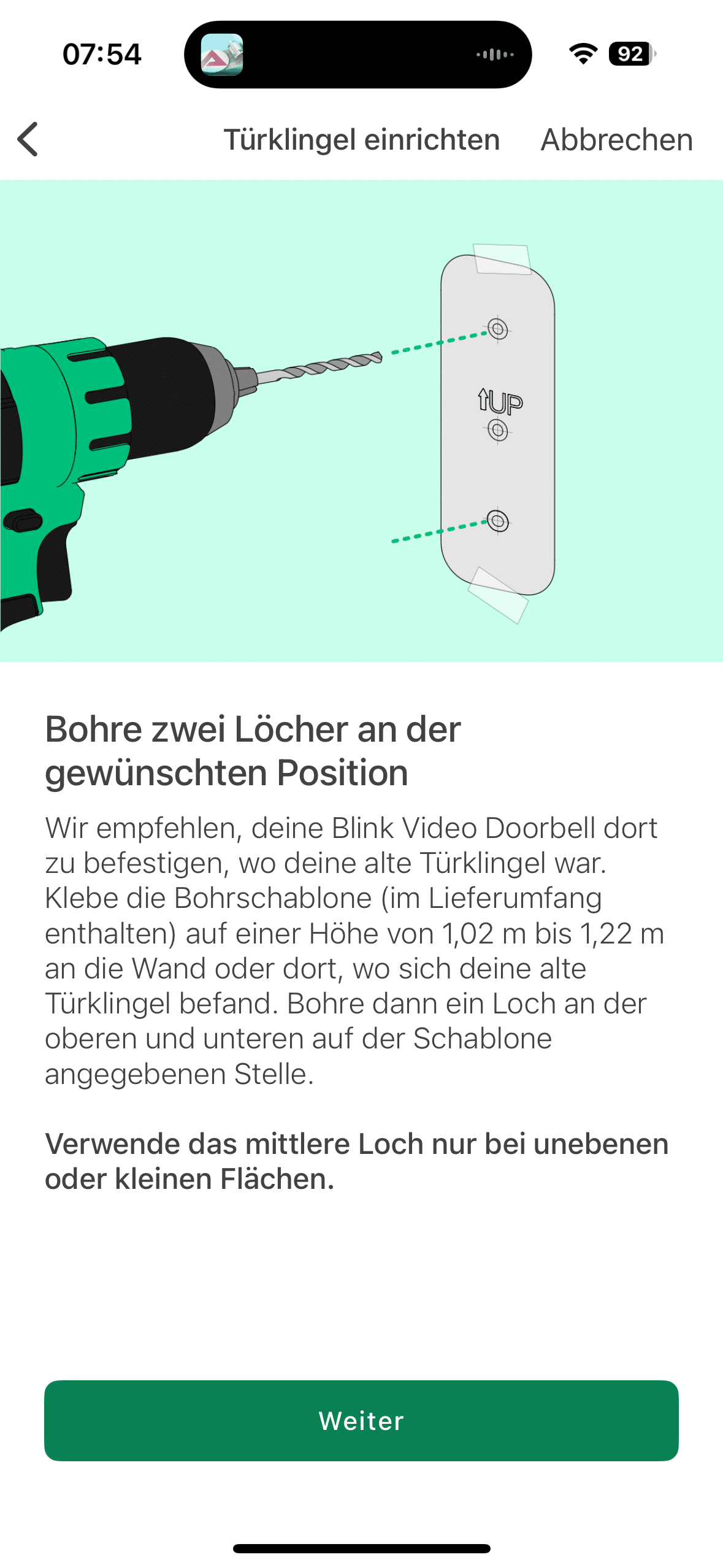
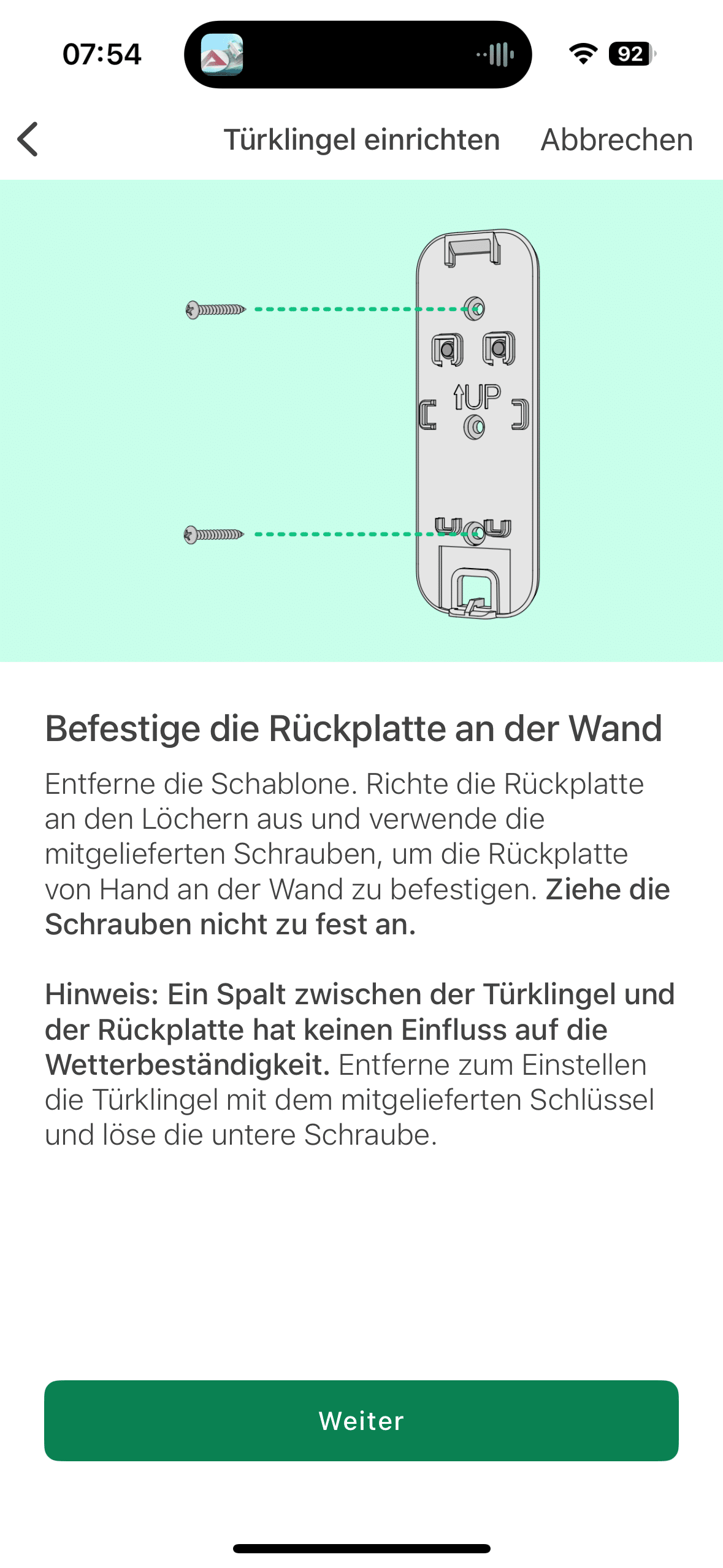
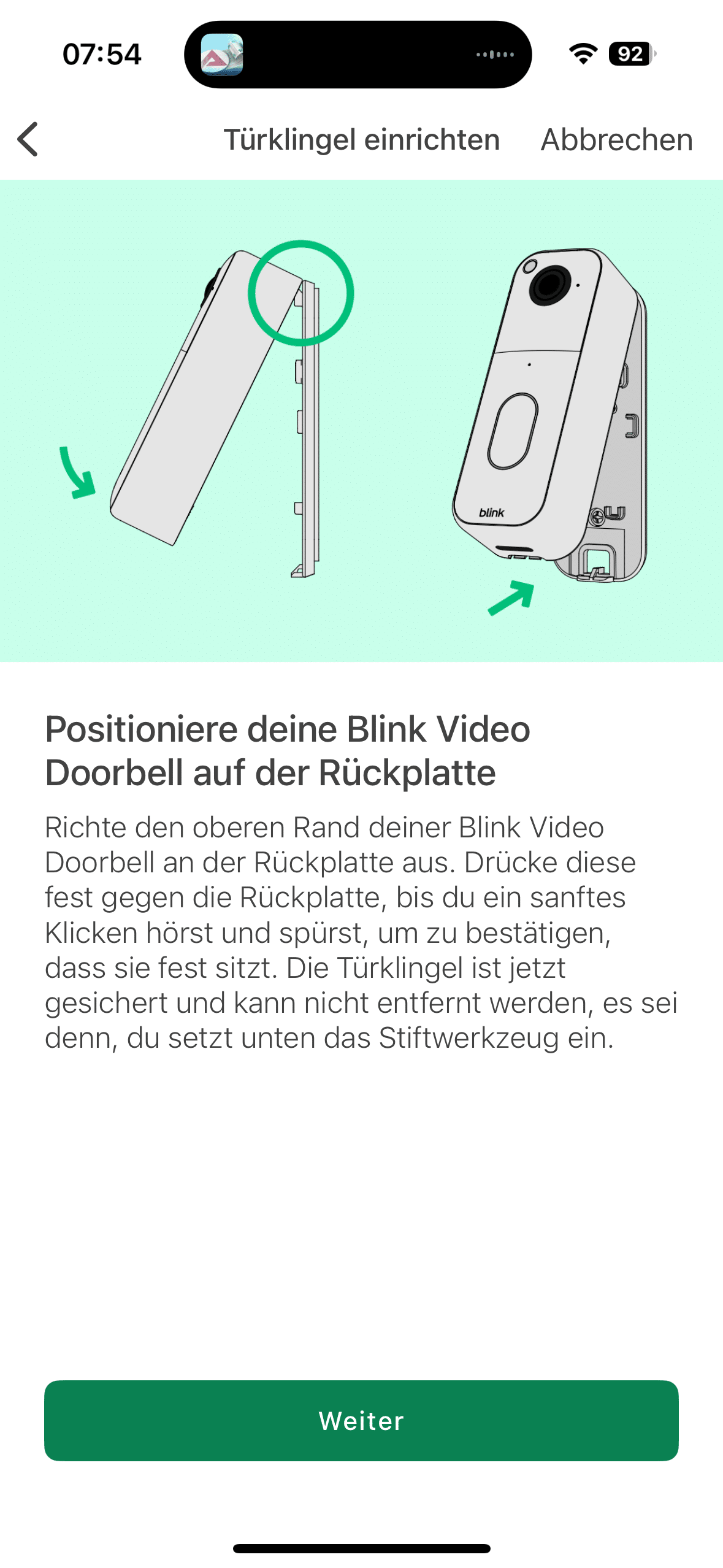
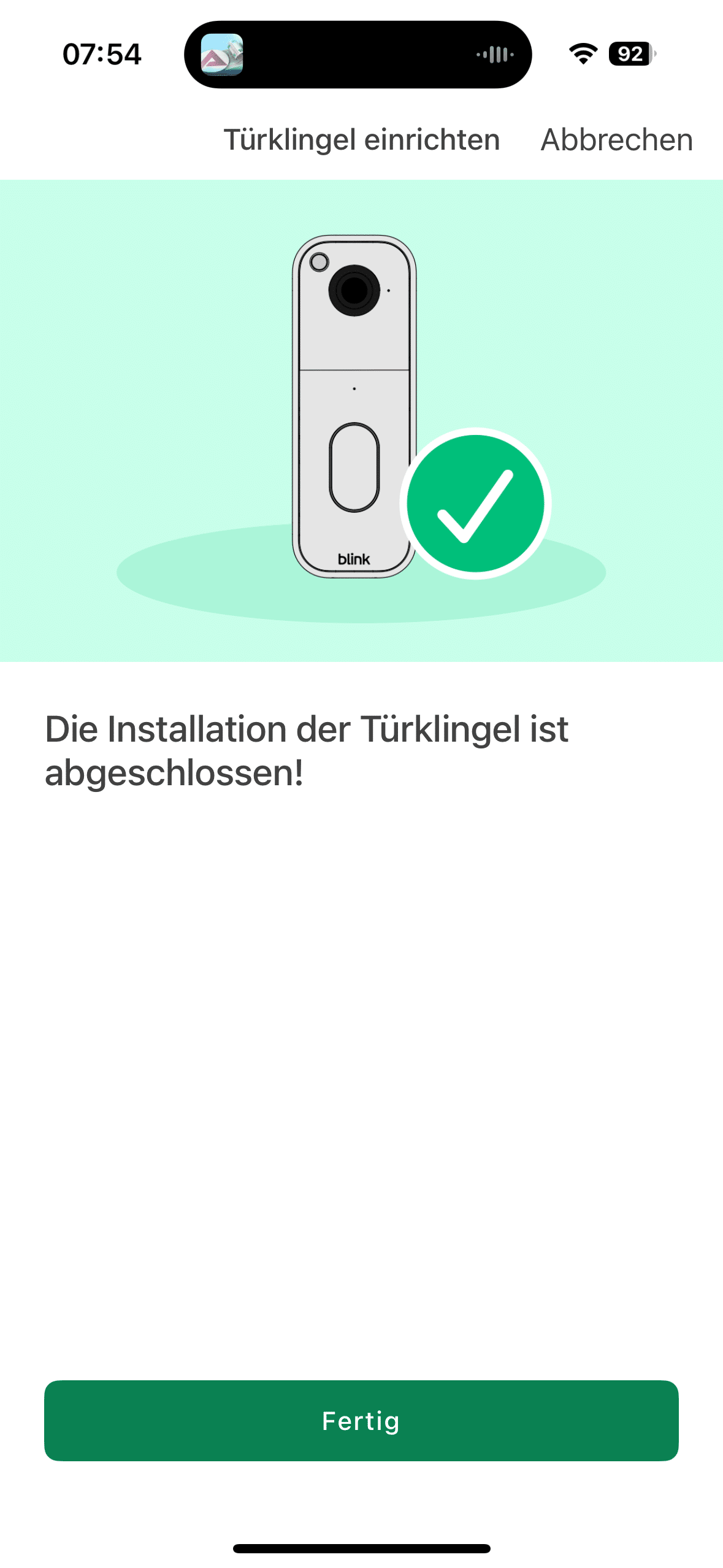
Anyone who already owns other Blink devices will find the process particularly convenient, as the app quickly recognizes and integrates the new doorbell. The initial setup via the Blink app is a step-by-step process and only requires the Sync Module Core to be connected to the WLAN and the doorbell to be added via QR code.
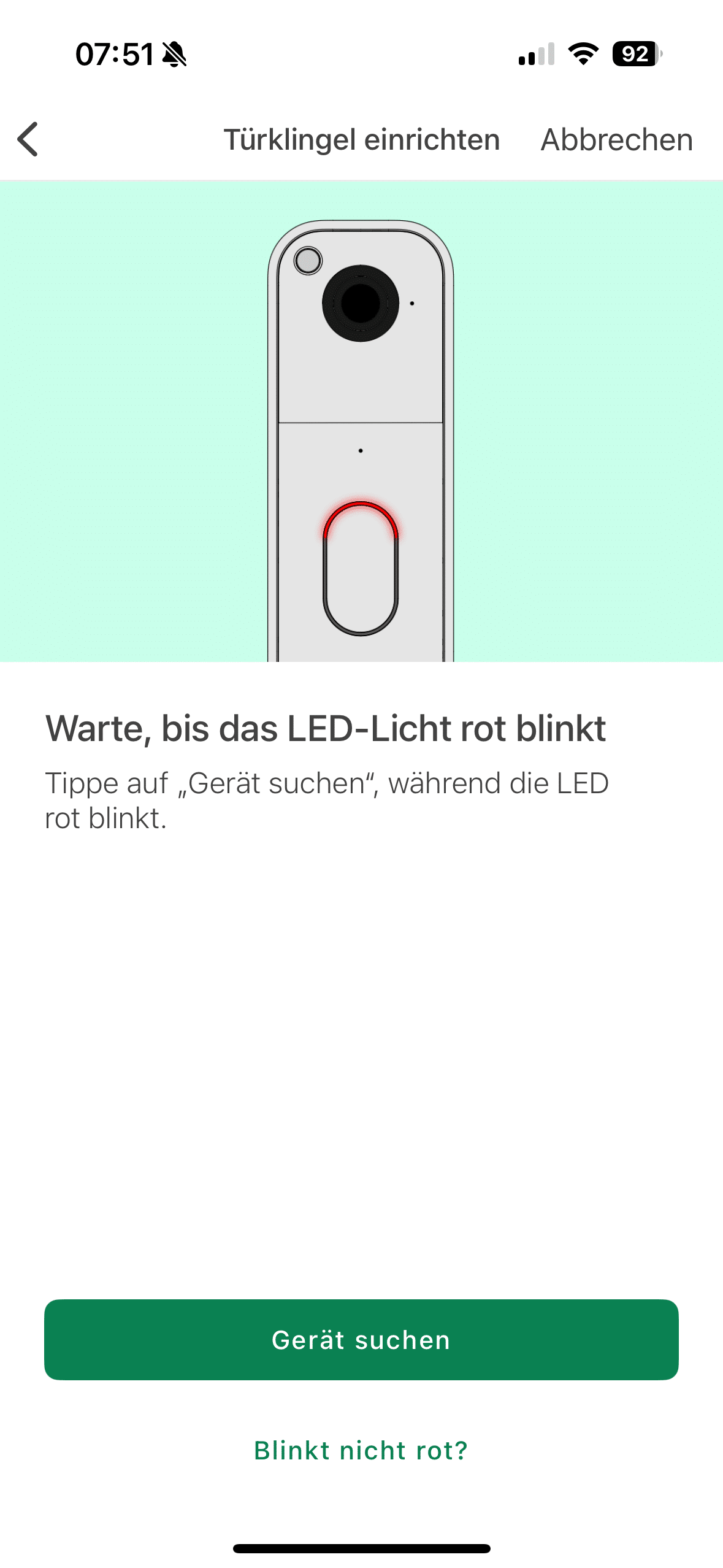
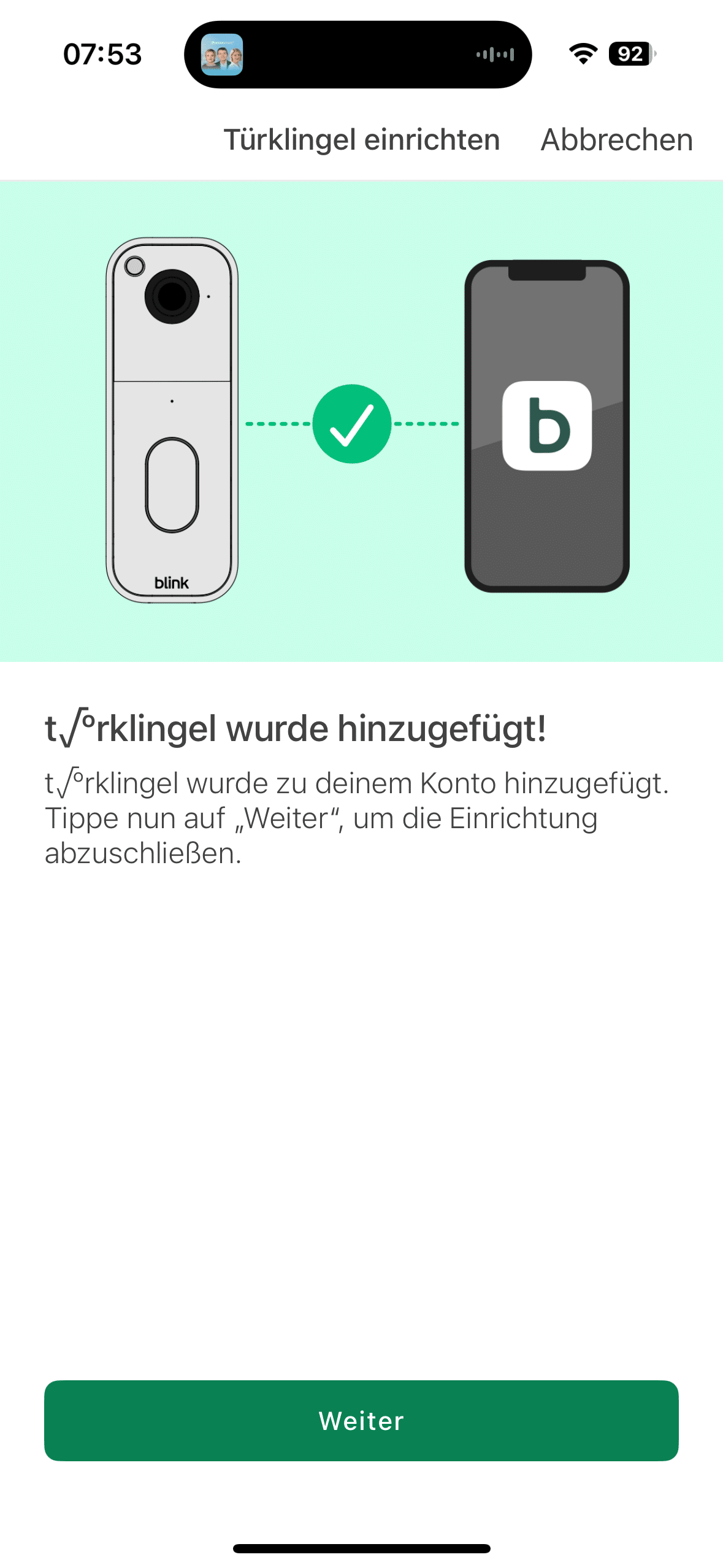
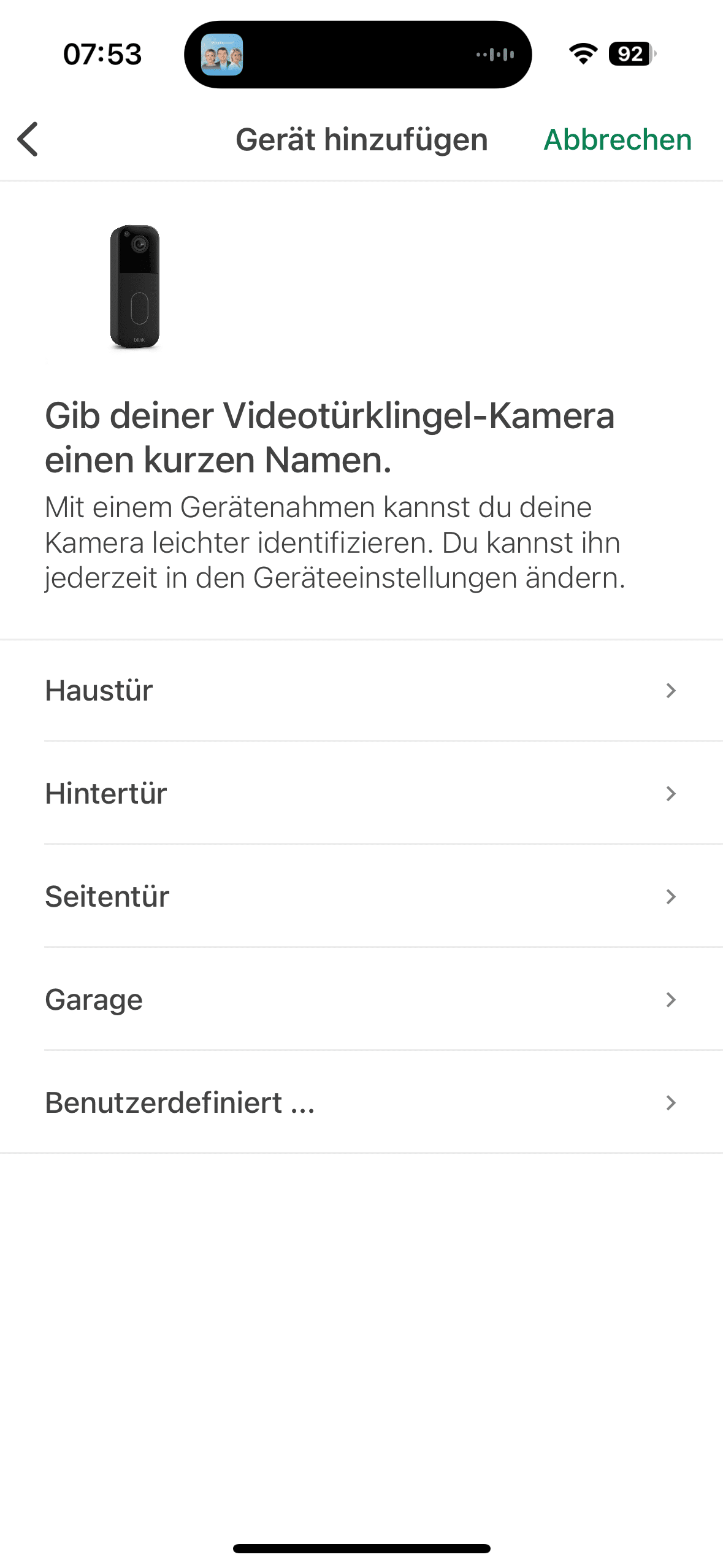
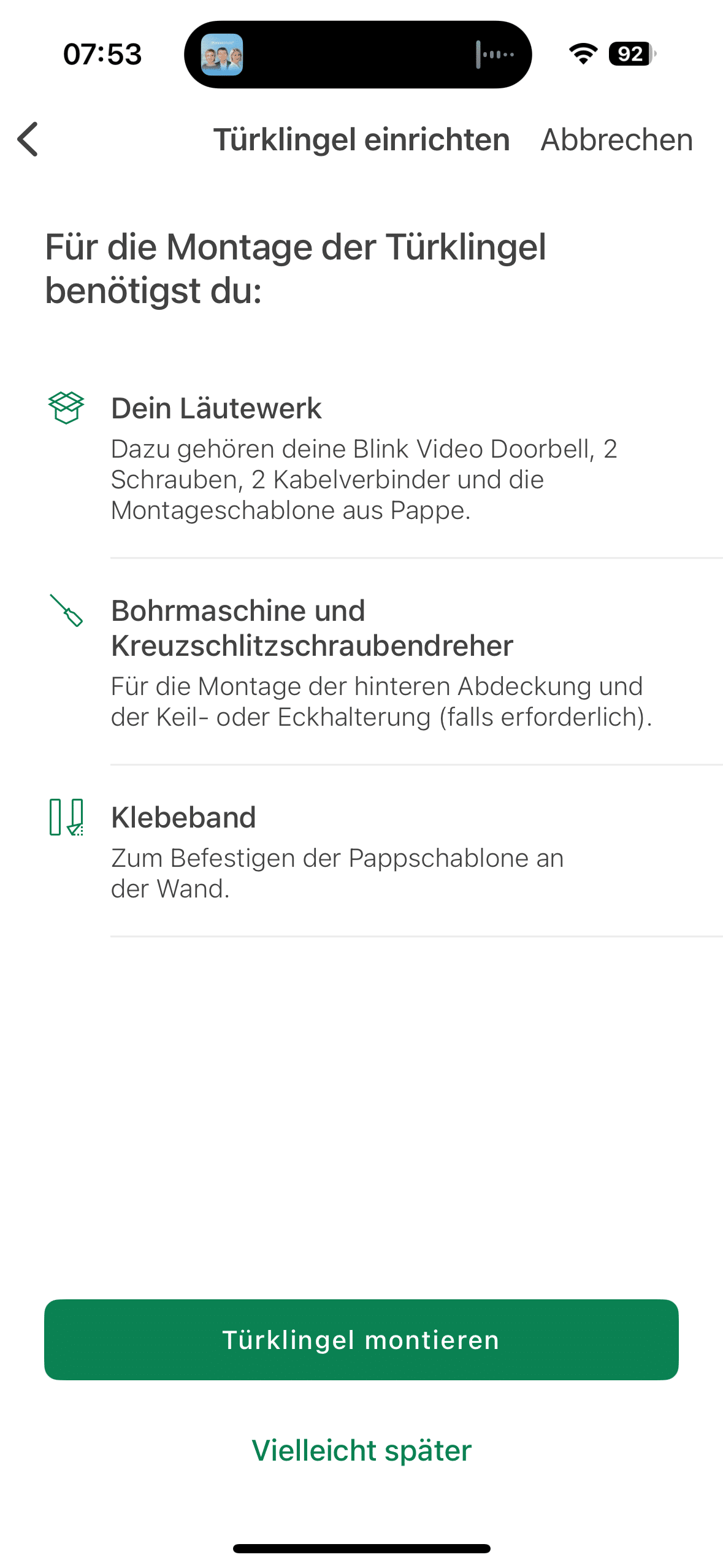
The app takes you comfortably by the hand, which means quick setup even for newcomers. If you want to operate the doorbell via existing wiring, you will need to invest a little more effort, as the connection cables need to be connected correctly. Nevertheless, this option also requires a manageable amount of effort, meaning that installation rarely takes longer than 15 to 30 minutes.
Blink Video Doorbell (Gen 2) test: App operation
The Blink app is the central hub for controlling and configuring the Video Doorbell. It is available for both iOS and Android and impresses with its clear user interface. Once set up, you receive real-time notifications when someone rings the doorbell or motion is detected. The app allows numerous settings to customize the use to your own needs.
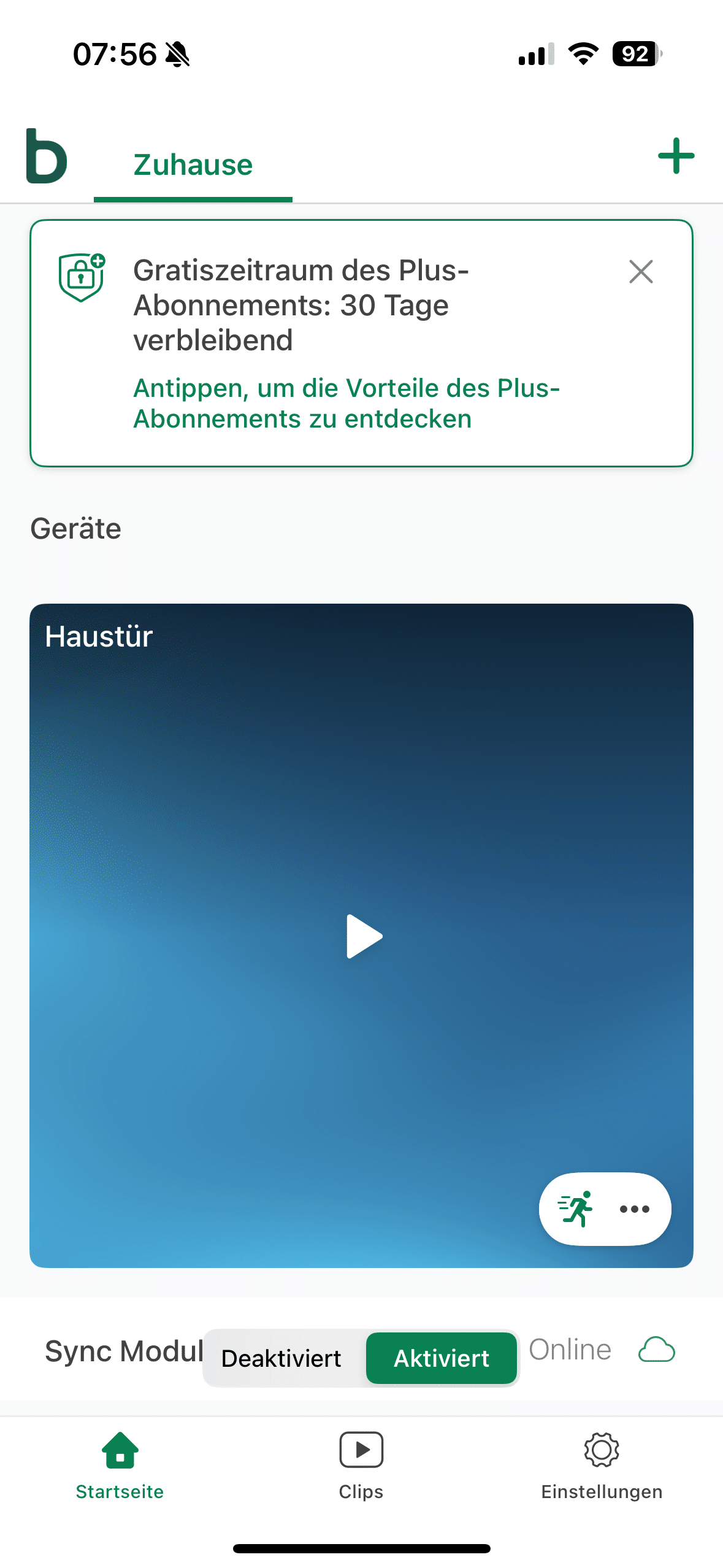
This includes defining motion zones, which can be used to exclude certain areas of the image, and adjusting the sensitivity of motion detection. Anyone living in a busy street will quickly appreciate these functions, as they can significantly reduce false alarms. The video quality can also be adjusted. Depending on the selected mode, you can prioritize between the best possible image display and a longer battery life. Another highlight is the two-way communication.
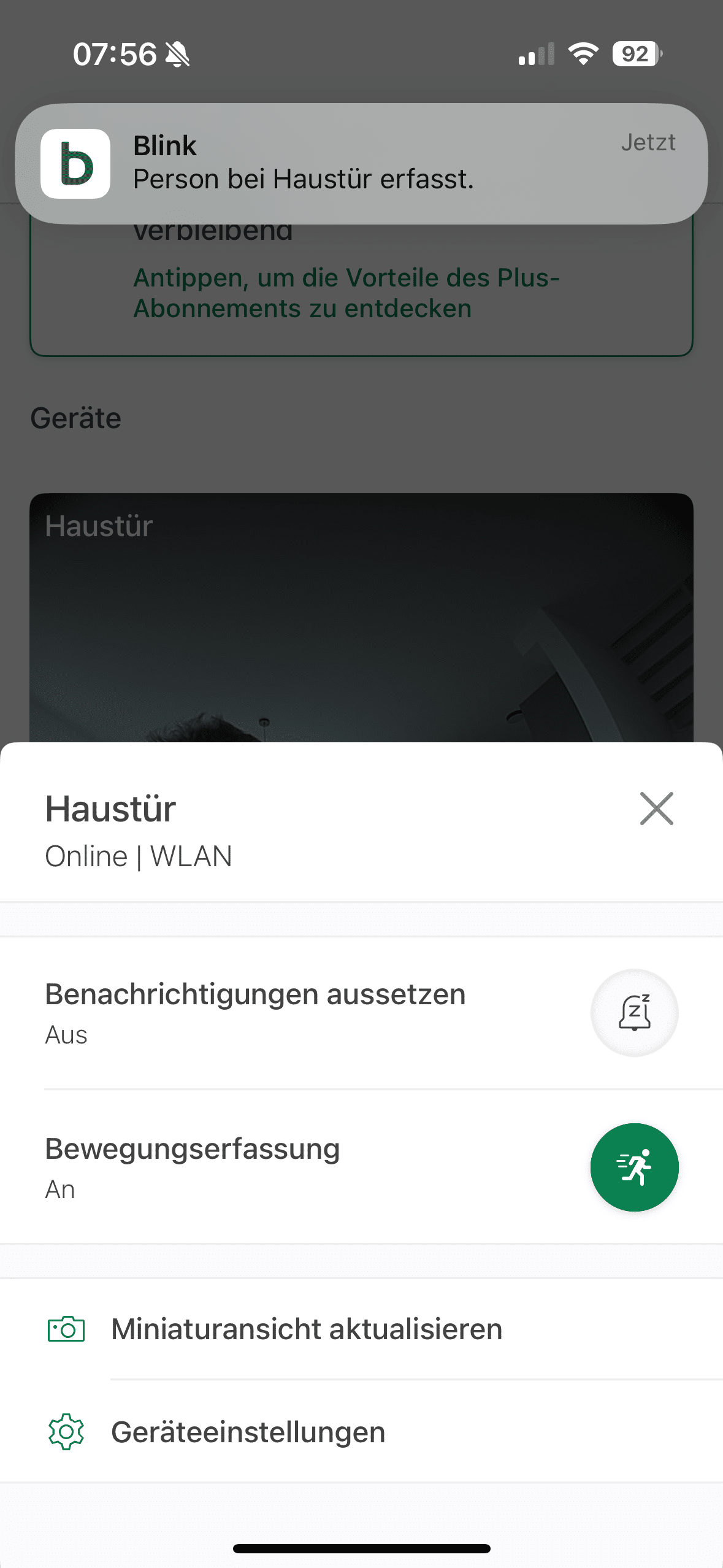
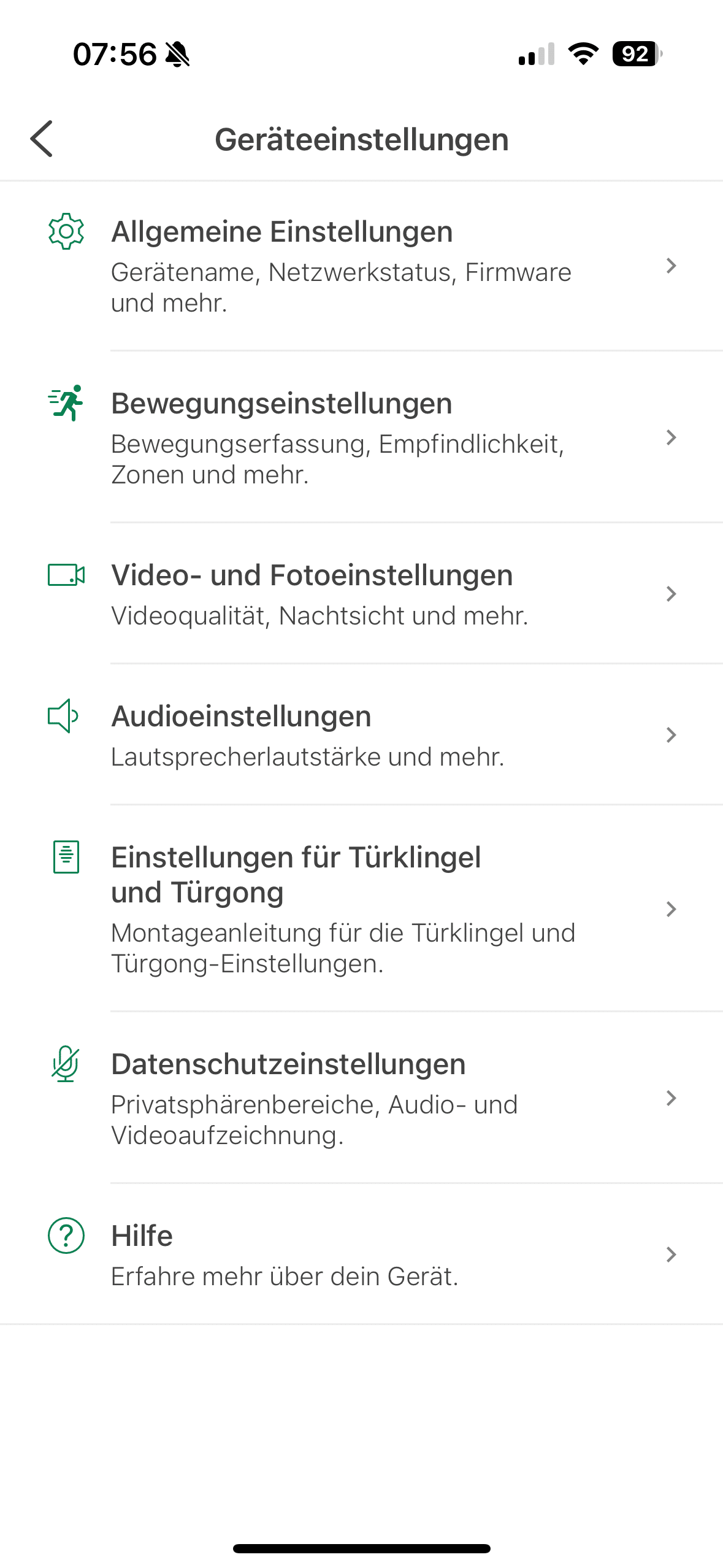
You can use the app to speak directly to visitors, which is particularly useful when you’re not at home. However, the doorbell lacks its own internal speaker for ringtones in the house. Instead, users must either use existing wired doorbells or integrate Alexa devices to receive an acoustic signal inside. This is a shame, as many competitor models come directly with an indoor chime. It is also not possible to connect to external smart home systems. You are therefore forced to operate the latest Blink Video Doorbell exclusively in the Blink ecosystem.
Blink Video Doorbell (Gen 2) test: camera quality
The biggest improvement over the first generation is probably the camera quality. With a resolution of 1440p, the Gen 2 offers a visibly sharper image that allows faces to be recognized more clearly.

The square picture format, which covers 150 degrees both horizontally and vertically, is a particularly positive feature. This means that you can not only see the heads of visitors, but also their feet and objects on the floor, such as parcels.

The camera also delivers solid results at night. Although the quality of the black and white images does not come close to higher-priced models, the images are sufficiently bright and detailed to clearly identify people.

In brightly lit entrance areas, the display is convincing anyway. The camera only reaches its limits with very high contrasts or direct sunlight, but this is not unusual for this price range.
Blink Video Doorbell (Gen 2) test: Motion detection
The second generation of the Blink Video Doorbell can distinguish between people, vehicles and other movements. This works quite reliably in practice, but is prone to frequent false alarms if the sensitivity is high. Cars driving past the house or pets can quickly trigger a notification. This is where the option of defining zones and regulating sensitivity proves to be indispensable.
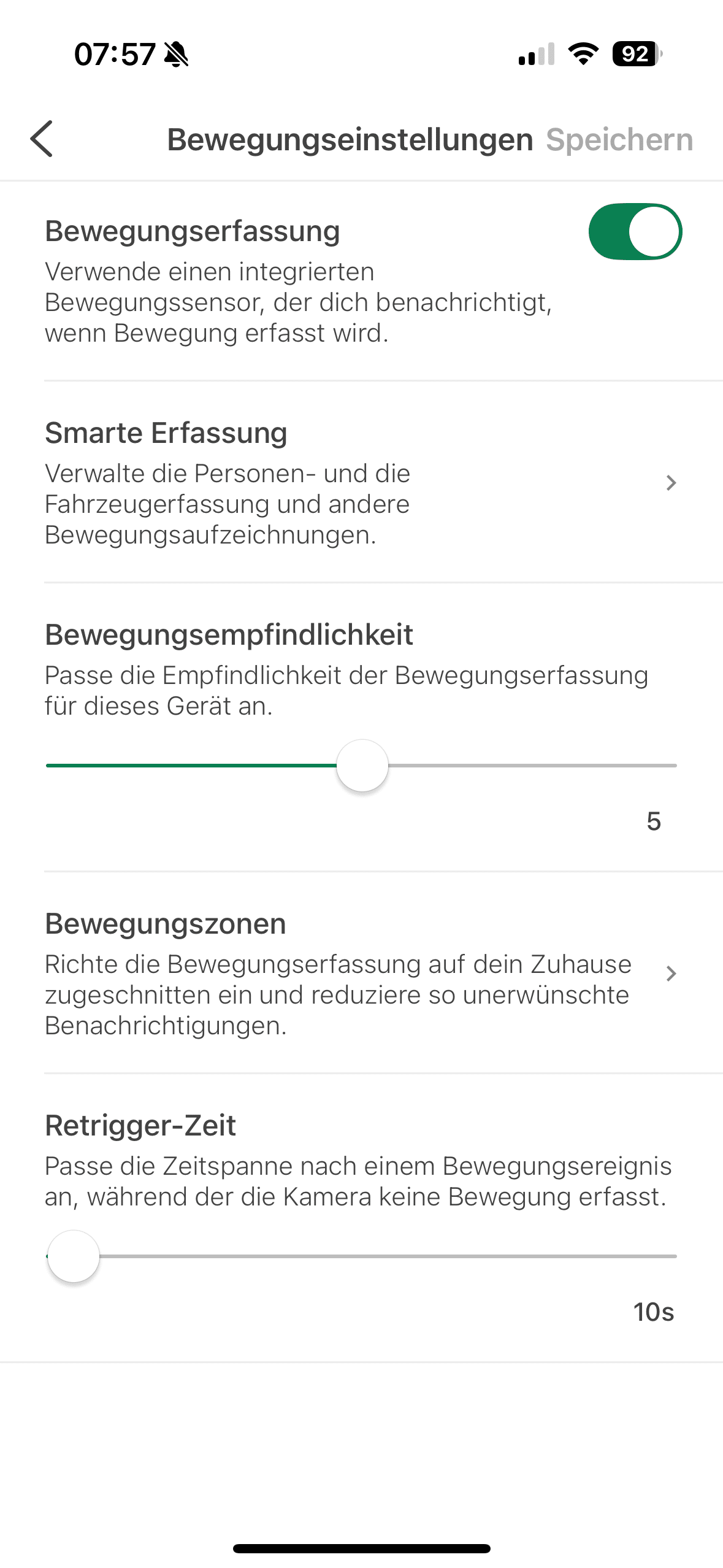
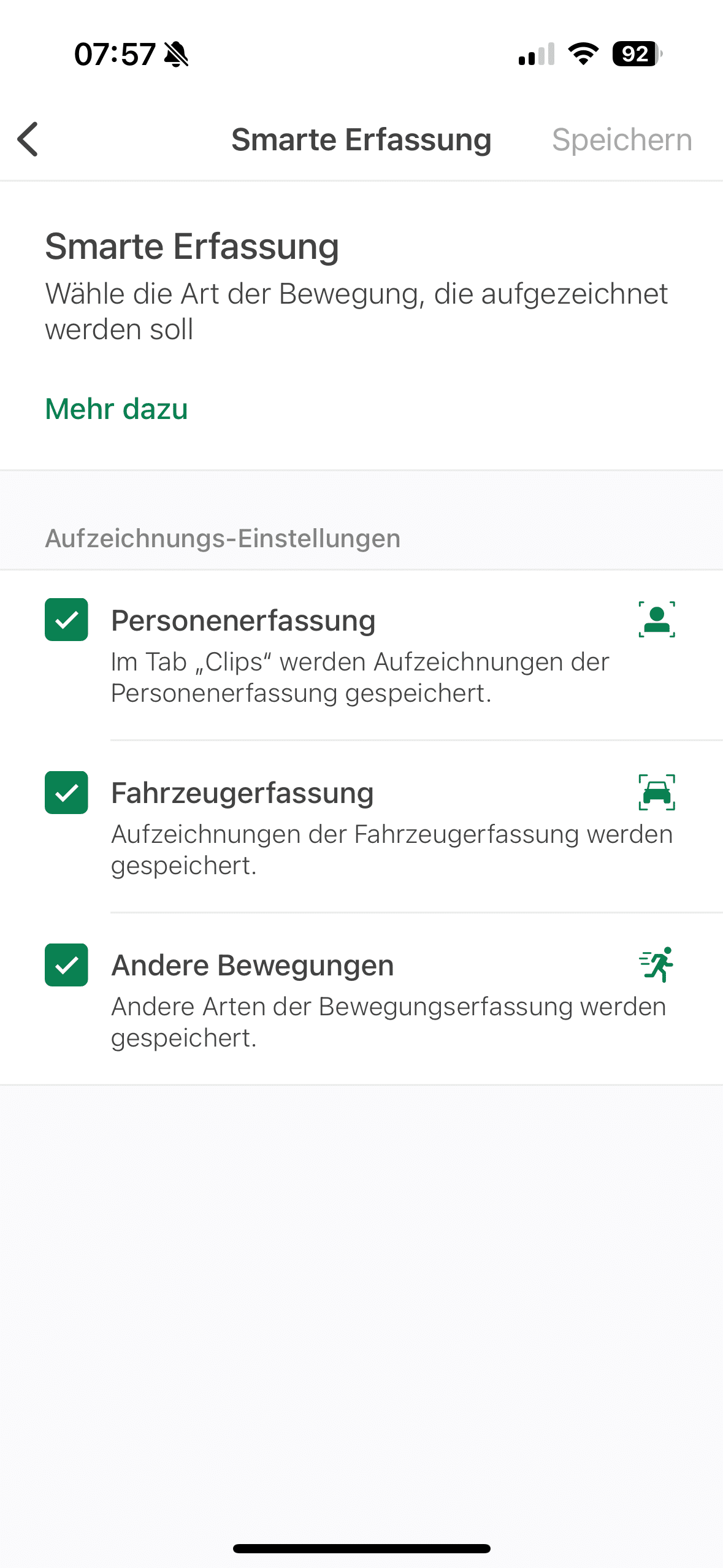
With a little fine-tuning, the number of unnecessary messages can be significantly reduced. You should define zones anyway in order to be able to operate the Blink Video Doorbell (Gen 2) in compliance with data protection regulations. Blind zones can be created for this purpose, which you should define in public spaces and especially where neighboring properties are visible.
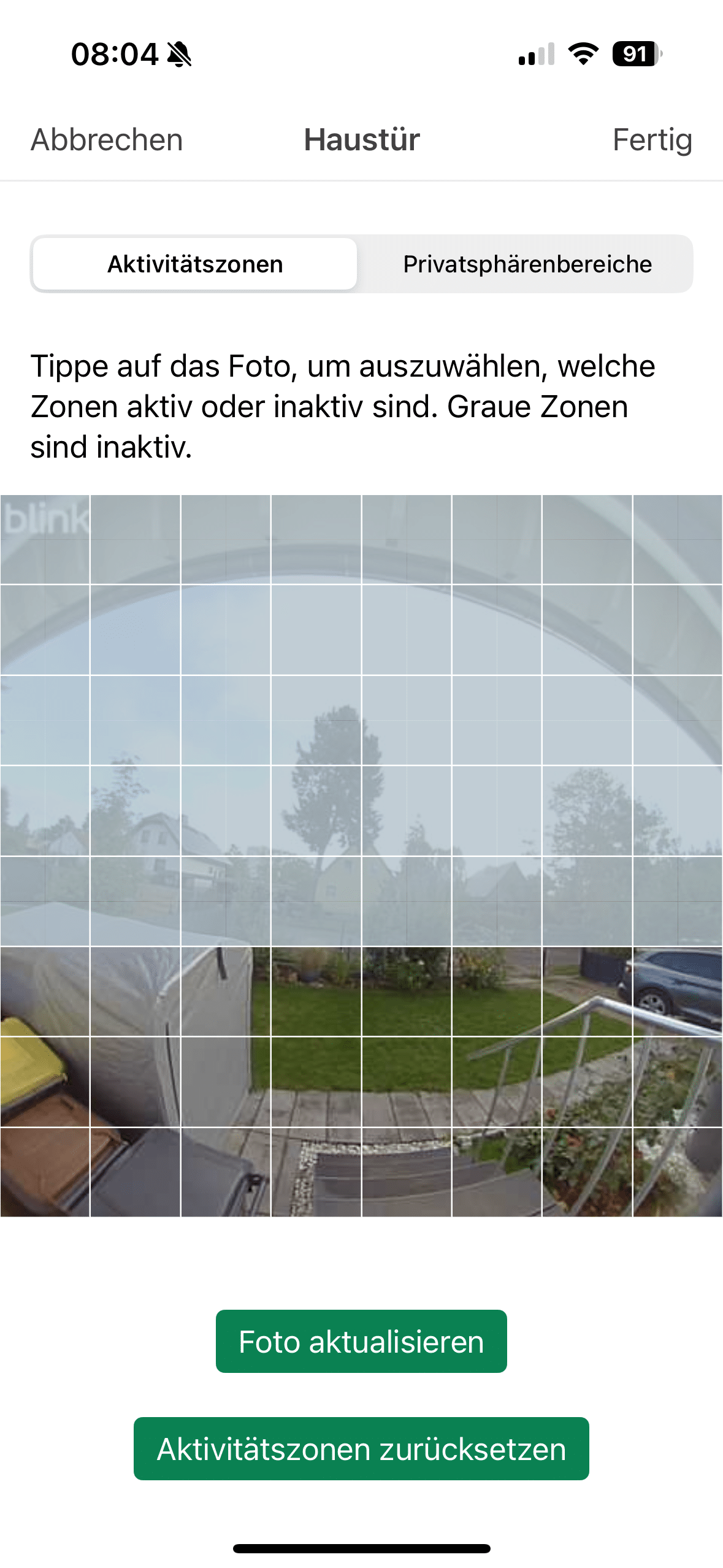
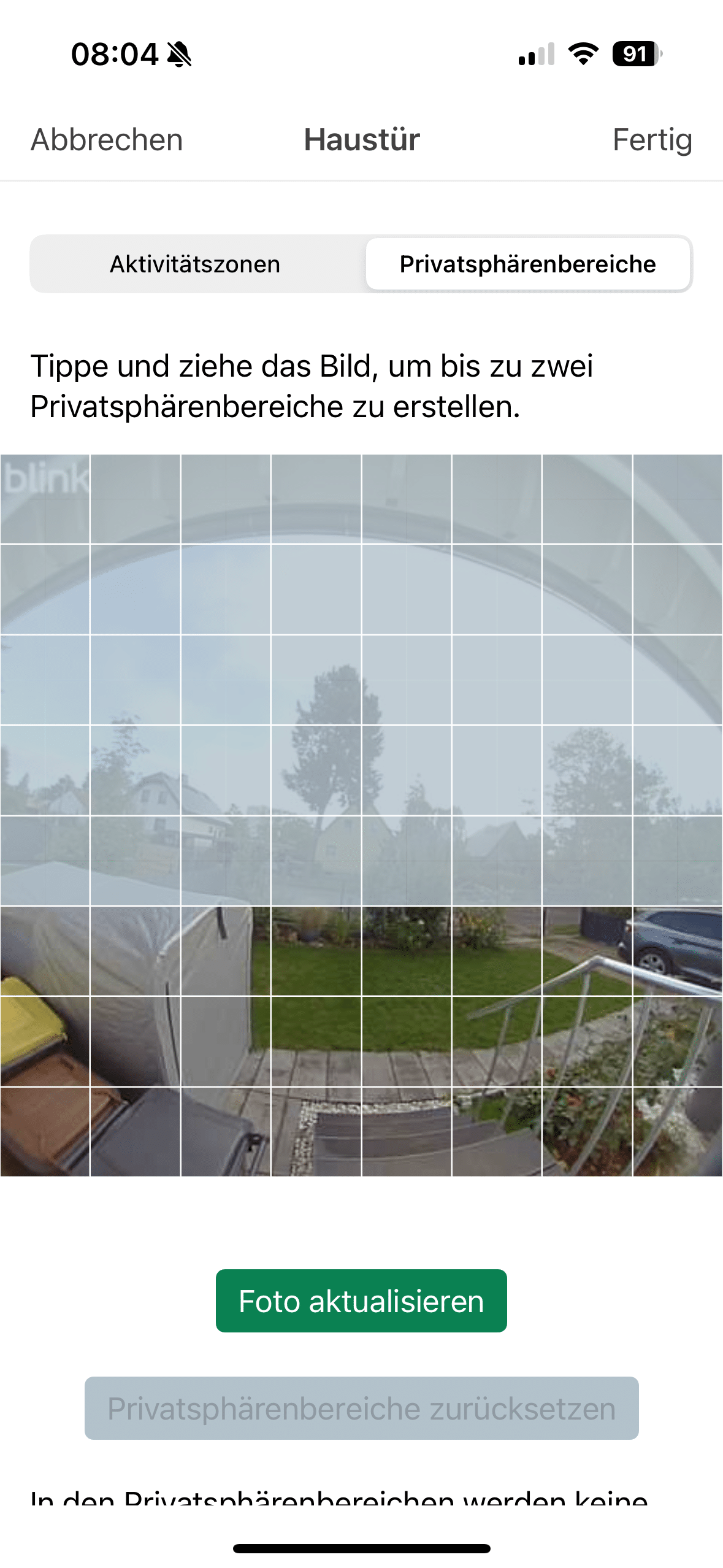
Under optimal conditions, the range of motion detection is up to seven meters if the doorbell is installed at a height of around 1.20 meters. The range decreases with lower objects such as pets, but this is usually not a disadvantage in everyday life. Overall, the motion detection works precisely enough to react reliably to people without producing an unusable number of false alarms.
Blink Video Doorbell (Gen 2) test: Video memory
One point of criticism that cannot be dismissed with the second generation is the storage of video recordings. This is where the second generation deteriorates in comparison to its predecessor. While earlier Blink products sometimes enabled local storage via USB, this is no longer provided for in the new Sync Module Core.
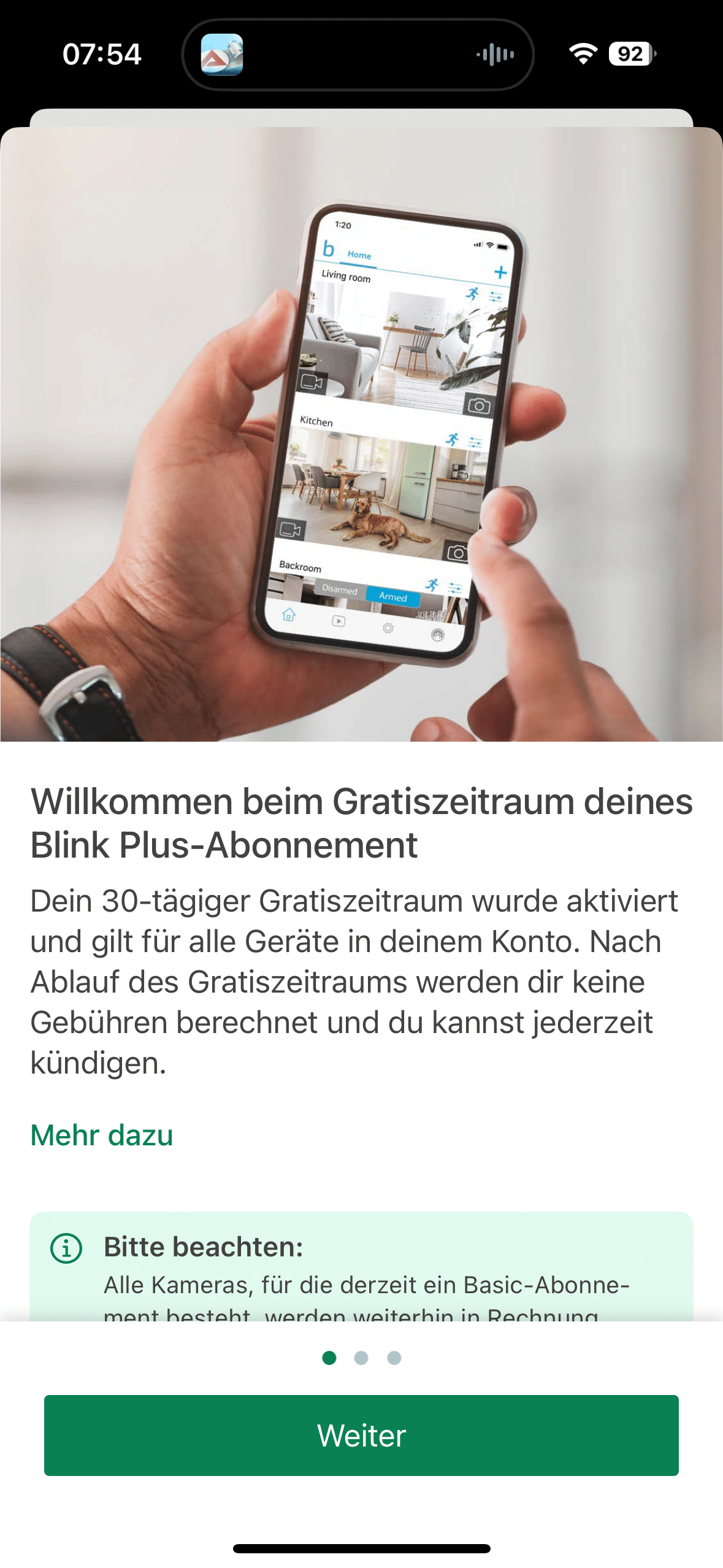
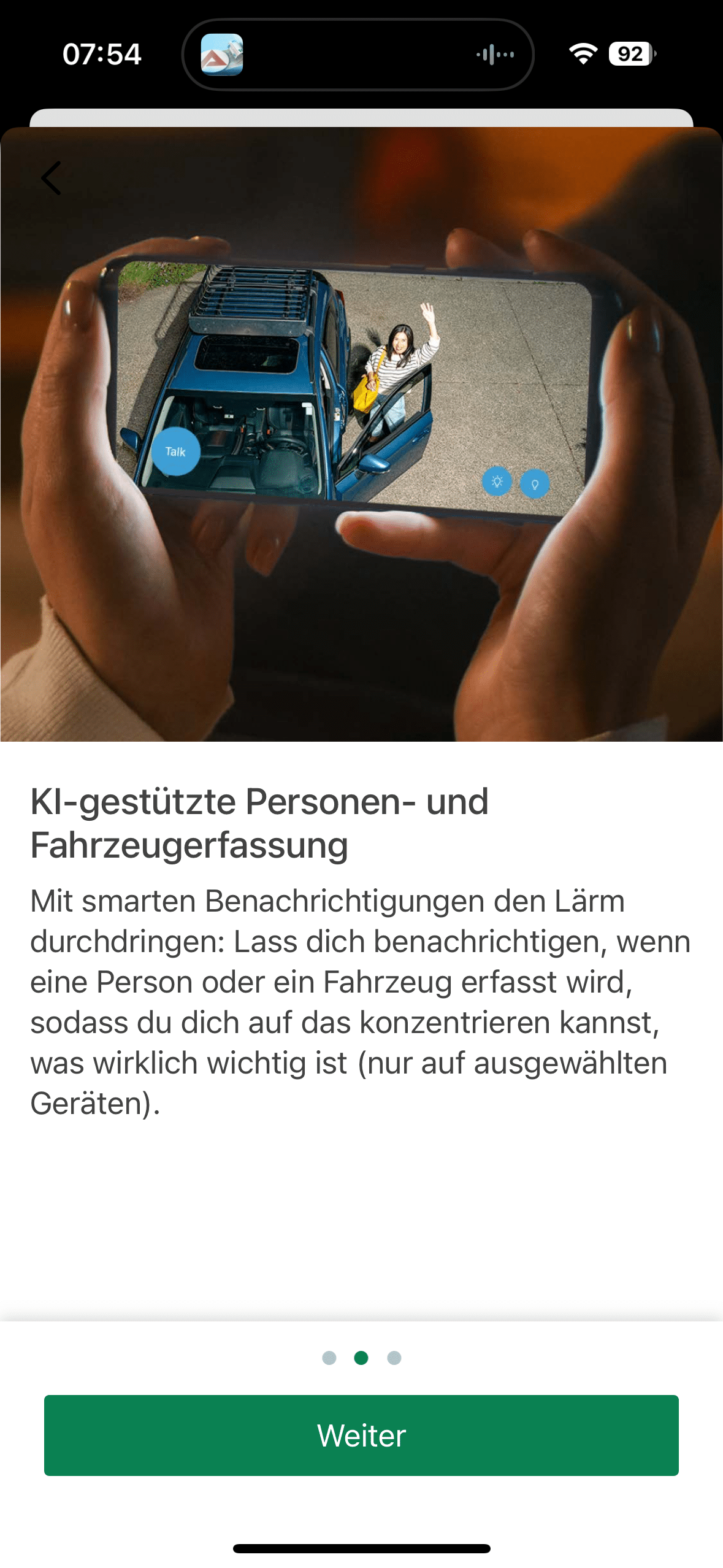
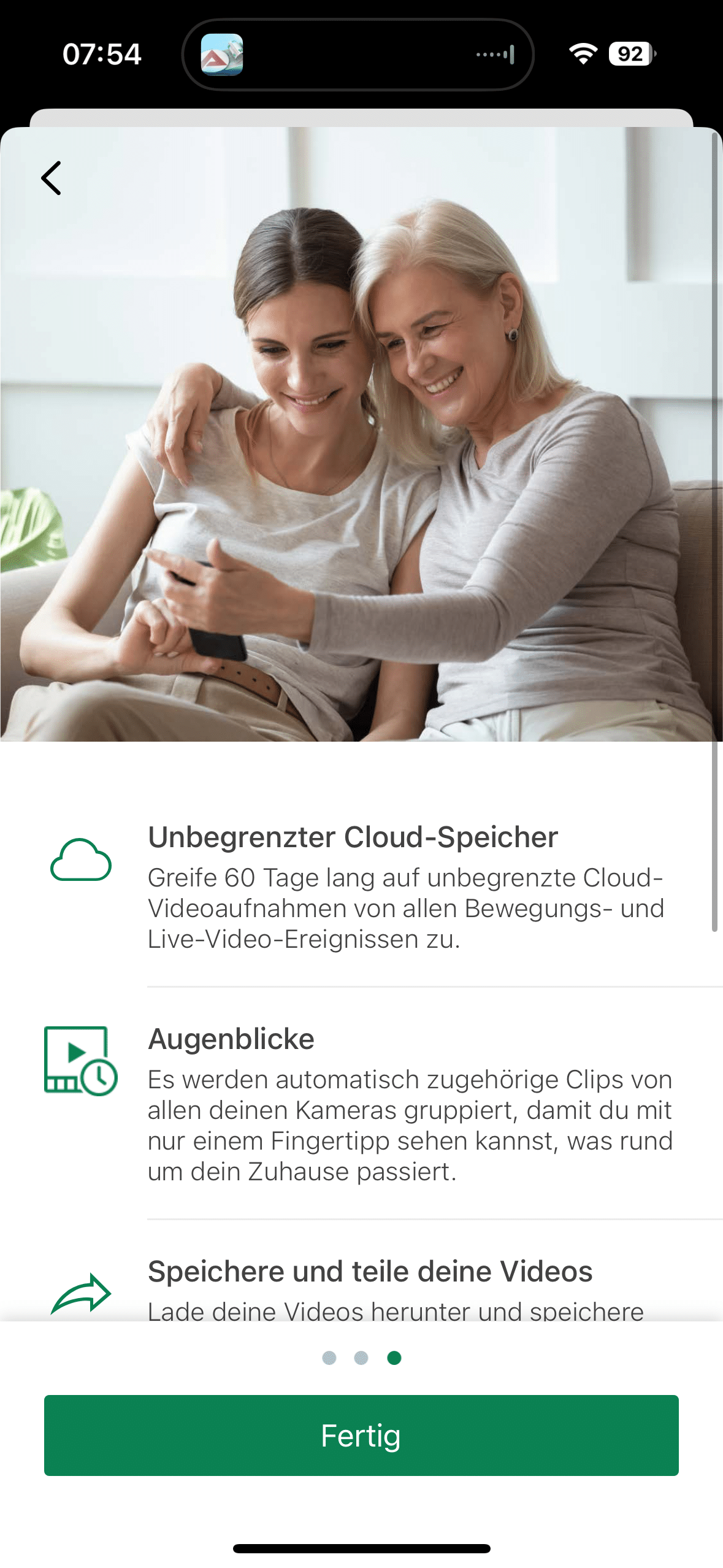
Users who want to back up their recordings must therefore take out a paid cloud subscription. Blink offers various packages for this, starting at €3.00 per month for the basic plan. If you want to use not just one, but several devices, you can opt for the Plus subscription. This offers the maximum scope and costs €10.00 per month.

For households with several Blink devices, a Plus subscription that covers all cameras is therefore worthwhile. Similar to Ring, the subscription model not only includes cloud storage. Additional functions such as Smart Detection or motion summaries are also only available with the subscription. Without the corresponding package, live images can still be retrieved, but longer-term storage is not possible.
Conclusion
The second generation Blink Video Doorbell is a successful further development of its predecessor. The significantly improved field of view and higher resolution in particular take it to a new level. The simple installation, solid workmanship and weatherproof design make it an attractive choice for anyone looking for an uncomplicated and reliable video doorbell. On the other hand, there are limitations that you should be aware of. In practice, the battery life is likely to be well below the stated two years if many notifications are triggered or videos are recorded in high quality. In addition, Blink practically forces users to subscribe to the cloud if they want to save recordings and use other essential features.

The lack of an integrated chime in the house is also a disadvantage that can only be compensated for via Alexa devices or wired doorbells. The bottom line is that the Blink Video Doorbell Gen 2 offers very good value for money. It is particularly suitable for users who are already at home in the Blink ecosystem or who are looking for a simple and inexpensive solution to keep an eye on the entrance area at all times. However, those who value local storage, openness to other smart home ecosystems and free motion detection features should look at alternatives. Overall, however, the second generation makes a good impression and should be the right choice for many households.

VORTEILE
- Very good price-performance ratio
- Quick and easy installation
- Solid, weatherproof processing (IP-65)
- Significantly improved camera quality with 1440p
- Intuitive app operation with motion zones and two-way audio
- Good integration into the existing Blink ecosystem
NACHTEILE
- No local storage, cloud subscription almost unavoidable
- No integrated chime, only possible via Alexa or wiring
- Blink as a closed ecosystem
Fazit
The Blink Video Doorbell (Gen 2) offers a solid camera and simple operation at a fair price, but requires compromises in terms of memory and battery life and comes with a closed ecosystem.


This review of the Blink Video Doorbell (Gen 2) shows that it offers a solid upgrade with sharper image quality a wide field of view and an easy setup process. Its weatherproof build and affordable price make it appealing though the reliance on a paid cloud subscription for storage and missing indoor chime option could be drawbacks for some users. Overall it delivers good value for budget friendly smart home security.