Bose is getting serious: after releasing the QuietComfort Ultra (2nd gen) earbuds in August, one of the best in-ear headphones currently available, the over-ear model will follow just one month later. And on paper, they are also significantly better, with the manufacturer promising even better sound, more precise ANC and modern technology. Does this make the Bose QuietComfort Ultra (2nd gen.) the best ANC headphones currently available? Our test reveals more.
Technical data
| The product | QuietComfort Ultra (2nd gen.) |
| Design | Over-ear (closed) |
| Bluetooth version | 5.4 |
| Bluetooth codecs | AAC, SBC |
| Maximum range | 12 meters |
| Battery life | Up to 30 hours (with ANC); Up to 40 hours (without ANC) |
| Driver | Dynamic |
| Connectivity | Bluetooth; 2.5 mm jack; USB-C |
| weight | 250 g |
| Special features | Wearer detection; Spatial audio; Multipoint; Foldable design |
| Price | € 449.95 * |
Bose QuietComfort Ultra (2nd gen.) test: Familiar design, but refined
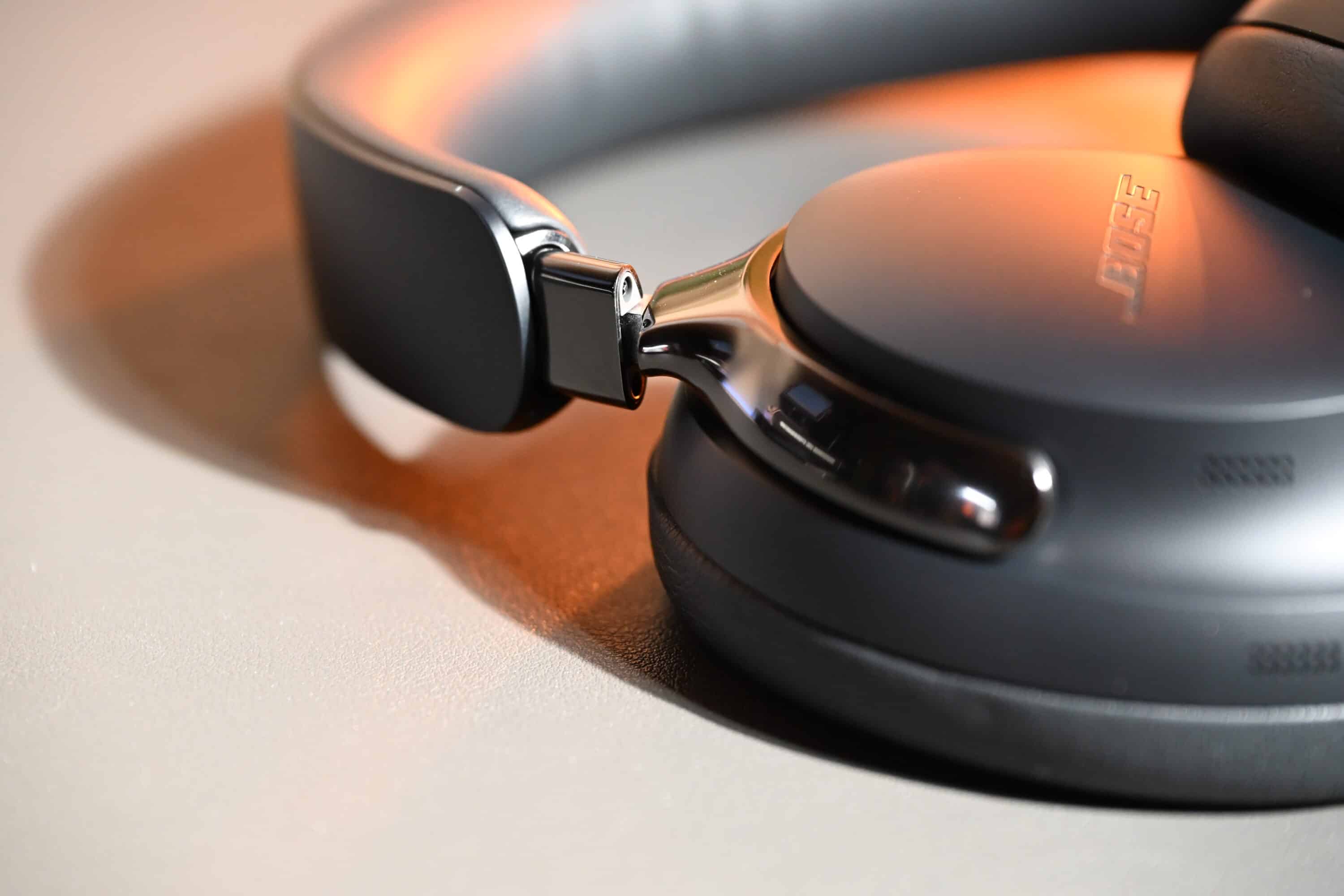
The 2nd generation Bose QuietComfort Ultra headphones follow a modern, yet discreetly classic over-ear design that is strongly reminiscent of its predecessors. Nevertheless, the over-ears are visually refined and have improved details: the combination of matt, high-quality plastic and polished metal accents on the connectors creates a robust yet elegant impression. The ear cups are made of soft imitation leather, which is comfortable to wear even for long hours and is also adaptable to comfortably accommodate different head shapes.

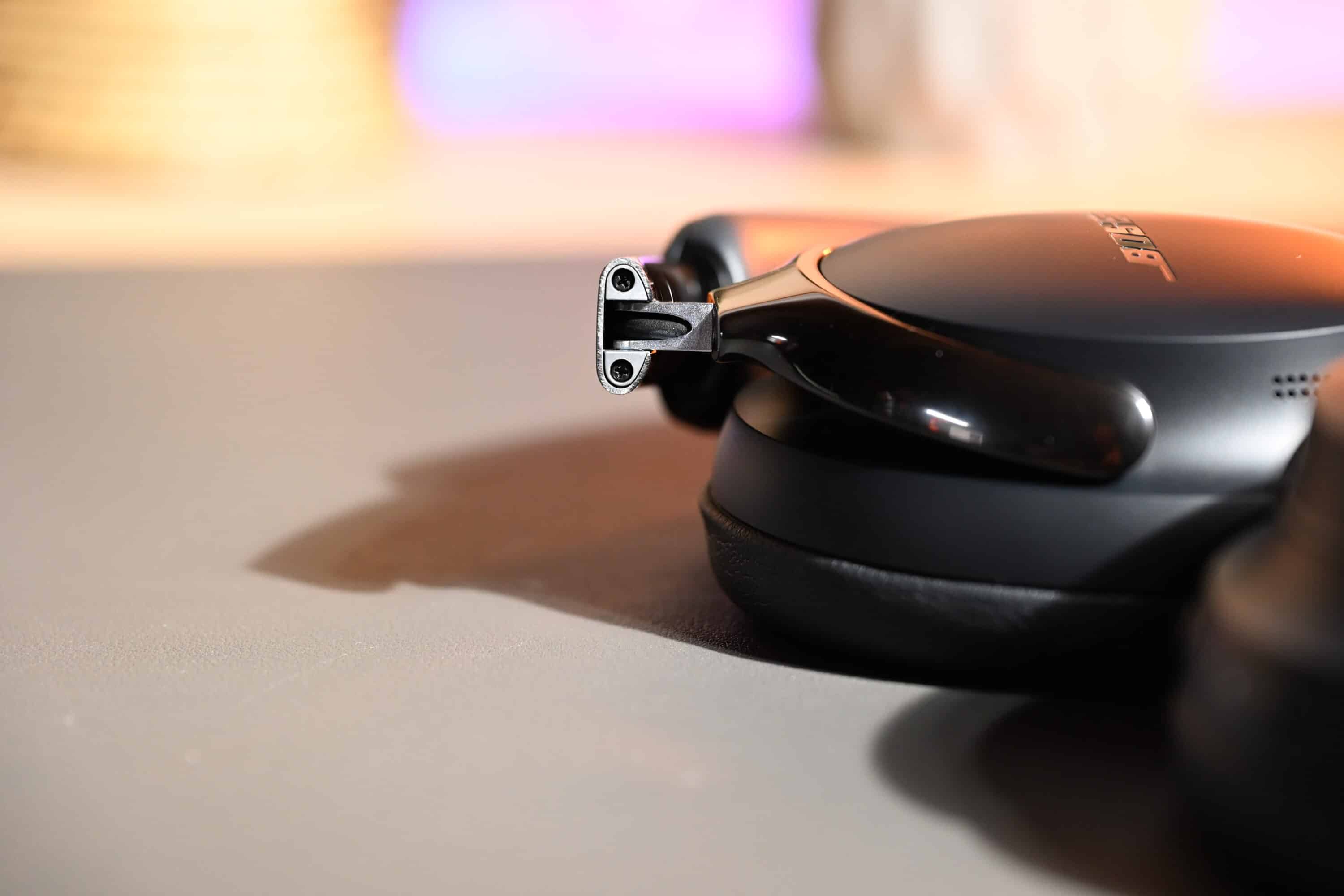
The headband has thick foam padding and is lined on the inside with a non-slip material to provide a secure grip even during prolonged use. The entire construction weighs a moderate 250 grams, which makes the Bose QuietComfort Ultra 2 significantly lighter than many of its competitors and also allows for longer periods of wear without creating uncomfortable pressure. The joint of the ear cups offers a 90-degree rotation for flat folding, allowing the headphones to be stowed compactly in the robust hard case.

The details impress with clean gaps and excellent workmanship. A slight metallic sheen on the joints lightens up the design, while the matt plastic hardly shows any fingerprints. The overall finish is very durable and of high quality, which justifies the high price of around 500 euros. Small ergonomic details – such as the indicated grip edges on the ear cups for easier operation – are particularly pleasing.

Modern features
In terms of technology, the second generation of the Bose QuietComfort Ultra Headphones 2nd generation features a noticeable evolution in equipment. The headphones support Bluetooth 5.4, which improves stability and range, including aptX Adaptive codec for high-resolution audio transmission. In addition to the classic SBC and AAC codecs, this modern codec is also supported, although aptX Adaptive is only available for compatible Android devices.
A major advance is the USB-C connection, which also enables digital, lossless audio transmission (16 bit/48 kHz) for the first time – a feature that audiophile users are likely to welcome. The headphones can also be used conventionally via a 2.5 mm cable.
The active noise cancelling (ANC) has been further optimized to eliminate high-frequency and mid-frequency disturbing noises particularly effectively. Bose has opted for an AI-supported adaptive ANC system here, which adapts individually to the shape of the ear and environment using the CustomTune function. In practice, this results in significantly improved noise isolation compared to the first generation. The “Still” and “Motion” functions also enable automatic adjustment of the ANC depending on the user’s activity level.
A special feature is the spatial audio with optional head tracking, which creates a three-dimensional spatial impression. Although this technology is technically sophisticated, practical tests show that the quality and stability of this effect can vary from song to song and occasionally appears slightly delayed.

In addition to the headphones and the robust carrying case, the scope of delivery includes a high-quality, fabric-covered USB-C cable, a 2.5 mm audio cable with a lockable 3.5 mm plug adapter and a quick start guide. The hard case protects the headphones securely and can also be easily stowed away in a compact hand luggage bag.
Operation and app connection
The controls are well distributed and designed so that the user can control the most important functions with minimal effort. The central power button with multi-function for switching on/off and Bluetooth pairing is located on the left. A large, touch-sensitive strip dominates the right-hand side, which enables volume control by swiping, track changes by tapping and ANC mode changes by pressing and holding.
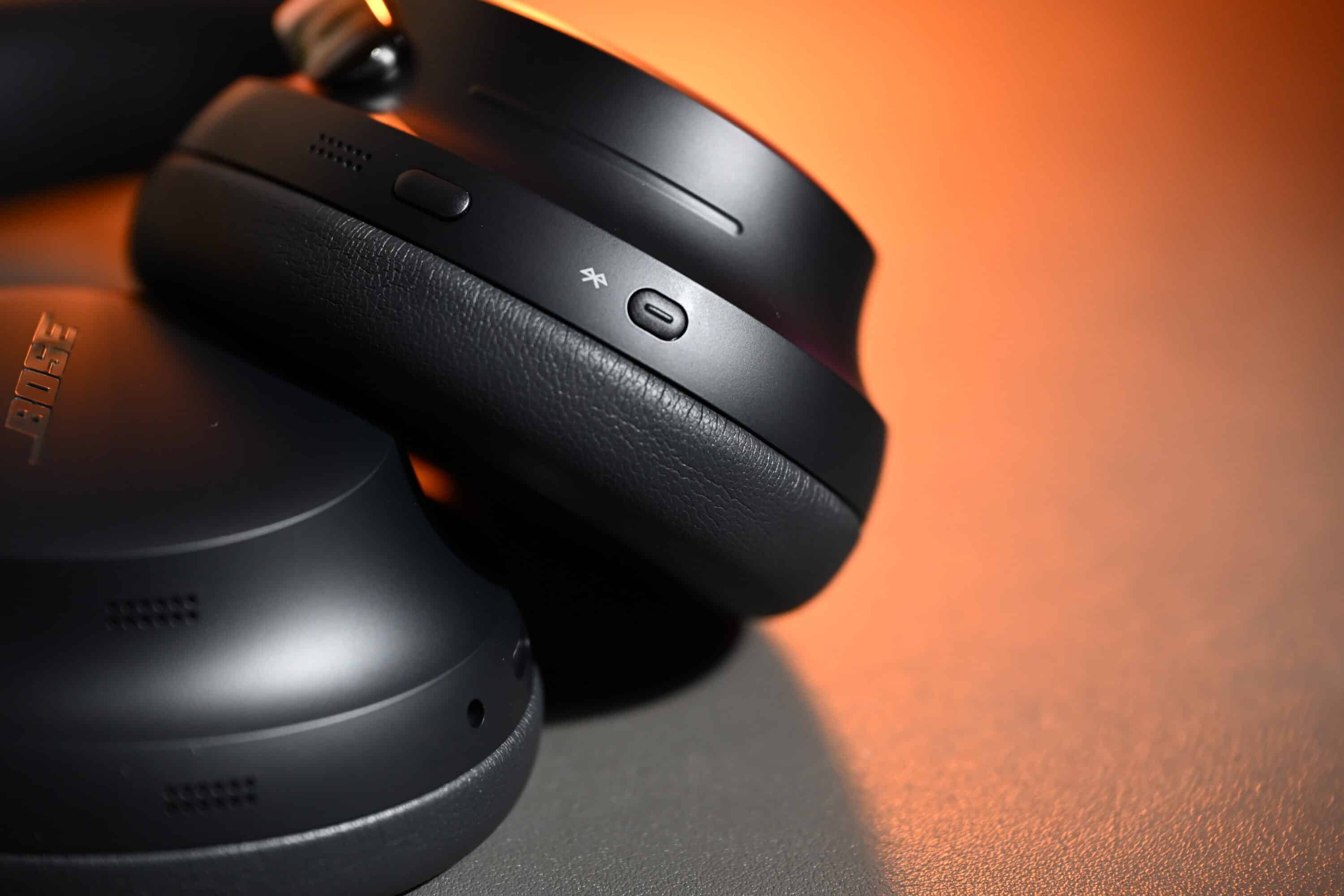
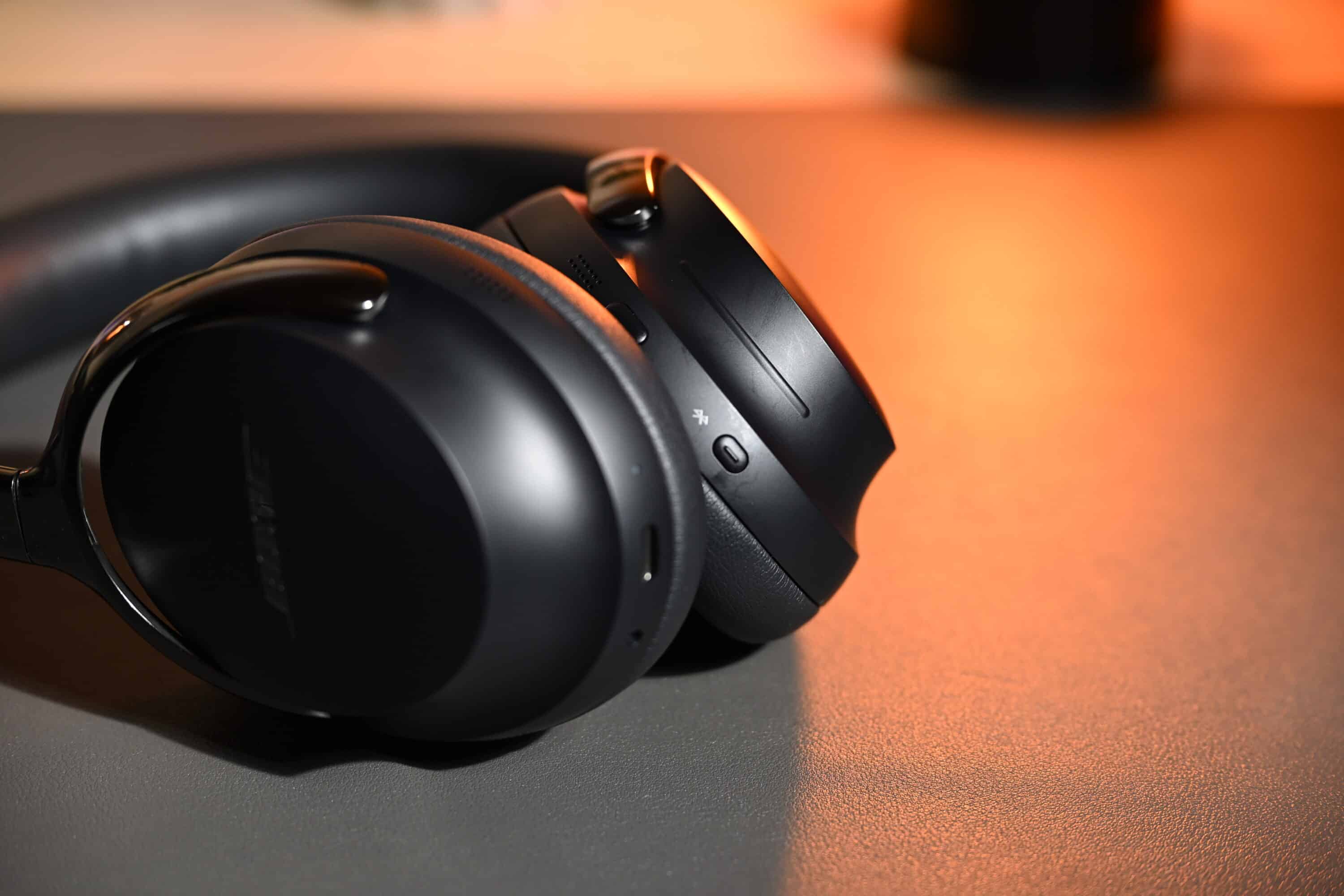
The input surface is well tactilely positioned and responds precisely. The small size of the buttons takes some getting used to, but commands work reliably after a little practice. The touch control can be switched off via the associated Bose Music app, which prevents unintentional triggering.
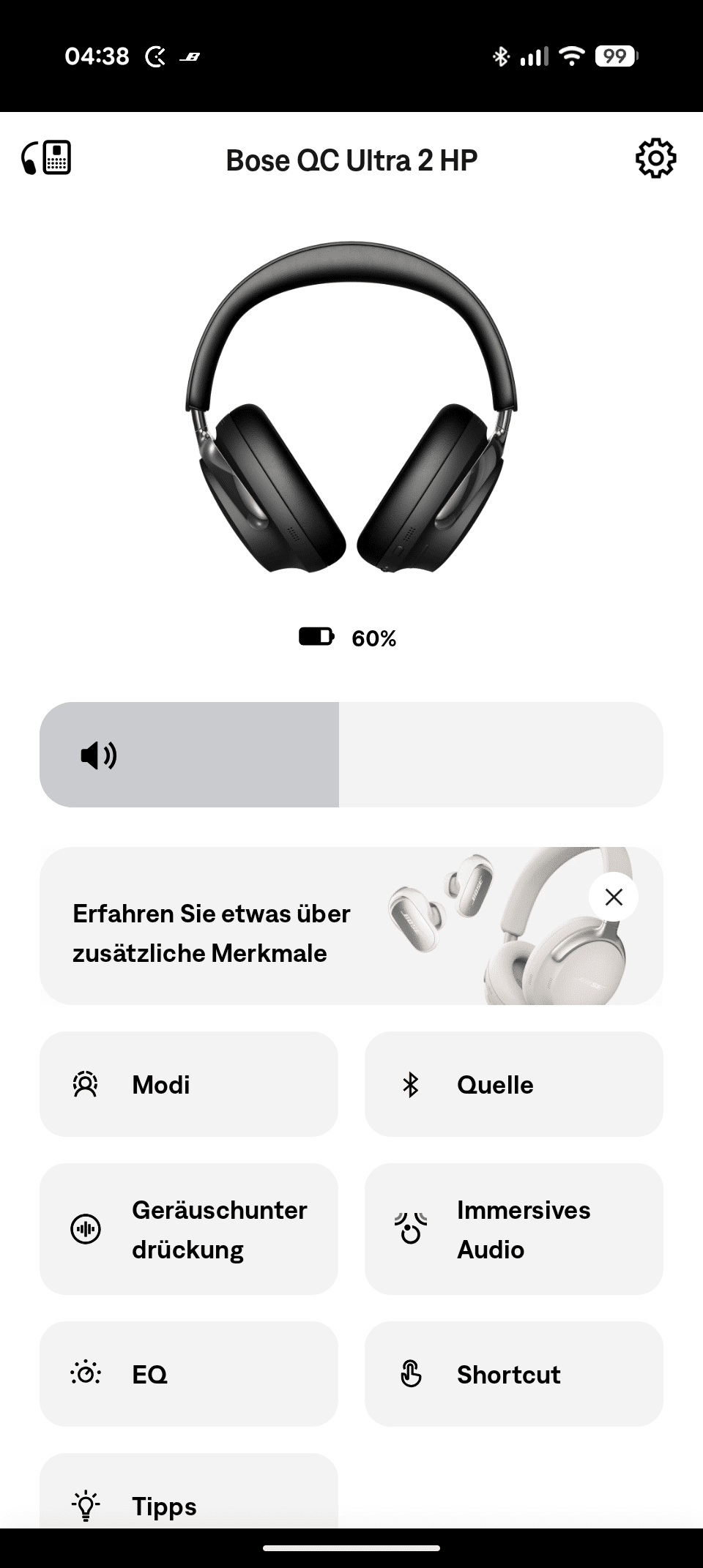
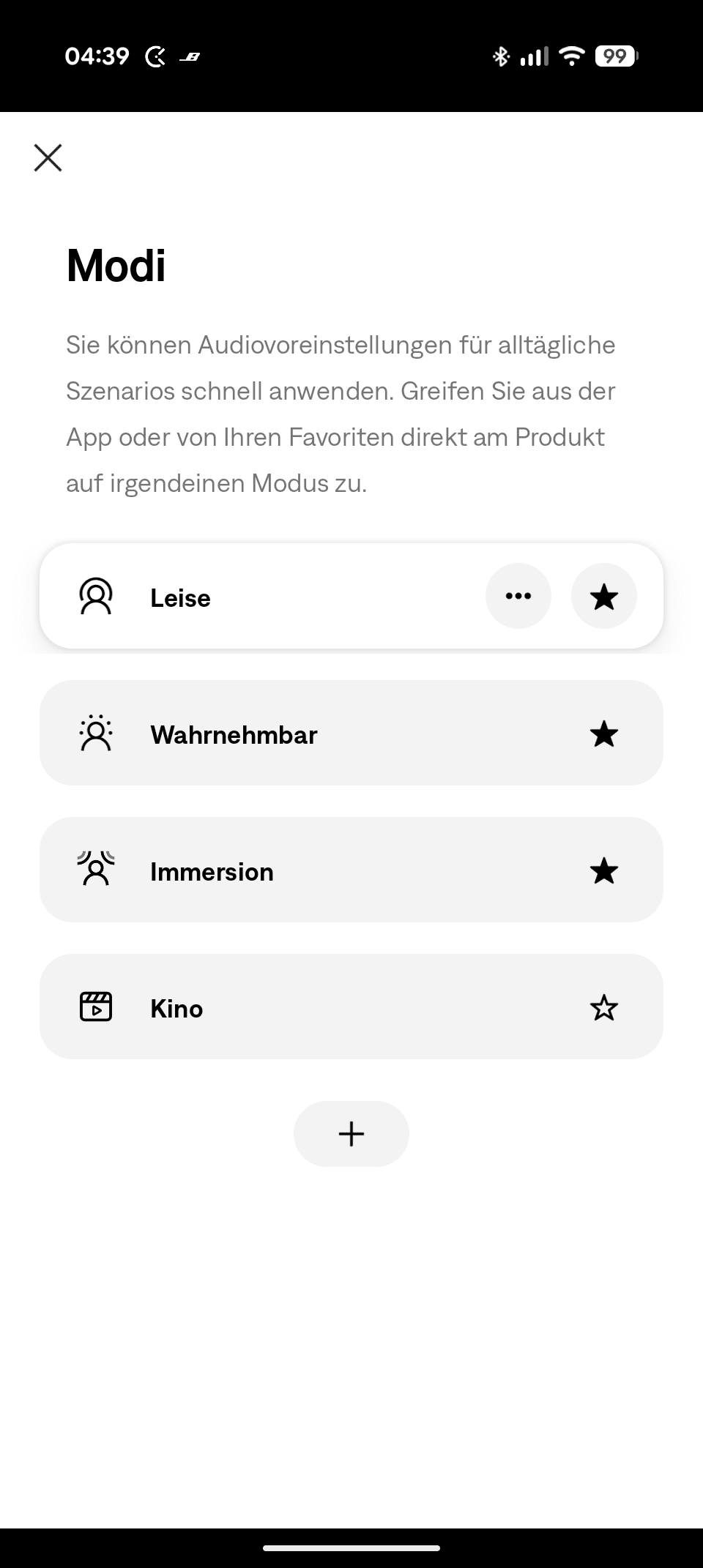
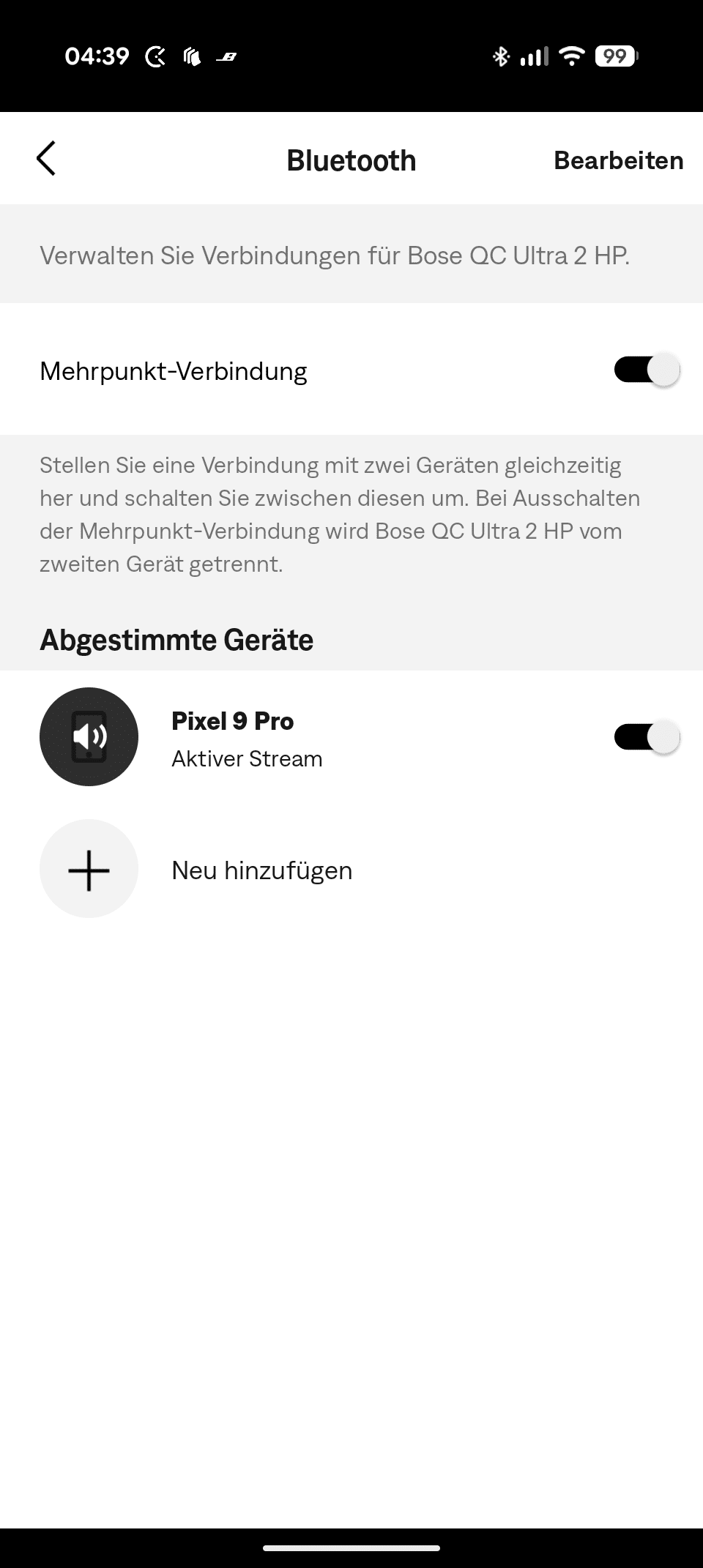
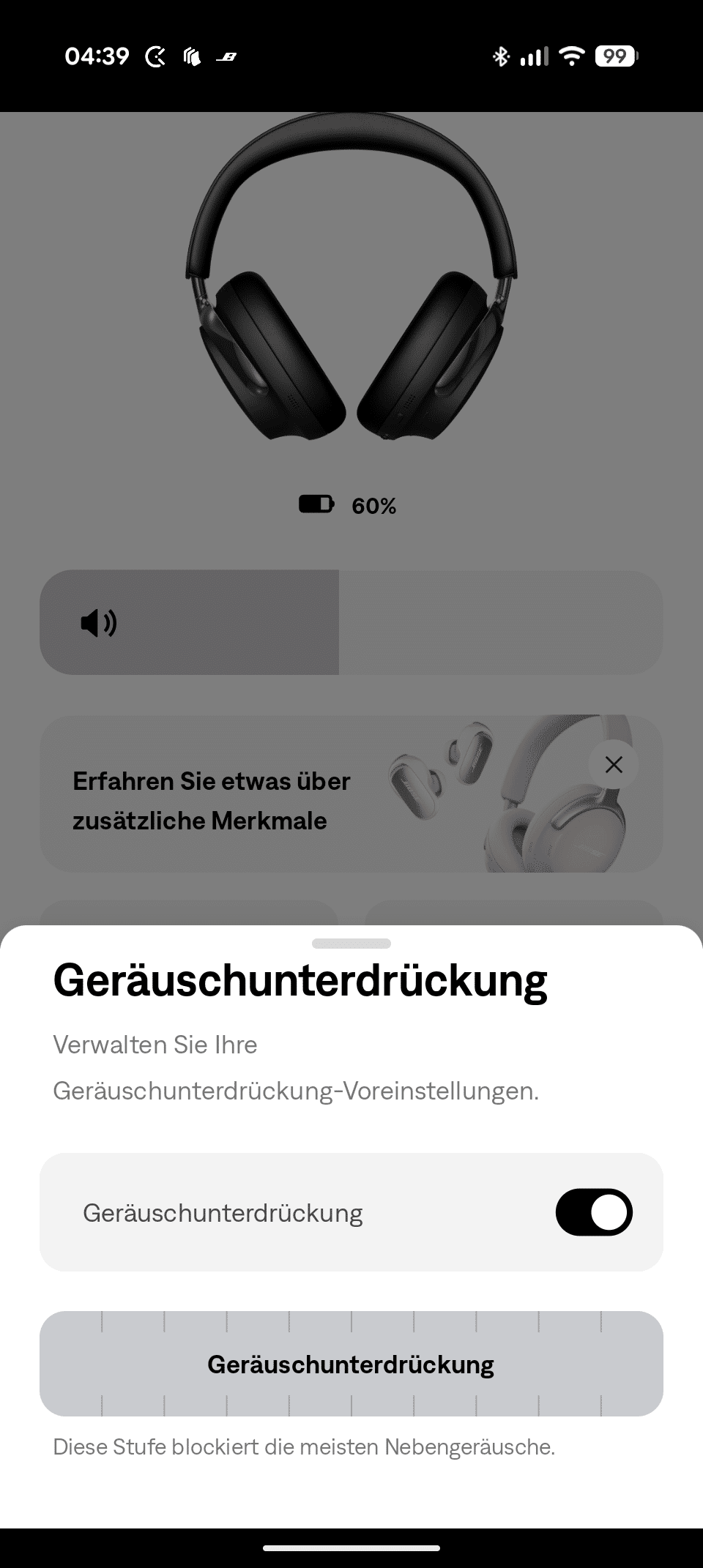
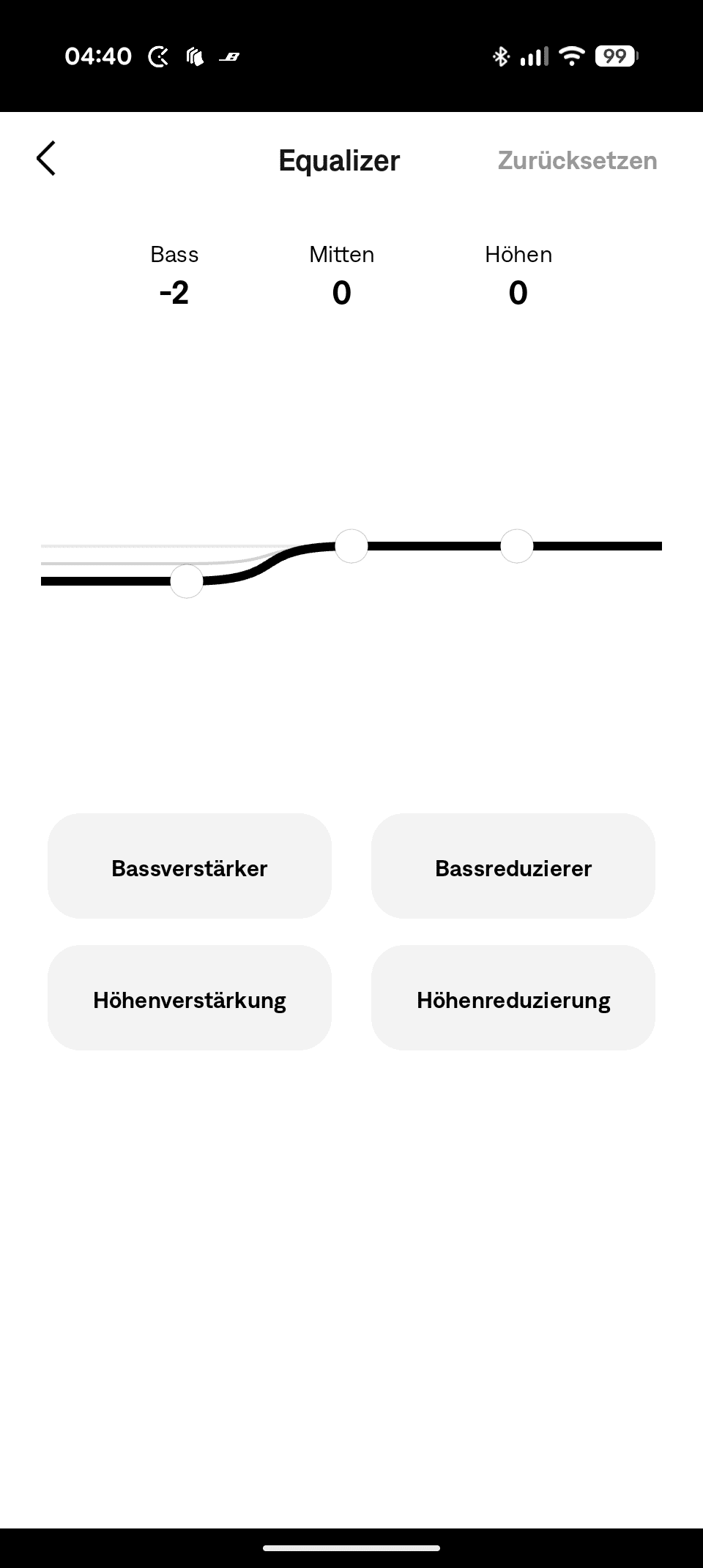
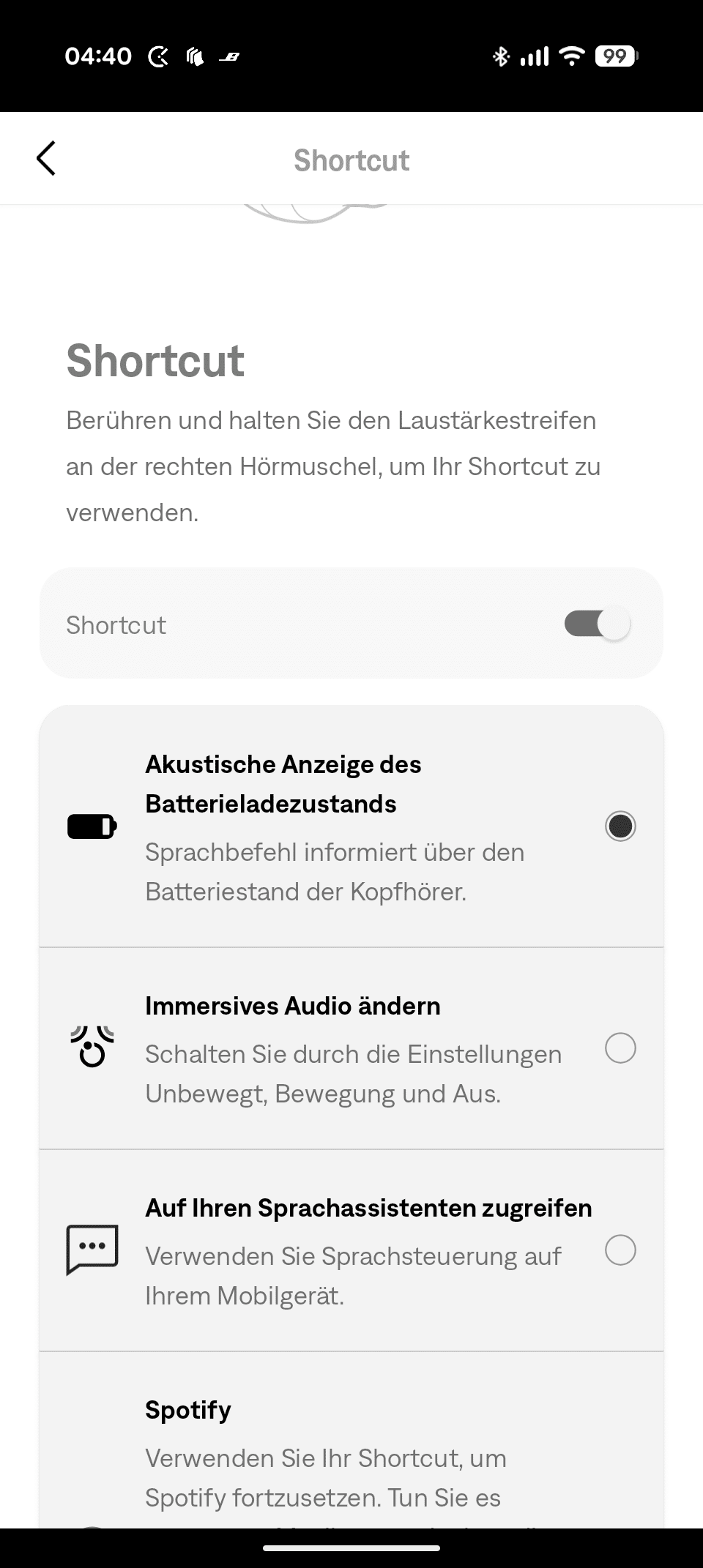
The app itself offers a clear user interface for setting different ANC levels (high, medium, low, off), spatial audio with head tracking, equalizer (3 bands with presets) and the configuration of shortcut functions on the touch surfaces. Firmware updates are loaded automatically. The Bluetooth multipoint connection facilitates seamless switching between two paired devices, such as a smartphone and notebook.
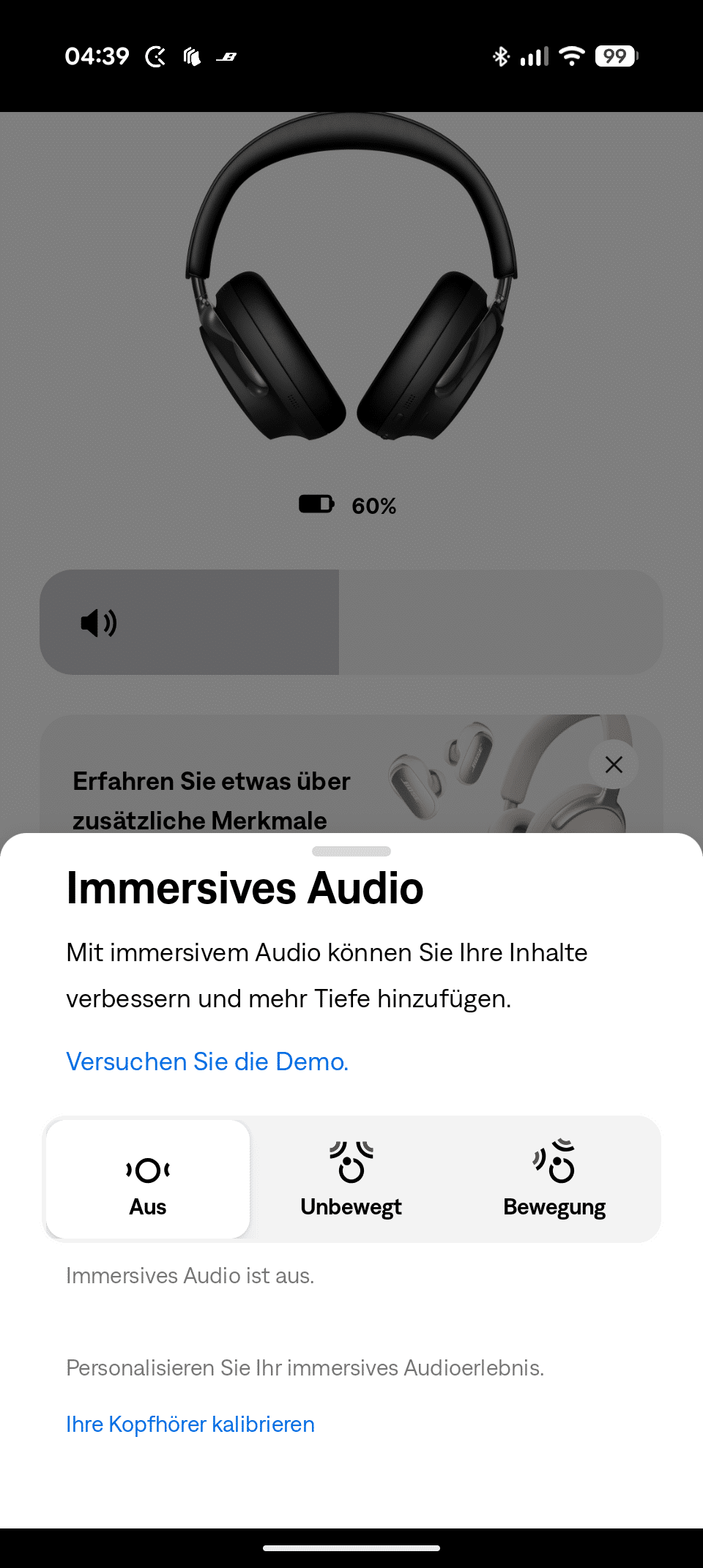
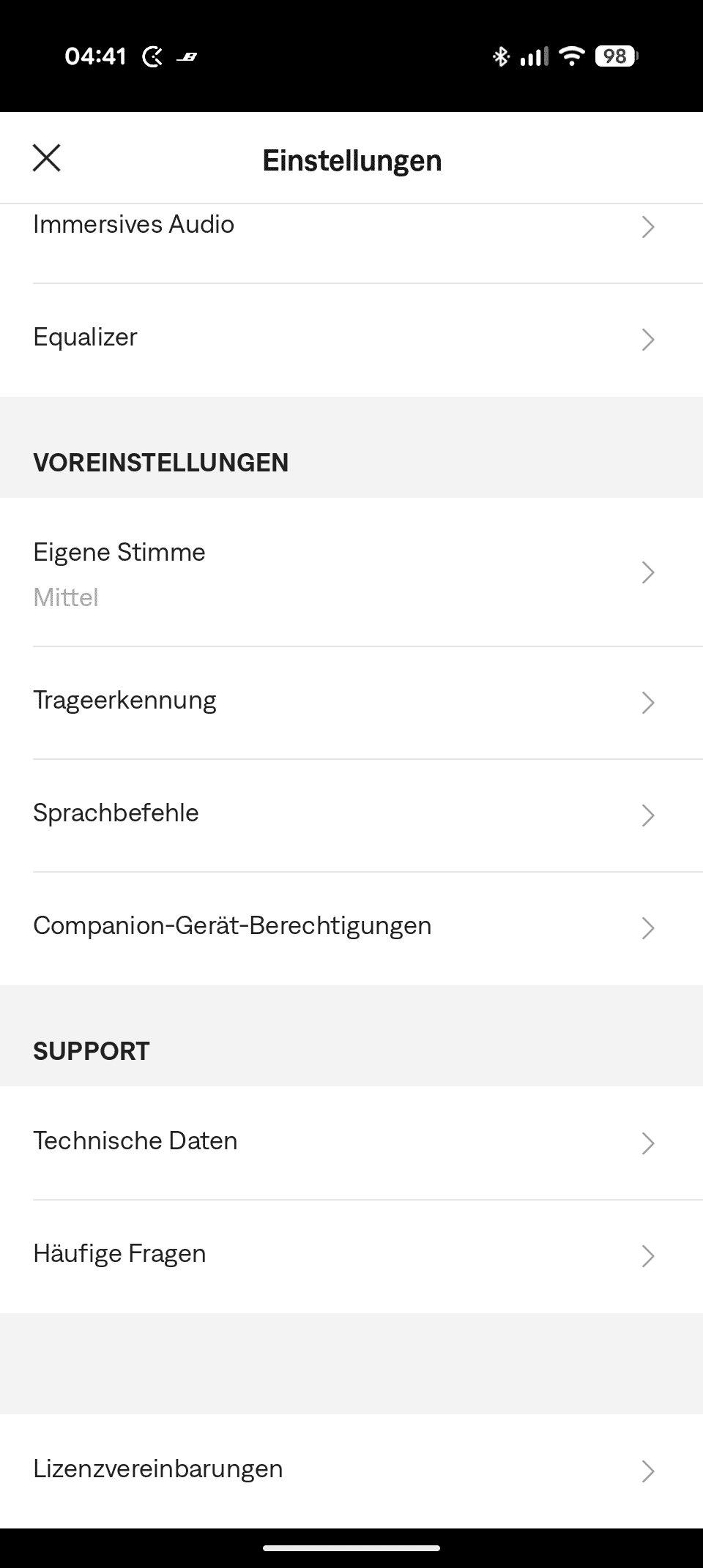
Minor limitations include the lack of comfort functions such as automatic pause in transparency mode or voice control for ANC. Nevertheless, the app and controls are solid, stable and very functional in practice
Battery life of the Bose QuietComfort Ultra (2nd gen.)
The battery life of the Bose QuietComfort Ultra Headphones 2nd Gen. has been increased from 24 to up to 30 hours in ANC mode compared to its predecessor. This is a good value for an ANC flagship, which is easily sufficient both at work and when traveling. It takes around 3 hours to fully charge the battery, with a quick-charging function making a 15-minute recharge sufficient to ensure around 2.5 hours of music playback.

An important point is that the headphones must also be switched on in wired mode, which drains the battery. Pure passive use without a power supply is not possible. The battery indicator is shown via an LED on the ear cup and synchronizes with the Bose Music app, which displays the battery level precisely.
Compared to competitors such as the Sony WH-1000XM6 (our test) or Apple AirPods Max, Bose is positioned in the upper midfield with a battery life of 30 hours, but there are undoubtedly headphones that last noticeably longer.
Audio quality, ANC and microphones
The sound signature of the Bose QuietComfort Ultra 2 has changed little from the first generation, which is understandable given the already very strong sound base. And yet the Ultra 2nd gen are much more nuanced and detailed.
The overall sound is warm, balanced and suitable for many genres of music. The bass is powerful, precise and contoured, delivering a powerful foundation without overemphasis. The mids are clear and natural, providing an authentic reproduction of voices and acoustic instruments in particular. Trebles sound brilliant and detailed without being overly intrusive, although some users may find them a little too present or sharp.

The stereo imaging is excellent, with good spatial resolution and clear separation of individual instruments. Listeners benefit from the clean separation and differentiated dynamics, especially in demanding pieces with many layers of instruments, which ensures a pleasantly lively musical image.
In terms of sound, the Bose QuietComfort Ultra (2nd gen.) are right up there with the best. However, the competition from Bowers & Wilkins in particular sounds noticeably livelier and more dynamic, while the Sennheiser Momentum 4 are also (slightly) ahead in terms of sound.
Active Noise Cancelling (ANC)
The ANC system is one of the best on the market and has been further improved compared to the first generation. The suppression of high-frequency, stressful noise is particularly effective, ensuring a quieter listening environment. Moderate mid frequencies are also reliably absorbed. The effect is clearly noticeable in the office, train or airplane and creates a kind of acoustic bubble that keeps out very unpleasant noises. This means that Bose can even surpass the ANC performance of the Sony WH-1000XM6 and Apple AirPods Max and currently offers the best ANC on the market.

The transparency mode basically works well, but the transmission of ambient noise is slightly distorted – voices appear somewhat muffled and a clear, albeit low, background noise is audible. The function can be used well in practice, but cannot quite keep up with market-leading models.
Microphones
The microphones are very good for Bluetooth over-ears and enable clear voice transmissions. Even with loud ambient noise, voices are transmitted clearly and intelligibly, making calls more professional and pleasant. The voice quality benefits from improved noise suppression during phone calls. This telephone quality sets the Bose headphones apart from many competitors, which often have problems with wind or street noise. Overall, good intelligibility and natural voice timbre are achieved.
Bose QuietComfort Ultra (2nd gen.) Review: Conclusion
Bull’s eye, the second. After the excellent earbuds, the Bose QuietComfort Ultra (2nd gen.) headphones are also convincing across the board and surpass the already excellent manufacturer in all respects, even if the really important innovations are limited.
When it comes to ANC, no competitor can beat the Bose QC Ultra 2. You won’t get better isolation anywhere. But the over-ear headphones also have a lot to offer in terms of sound, even if it’s not quite enough for the top spot here. However, the price of around 500 euros is pretty steep and the battery life should be better.

VORTEILE
- Outstanding ANC
- Warm, vibrant sound
- Powerful microphones
- Wired playback
NACHTEILE
- Very expensive
- Average battery life
Fazit
Powerful sound, industry-leading ANC, meaningful improvements: The new Bose QuietComfort Ultra (2nd Gen.) are among the best ANC headphones on the market.