


Powerstations are no longer just used for camping. They are increasingly becoming a real alternative for emergency power and mobile energy supply. The DJI Power 2000 not only offers raw power, but also smart features and well thought-out modularity. Our test shows that DJI has learned from its experience with the Power 1000 and has created a system that sets new standards with the Power 2000. At the same time, it becomes clear why this power station is not for occasional users.
| Category | Specification |
|---|---|
| Battery capacity | 2,048 Wh (LFP, LiFePO4) |
| Output power | 3,000 W continuous |
| Charging cycles | ≥ 4,000 cycles up to 80% capacity (according to manufacturer’s specification) |
| Charging time | 0-100 % in approx. 75 minutes, 0-80 % in approx. 45 minutes (according to manufacturer’s specifications) |
| Weight | approx. 22 kg |
| Dimensions | 448 × 225 × 324 mm |
| AC connections | 4× Schuko |
| USB ports | 4× USB-C (2× 140 W, 2× 65 W), 4× USB-A |
| UPS function | Switching time approx. 0.01 s (10 ms) |
| Expansion | Up to 10 expansion batteries possible (max. 22.5 kWh total) |
First impression of the DJI Power 2000
The DJI Power 2000 comes in a plain cardboard box. No glossy unboxing and no show, but neatly packed and logically sorted. Everything is firmly in place.
When unpacking, the weight is immediately noticeable. It weighs 22 kilos and looks like the big sister of the Power 1000 Plus. The footprint is identical, only the height is significantly higher. DJI has thus doubled the capacity without needing more floor space. This is a real advantage in narrow vans or small storage niches.
When it comes to handling, the picture is mixed. The side handles are stable and well positioned, but you can still feel every kilo. If you move it often, you should at least use two hands and a steady stance.

Design and workmanship: Pragmatic instead of spectacular
Visually, the Power 2000 remains true to the typical DJI line. Anthracite gray, clear edges, functional and unagitated. It’s not spectacular, but it doesn’t have to be. What counts in the end is suitability for everyday use, and this is where DJI’s experience comes into its own.
The display is significantly larger than its predecessor and offers more information. The charge status, input and output power or estimated runtime are immediately recognizable without having to search for a long time. The controls are also logically arranged and easy to use.
There is nothing to complain about in terms of workmanship. Everything seems sturdy, well-fitting and well thought-out, and we couldn’t find any major weaknesses.
The connections are where things get exciting. On the front are four fully-fledged Schuko sockets, four USB-C ports with up to 140 W power, four USB-A ports for classic devices, two modular SDC ports and the charging input. At first glance, the Power 2000 appears to be generously equipped, and we will go into more detail later on about how versatile this combination actually is.

The SDC philosophy: modularity as a strength and weakness
With the Power 2000, DJI relies on a modular system with the proprietary SDC ports (Smart DC). These two connections on the front are the key to versatility, but also the crux of the matter.

The concept is clear: if you need more functions, you can expand the Power 2000 with suitable modules. These include the MPPT solar module, a car charger or classic 12 V sockets. If you can do without these extras, you save on costs. On the other hand, this also means that only the AC and USB outputs can be used without additional modules.

We tested the MPPT solar module. The handling is uncomplicated, it is simply plugged into one of the SDC ports and recognized immediately. With a 200-watt panel, we achieved the specified charging power in good conditions. When clouds rolled in, the power dropped as expected, but the system ran stably and without interruption.

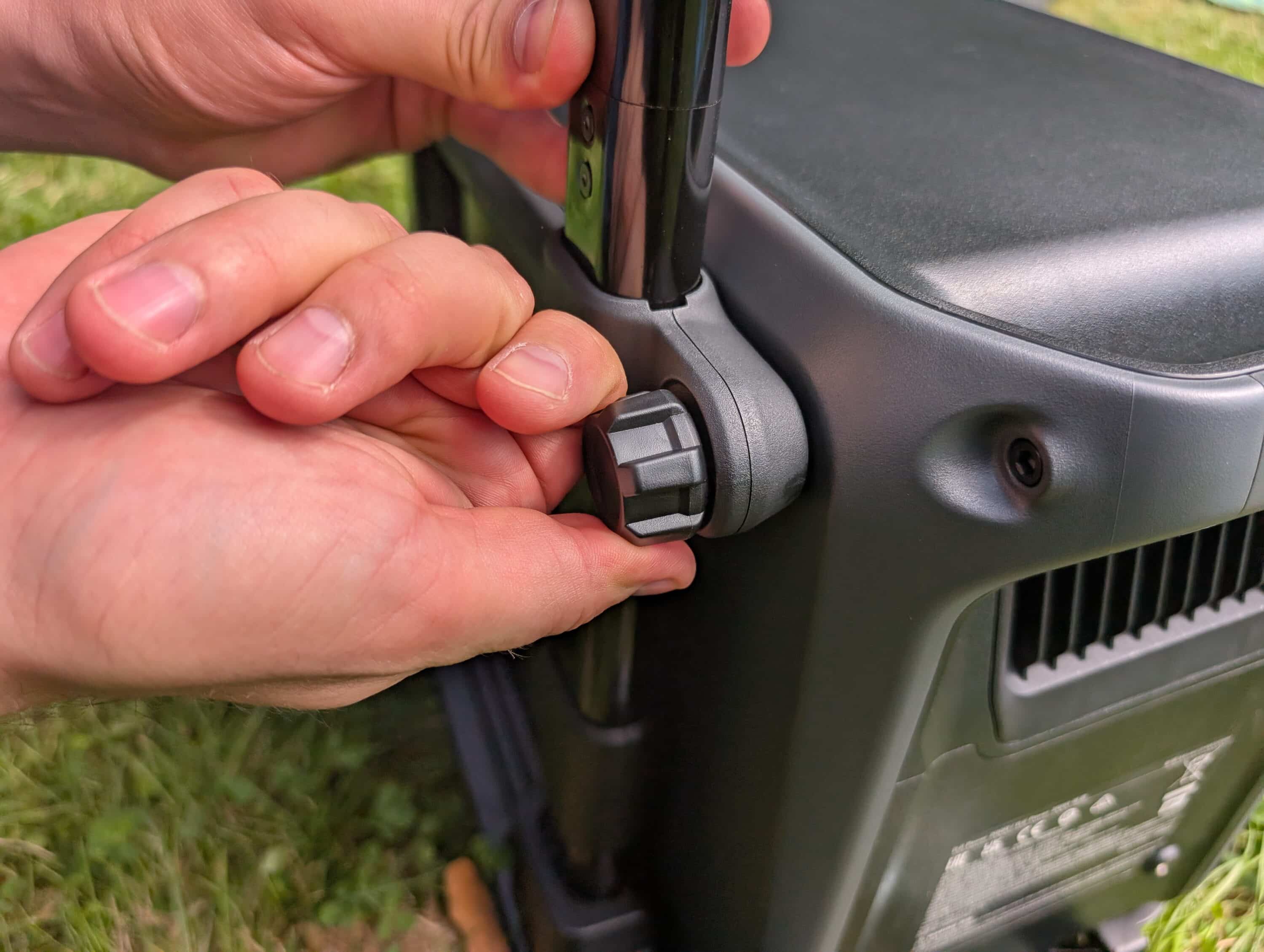
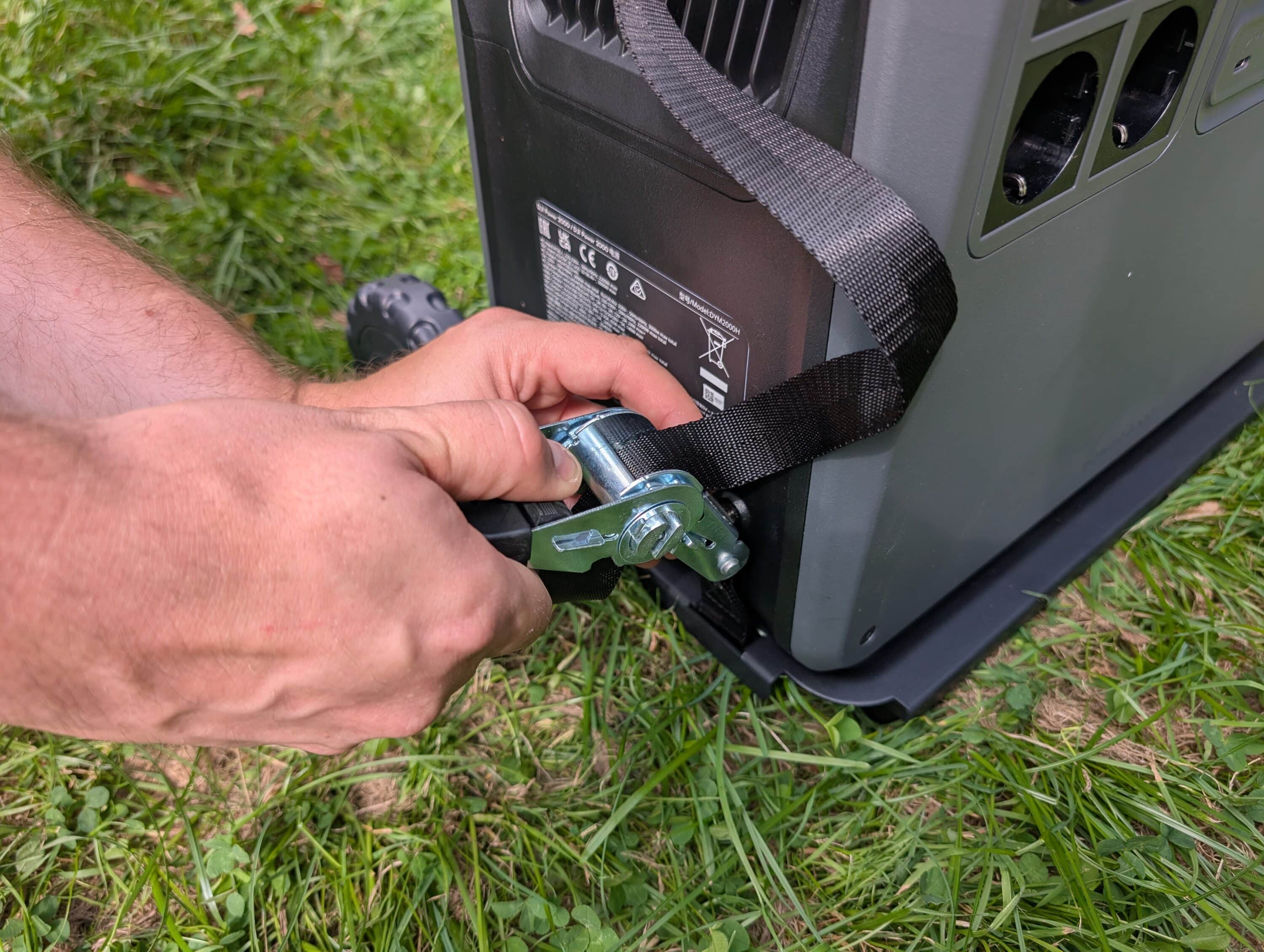
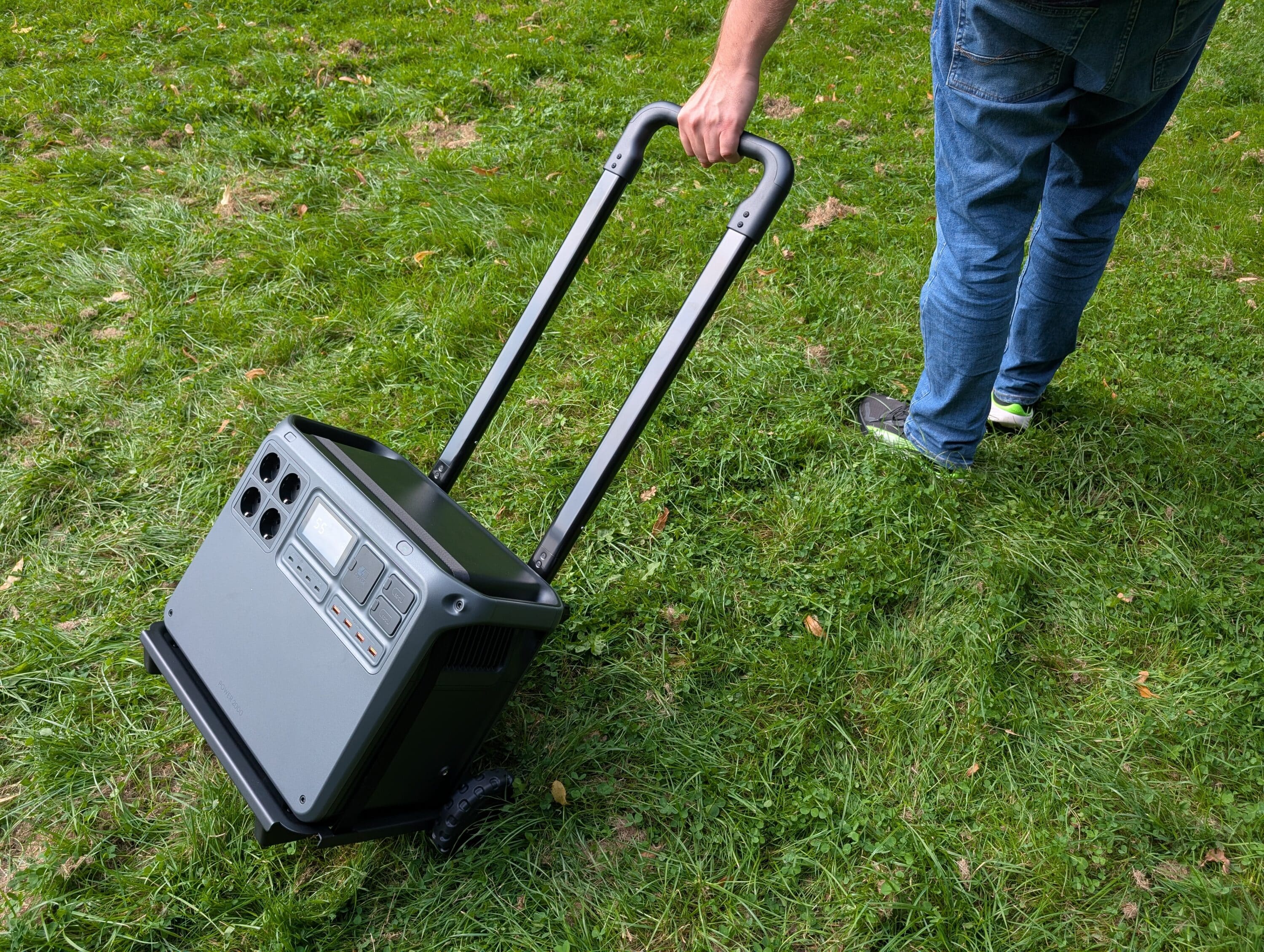
The optional hand truck is almost indispensable for transportation. The Power 2000 is pushed onto it and secured with a strap. This turns transportation from a feat of strength into a relaxed task. Without this aid, the weight quickly becomes a challenge, but with the hand truck everything remains manageable.
Loading times: Record-breakingly fast
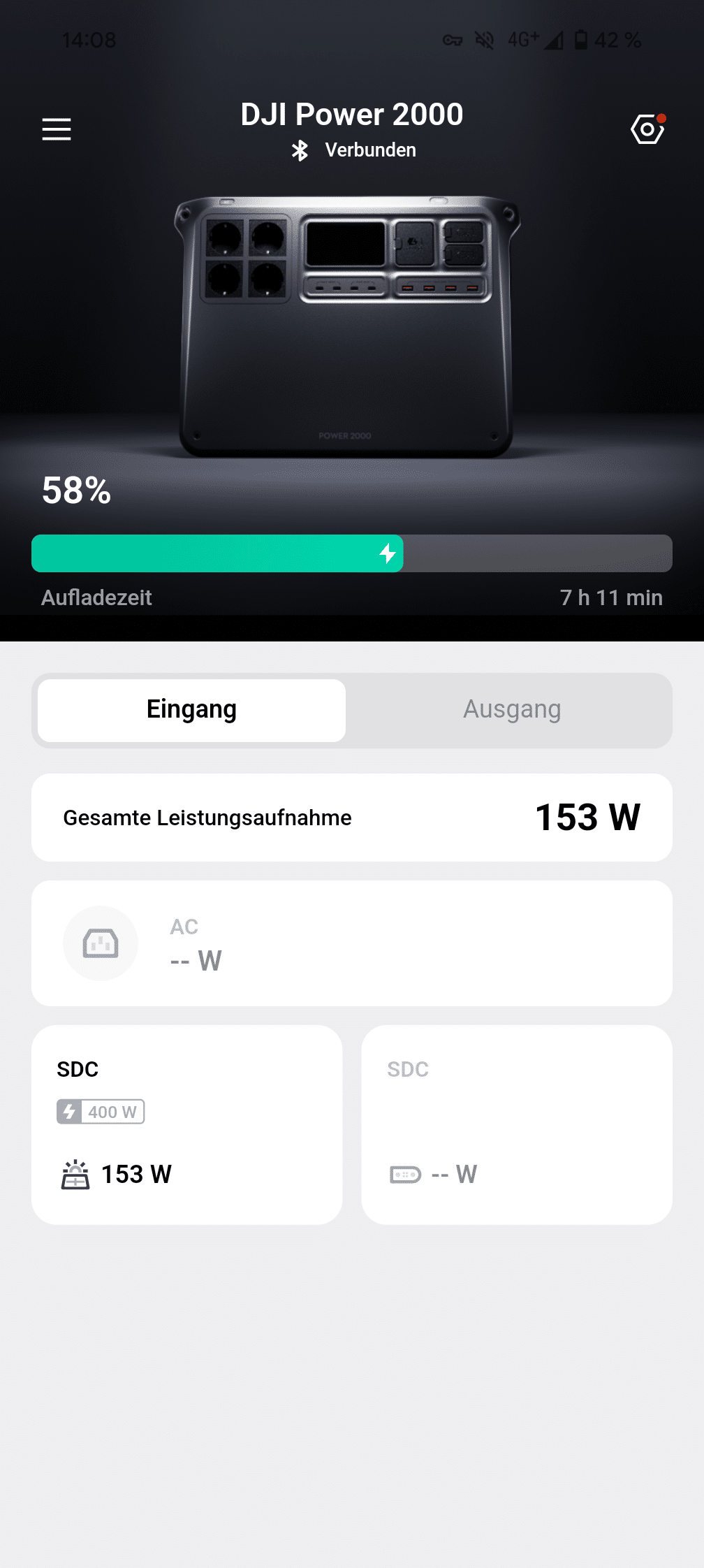
This is where the Power 2000 shows what it’s made of. It goes from 0 to 80 percent in around 45 minutes and is fully charged in around 75 to 90 minutes, depending on the conditions. In normal charging mode, the station draws around 1,200 watts from the socket and charges very quickly. If you need it even faster, switch on the “super recharge mode” in the DJI Home app or on the device itself. The input power then increases to almost 1,800 watts and the Power 2000 is ready for use again in well under two hours, even when completely empty. This is ideal if you only have a short time to charge, for example between two errands, while you are packing or before you set off.

The speed comes at a price. During fast charging, the housing becomes noticeably warm and the fans are audible, sometimes more, sometimes less, depending on the environment. Turbo is perfect for spontaneous recharging, but we recommend standard mode for everyday use. This protects the LiFePO₄ cells, the noise level is more pleasant and the overall service life remains at a good level.
Practical test: From toaster to hair dryer
In everyday use, the Power 2000 quickly shows what it can do. A toaster is not an issue, even if it briefly draws over 1,000 watts. With the kettle, the load continues to increase, but remains stable. Things get exciting with the hairdryer, which reaches the power limit depending on the setting. Here, the cooling system turns up audibly, but the output remains constant. This is perfect for short sessions, but for longer sessions or several powerful appliances at the same time, it is advisable to work in succession. Heating appliances such as electric heaters, large infrared radiators or powerful hotplates are typical candidates that are better operated individually.

It’s just as fun on the go. Charge the cooler via AC, camera batteries and drone controller in parallel, plus power banks on USB-C with 65 or 140 watts. At the festival, it can easily power the tent lighting, speakers and notebook at the same time without having to constantly check the display. In the evening on the balcony or in the garden, it’s just as relaxed. In short: there is plenty of reserve for typical household and leisure appliances, only with very power-hungry devices or when a lot needs to run at once does a little planning help.
The 3000 watt question: marketing or reality?
For Germany, it is clear what comes out of the socket: The Power 2000 supplies a normal 230 volts with Schuko at its AC sockets. This means that appliances behave in the same way as they do at home. No adapter tricks, no voltage acrobatics.
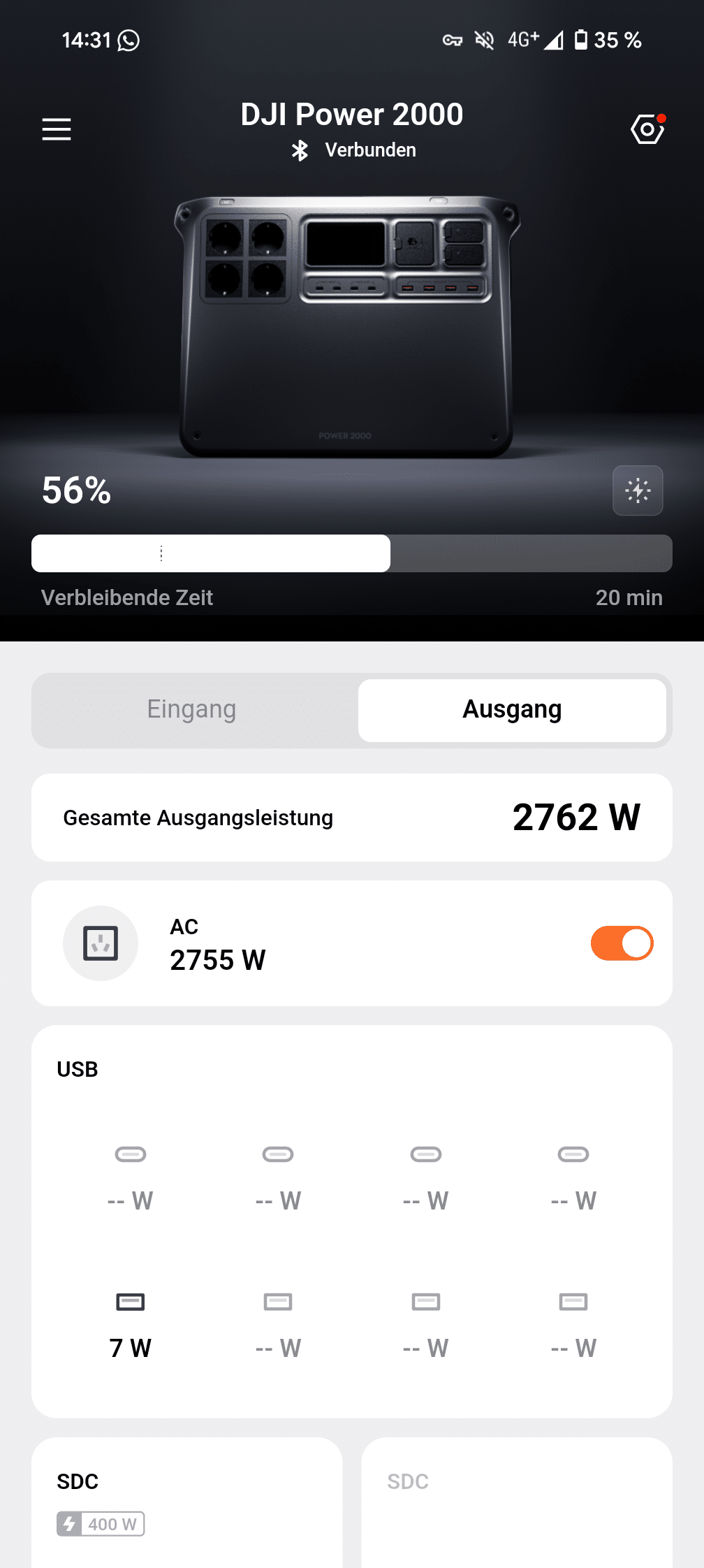
The advertised 3000 watts of continuous power is more than just a nice value. In our measurements, the station maintained a stable 2800 to 2900 watts over a longer period of time. As soon as we were permanently above this, it continued to run briefly, announced the limit and regulated down in a controlled manner before switching off.
This reserve is worth its weight in gold in everyday life. Many appliances draw significantly more than the rated power when they are switched on. The Power 2000 reliably absorbs such short peaks without switching off immediately. For typical 230-volt consumers, this means solid performance with noticeable room for improvement.
DJI Home App: Smart energy management
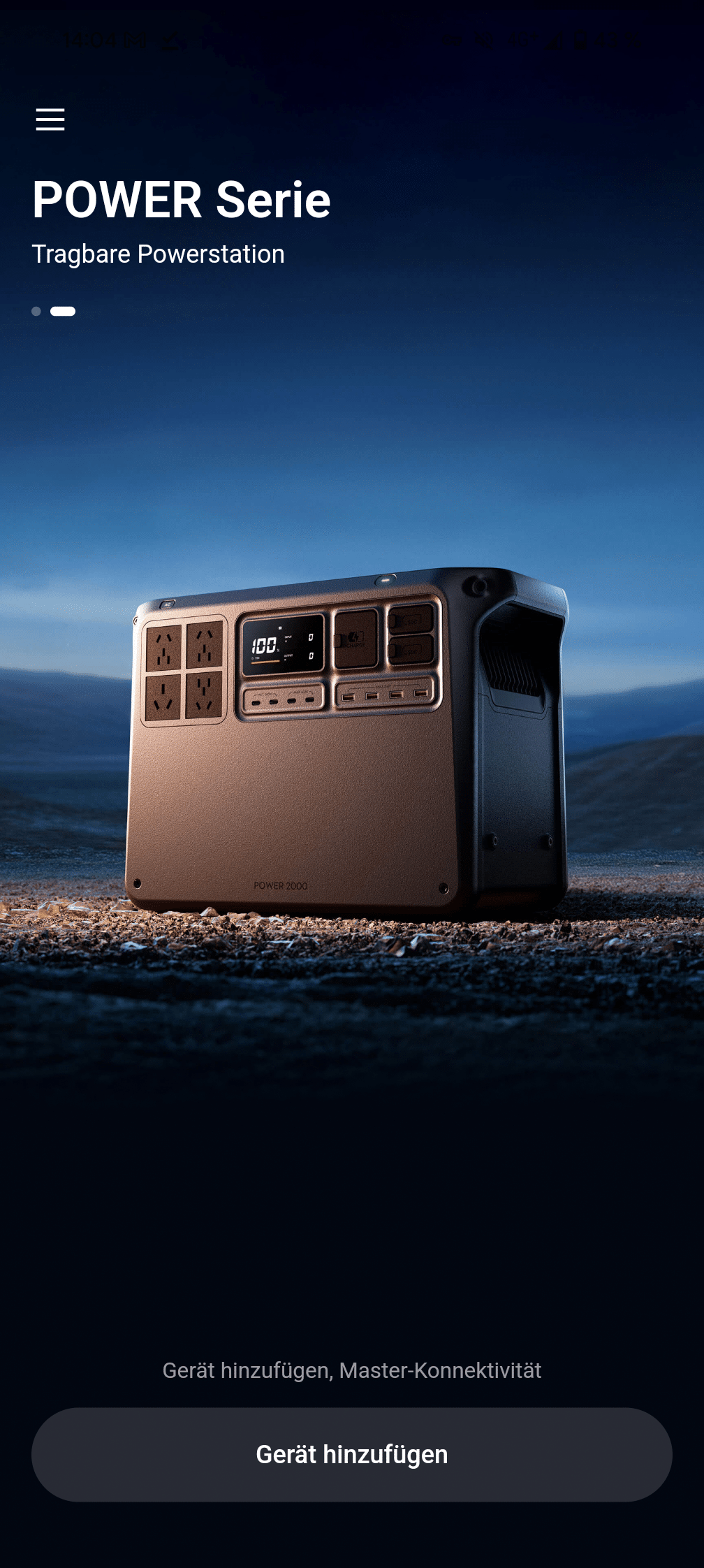
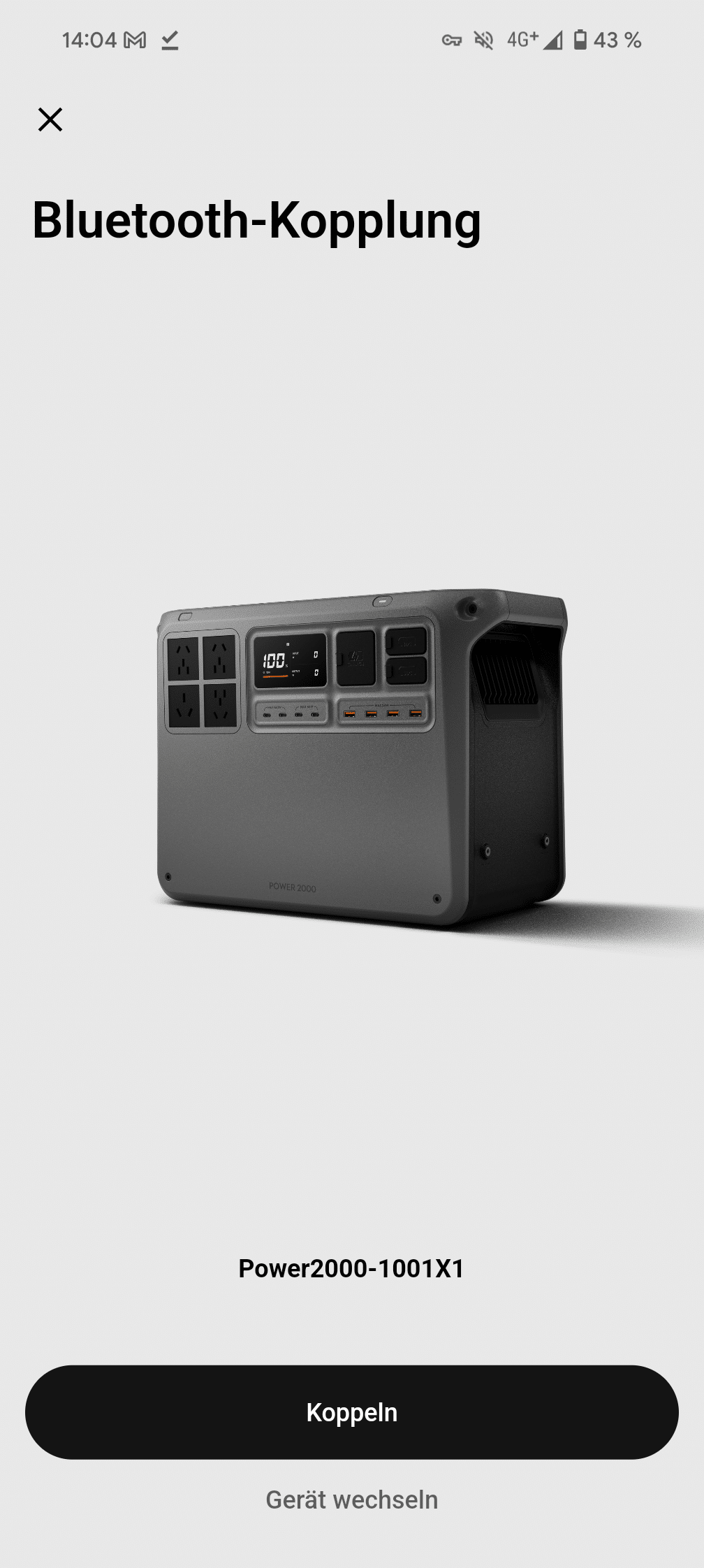
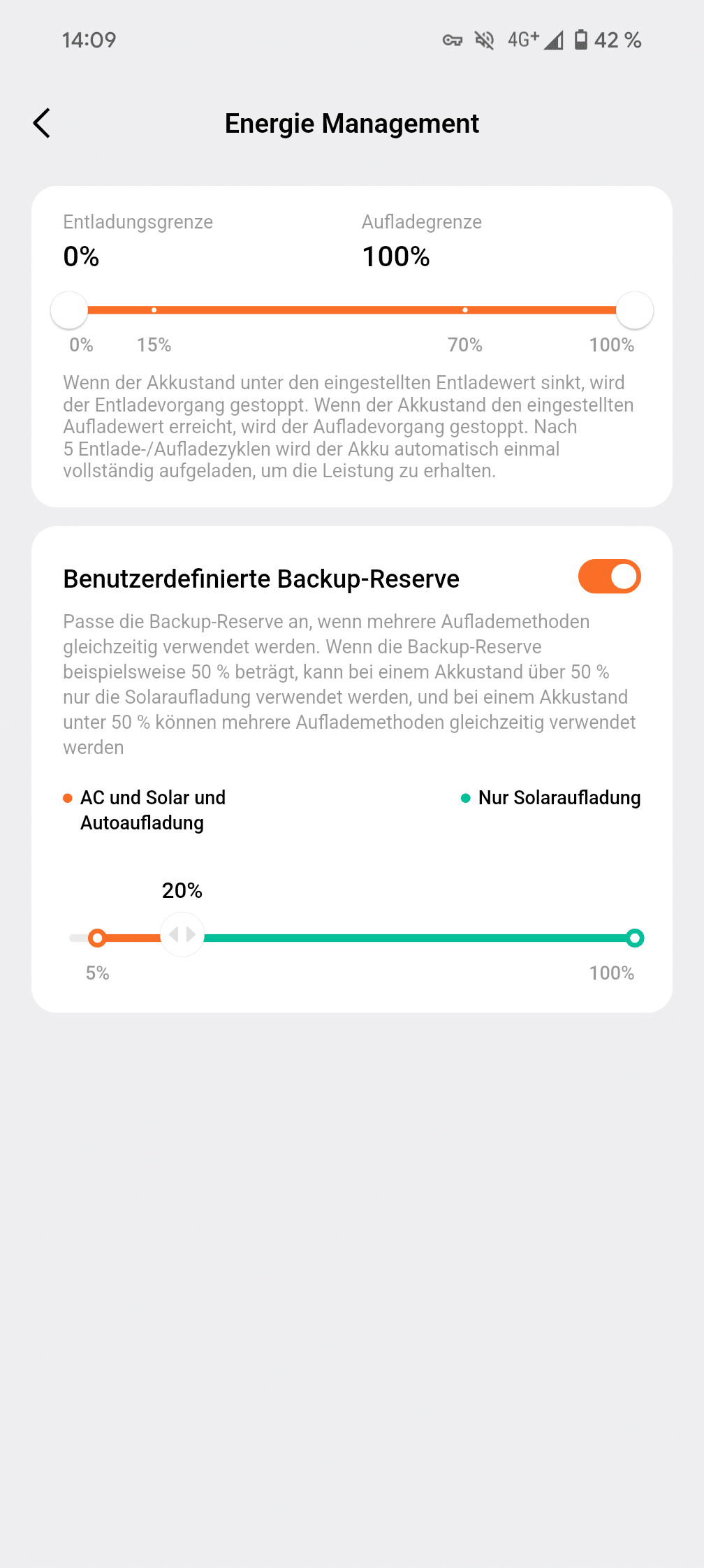
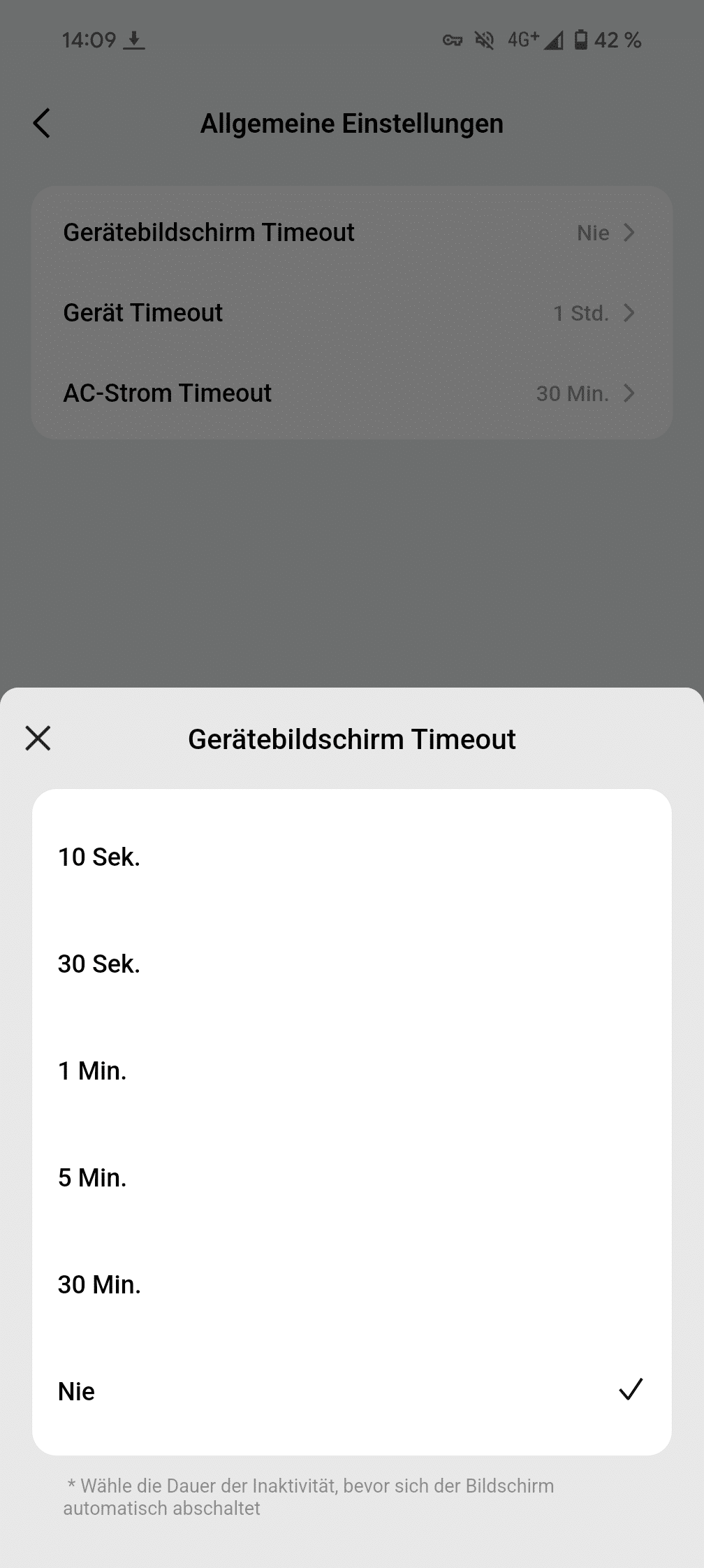
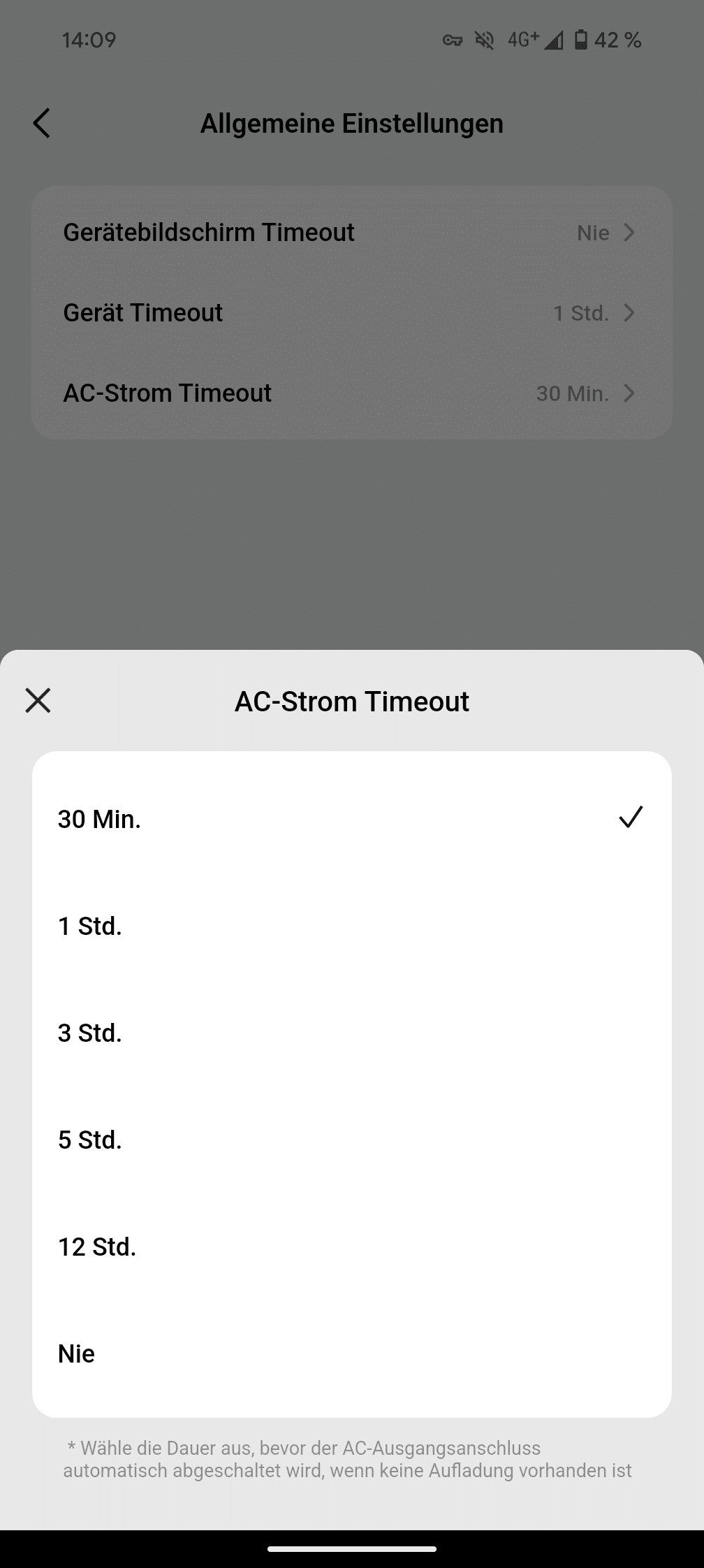
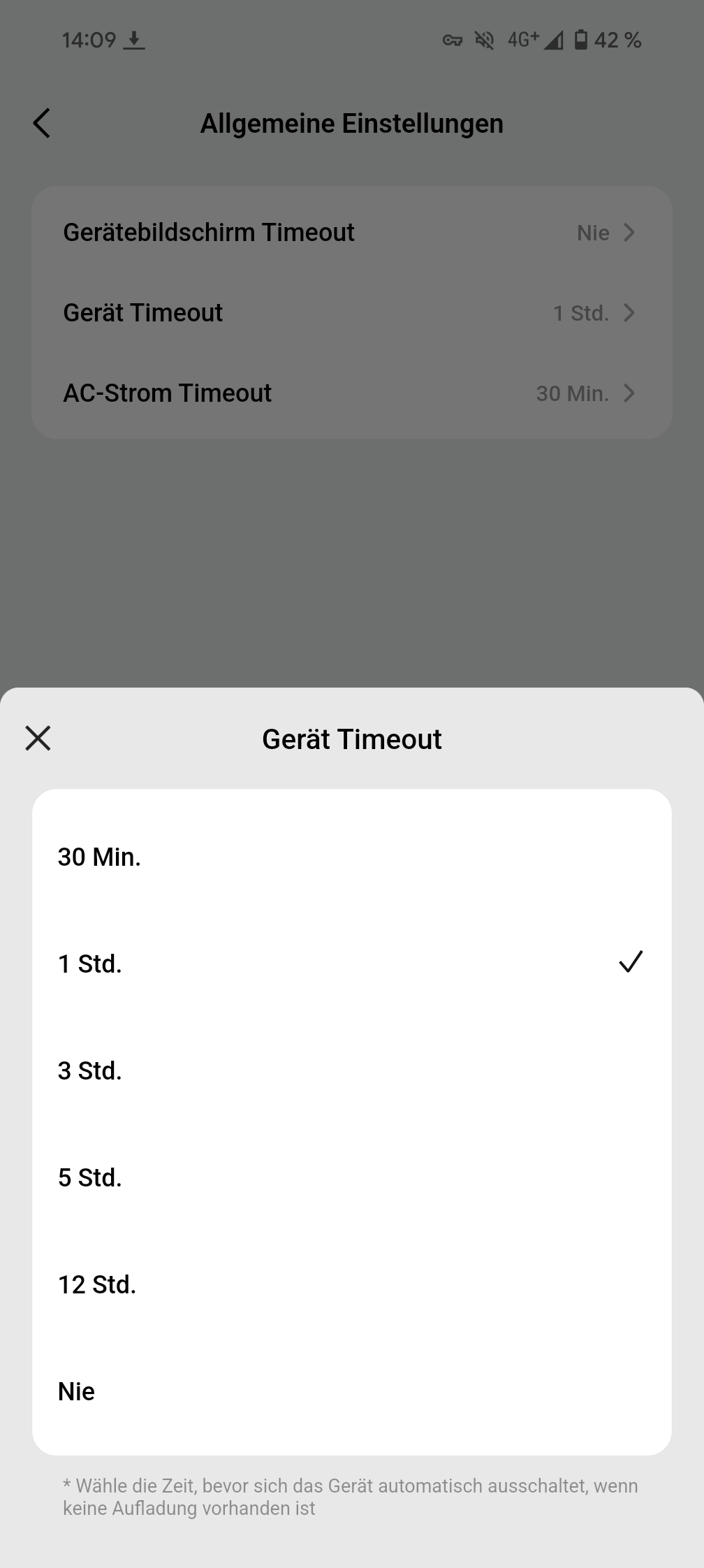
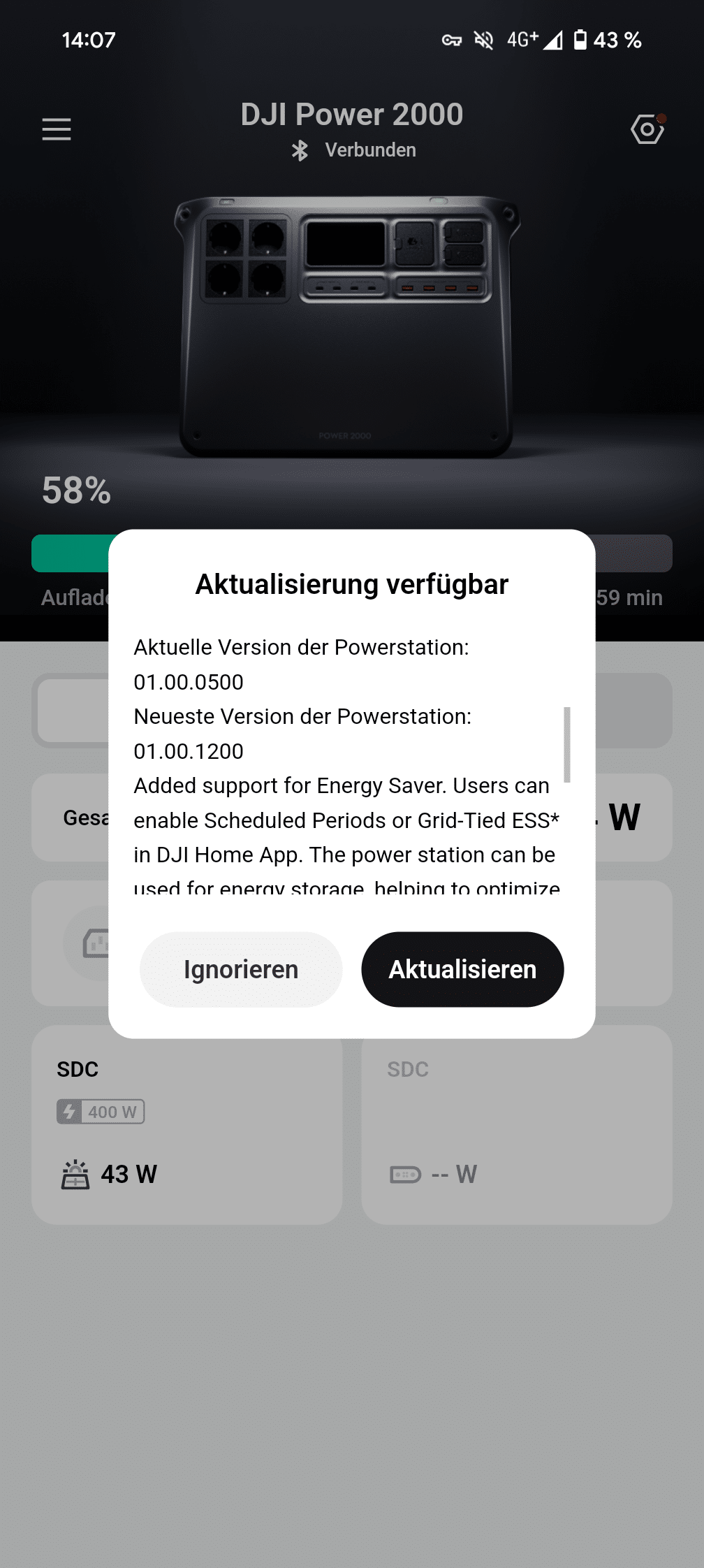
The DJI Home app is not just a nice addition to the Power 2000, but the actual control center. The connection runs directly via integrated Bluetooth, so an extra dongle is no longer necessary as with the Power 1000. In the app, you can see the current status in real time and adjust important parameters. These include
- Setting charging limits, for example when the Power 2000 is used as a UPS
- Programming automatic switch-off times to save energy
- Installing firmware updates so that the system is always up to date
The ability to monitor the station remotely is particularly helpful. Anyone using the Power 2000 as an emergency power solution can conveniently check the status or change settings without having to stand right next to the device. However, the range remains limited when used with Bluetooth.
Efficiency, consumption and noise: the truth behind the figures
The decisive factor is what is actually usable in the end. From the nominal 2048 Wh via AC, around 1820 Wh is available, i.e. around 90% efficiency – a very good value. At the DC outputs, the efficiency is around 75%, due to the conversion to 12 volts. Anyone planning a large number of 12 V consumers should take this into account when calculating the capacity. The standby consumption is around 16.4 W; after a week without use, around 15 % of the charge is missing. This is not dramatic, but it is noticeable and a reason to switch off the station during longer breaks.
In terms of volume, the Power 2000 remains inconspicuous in everyday use. At low loads, it works almost silently, a slight whirring can only be heard in very quiet environments. Above around 2000 W, the fans switch on audibly, but the noise remains tolerable. Compared to petrol-powered generators, this is still “whisper quiet” and therefore absolutely suitable for living rooms, balconies, gardens or camping.
Weak points and points of criticism
The Power 2000 is powerful, but not without compromises. As already mentioned, the biggest problem is the proprietary SDC system: every extension requires expensive original accessories. A 12V adapter costs €49, the MPPT solar module costs €59 – if you need these functions, you have to pay extra.
The weight of 22 kilograms makes the “mobile” power station an ordeal without the optional hand truck. What’s more, the AC sockets and USB ports have no protective covers – a no-go at a price of just under €1,400. The competition protects its ports from dust and moisture as standard.
Other problems in everyday life: without the DJI Home app, many functions remain locked, solar charging only works optimally with DJI panels, and a classic 12V connection is completely missing. Modules have to be purchased separately, which can quickly add up. We draw the line under this in the conclusion.
Target group and areas of application
The Power 2000 shows its strengths when a lot of energy is regularly required and charging windows are short. Then the combination of high continuous power, fast mains charging and clear control is what counts. If you only charge your cell phone and lamp from time to time, you will be more relaxed with smaller devices.
Clear use cases are, for example
- Motorhome and van life with high daily demand
- Backup at home for routers, lighting, IT and heating electronics
- Events and festivals with cool box, light and sound
- Film and photo productions with several cameras, lighting setups and laptops at the same time
- Drone pilots who want to get their batteries up and running again in record time with a quick charge
If you need less, go for the Power 1000 – same design language, half the capacity, significantly lighter and cheaper.
Competition and market position
In the field of two kilowatt hours, DJI is up against established names with mature solutions. The EcoFlow Delta 2 Max also has 2048 Wh, but only manages 2400 watts of continuous power and relies on X-Boost technology for higher short-term loads. Jackery counters with the Explorer 2000 Plus, which delivers 3000 watts like the DJI, but takes two hours to charge and has no app control. However, it can be extended to an impressive 24 kWh.
The Bluetti AC200MAX scores with 15 outputs including a wireless charging pad and 3500 charging cycles, but needs six hours for a full charge. With the PowerHouse 767, Anker focuses on ease of transportation thanks to wheels and a retractable handle, but offers slightly less capacity at 1777 Wh.
Many competitors come with more fixed DC connections and do not require additional modules. EcoFlow shines with smart home integration and fast app development, Jackery with proven reliability without frills, Bluetti with maximum connectivity. DJI, on the other hand, relies on its SDC modular system and by far the fastest AC charging in a sophisticated app.
Within the DJI family, the Power 1000 is available as a compact alternative. With a capacity of 1024 Wh, 2200 watts of continuous power and a weight of 14 kilos, it covers the majority of everyday applications – from camping to occasional emergency power. The Power 2000 is positioned as a step up for users with higher energy requirements, longer periods of use or the desire for more reserves. If you regularly reach the limits of the 1000 or want to use the new balcony power station integration, the 2000 is the logical step up. For occasional users, the Power 1000 remains the more sensible choice. Speaking of the new Balkonkraftwerk integration, more on this in the next section.
Balkonkraftwerk integration: The new dimension
Since August 2025, a firmware update (version 01.00.1200) has transformed the Power 2000 into much more than a mobile power station. The new grid-connected energy storage function turns it into the intelligent heart of a balcony power station. During the day, it charges itself via connected solar modules, and in the evening or when required, it feeds stored energy back into the household grid.
The setup is more sophisticated than expected: The inverter of the balcony power station remains connected to the home grid as usual. A smart meter – currently only Shelly Pro 3EM and Shelly Pro EM-50 are compatible – monitors the house consumption and controls the Power 2000 accordingly. If the solar system produces more electricity than is consumed, the Powerstation charges itself automatically. When the battery is full, the surplus flows directly into the public grid.
Two operating modes are available in the DJI Home app: time-controlled feed-in with fixed times and power levels or fully automatic control based on actual household consumption. Particularly interesting for users of dynamic electricity tariffs. The Power 2000 can learn when electricity is expensive and then feed its stored energy into the grid in a targeted manner.
The function is currently only available in Germany, France and Spain and is limited to 800 watts of feed-in power. This may not sound like much, but it is enough for many households and turns the Power 2000 from a mobile device into a stationary energy management system that reduces electricity costs and maximizes solar yield. A clever move by DJI that is shaking up the power station landscape.
Our conclusion: Powerstation for the discerning
The DJI Power 2000 is an impressive piece of technology that impresses in almost all areas. The combination of high performance, fast charging times and smart features is second to none. The new balcony power station integration in particular could turn it from a mobile device into a stationary power solution.
However, it is definitely not for those on a budget or occasional users. Its weight, price and complexity make it a tool for users who know exactly what they need and are prepared to pay for it. Anyone who regularly needs a reliable, powerful mobile power supply will find the Power 2000 a loyal companion. It may not be perfect, but it comes damn close. The modular philosophy will delight some users and frustrate others. But as is so often the case, this is ultimately a matter of taste.
With the Power 2000, DJI has shown that it can also develop innovative technology beyond drones and cameras. The Power 2000 is not a revolutionary device, but a consistent evolution of established concepts. For the right target group, it is an investment that will pay off for years to come.

VORTEILE
- High continuous power up to 3000 W, short peaks even higher
- very fast charging, full in less than 2 hours in Turbo mode
- clear display and app with real-time values and control
- Robust workmanship, stable impression
- expandable up to 22.5 kWh with modules
- new Balkonkraftwerk integration
NACHTEILE
- Very heavy weight, unwieldy without a hand truck
- Expensive accessories due to SDC modules
- No protective covers on AC and USB ports
- Many functions can only be used via the app
Fazit
The Power 2000 impresses with high continuous output, very fast charging times and a sophisticated app with energy management and balcony ESS integration. Workmanship and efficiency are at a high level. The weight and cost of the modular accessories detract somewhat from the overall impression, but do not detract from the strong overall performance.


