A lot has happened in the field of vacuum mopping robots in recent years. While the smart household helpers initially only came with a pure mopping plate, the majority of flagship models now offer two rotating mops. But are mop rollers the next revolution? In the Narwal Flow test, I was able to take a closer look at a robot vacuum mop that not only promises powerful mopping performance with its mopping roller, but also virtually rimless cleaning.
Technical data
| Model | Narwal Flow |
| Overall height | 95 mm |
| Suction capacity | – 22,000 Pascal – Main brush can be lowered – Side brushes in wing design |
| Obstacle detection | – TwinAI Dodge Obstacle Avoidance – Additional sensors on the side and bottom – Differentiation between over 200 objects – Obstacles up to 40 mm high can be overcome |
| Wiping function | – Cleaning roller with 12 N contact pressure – Integrated fresh and dirty water tank – Warm mop water (45°C) – Cleaning roller can be raised by 12 mm |
| Cleaning station | – Mop wash with hot water (max. 80°C) – Dust bag lasts up to 120 days – Hot air drying (40°C) – Dirt sensor |
| The price | € 899.00 * |
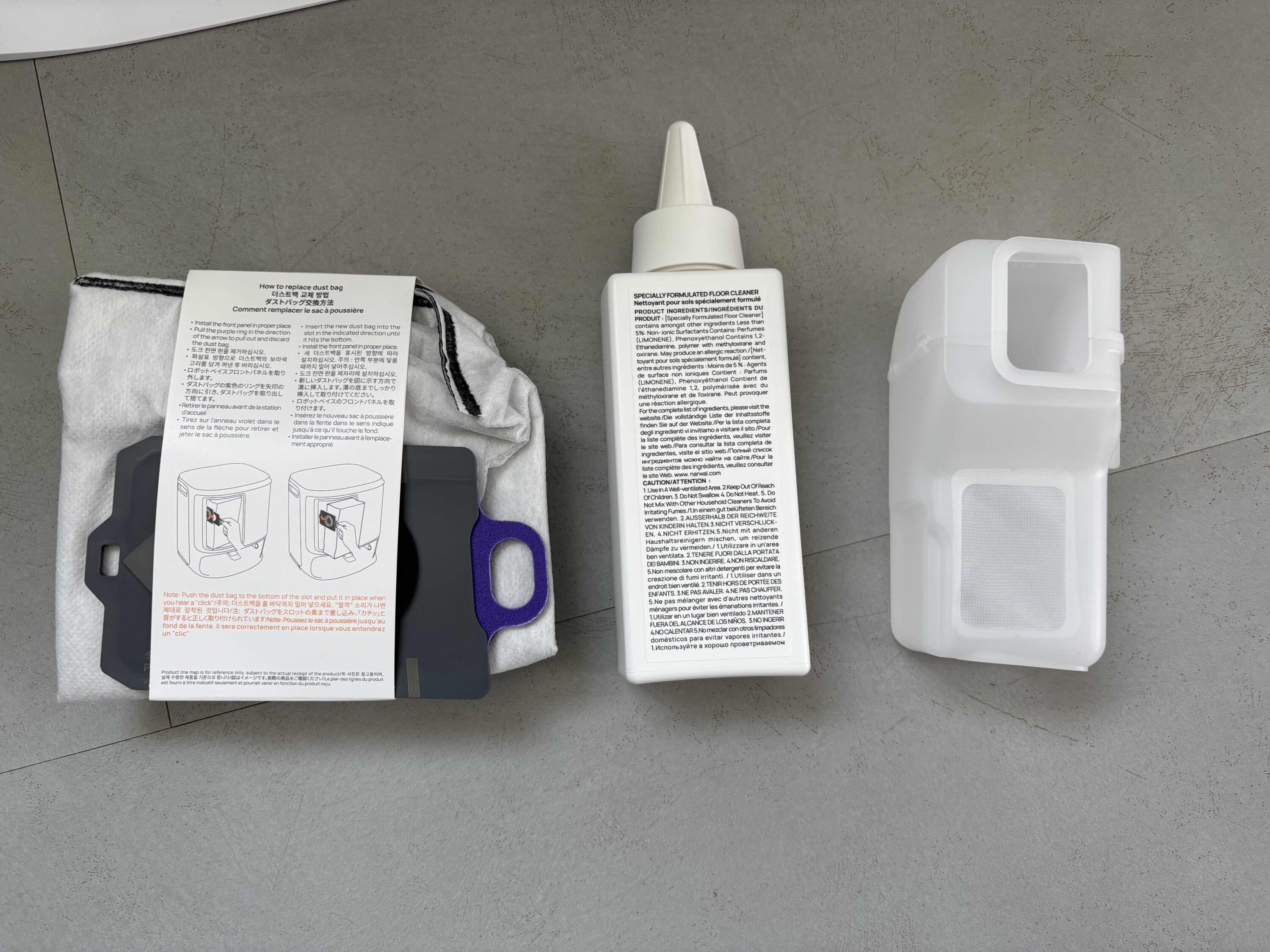
Scope of delivery
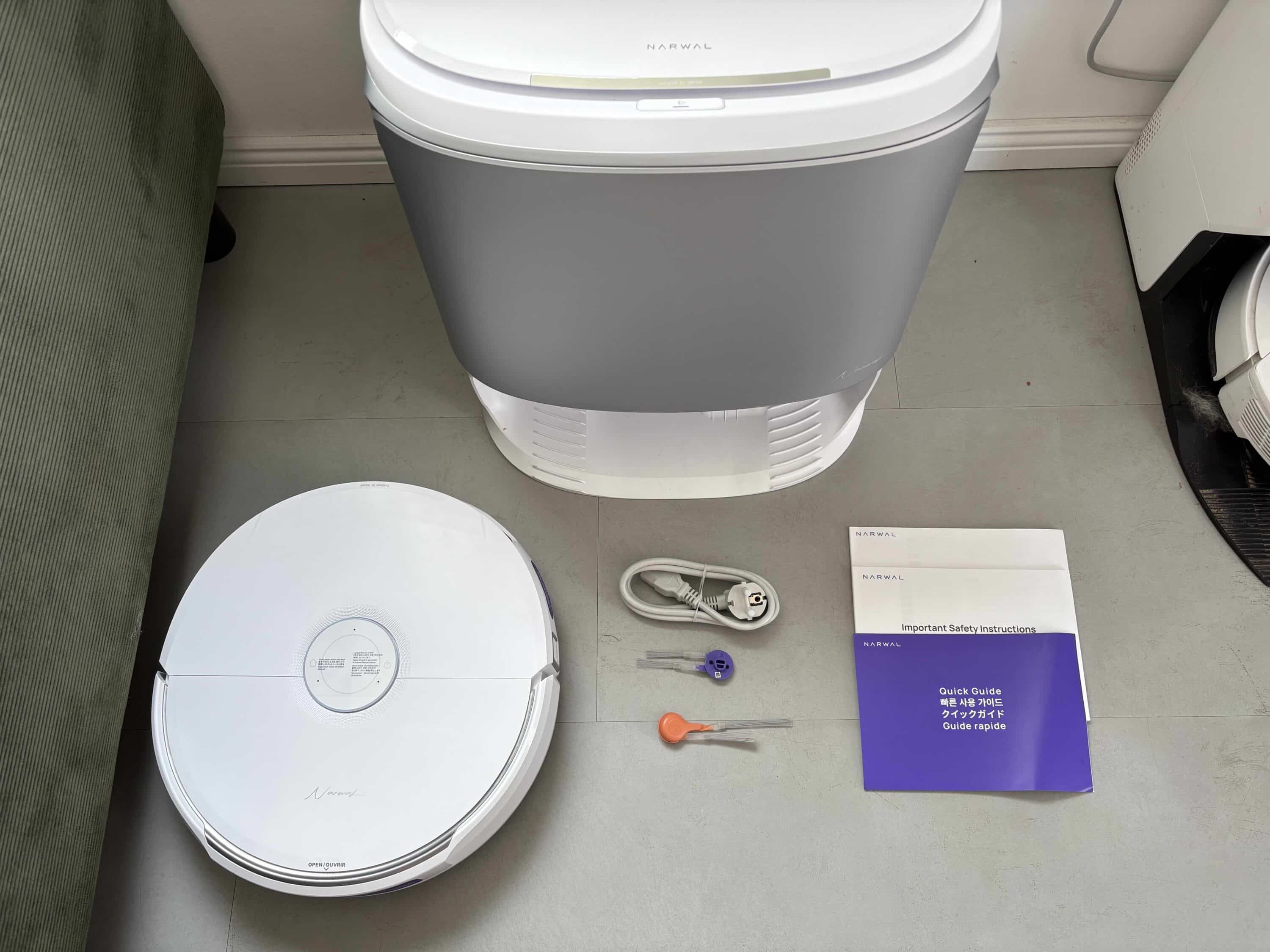
Narwhal Flow test: design and workmanship
When it comes to build quality, Narwal once again remains true to itself with its latest household helper. Once again, you are offered a high-quality robot hoover in a classic circular shape with a color combination of elegant grey and white.

However, the first major difference can be seen on the top. Narwal previously relied exclusively on a LiDAR sensor on the top of the robot hoover. You will look in vain for this on the Narwal Flow.

At first glance, the illuminated ring in the middle looks as if it is a retractable LiDAR tower, such as the Dreame X50 Ultra (Review | € 1,303.96 ), but this is not the case. Instead, this is the start/pause button.
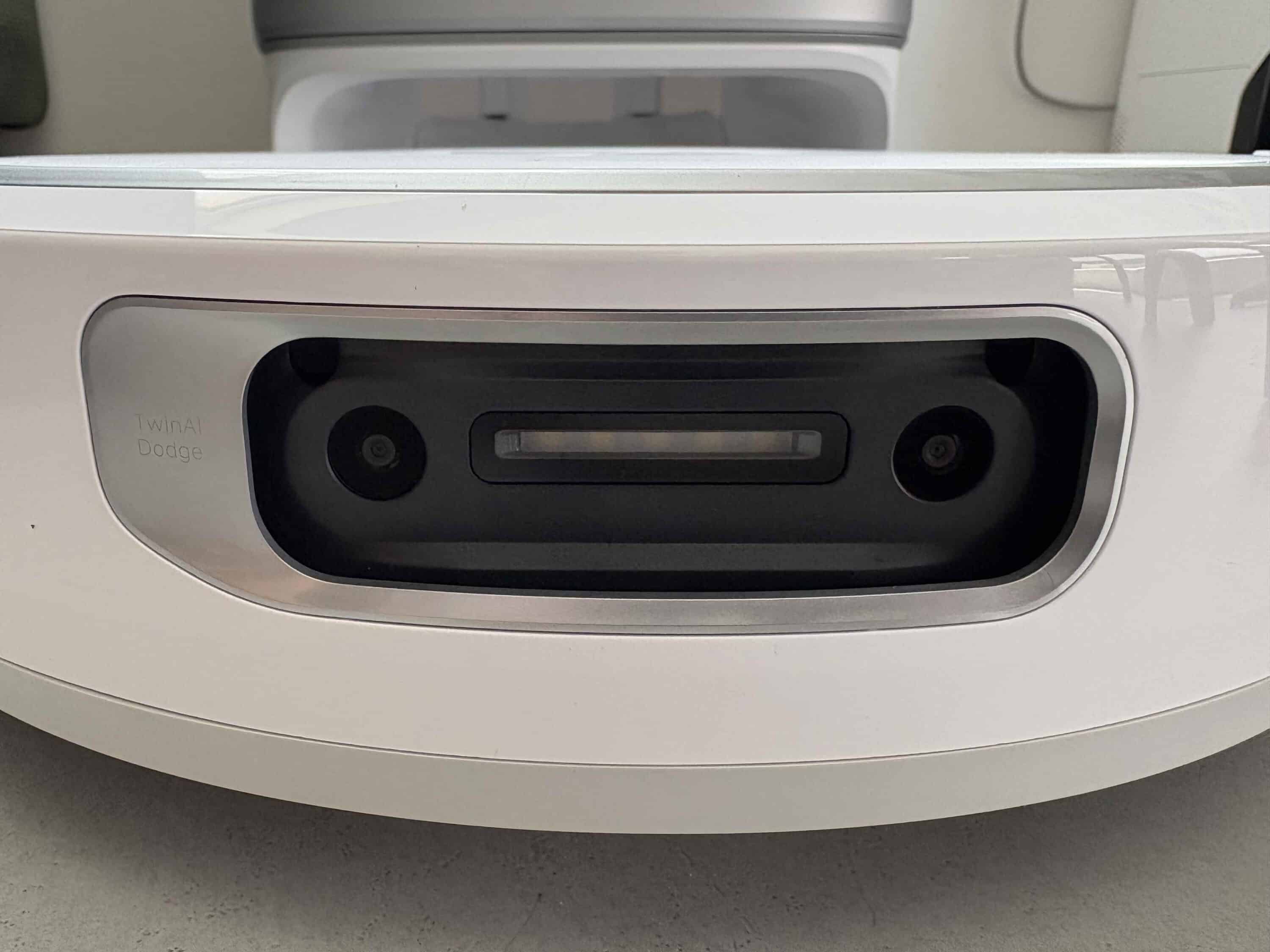
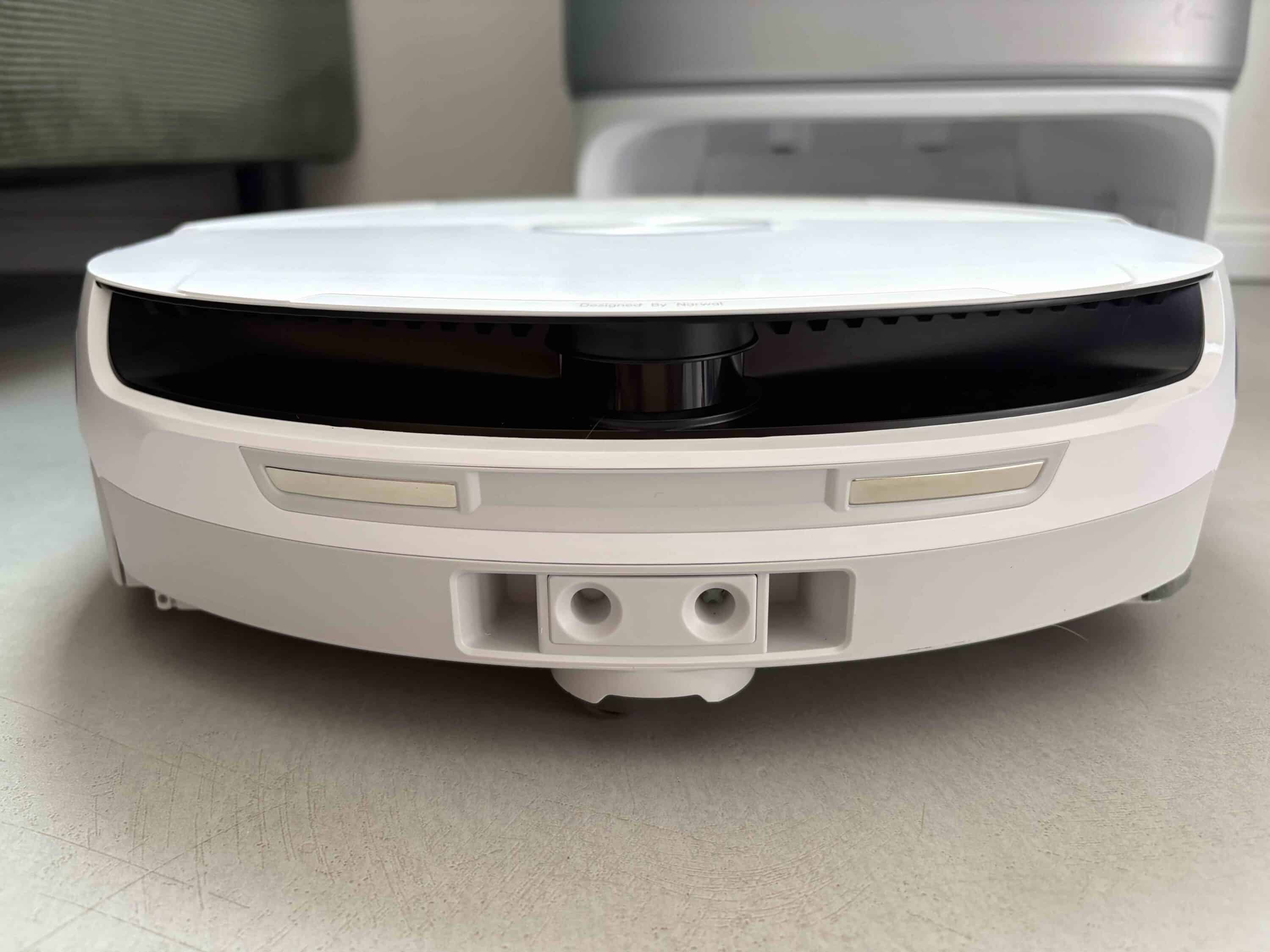
We’ll find out later how the absence of the classic tower affects navigation. In any case, the lack of a tower means that the Narwhal remains pleasingly flat with a height of 95 mm. The replacement for the LiDAR tower – the obstacle detection unit – is located at the front of the Narwhal Flow.

Narwal installs a camera unit here that consists of two RGB cameras and, thanks to AI evaluation, should be able to distinguish between over 200 different objects. This would put it on a par with the Narwhal Freo Z Ultra (Review | € 1,299.00 ), which has already impressed us with its powerful obstacle detection.

The charging contacts and the tank nozzle, which is used to fill the smart household helper’s internal water tank, are located on the back. The underside is particularly exciting. In addition to the main brush and two side brushes, this is where the mopping roller is located.
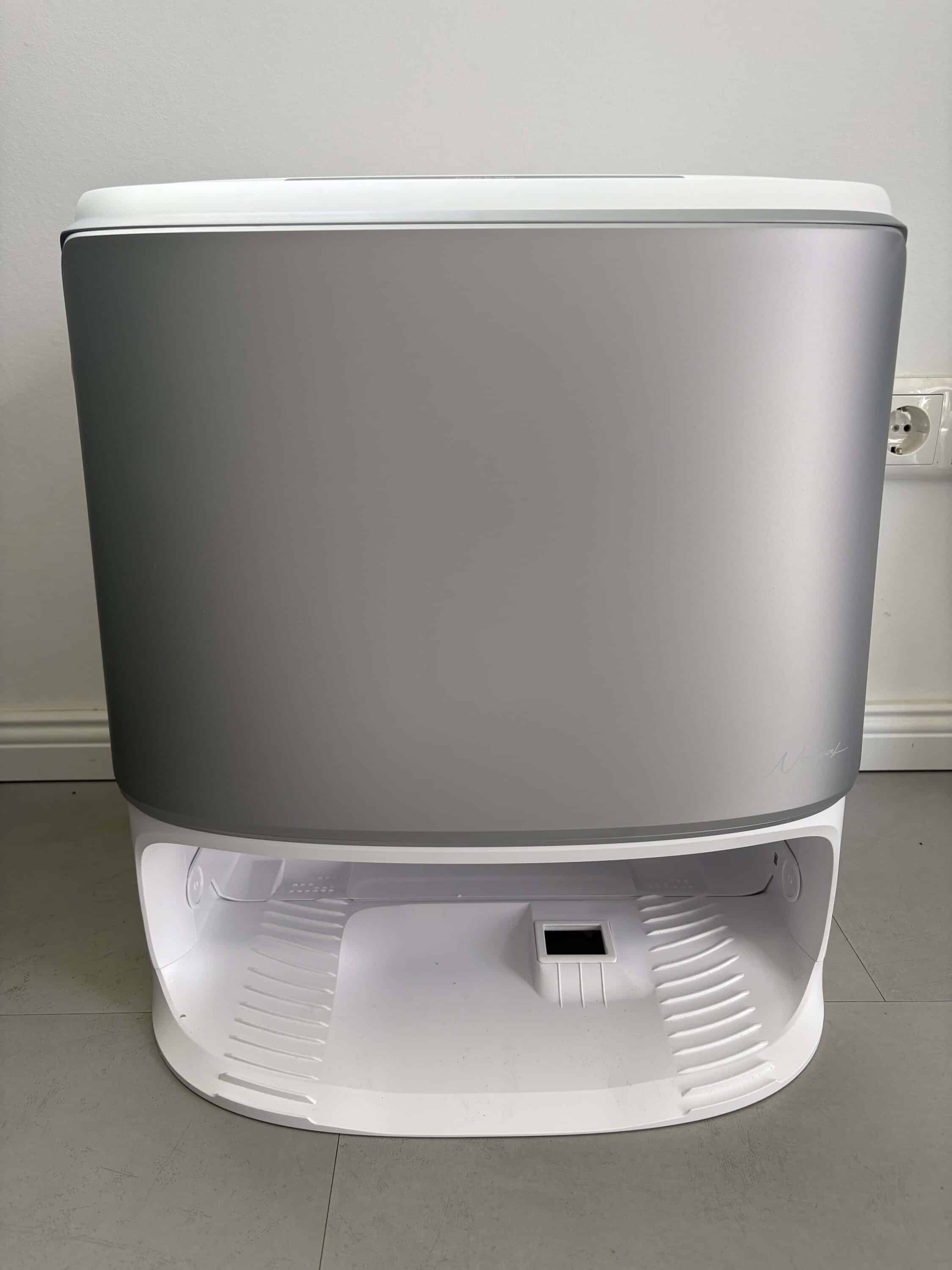
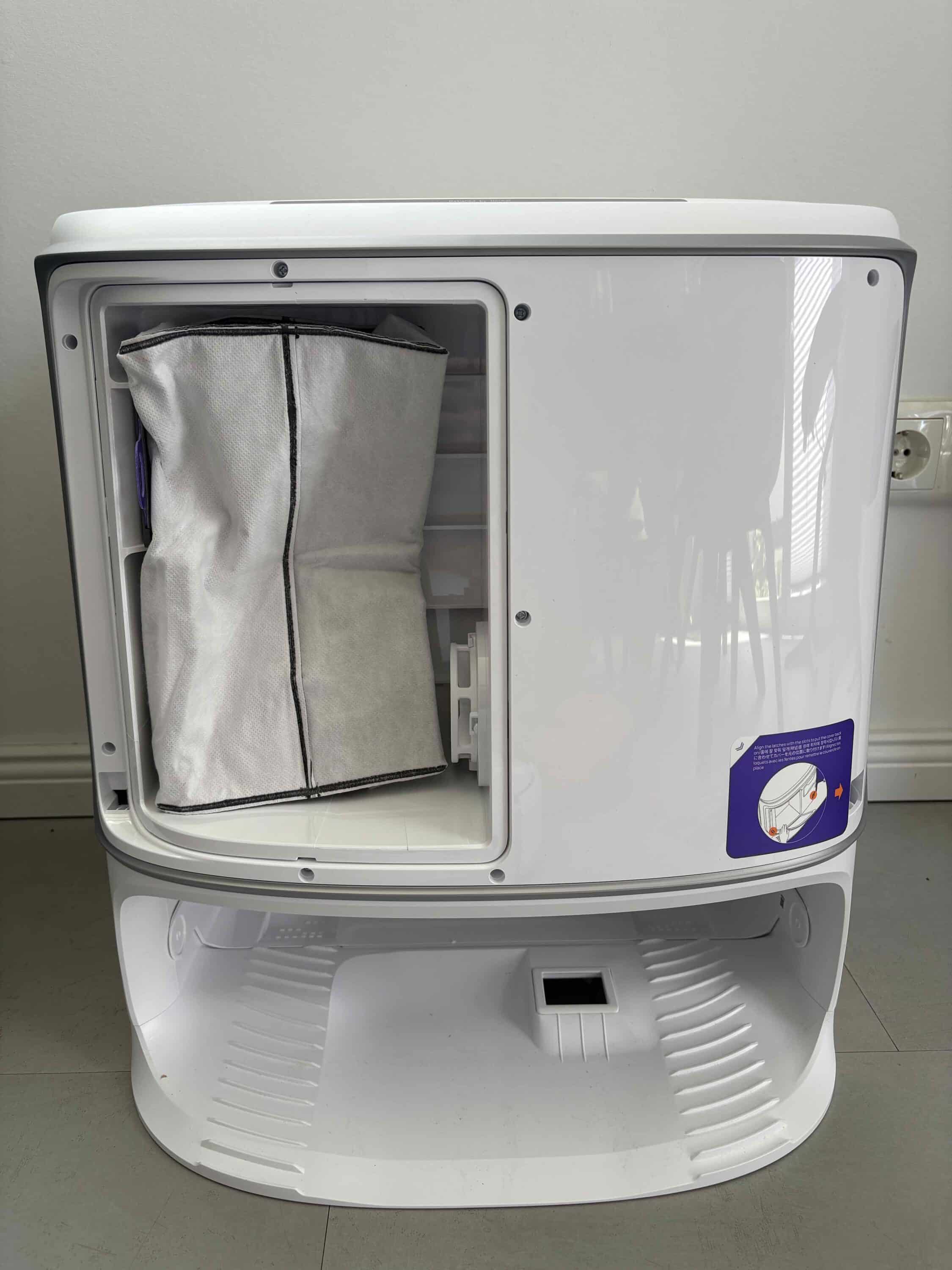
Narwal calls the whole thing the Flowwash Mopping System. As befits a modern flagship, the Flow naturally also comes with a matching all-in-one station. And it matches the robot vacuum perfectly. One major difference to previous Narwal models is the absence of a display and control unit.
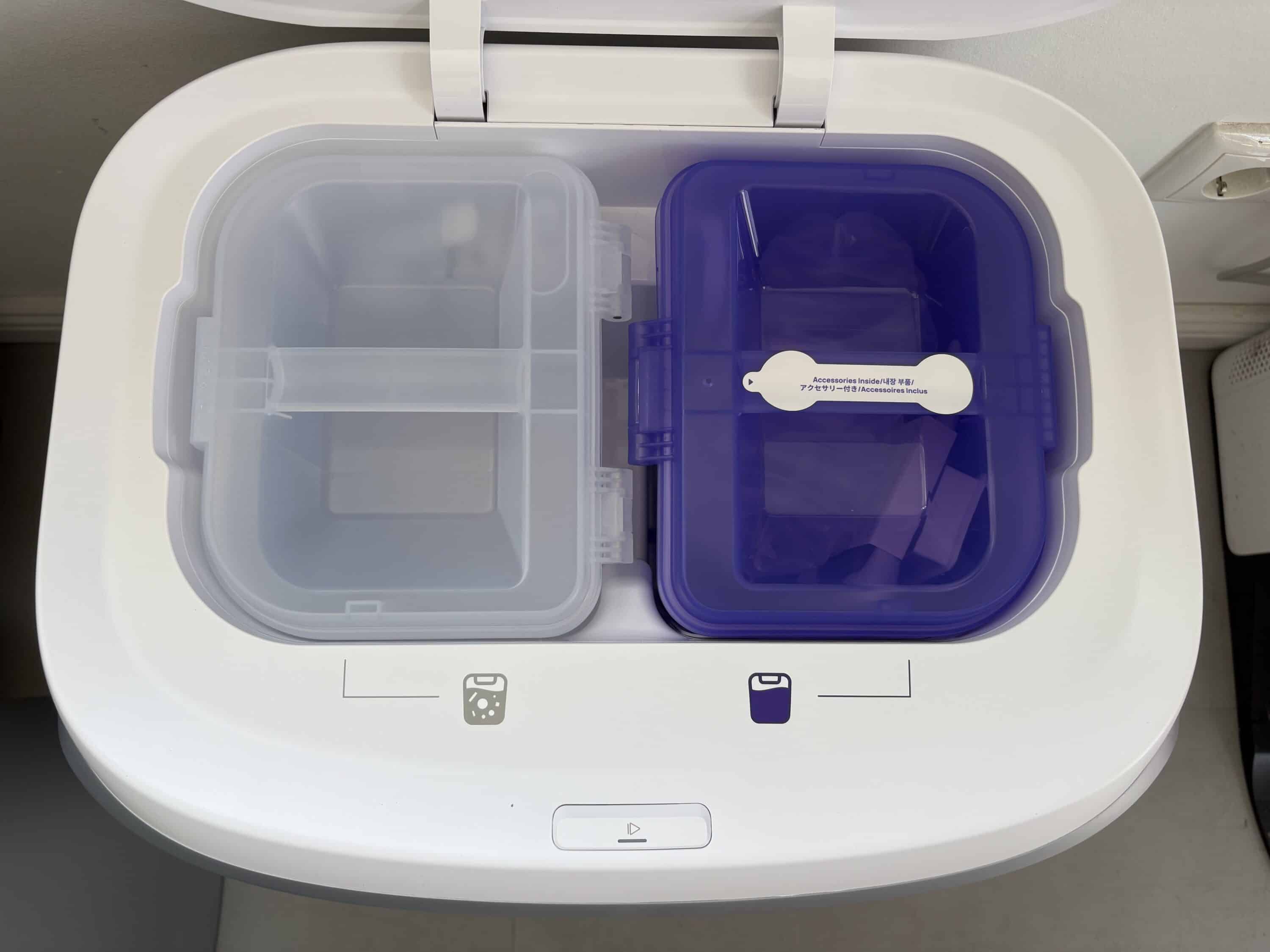
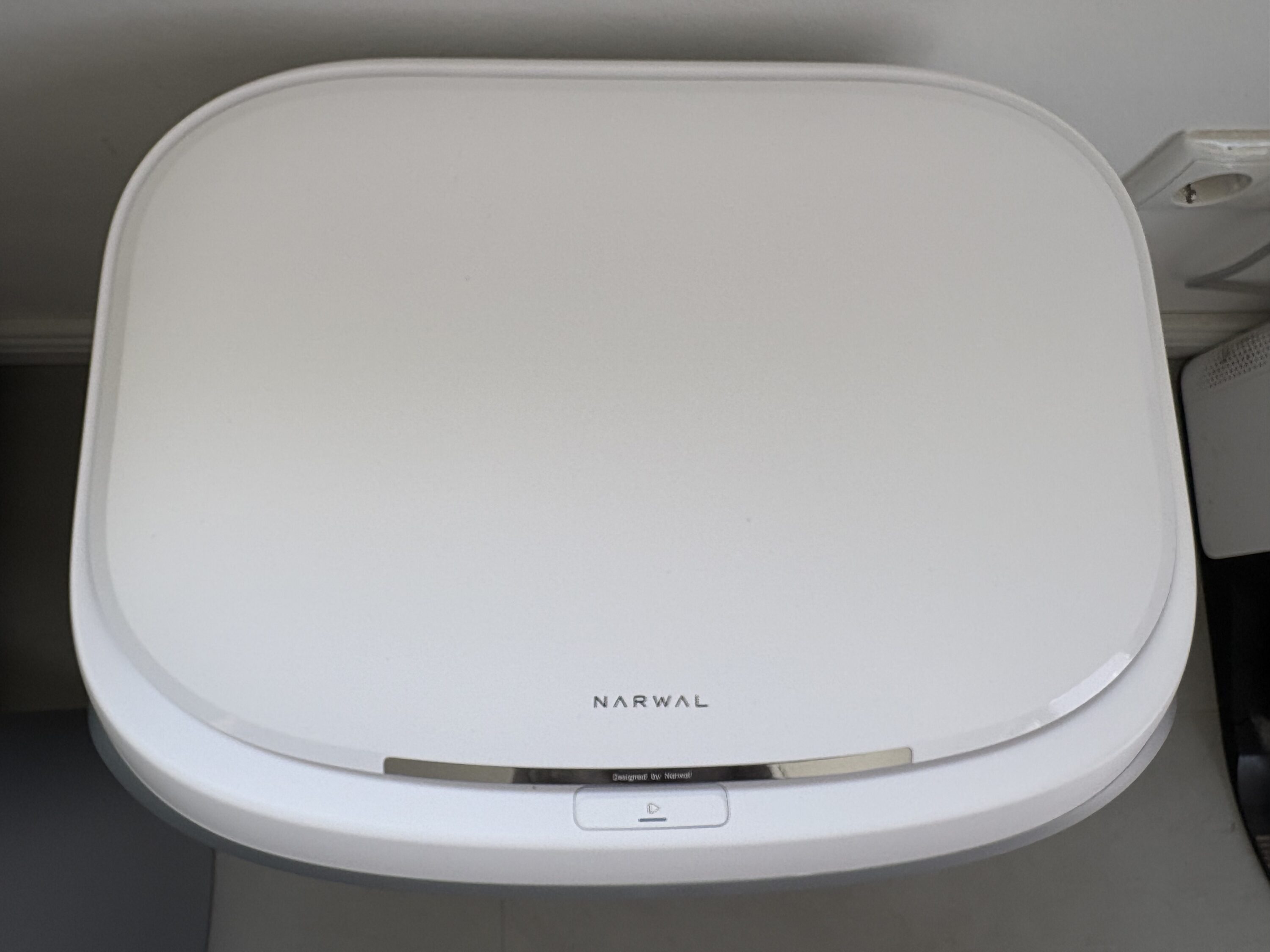
Instead, the station has a physical button that you can use to start the cleaning process. I would have liked to have seen a few more buttons like on the Narwal Freo Z10 (Review | € 699.00 *). Your smartphone serves as the remote control here.
Narwhal Flow test: navigation and obstacle detection
As already mentioned, the Narwhal Flow does without the usual LiDAR technology and instead relies on a sophisticated dual camera system. The manufacturer calls this TwinAI Dodge Obstacle Avoidance. The name is quickly explained. Twin stands for the two RGB cameras, which should be able to provide a field of view of a whopping 136 degrees.

AI, on the other hand, stands for artificial intelligence, which Narwhal once again relies on for the Flow. And once again, it has it all. The smart household helper is able to distinguish between more than 200 objects. This includes complex obstacles such as dog poo or flat cables. In practice, the plan works.

As with the Freo Z Ultra, Narwal also impresses here with its excellent obstacle detection. The system not only reacts to small objects and reliably avoids them. The Narwal Flow also works at lightning speed. I took a test run through the Narwal Flow’s cleaning path to check its reaction speed.

The smart household helper reacted immediately and stopped when I suddenly stood in front of it. The manufacturer has installed a bright LED on the front to ensure that it also works well in poor lighting conditions. In the test, this reliably illuminated dark areas under furniture. The absence of LiDAR is also not noticeable when mapping.

The quick mapping lived up to its name and produced a detailed and representative result. I don’t know whether Narwal has hidden LiDAR sensors in the housing here after all. The Roborock Saros 10R (Review | € 1,249.00 *), for example, uses a similar principle with its StarSight 2.0 system.
Narwal Flow Test: Narwal App
Not much has changed in the Narwal app with the release of the Narwal Flow. It scores with a very good overview, but its look and feel cannot keep up with the software solutions of the major brands Roborock and Dreame. Setting up the robot hoover is quick and uncomplicated. Once you have created a Narwal user account, you simply add the Flow as a new device. The robot is then transferred to your network, which is the basis for remote control of the smart household helper.
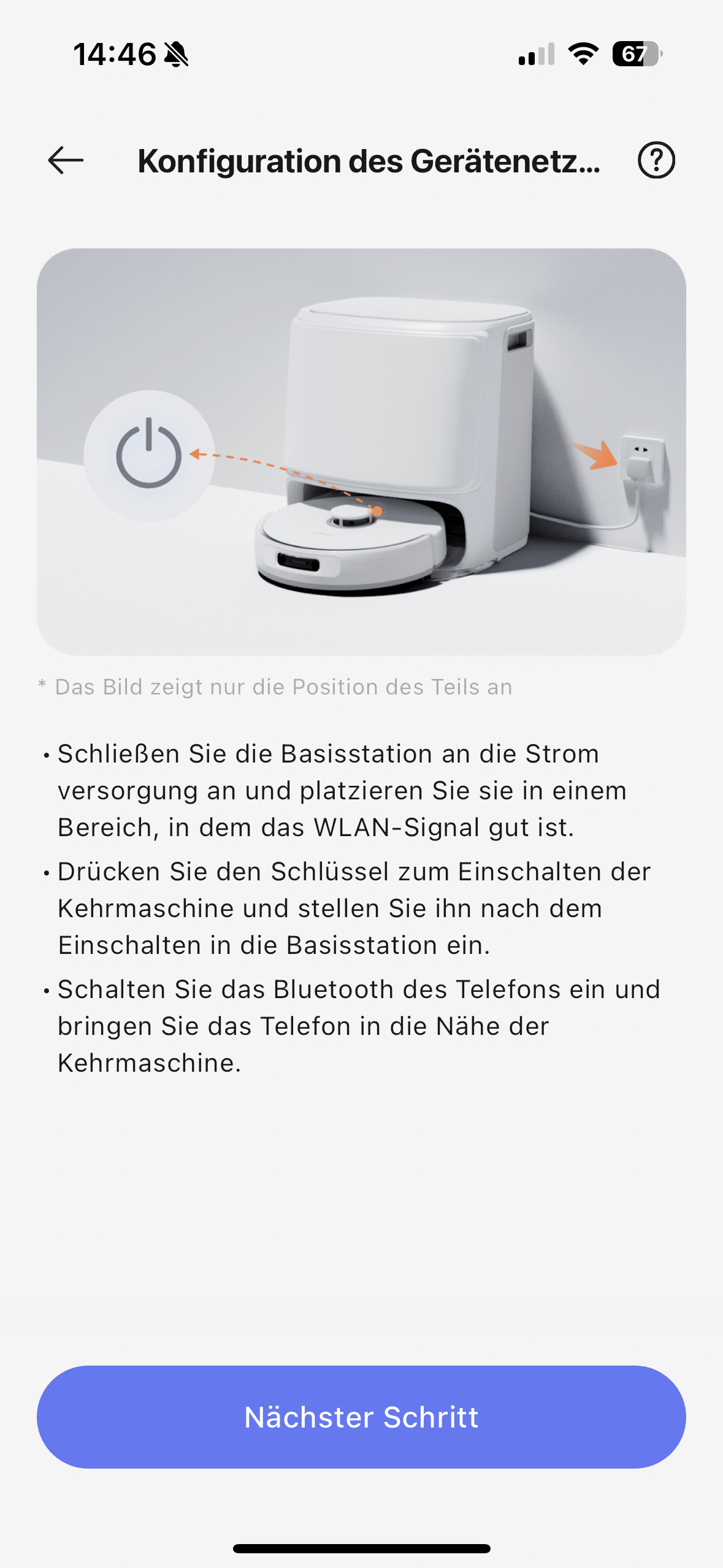
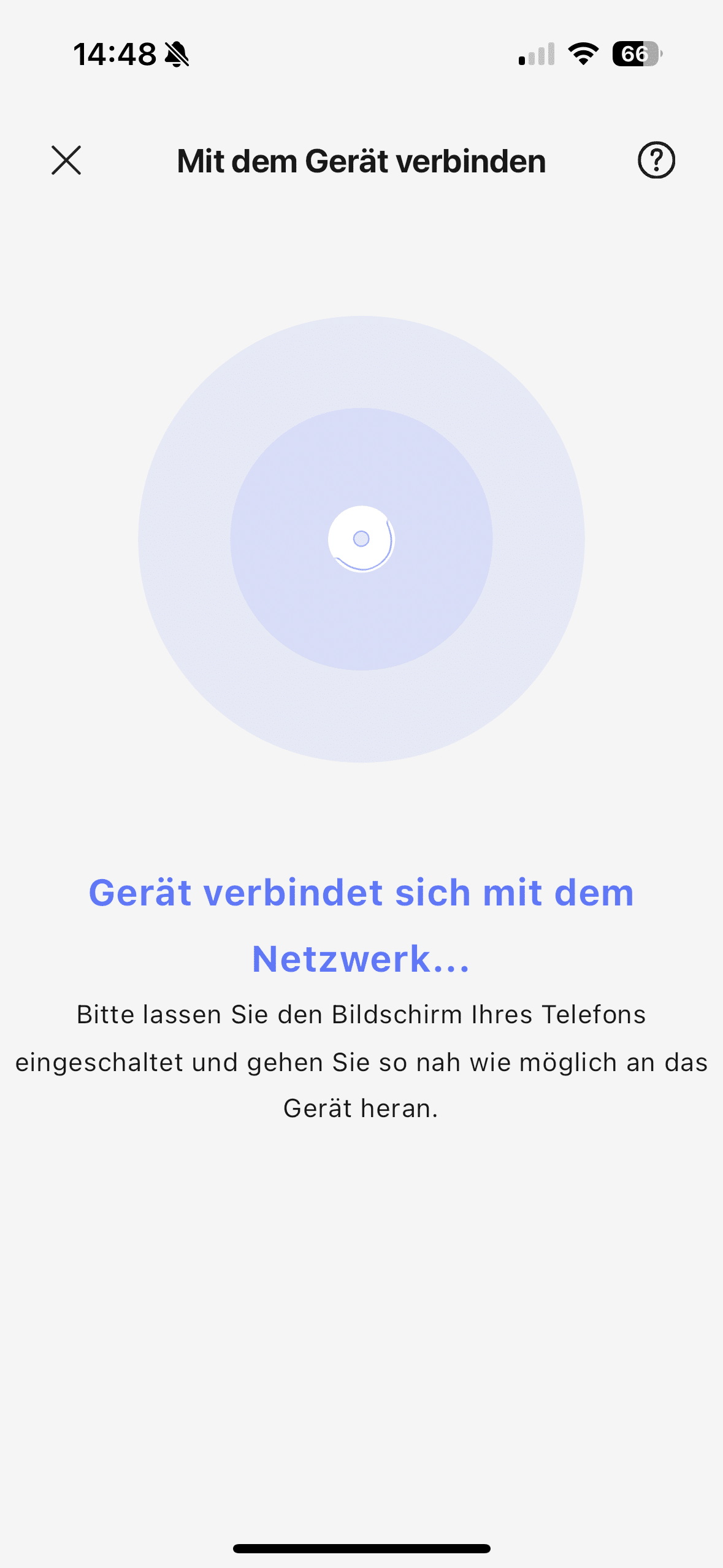
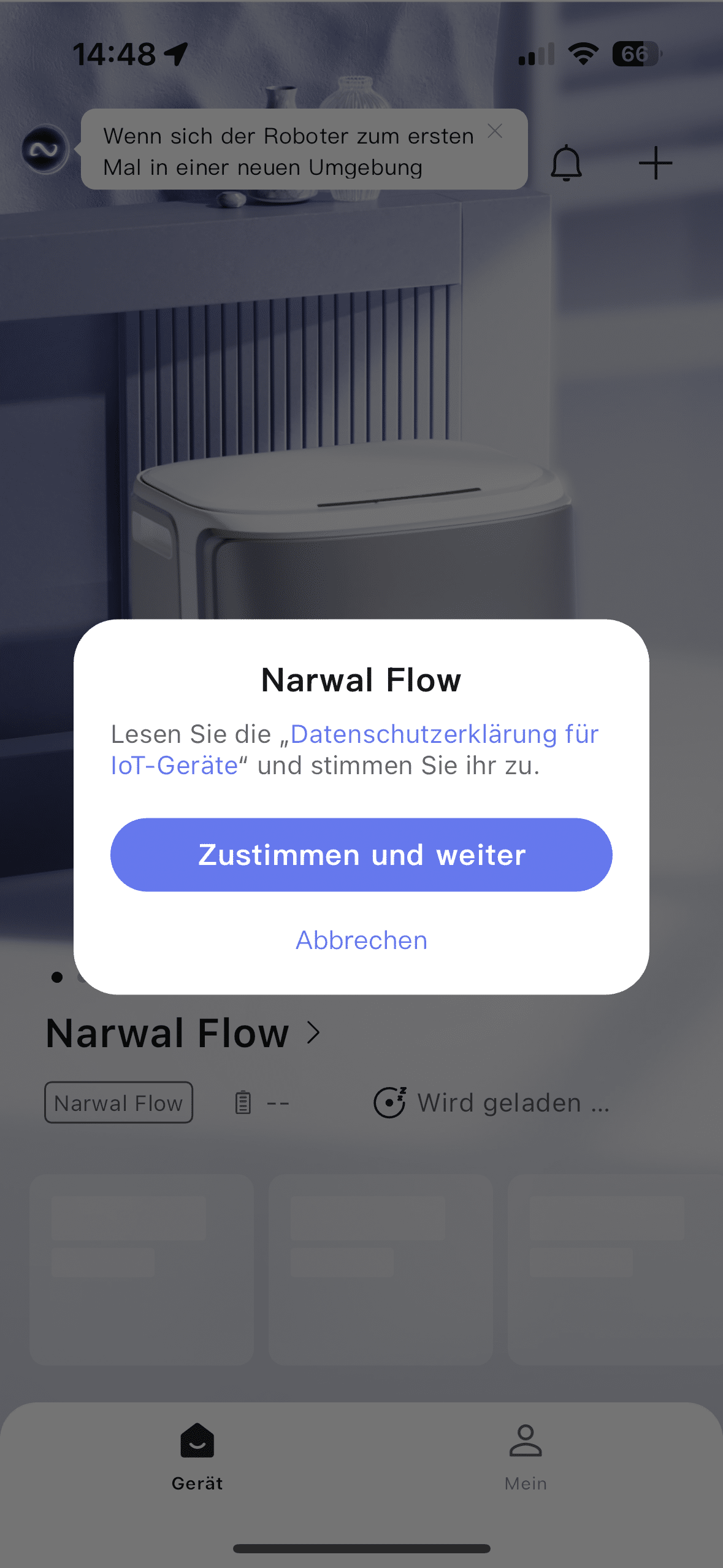
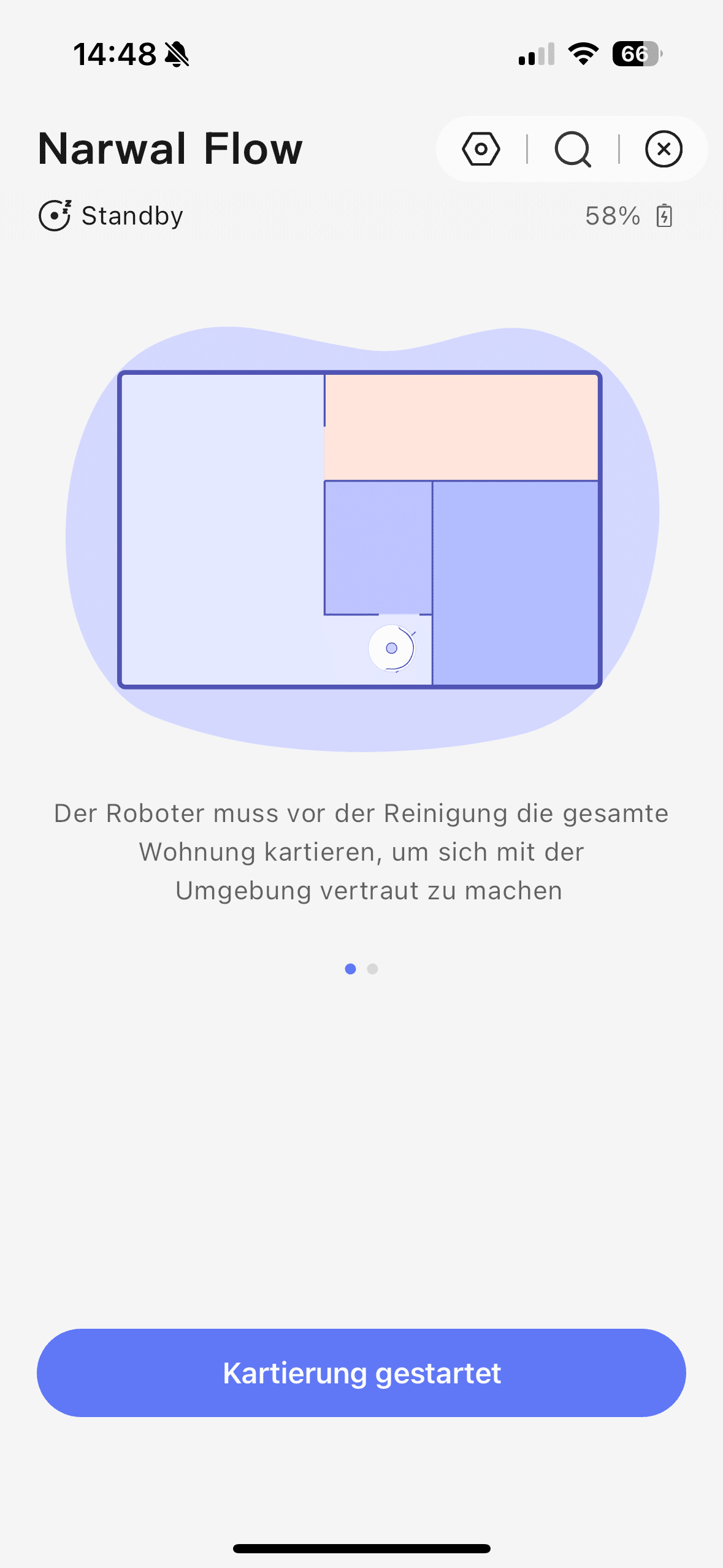
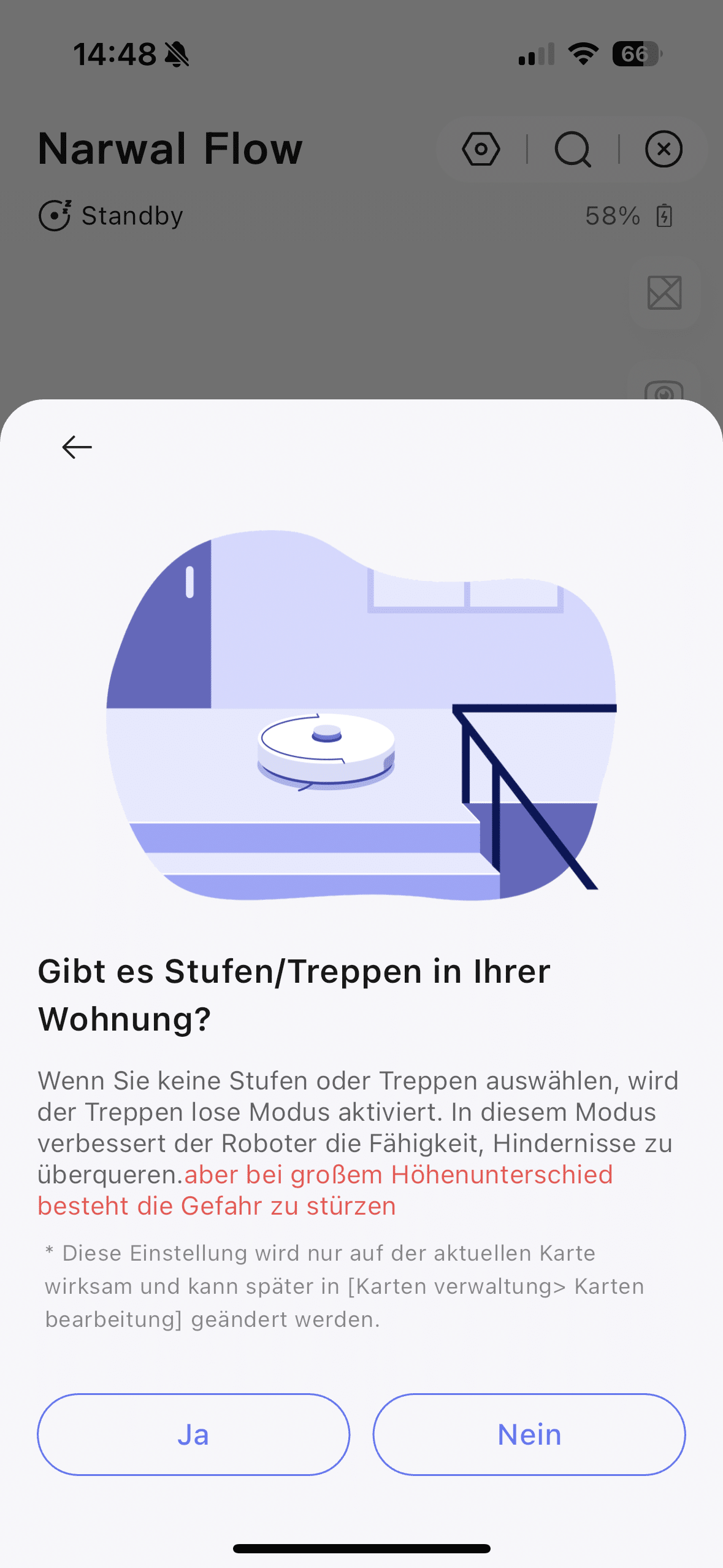
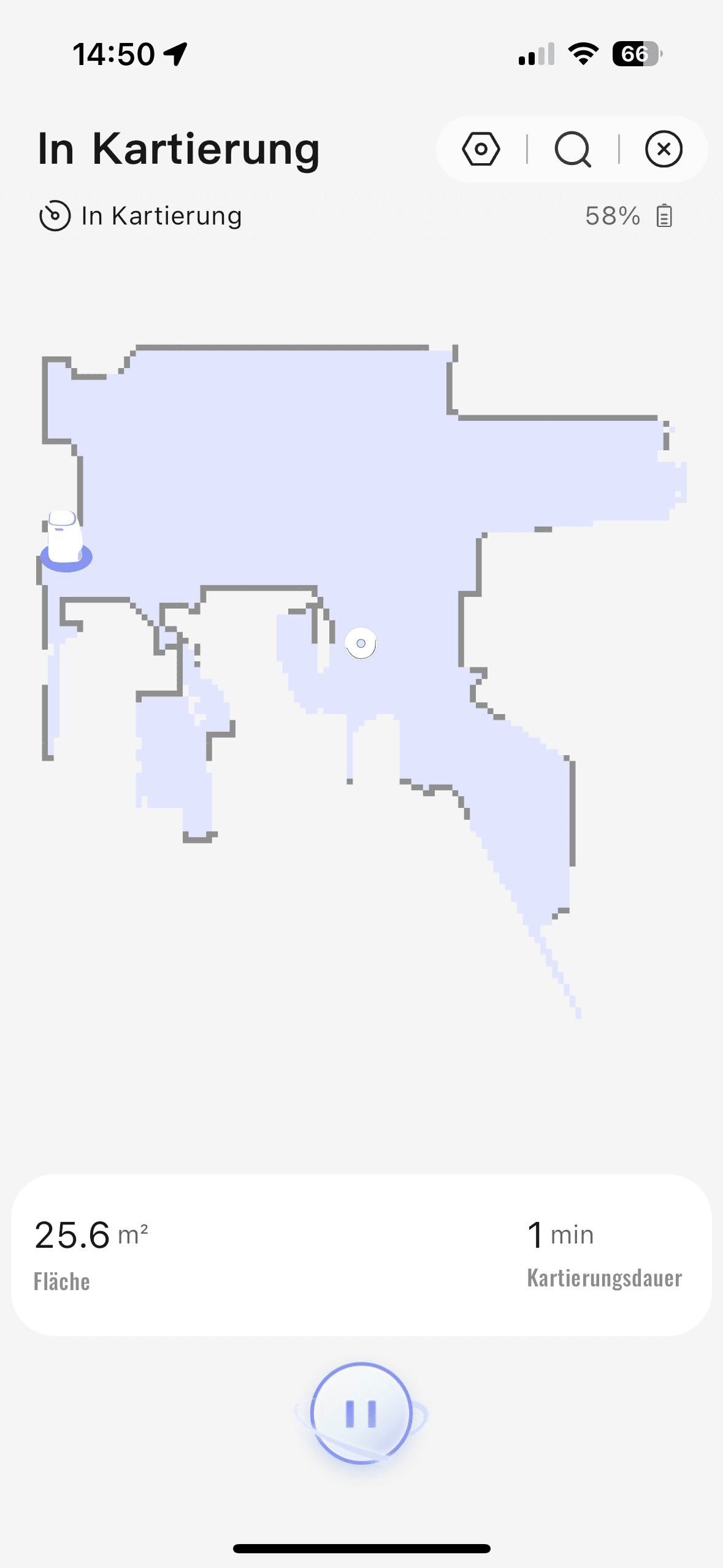
Before you let off steam in the numerous setting options here, you should first carry out a quick mapping. This is done in just a few minutes, as the narwhal does not yet clean, but simply creates a floor plan of your home. It will then automatically assign different rooms. If its calculations are not correct, you can easily make adjustments. The Narwhal Flow is now fully operational.
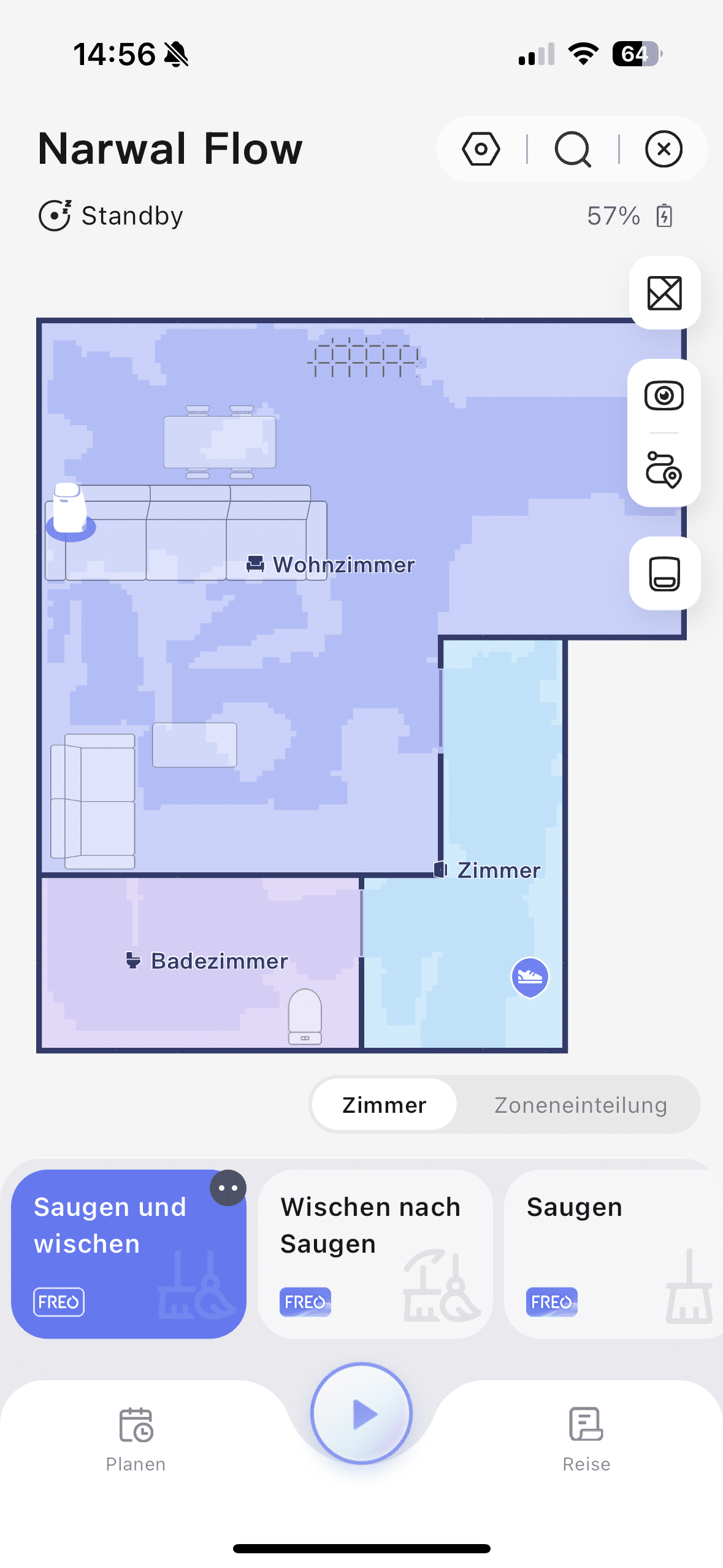
Many attributes of the smart household helper can be customized in the options. For example, you can adjust the suction and mopping power in several stages. If you don’t fancy this fine-tuning, you can also easily use the Freo mode, which we already know from previous models. Here, the Robo uses AI to determine how strong the suction and mopping power should be. It also visits certain areas more frequently where it has found heavier soiling in the past.
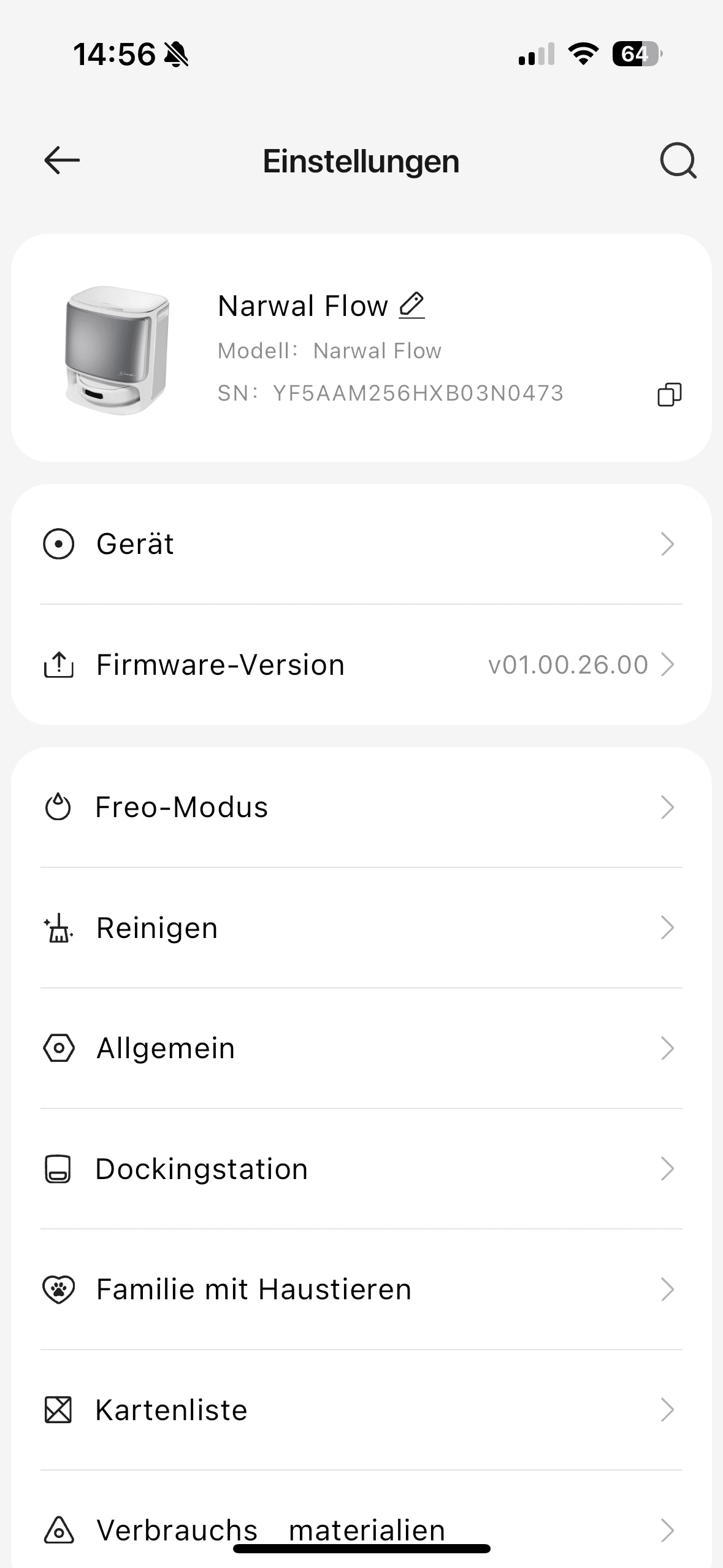
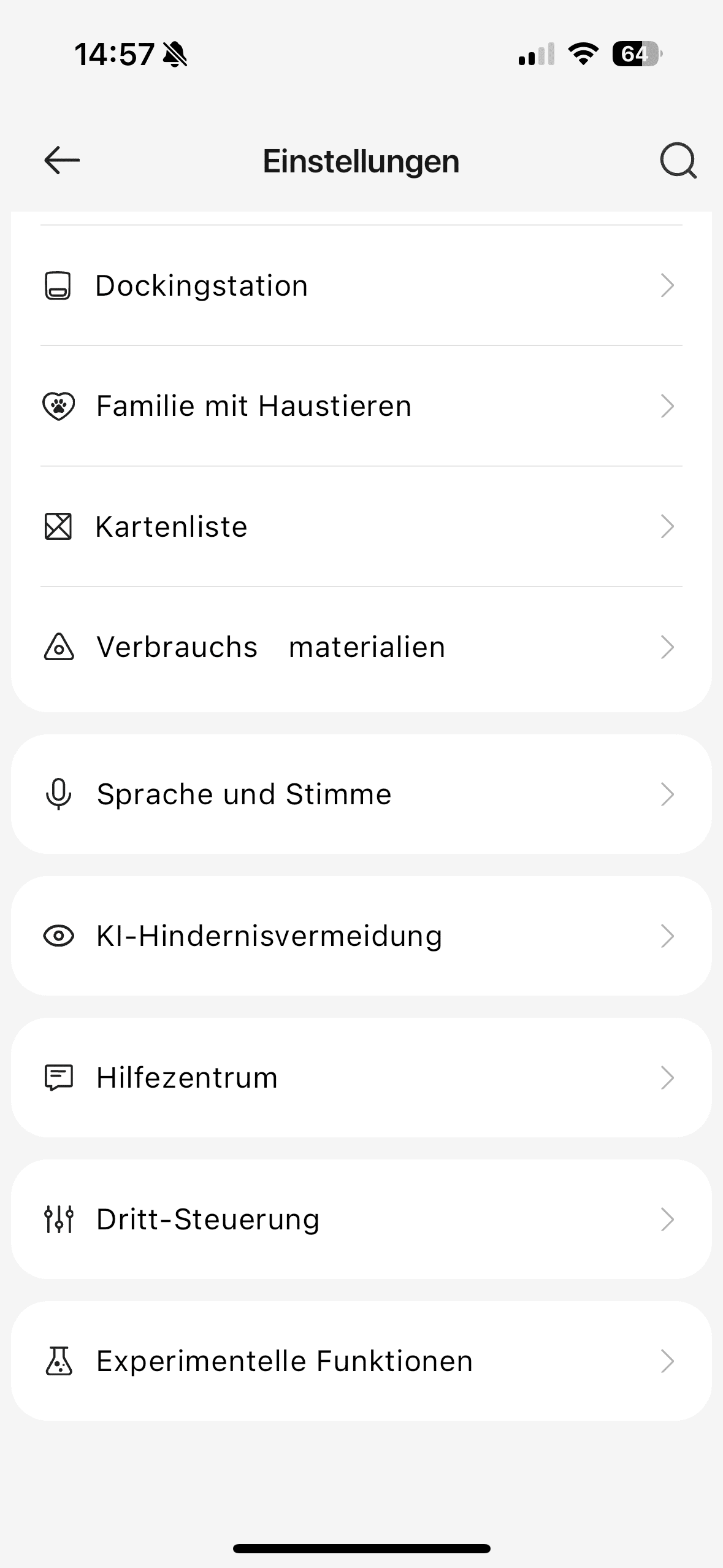
In the test, this was the case in my hallway or kitchen, for example. Apart from this, you can of course also make many other settings. For example, you can define no-go zones or invisible walls within the map. You can also create a practical cleaning plan. This means the robot always runs at a certain time without you having to start it manually.

The cleaning station can also be customized. For example, you can specify how long the Narwhal Flow should be dried in the station after it has been cleaned. Last but not least, the topic of data protection should not be left out. Narwal emphasizes that the Narwal Flow’s data is only processed on the robot’s local AI chip. And not in the cloud. The manufacturer has even obtained TÜV certification for this.
Narwal Flow test: a powerful 22,000 pascals
A look at the technical data suggests great things in terms of suction power. And Narwal certainly delivers here. With a whopping 22,000 Pascal, it is on a par with current flagships such as a Roborock Saros 10 (Review | € 1,399.00 *). Thanks to the combination of a floating main brush and two side brushes, it can also convincingly transfer its performance to the floor. Only when it comes to cleaning corners does it still have to admit defeat to the competition from the upper class.

Although the side brushes offer an exciting wing design to extend the reach, they are unfortunately not extendable. However, the special design has another advantage. The shape of the two wings can be adjusted to guide tangled hair to the main brush. Narwhal calls it the Dual-Flow Tangle-Free System. As a pet owner, I was able to test the whole thing directly with the hair of my two cats and my dog. There was a bit left behind here and there, but the result was still quite good.

The hair on the main brush is then passed on to the suction shaft thanks to the conical shape. What struck me positively in the test were the all-round capabilities of the Narwal Flow. It not only picked up pretty much every speck of dust from hard floors such as tiles, vinyl or laminate. It also worked excellently on carpets. When the Flow moves onto a carpet, it automatically increases its suction power to the maximum and lowers the main brush to create an even stronger vacuum between the suction shaft and the carpet.

It also raises its mopping roller by 12 mm so that the carpet is not moistened. The 12 mm may certainly be sufficient for short-pile carpets, but anyone with long-pile carpets will have to live with the fact that they will get a little damp. Here, systems where the mop pads can be parked before a carpet is cleaned are definitely a step ahead. A prime example of this is the Mova V50 Ultra (Review | € 1,199.00 *).
Narwal Flow Test: Strong off-road capability
This year’s range of flagship vacuum robots also focuses on the chassis. More and more top-of-the-range models are able to cross higher thresholds without any problems. Narwal is also aware of this and has upgraded its chassis.

For example, the Narwal Flow can easily cross smaller obstacles such as crossbars on chair legs by simply extending its wheels downwards and lifting the housing without further ado. According to Narwal, obstacles with a height of up to 40 mm are no problem. This is roughly comparable to the climbing capabilities of a Dreame L50 Pro Ultra (Review | € 1,129.00 *).
Narwal Flow Test: Outstanding wiping capabilities
Narwal has decided against two rotating wiping pads for the Flow. Instead, the manufacturer has taken a similar approach to the MOVA Z50 Ultra (Review | € 899.00 *) and opted for a wiping roller. Unlike the MOVA, however, Narwal wants to promise rimless cleaning here. The manufacturer achieves this ambitious goal with the retractable design of its wiping roller.

This means it maintains a distance of less than 5 mm. This is immediately noticeable when driving along skirting boards or furniture edges. Here, the Narwhal hardly leaves an uncleaned edge behind. Only in the corners do models with a retractable mop have the edge, which is simply due to the round shape of the mop surfaces. But much more important than cleaning the edges and corners is, of course, the mopping performance on large indoor areas. And this is where the Narwhal really comes into its own.

The combination of a contact pressure of 12 N and the use of 45°C hot water ensures that even stubborn stains are removed. Thanks to AI support, the smart household helper also returns to areas that it has not yet been able to clean properly. The Narwhal simply analyzes the degree of soiling of the dirty water and cleans again if necessary.

The advantages over dual mop technology are particularly noticeable in the case of heavy soiling. While the dirt is often simply spread around, the Narwhal wipes up the dirt without leaving any residue in most cases. The internal dirty water tank also pays off here.

As with a Dreame H15 Pro vacuum cleaner (Review | € 644.00 *), the Narwhal wipes the dirty water off the roller during the cleaning tour. This way, it not only wipes new areas of your home as fresh as possible. This feature also ensures that the Flow can mop up entire puddles. This is a really huge advantage over other robot hoovers with a mopping function.
Narwal Flow test: AiO station for ease of use
Of course, the Narwal Flow also comes with a matching all-in-one station. This ensures that you can comfortably watch the smart household helper at work and have surprisingly little maintenance work. The most important thing is certainly to empty the dirty water tank regularly and ensure that the fresh water tank is always sufficiently full. This is because the Narwal Flow sometimes needs quite a lot of water, especially when it is very dirty.

If you are looking for maximum convenience, you can also connect the Narwal Flow to the fixed water connection and the waste water connection. Everything runs fully automatically and you only need to replace the dust bag at regular intervals. This is where the garbage that the Flow collects during its cleaning tour ends up. The bag should be so large that it only needs to be disposed of and replaced with a new one every 120 days or so.

Apart from this, the station scores points with its sophisticated self-cleaning system, which also relies on AI. The hot water wash works with 80°C hot water. Bacteria and unpleasant odors don’t stand a chance here. Depending on the degree of soiling, the station adjusts the temperature during the hot water wash. The wash is followed by drying with 40°C hot air. The other features are also impressive.

The aforementioned dirt sensor, for example, analyzes the dirty water produced during intermediate cleaning and sends the Robo back to the previously visited area if necessary. The station also vacuums the dirty water from the Robo and fills its internal water tank with fresh water. In view of the numerous features, I am happy to do without the typical Narwhal display.
Conclusion
With the Flow, Narwal impressively demonstrates that innovations in the field of vacuum-mopping robots are far from exhausted. The decision to use a mopping roller instead of classic mop pads pays off in everyday use – especially when it comes to stubborn dirt and edge cleaning. The powerful suction power, sophisticated automatic carpet detection and excellent obstacle detection via the twin camera system also show that this is a real premium household helper at work.

But there is a little criticism. I’m not entirely convinced by the corner cleaning when vacuuming and mopping. Also, owners of long-pile carpets will probably have to live with the fact that the mopping roller moistens the carpet. However, as this doesn’t affect me, it didn’t bother me too much. Apart from that, the Narwhal Flow doesn’t make any mistakes. If you’re prepared to dig a little deeper into your pocket, the Narwal Flow is an almost fully automatic, state-of-the-art cleaning system that doesn’t have to hide behind the established top dogs.

VORTEILE
- Powerful mopping performance thanks to innovative mopping roller
- Cleaning close to the edge at a distance of less than 5 mm
- Very high suction power with 22,000 Pascal
- Excellent obstacle detection via TwinAI cameras
- Automatic carpet detection & lifting of the mopping roller
- Intelligent cleaning with dirty water sensor
- Low-maintenance all-in-one station with hot water cleaning
- TÜV-certified data protection through local AI processing
NACHTEILE
- Slight weaknesses when cleaning corners
- Mopping roller lift not always sufficient for long pile carpets
Fazit
Innovative mopping roller, powerful suction performance and excellent obstacle detection make the Narwal Flow a real high-end all-rounder for modern households.