The Deco series from TP-Link stands for smart and powerful network solutions. The network expert focuses on high-speed wireless Internet. This is also the case with the Deco X50. It not only aims to provide a fast wireless connection with high data rates. TP-Link also promises WiFi 6 support and a practical AI-supported mesh. The outdoor version of the system should also provide fast and reliable Internet in the garden. In the TP-Link Deco X50 test, we reveal how the extensive features pay off in practice.
Technical data
| Model | TP-Link Deco X50 Outdoor |
| WiFi | WiFi standard IEEE 802.11ax/ac/n/a 5 GHz IEEE 802.11ax/n/b/g 2.4 GHz WiFi speed 5 GHz: 2402 Mbps (802.11ax) 2.4 GHz: 574Mbps (802.11ax) |
| WiFi capacity | Dual band Distribute devices across different frequency bands for optimal performance.MU-MIMO Communicates simultaneously with multiple MU-MIMO clients.OFDMA Communicates simultaneously with multiple WiFi 6 clients.4 streams |
| Ethernet ports | 2x LAN ports (1 Gbit/s | PoE) |
| Power supply | AC or PoE |
| Dimensions | 110 × 121.3 × 215.5 mm |
| Weatherproof | Water resistance: IP65 standard Operating temperature: -30°C to 60°C |
| Operation | Deco app |
| Price | € 86.40 * |
Scope of delivery

- 1 × Deco X50-Outdoor
- 1 × power cable
- 1 × RJ45 Ethernet cable
- Kit for wall and pole mounting
- Installation guide
TP-Link Deco X50 test: Design and workmanship
The Deco X50 is available in different versions. These differ not only in the number of modules included. There are also differences in the installation locations. For example, there is the standard mesh system of the Deco X50 (twin pack: € 135.90 *), which was designed for use at home and is also intended to provide stable and fast Internet in multi-storey houses.
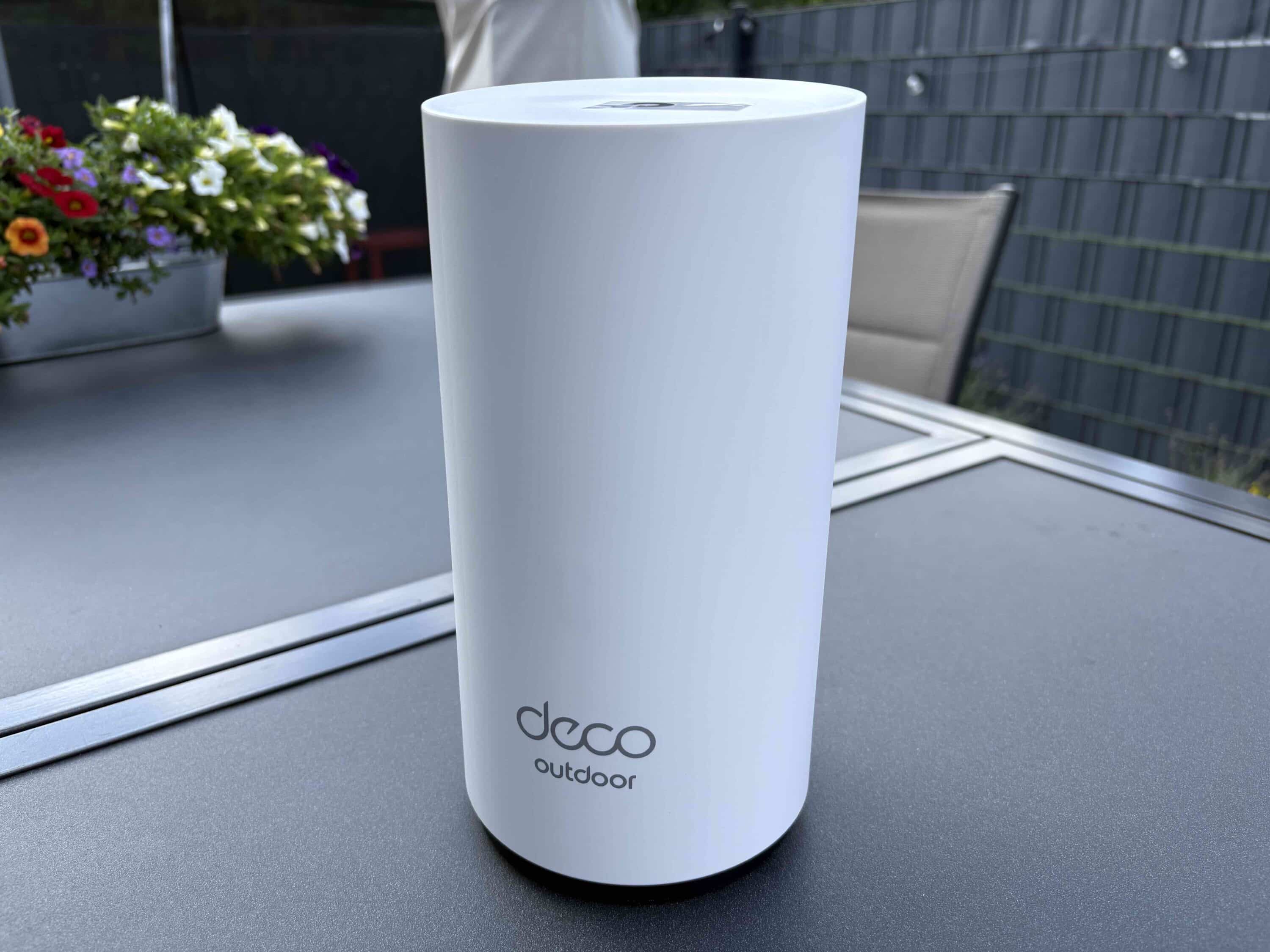
But TP-Link also has the right solution for those on the move. There is also an alternative in the form of the Deco X50 5G (€ 217.00 *), which is also designed to provide fast Internet outside the home in the garden or vacation home. TP-Link also offers the Deco X50 Outdoor for outdoor use, which was made available to us for testing.

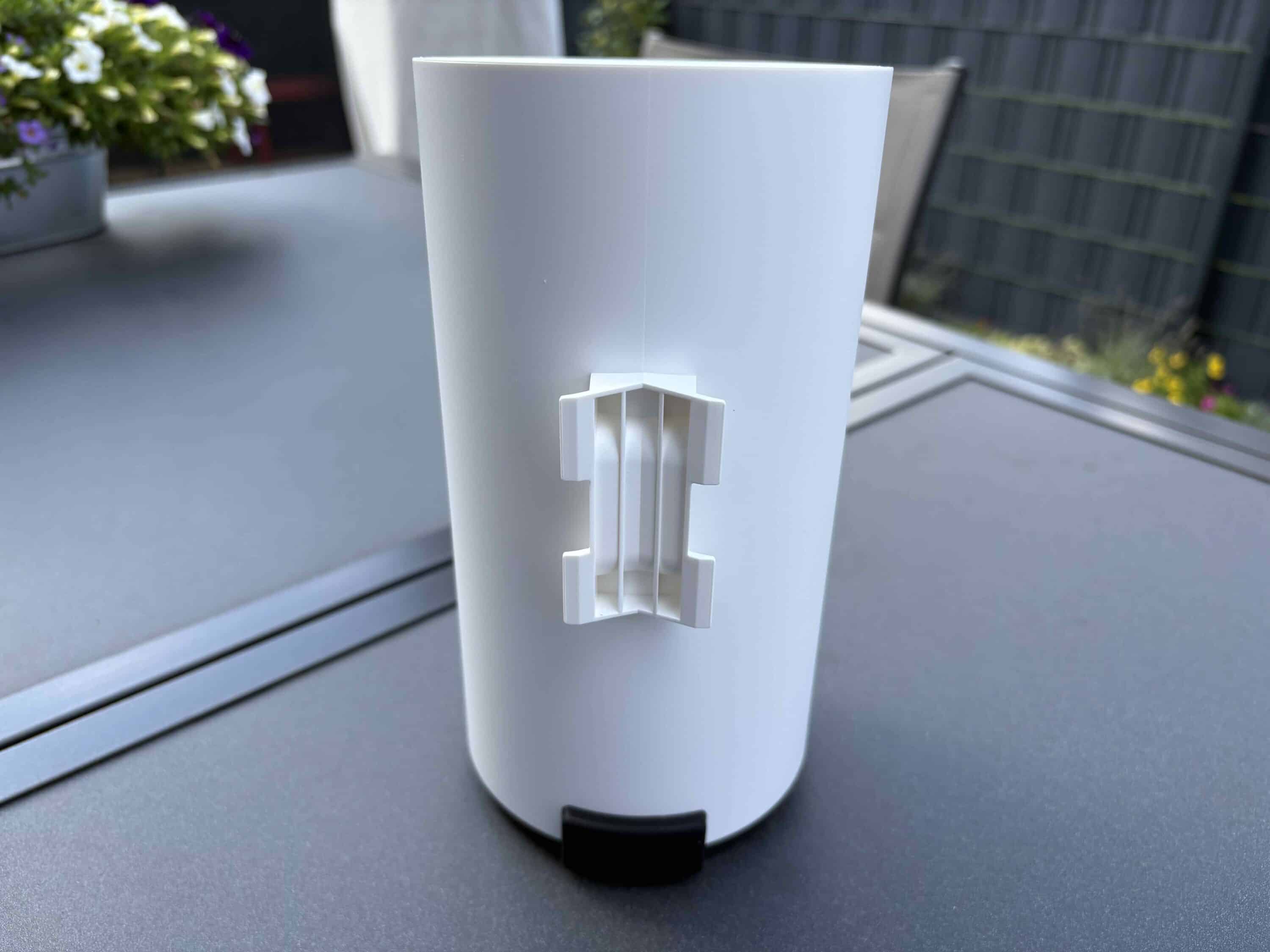
In terms of technical features, the outdoor version is similar to the standard version. The big difference lies in the housing. In contrast to the conventional Deco X50, the outdoor version offers IP65 certification to withstand rain showers and dirt outdoors. With dimensions of 110 × 121.3 × 215.5 mm, it is significantly higher, which is certainly due to the fact that TP-Link has to store the power supply unit in the housing. The outdoor model also offers various mounting options.

You can simply place it on a table, but you can also mount it on a wall or pole. The design language is nevertheless quite similar. The Deco X50 Outdoor also comes in the high-quality matt white that we know not only from the standard model, but also from other mesh systems such as the TP-Link Deco B25 (Review | € 109.90 *) or the Deco BE65 (Review | € 229.90 *). However, there are decisive differences when looking at the connections.

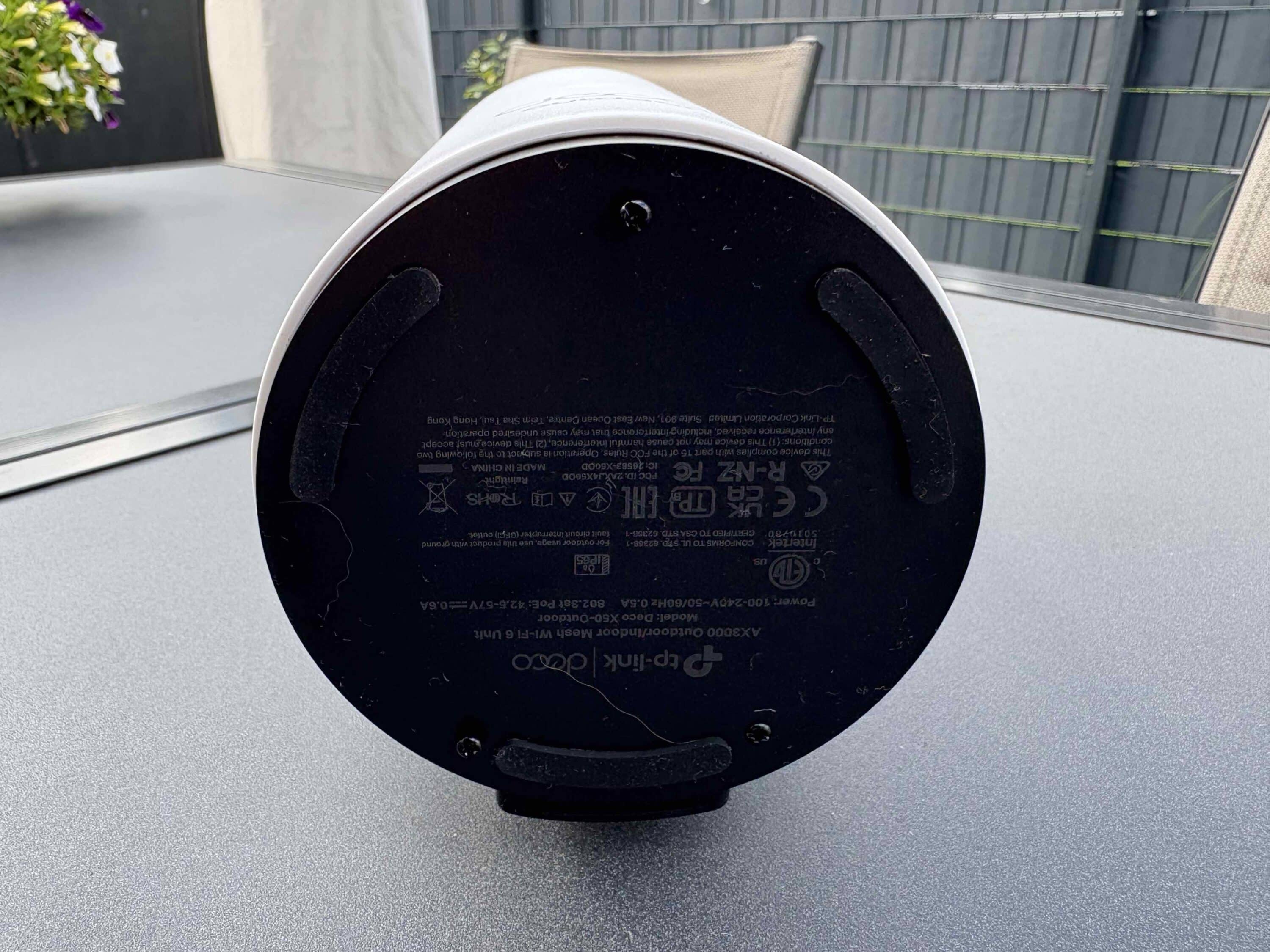
TP-Link has placed 2x Ethernet ports with 1 Gbit/s, which support Power over Ethernet (PoE), on the bottom of the X50 Outdoor. There is also an AC connection and a reset button. These are protected from water and dust by the base. The standard version has a total of three Ethernet ports. So if you only want to use the mesh system indoors anyway, you can do without the outdoor version and opt for the standard version instead to get one more Ethernet port. Unless you are interested in PoE.
TP-Link Deco X50 test: Commissioning
Even for newcomers to network technology, setting up the Deco X50 Outdoor is child’s play. Once you have decided on the right location for your system, all you have to do is supply it with power. As already mentioned, you can use either the AC port or PoE. If you opt for the classic mains plug, you will also need to plug a LAN cable into the X50 Outdoor in addition to the mains cable.
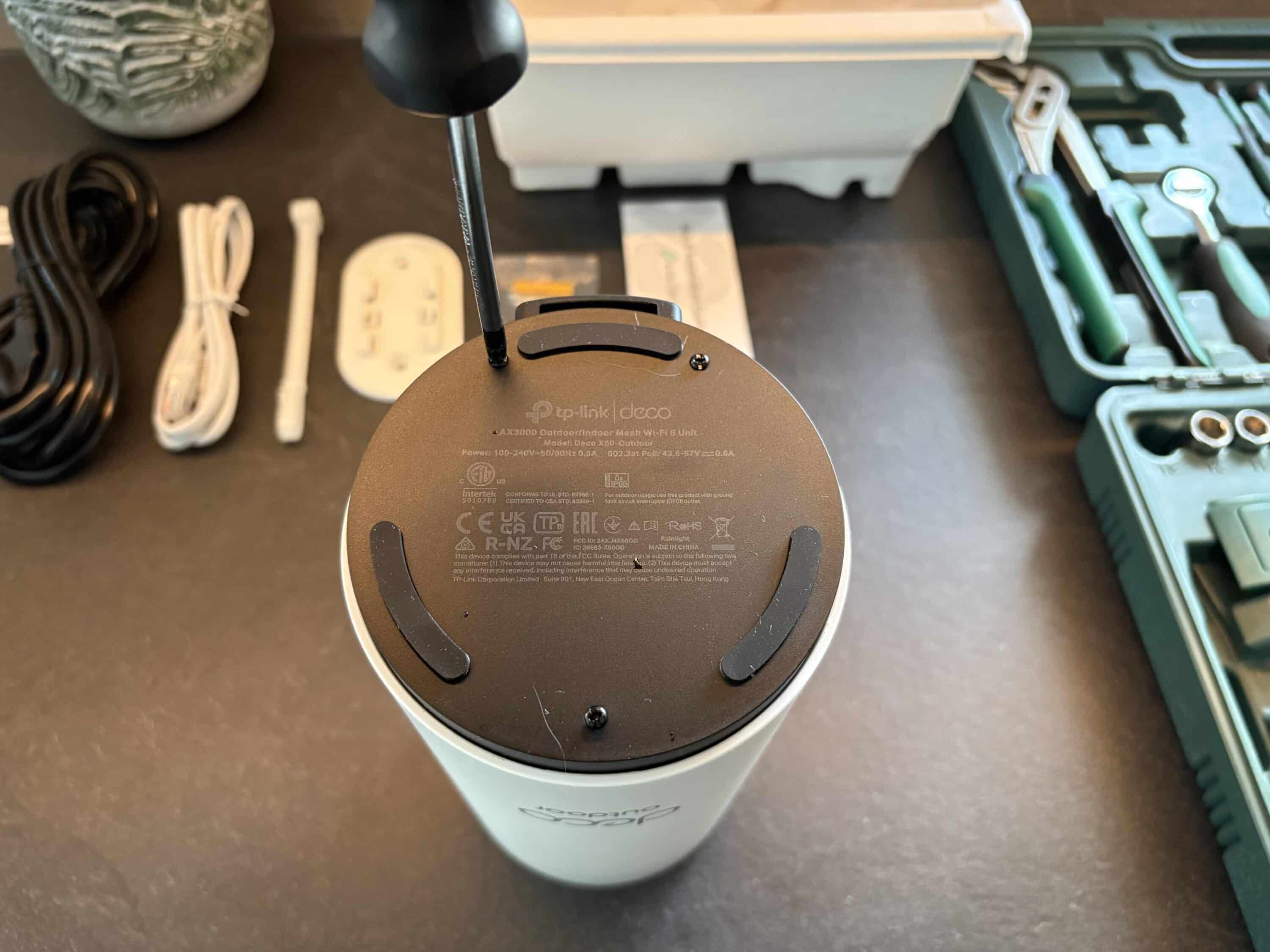
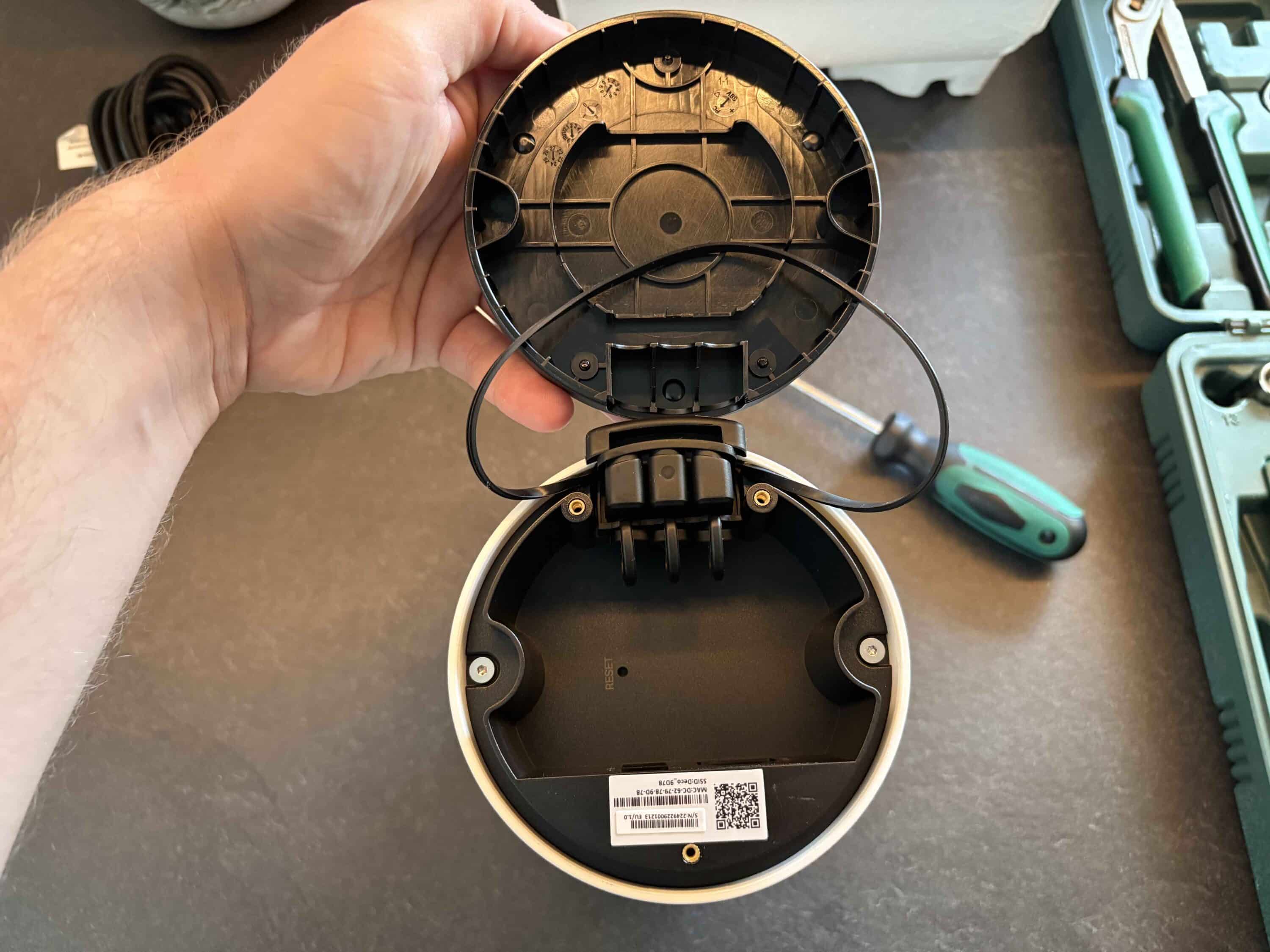
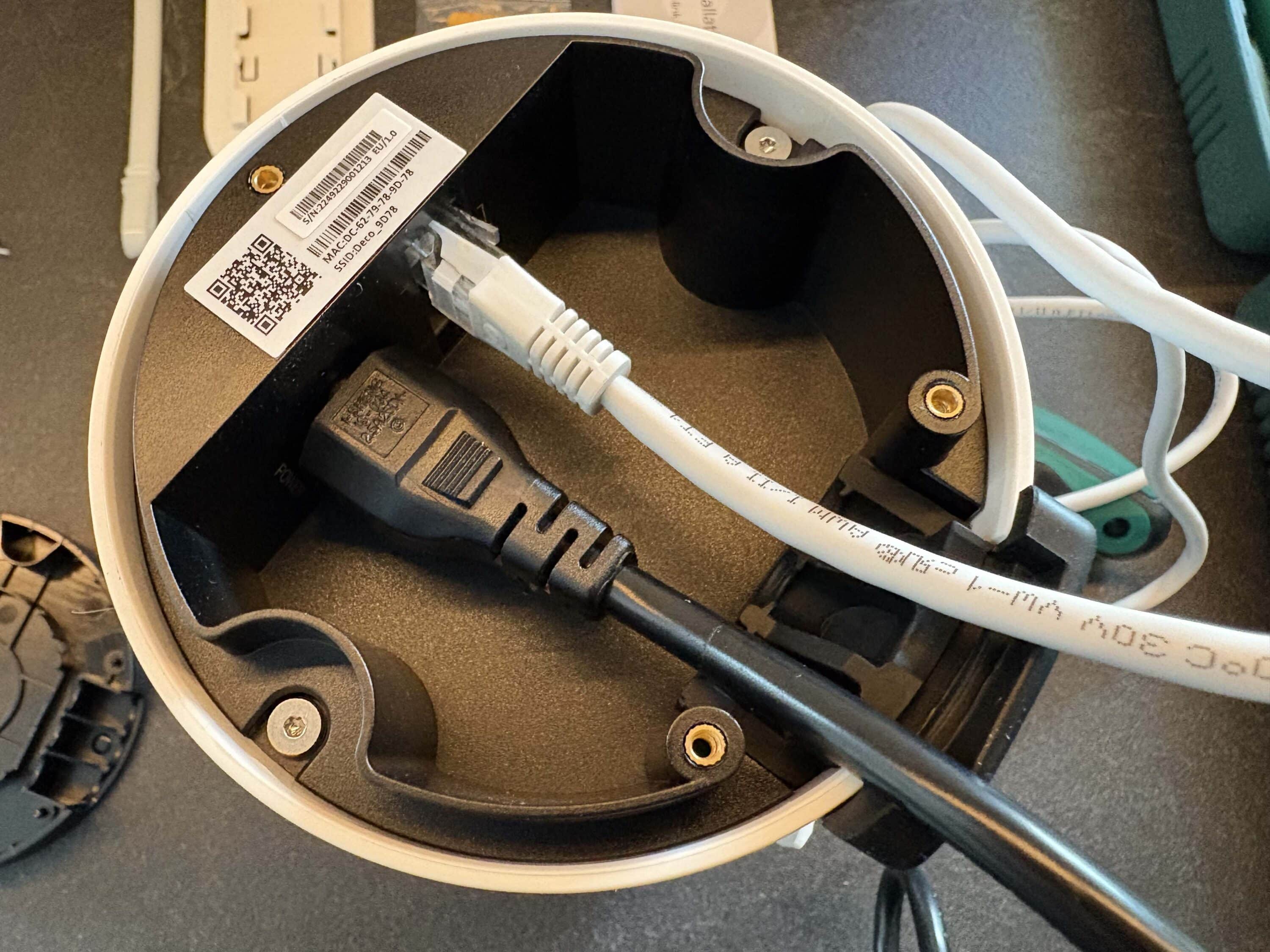
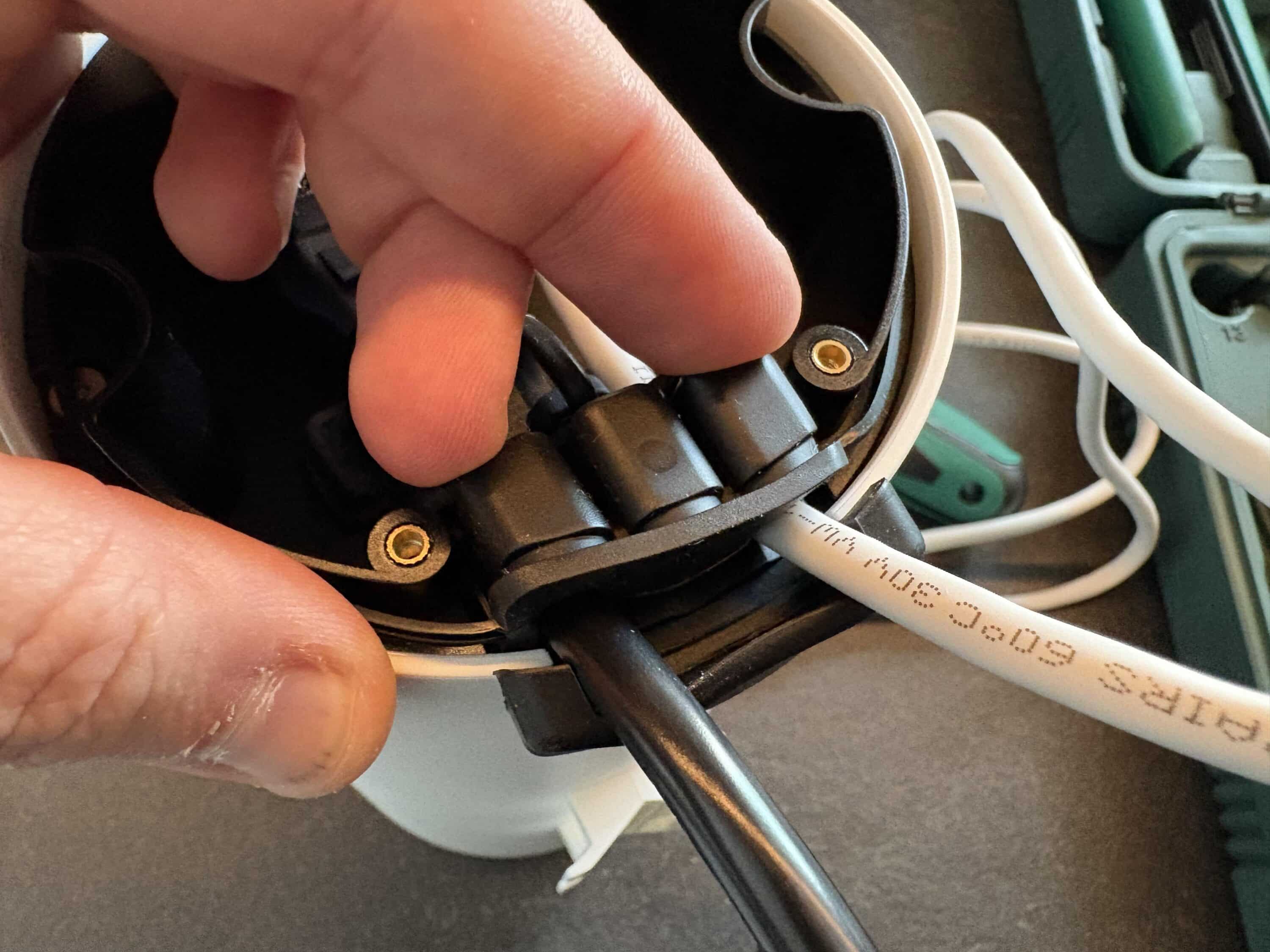
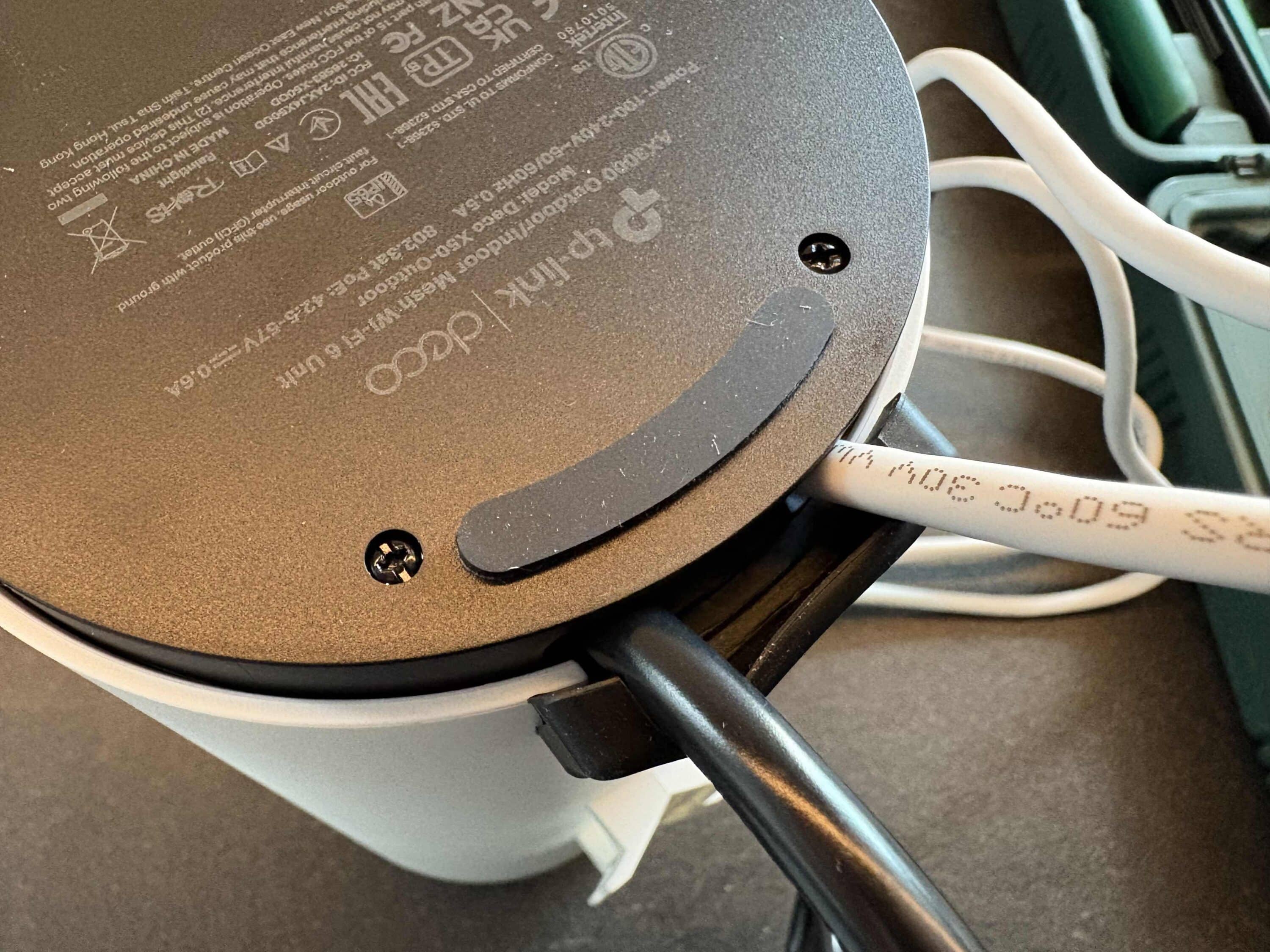
This is at least the case if the X50 is your main Deco. However, if it is to be integrated into an existing mesh system, the mains cable is sufficient. With PoE, however, the LAN cable is sufficient, as the X50 receives both Internet and power via the cable. As soon as the mesh system is supplied with power, it continues in the Deco app.
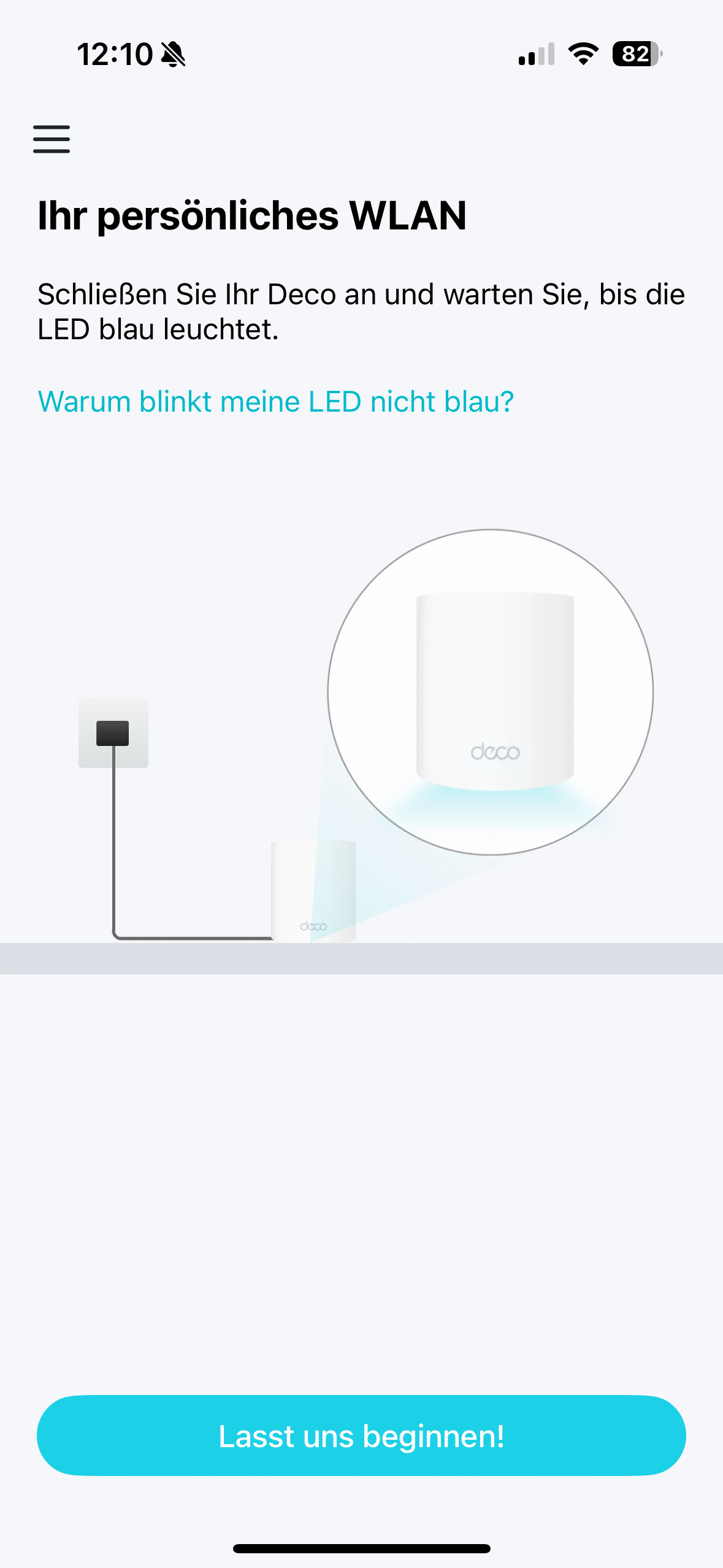
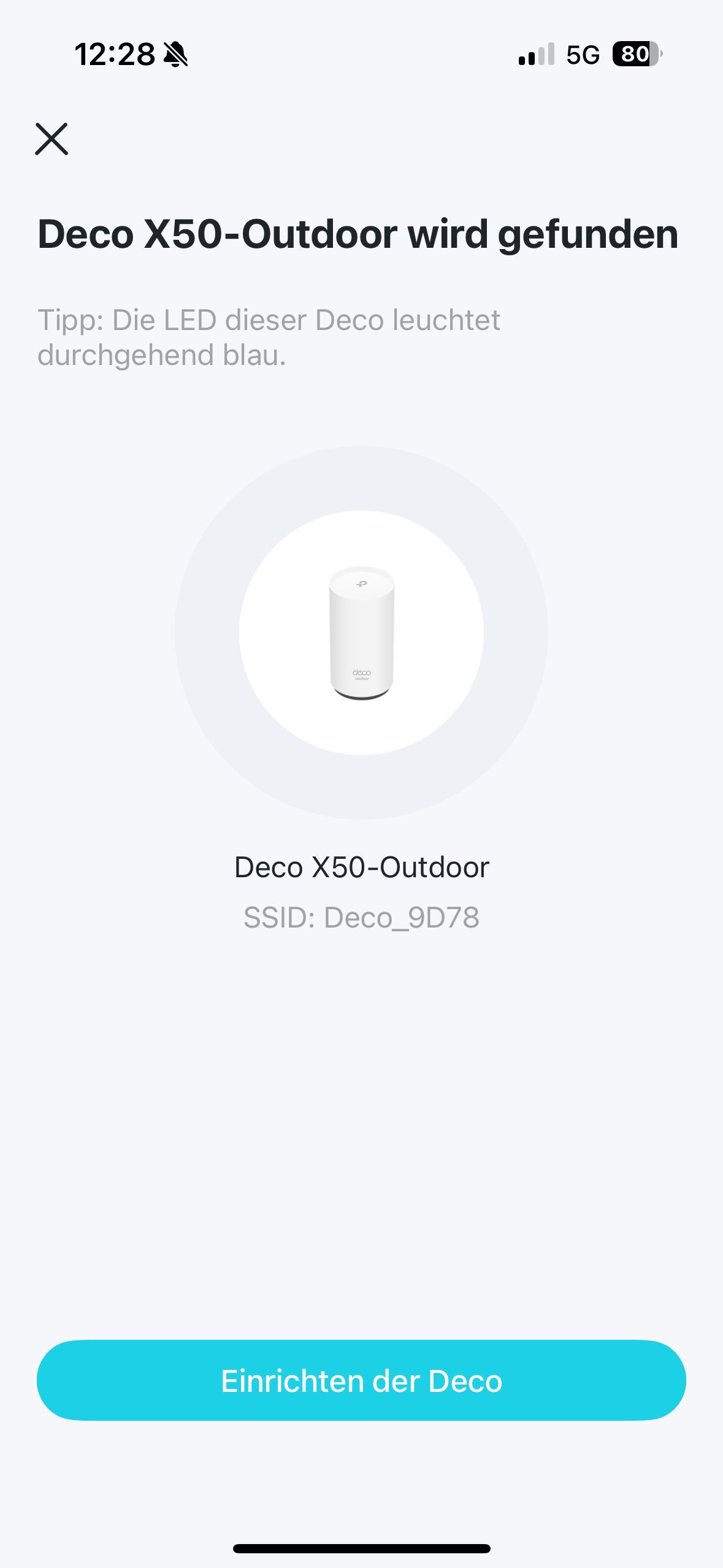
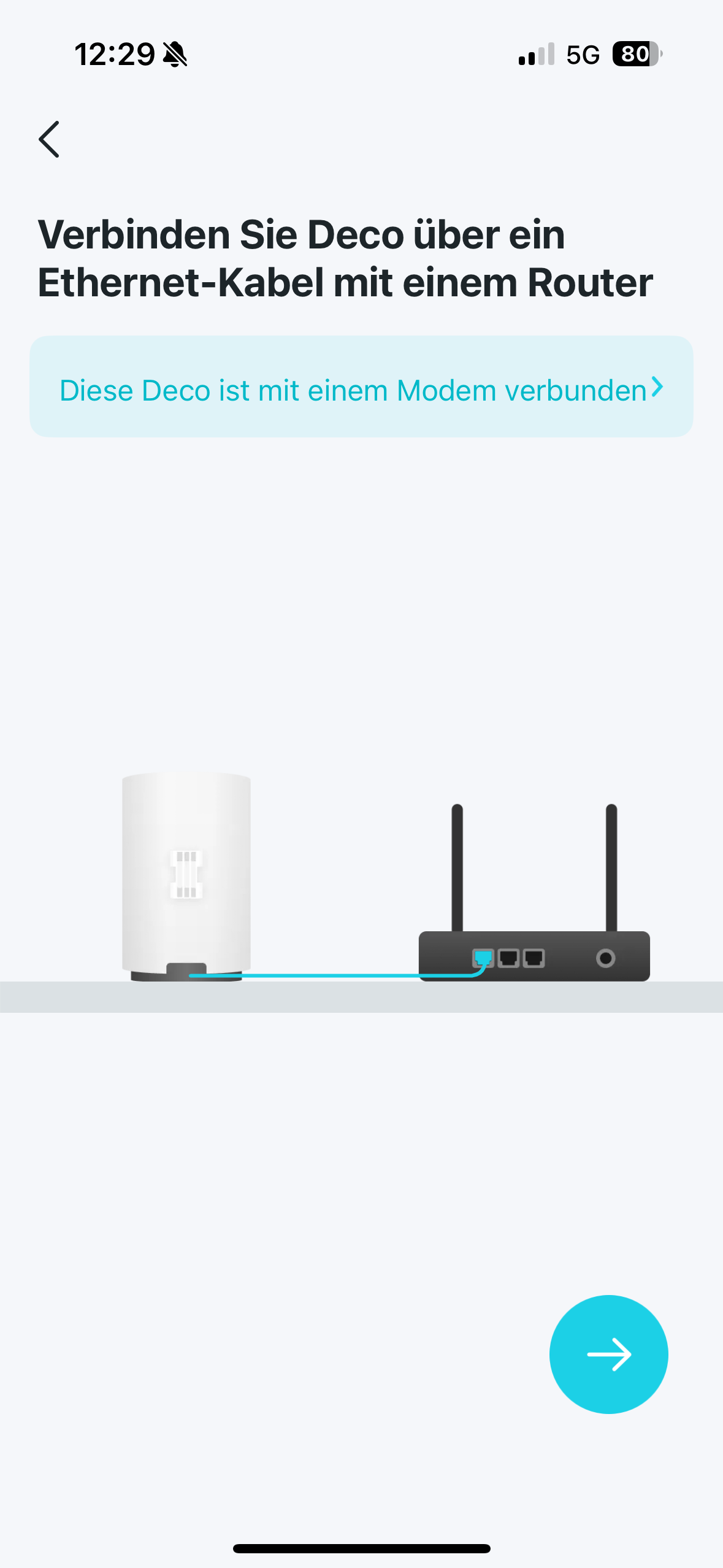
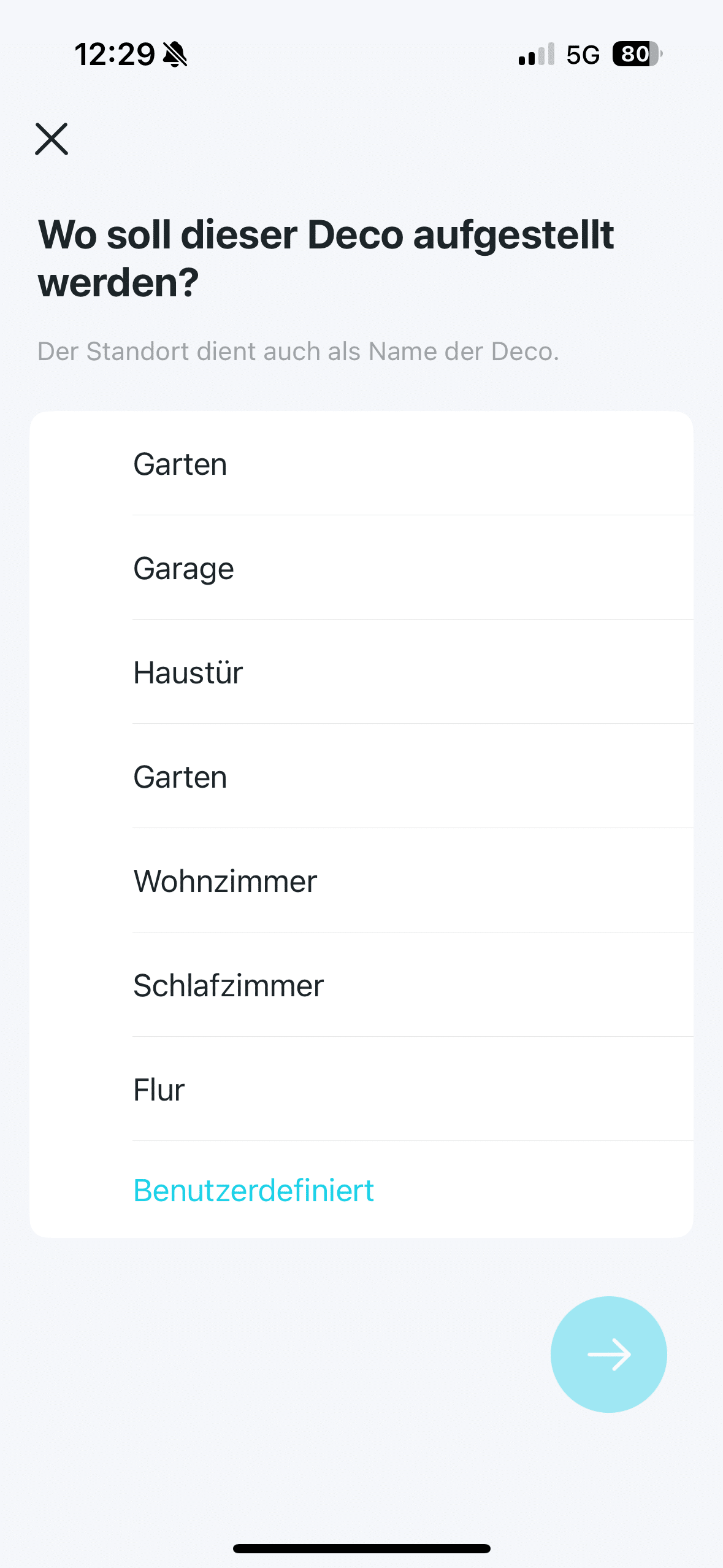
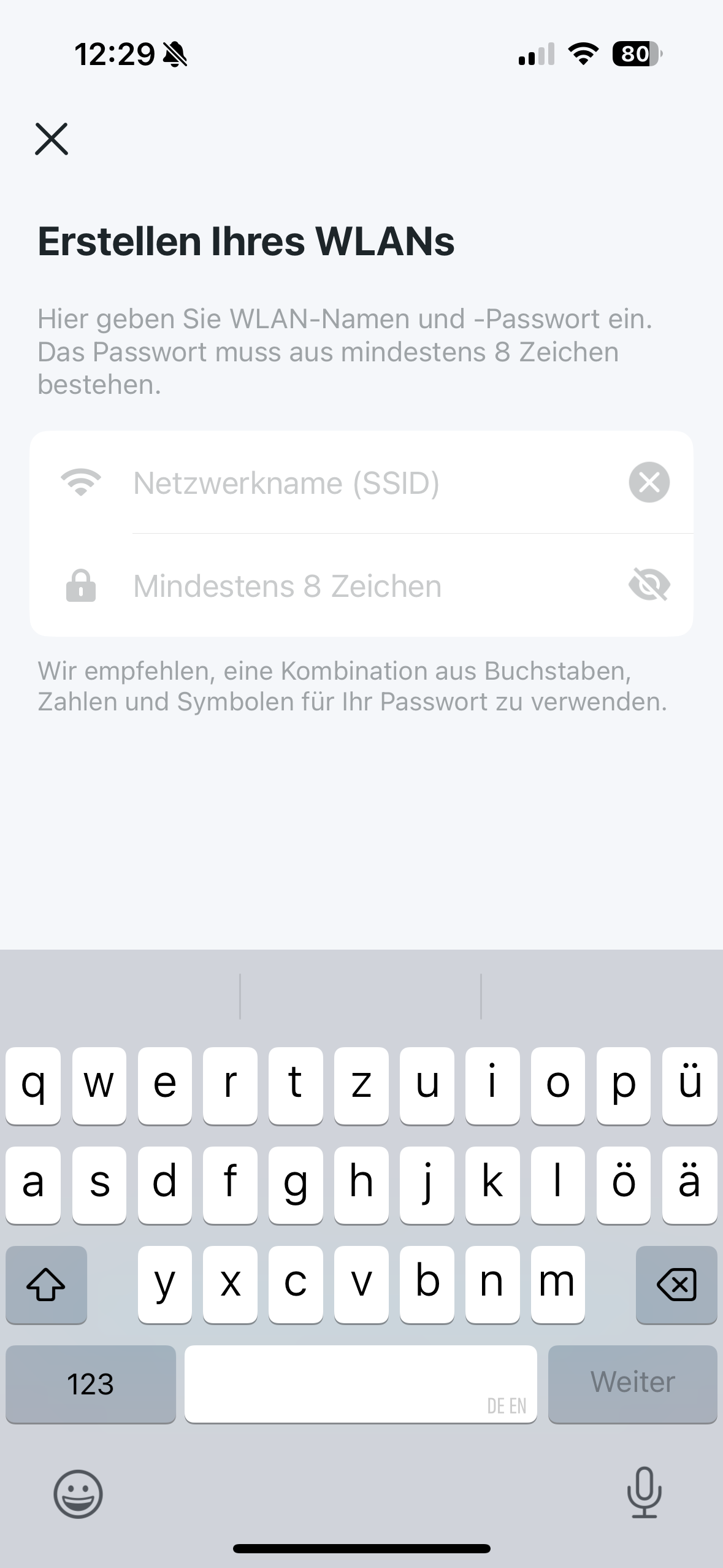
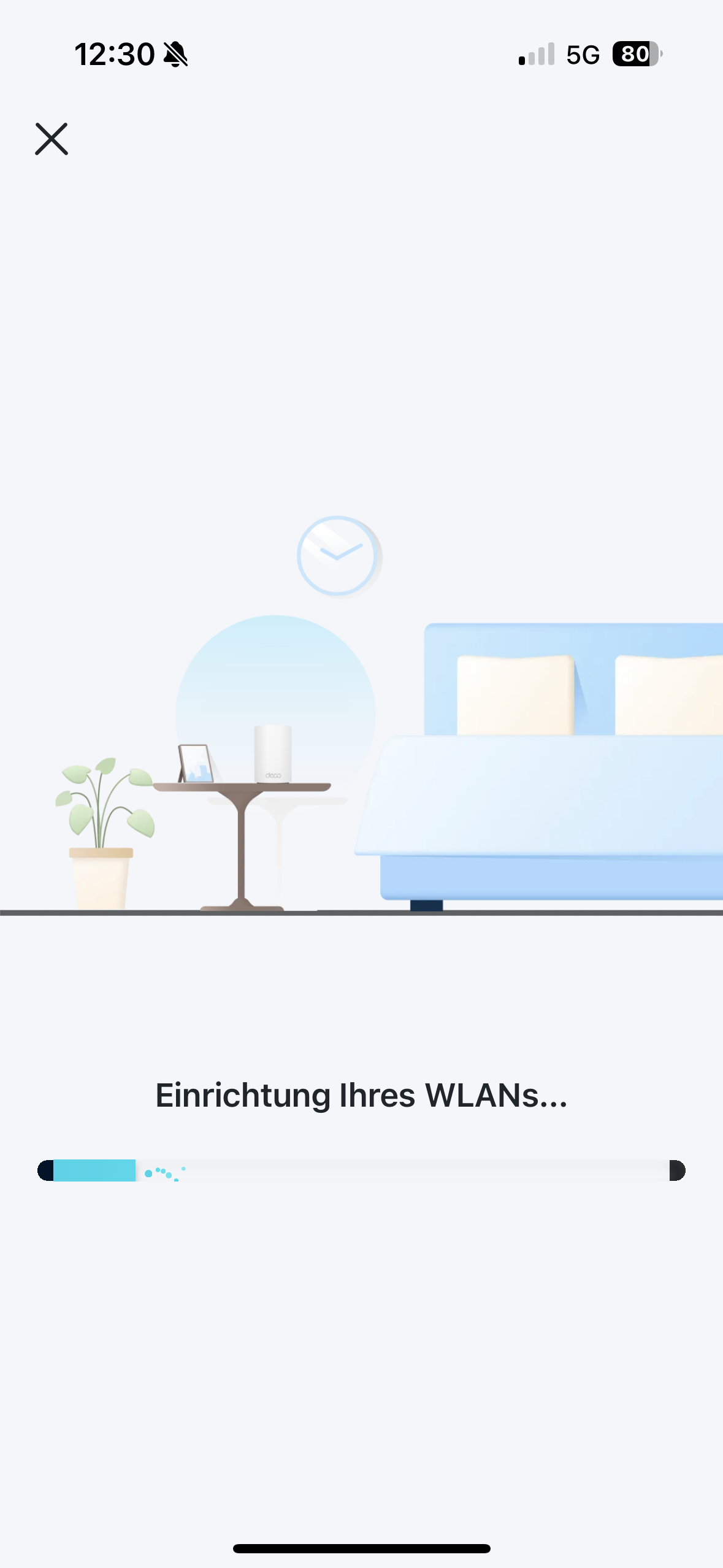
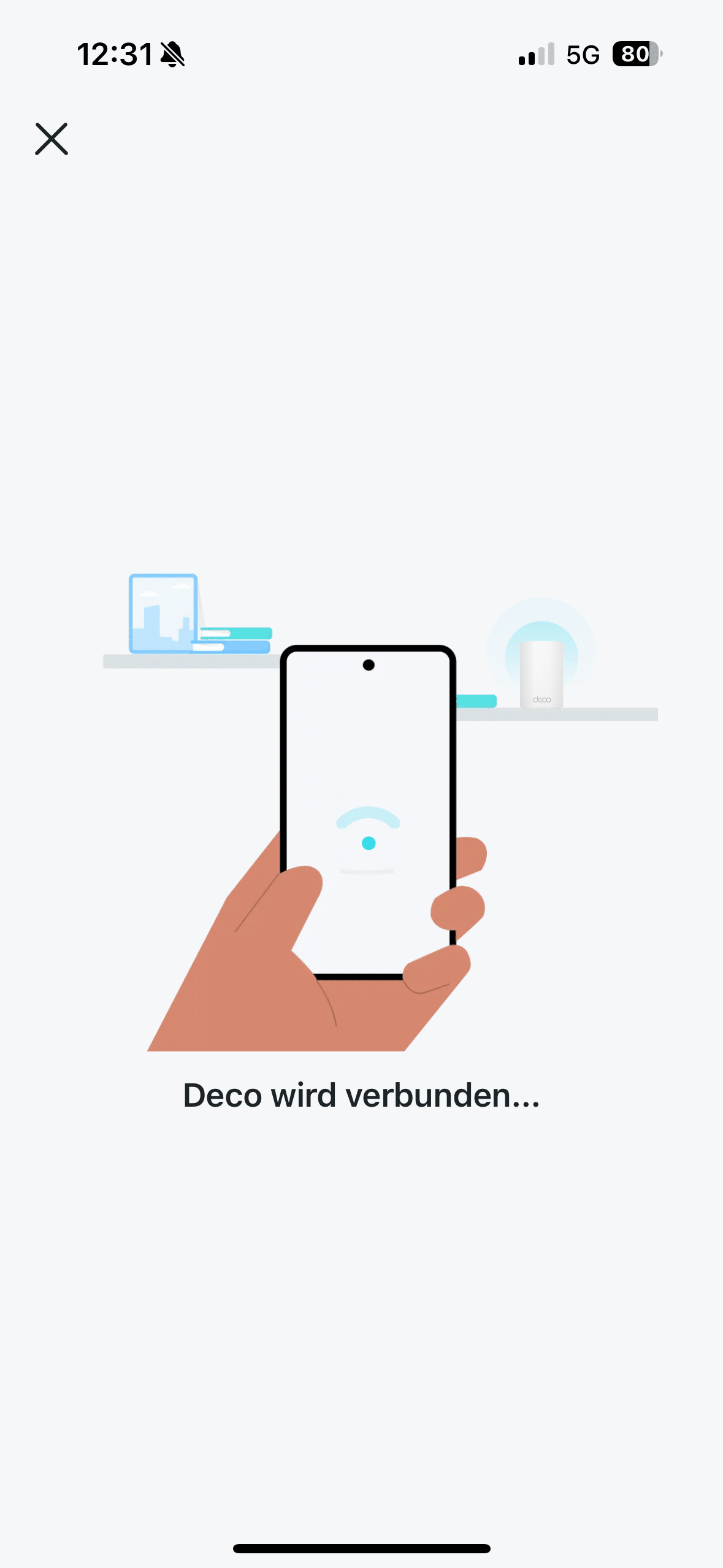
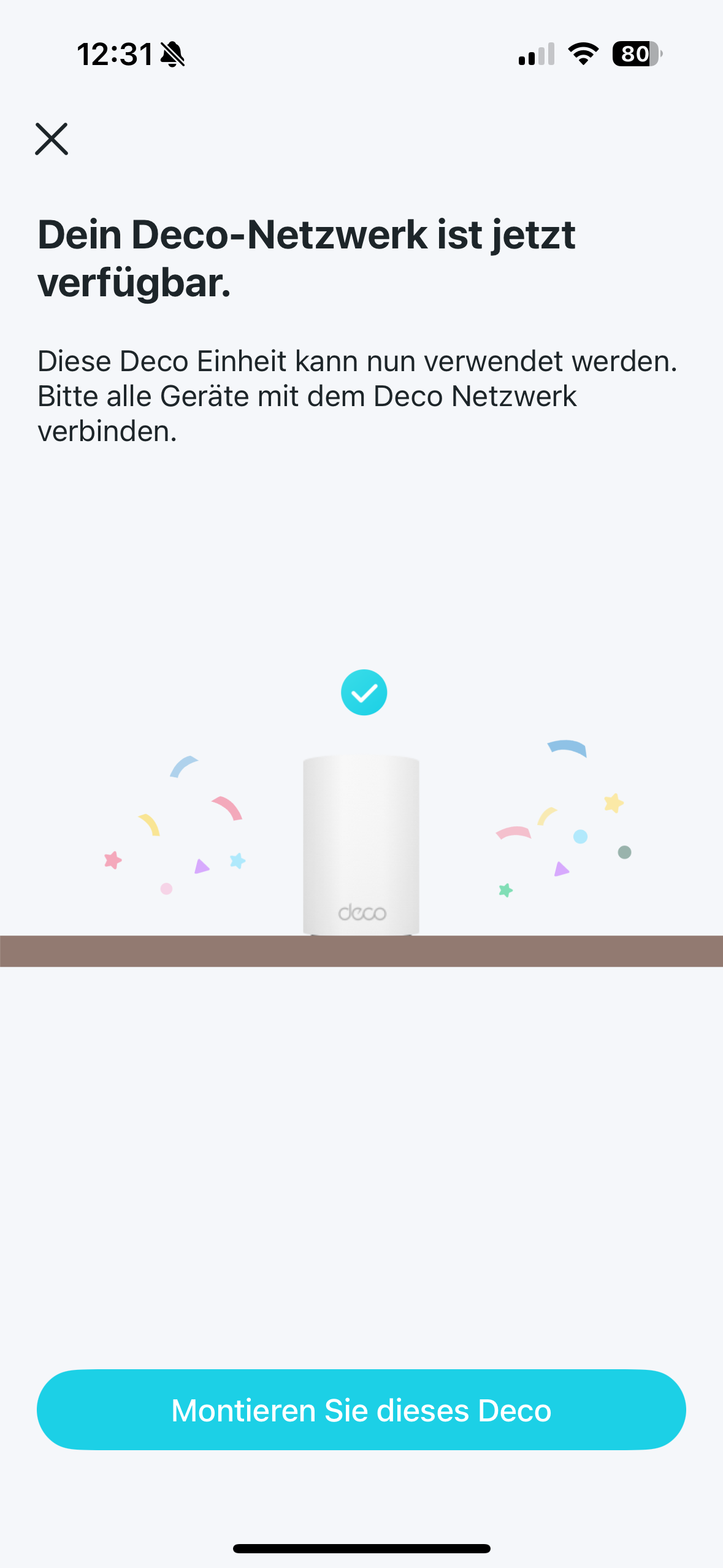
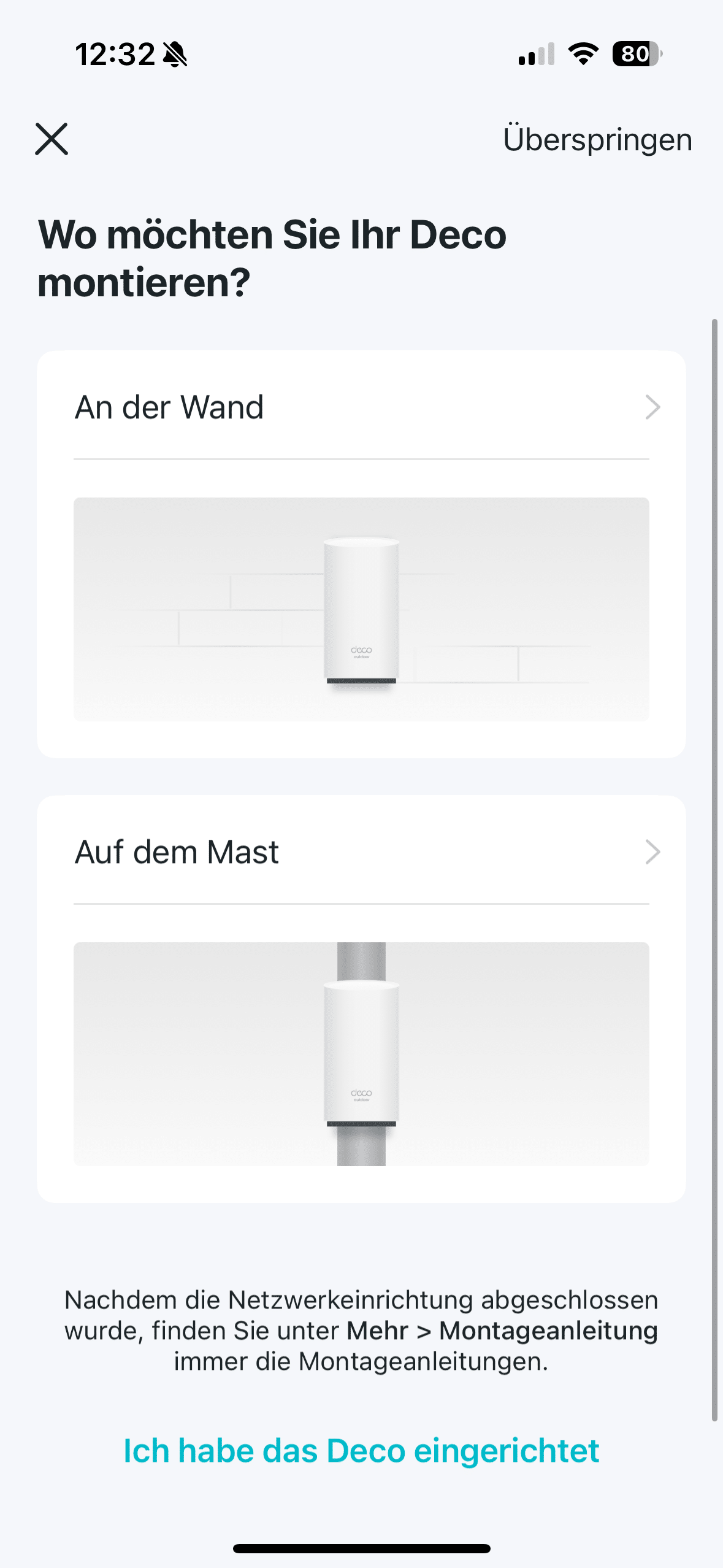
The X50 recognizes this immediately and you can add it as a new device. The mesh system is ready for use within a few minutes. Once you have set up the “main device”, you can now expand your mesh system with additional devices as required. This is even easier as you only need to connect another Deco Mesh to the power supply. It will then automatically connect to the Mesh network.
TP-Link Deco X50 test: What’s under the hood?
Technically, the X50 Outdoor is based on the X50. This means that you get the same hardware here, just in a weatherproof housing. Firstly, the mesh system supports WiFi 6, specifically the WiFi standards IEEE 802.11ax/ac/n/a 5 GHz and IEEE 802.11ax/n/b/g 2.4 GHz. WiFi 7 is excluded, but this is only supported by a few end devices anyway. TP-Link specifies 2.4 GHz and 5 GHz as compatible frequency bands.
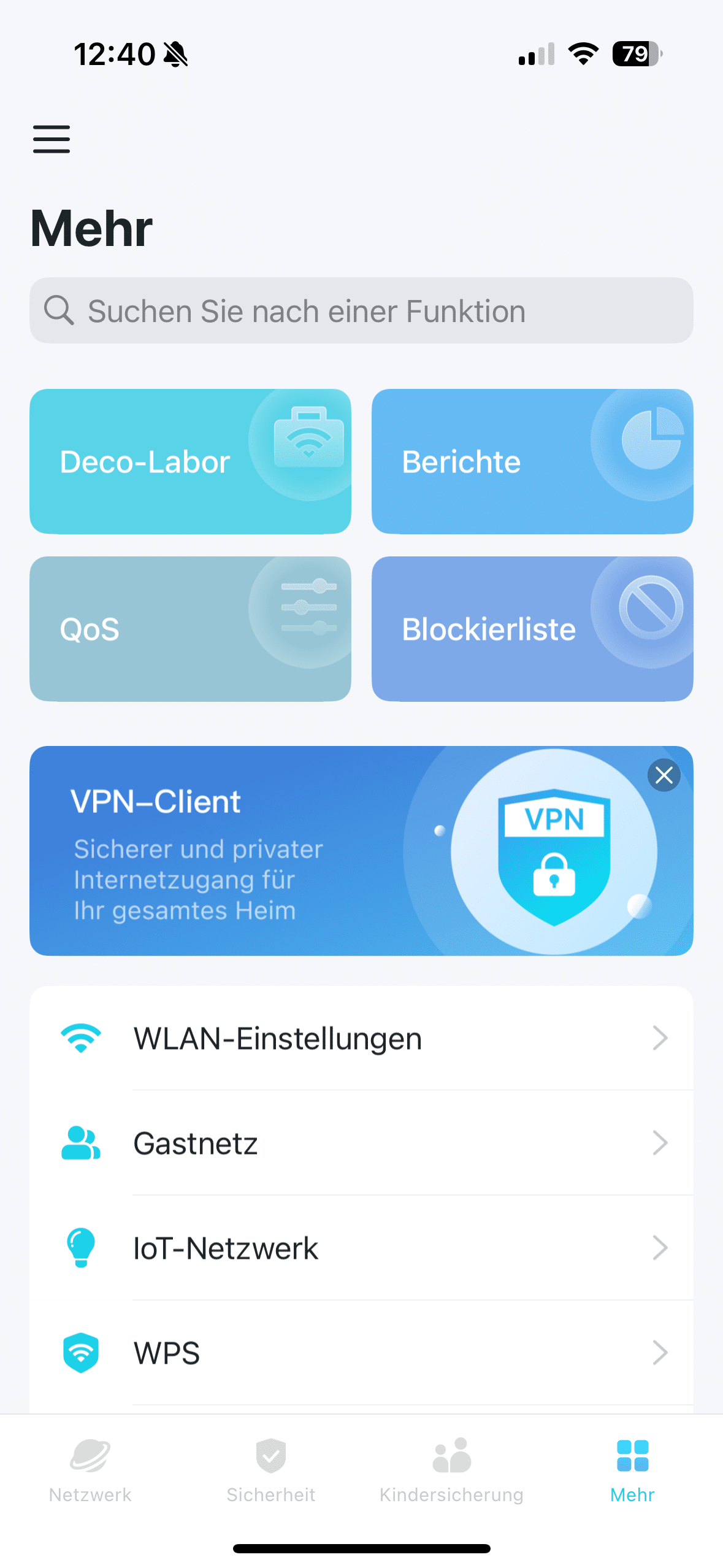
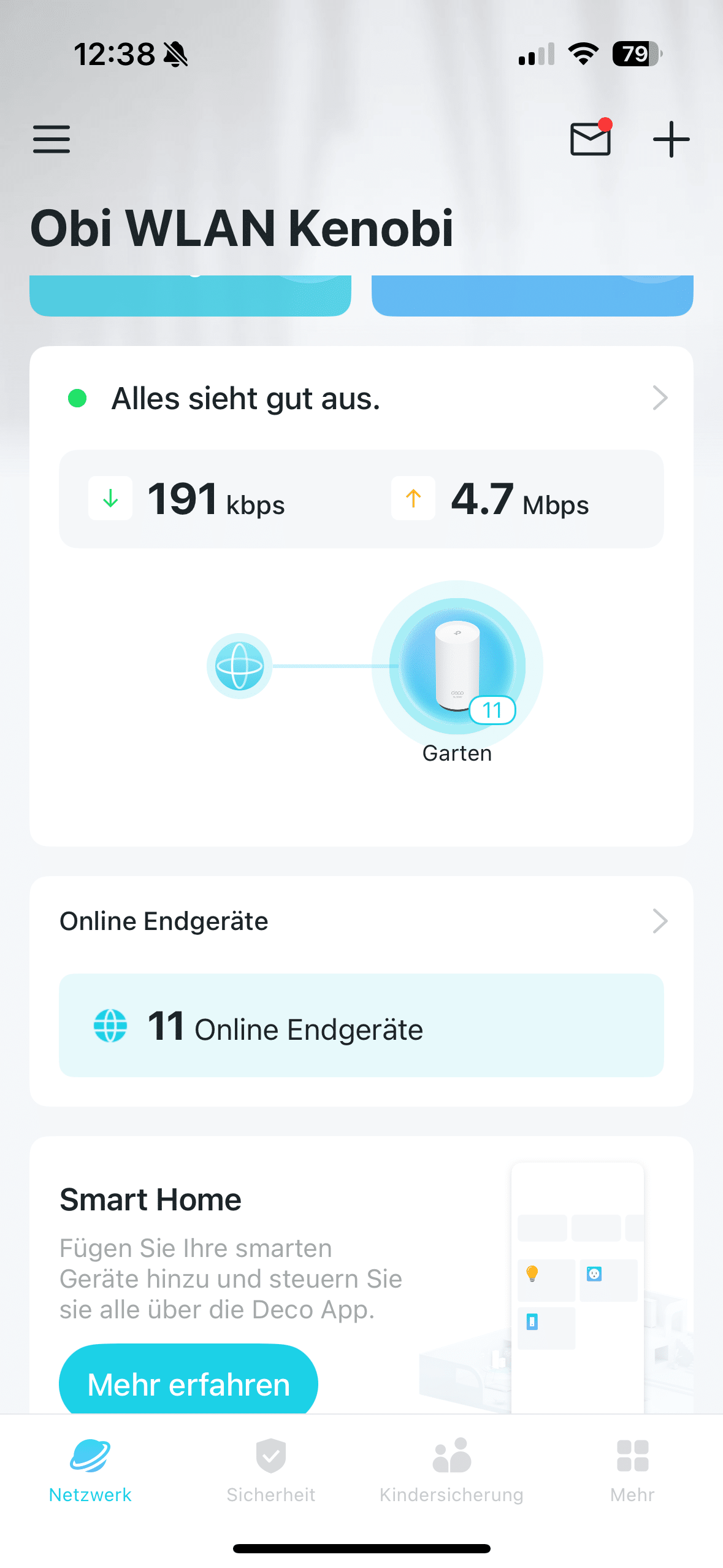
In terms of speed, up to 574 Mbit/s should be possible in the 2.4 GHz band and even up to 2,402 Mbit/s in the 5 GHz band. To ensure maximum stability and high speeds, the system automatically distributes the end devices across the various frequency bands. Thanks to MU-MIMO, the response time and connection speed should be increased even further.


The manufacturer promises a really good signal coverage of 230 m². This is made possible by the two powerful antennas located inside. The AI-supported mesh function is a real highlight. If you have several devices from the Deco X50 series in use, this ensures that your end device is always connected to the module with the strongest signal.
TP-Link Deco X50 test: Practice
The X50 Outdoor really shone in the practical test. We were offered a really strong WLAN. I sent large files of 3 to 4 GB within the network and was surprised at how quickly the whole thing worked. And the system scores points not only for pure data transfer, but also for Internet speed.

I was able to tease the required speed out of my 100K line without any problems. The system also scored highly in terms of latency with low ping values, which should be of particular interest to gamers. Anyone already using X50 modules for indoor use can therefore look forward to a practical extension for the garden.
Conclusion
With the Deco X50 Outdoor, TP-Link delivers a well thought-out extension to its popular mesh series, which has been specially designed for outdoor use. The combination of WiFi 6 support, strong range, high transmission speed and reliable mesh functionality is impressive across the board – even in adverse weather conditions thanks to IP65 certification. Even beginners can set it up in just a few minutes, while functions such as Power over Ethernet, the convenient app and AI-supported mesh ensure a high level of user convenience.

In practice, the system shone with very good data rates and stable performance – even with data-intensive applications. So if you already use a Deco system or are planning to extend your network into the garden or yard, the Deco X50 Outdoor is a powerful and elegant solution. The only downside: compared to the standard version, there is one less Ethernet port – but thanks to PoE and practical features, this is hardly an issue.

VORTEILE
- Weatherproof design (IP65)
- Easy to set up
- Fast WiFi 6
- Mesh compatibility
- Power over Ethernet (PoE)
- Good range
NACHTEILE
- Only two Ethernet ports
- No WiFi 7
Fazit
The Deco X50 Outdoor is an excellent choice for anyone who doesn't want to do without stable high-speed WLAN outdoors.