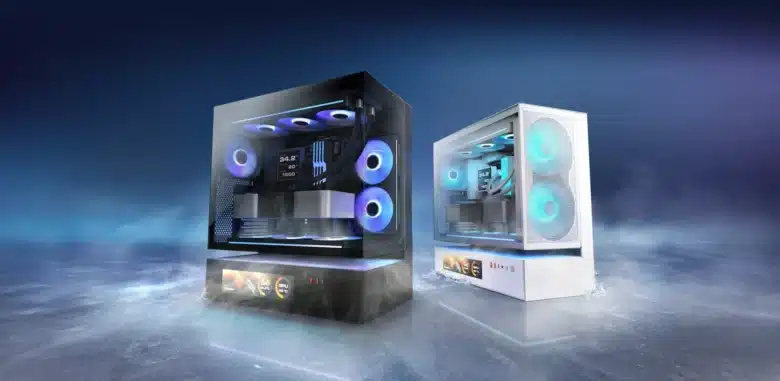
With the V2, the young manufacturer APNX is launching a new case on the market that is aimed specifically at enthusiasts, modders and gamers with high demands. According to the company, the chassis sets new standards: it is said to be “best in class” – both in terms of visible glass surface and cooling performance.
The APNX V2 does not stand alone, but is flanked by an entire product line. The in-house FP3 fans, which are available in various sizes and are pre-installed directly in the V2, are being released alongside the case. The portfolio is complemented by the Max G1 power supply series, which starts in the 850, 1000 and 1200 watt performance classes and is therefore also designed for high-end systems with power-hungry CPUs and GPUs.
APNX is thus clearly positioning itself in the premium segment, combining eye-catching design with practical features and competing directly with established names in the industry such as Lian Li or Hyte.
Technical details
| Model | APX-V2-BK-FRB / APX-V2-WT-FRW |
|---|---|
| Case type | Mid-Tower |
| colors | Black / White |
| Case material | SGCC steel, 0.8 mm, tempered glass (3-panel) |
| Dimensions (total) | 480 × 312 × 500 mm (D × W × H) |
| Capacity | 71 liters |
| Mainboards | ATX / Micro-ATX / Mini-ITX |
| Expansion slots | 7 |
| Storage slots | 1 × 3.5″ / 2 × 2.5″ or 4 × 2.5″ |
| GPU compatibility | up to 445 mm (without front radiator) |
| CPU cooler height | up to 183 mm |
| Power supply unit | ATX, up to 270 mm |
| Cooling options (air) | Right front: 3 × 120 mm / 140 mm Right-top: 3 × 120 mm Bottom: 3 × 120 mm / 140 mm or 2 × 160 mm Rear: 2 × 120 mm or 1 × 140 mm Included: 4 × FP3-140 (ARGB) |
| Cooling options (water) | Front-right: up to 360 mm Top: up to 360 mm Bottom: up to 360 mm Rear: 120 mm |
| I/O panel | USB 3.2 Gen2x2 Type-C × 1, USB 3.2 Gen1 Type-A × 2, Audio & Mic |
| Cable management | 99 mm cable management depth, dual-chamber layout |
| The price | 129,90 € |
Scope of delivery
The APNX V2 arrives well protected: The housing is securely packed in a cardboard box, padded all around and all glass panels are additionally covered with protective film. This effectively prevents damage during transportation.
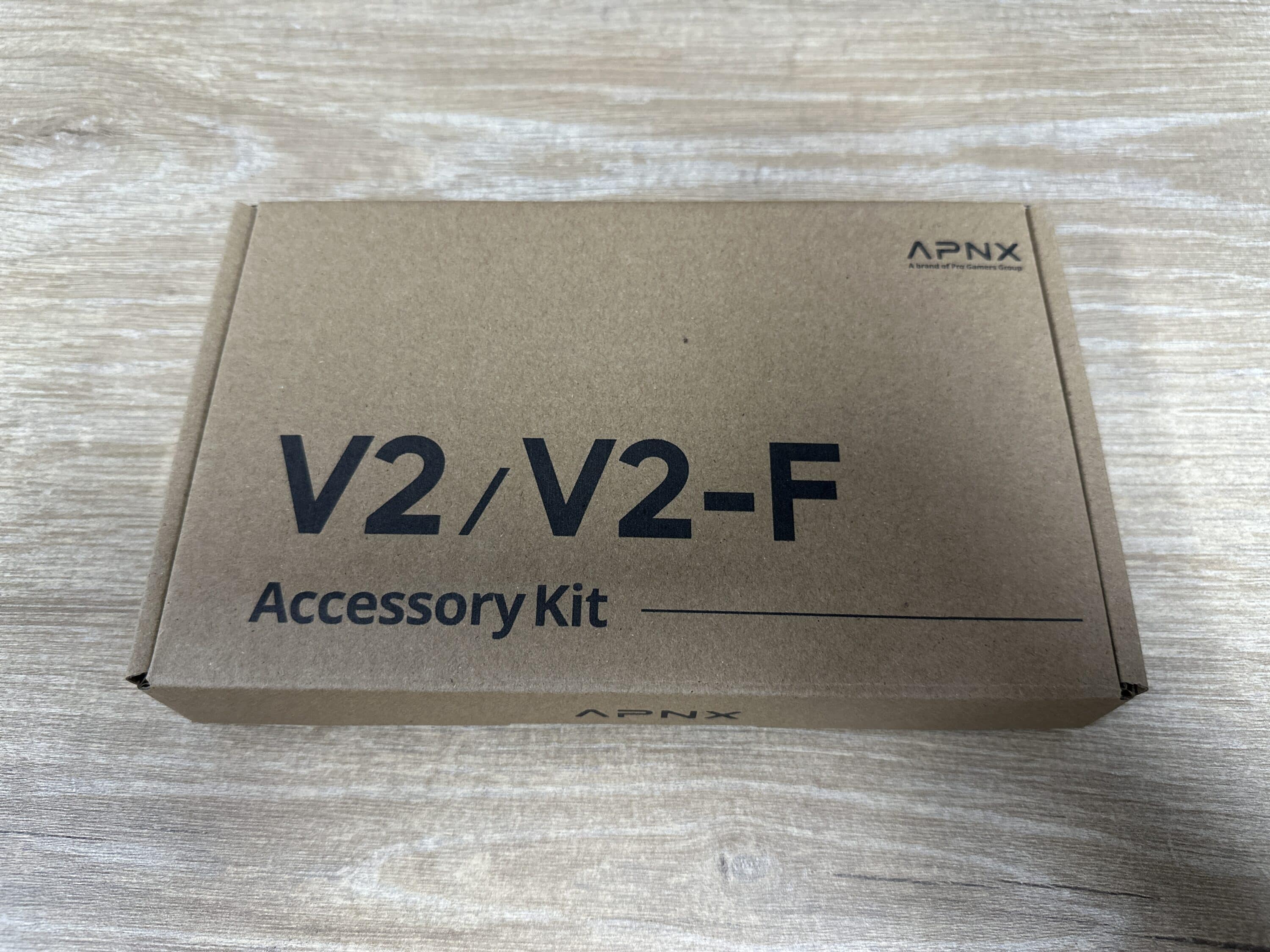
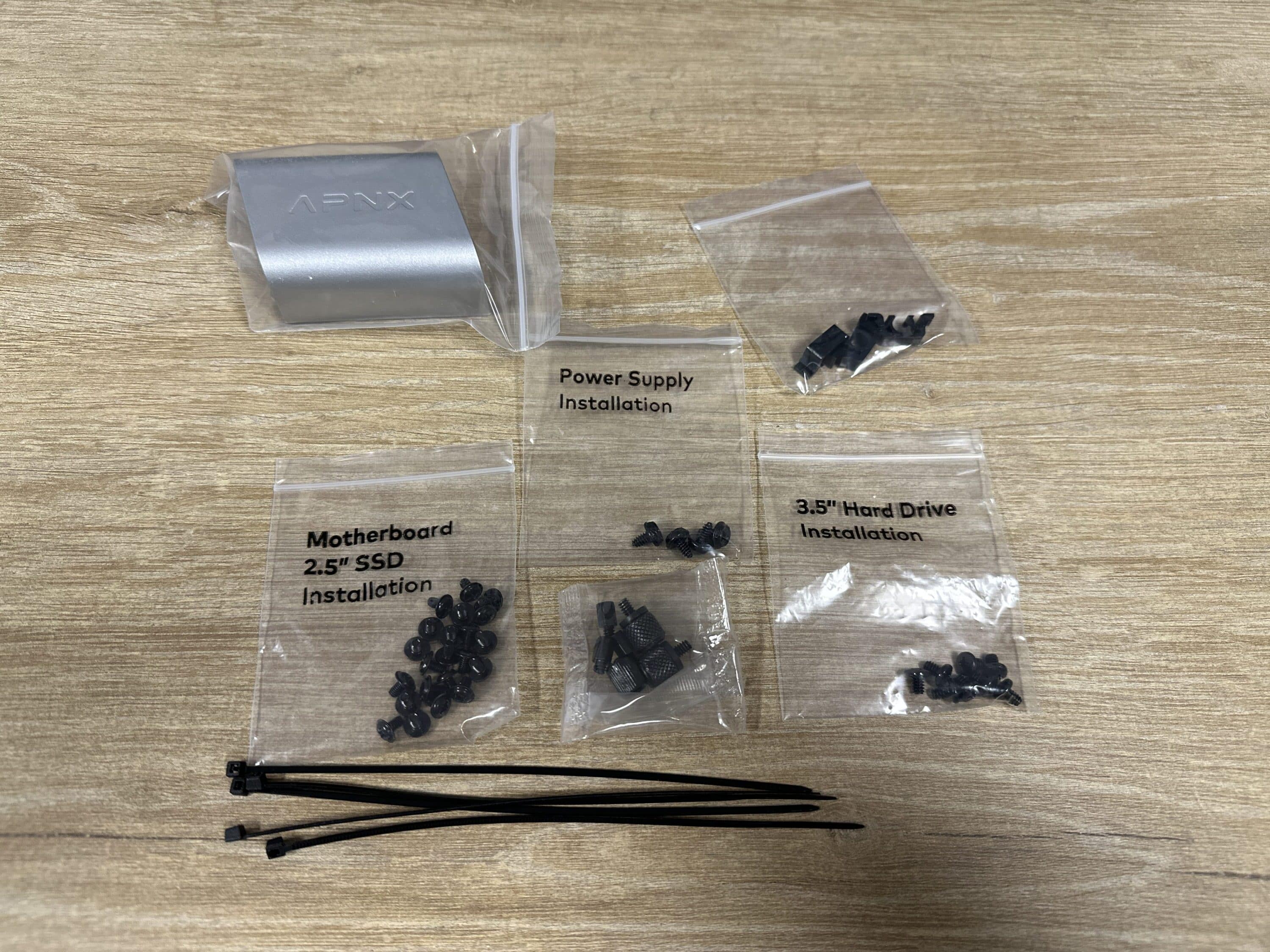
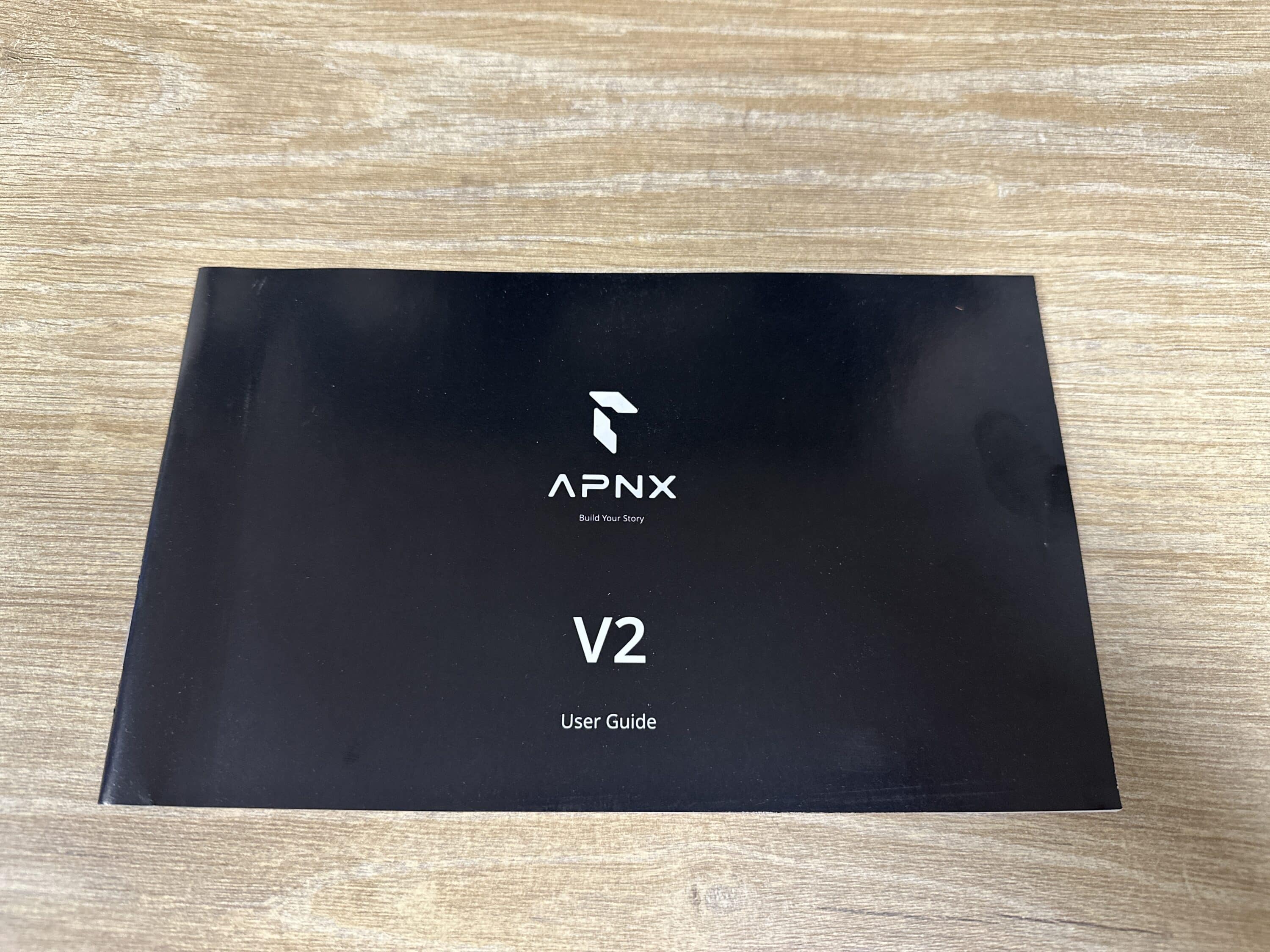
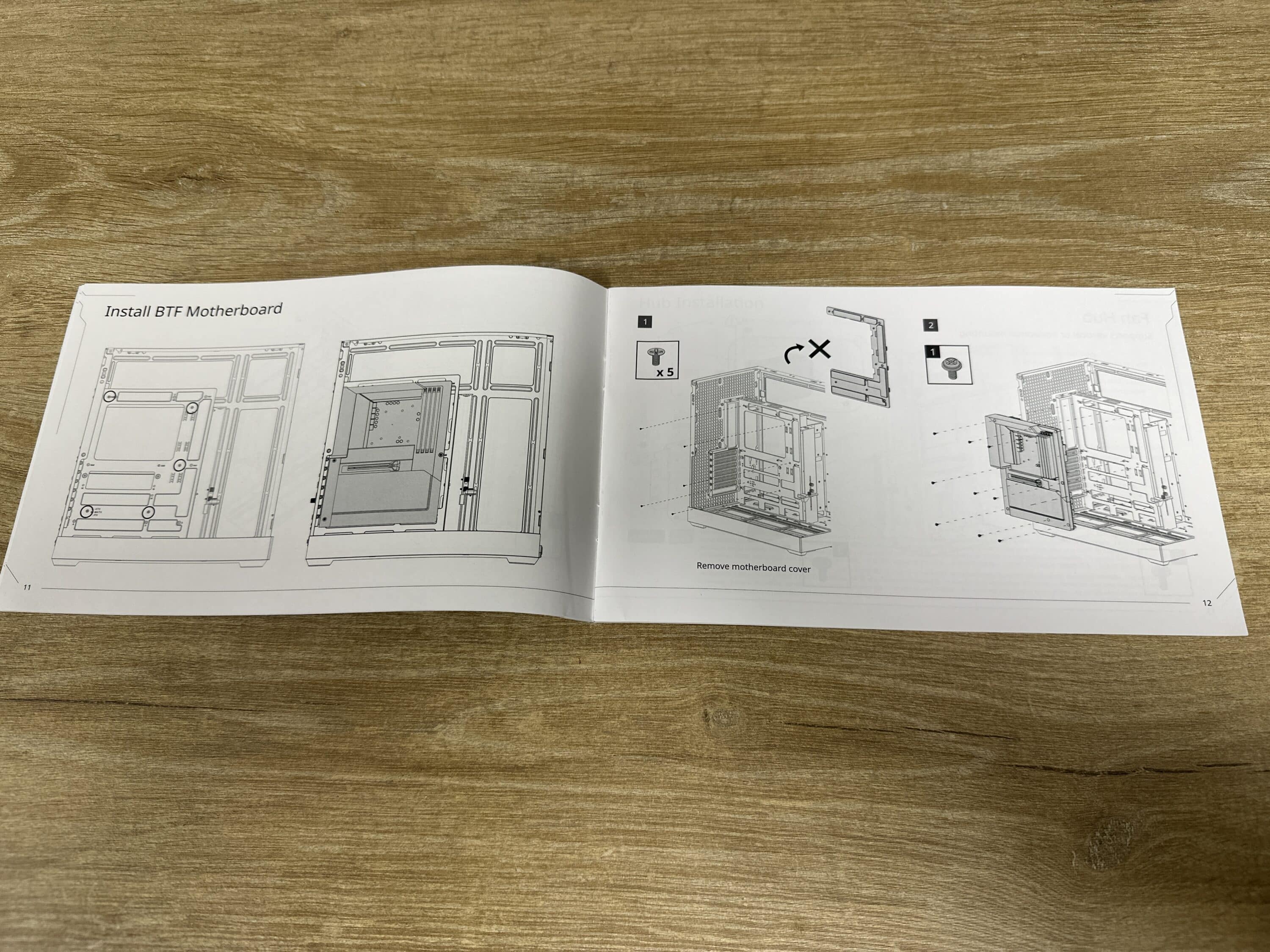
Inside you will find a generous scope of delivery for this price range:
- Pre-installed fans: Four 140 mm fans from the in-house FP3 series with ARGB lighting, already installed at the factory.
- PWM/ARGB hub: The supplied APNX hub (10 ports) enables centralized control of fan speeds and lighting.
- Accessory package: All necessary screws and mounting materials are included in a separate box – neatly sorted and well labeled.
- Illustrated assembly instructions: Clearly structured instructions with illustrations make installation easier, even for less experienced PC builders.
This means that the scope of delivery is not only functional, but also well thought out – a plus point that benefits both beginners and experienced hobbyists.
External impression
Even at first glance, the APNX V2 clearly positions itself as a showcase case. The three large tempered glass panels on the front, side and lid provide an almost unrestricted view of the interior. With a glass coverage of 86.5% of the entire front surface, the V2 currently offers the largest panoramic view in its class according to the manufacturer – a clear advantage for builds that rely heavily on RGB elements or visually striking hardware.
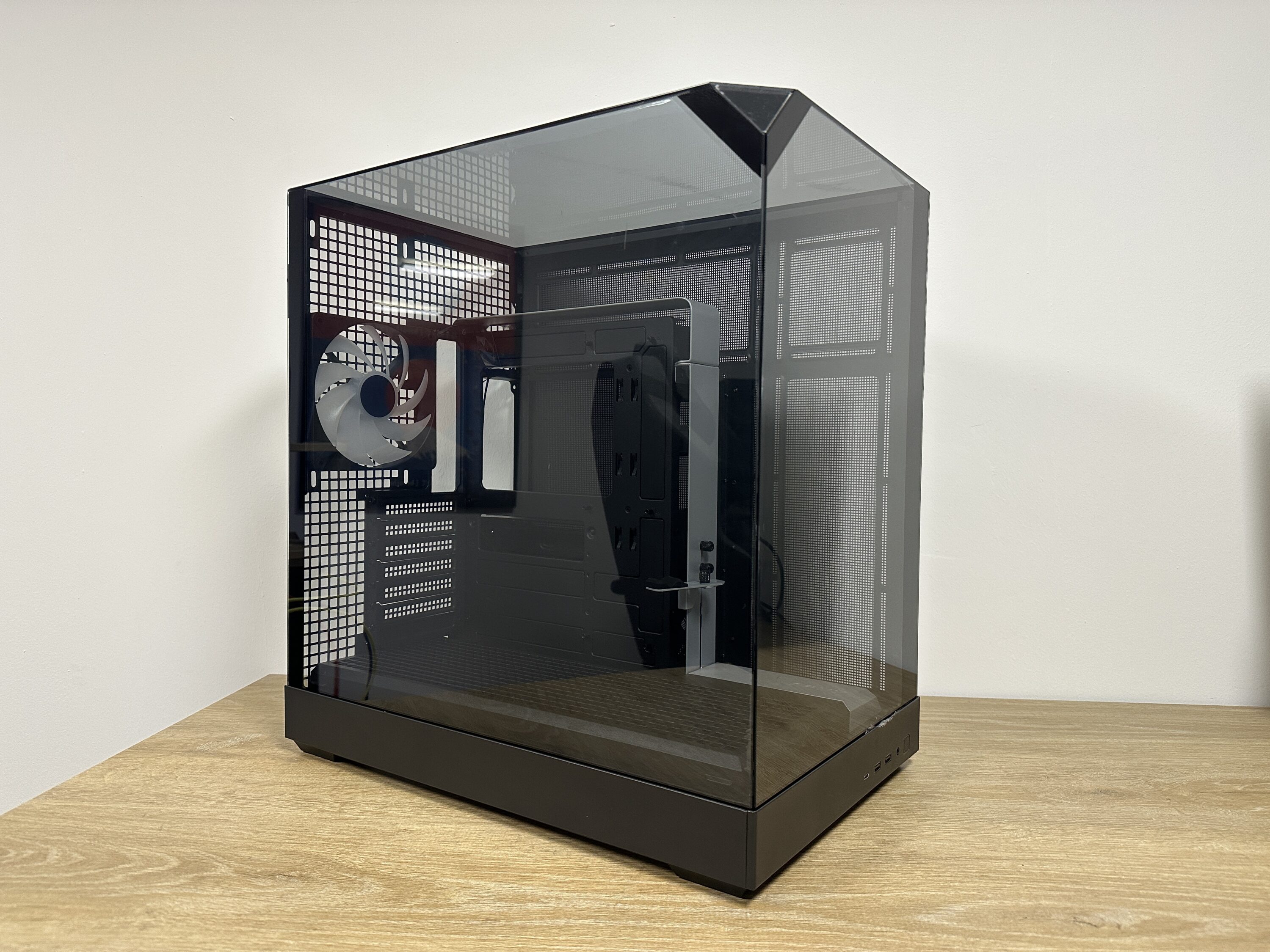
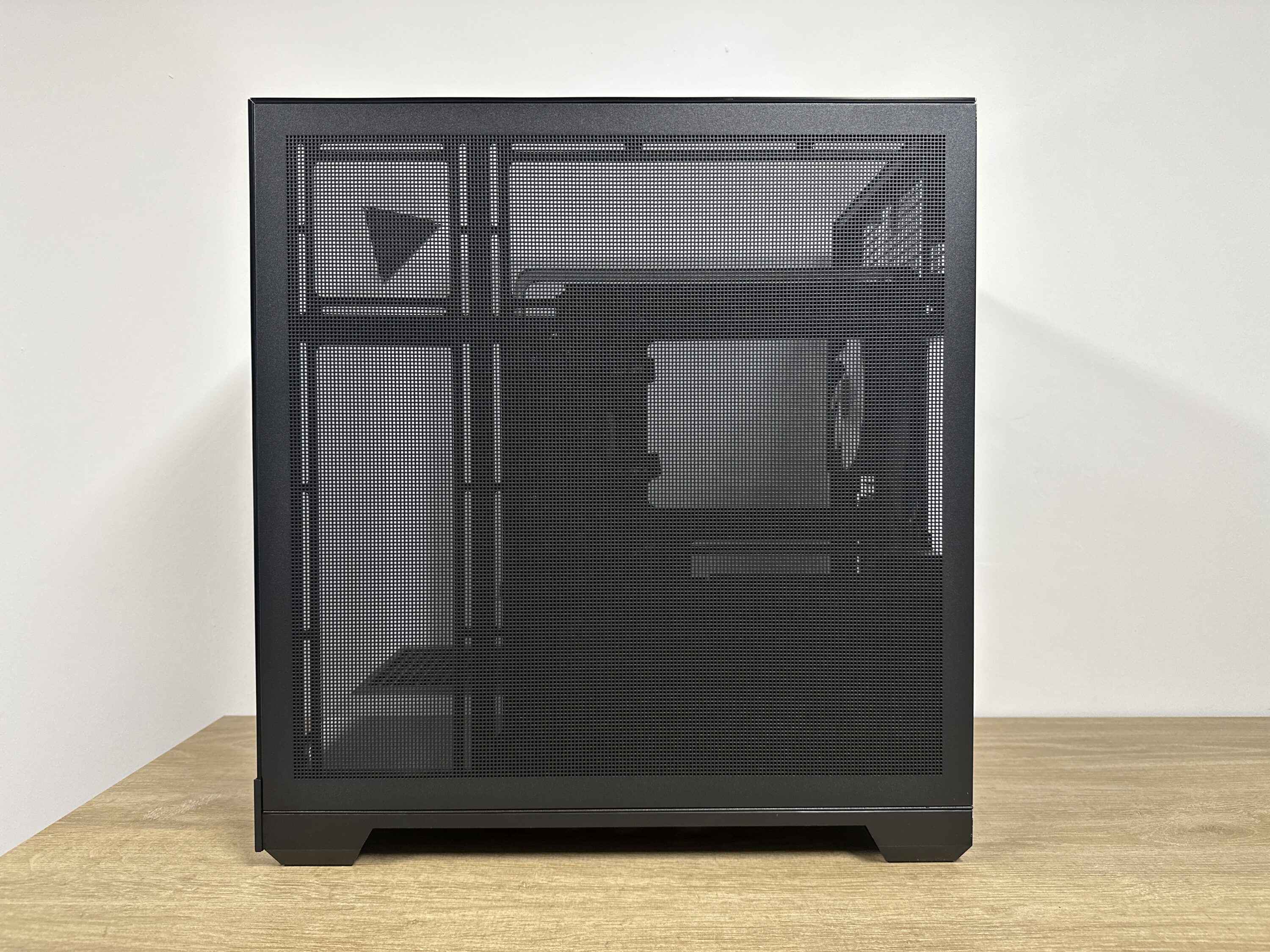
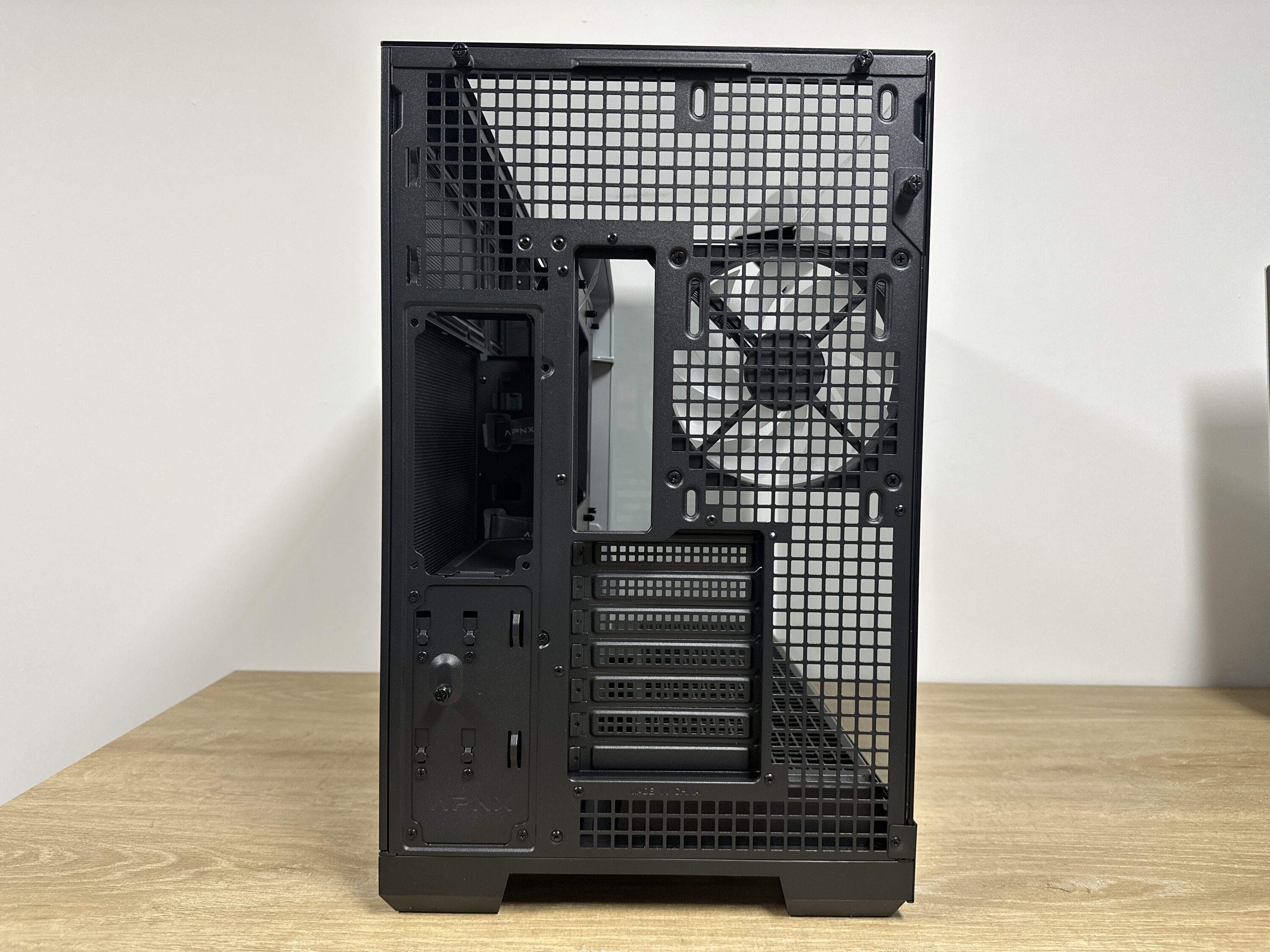
The case is available in black and white and features a minimalist, angular design with clean lines. The glass surfaces are seamlessly framed, creating a modern, almost frameless look. Despite the high proportion of glass, the V2 has a stable feel, which is due to the 0.8 mm thick SGCC steel construction.

The front connections are modern and easily accessible on the underside: 1× USB-C (Gen 2×2), 2× USB-A (Gen 1), audio and microphone connection. This means that the V2 is well prepared for both modern high-end setups and classic peripherals.
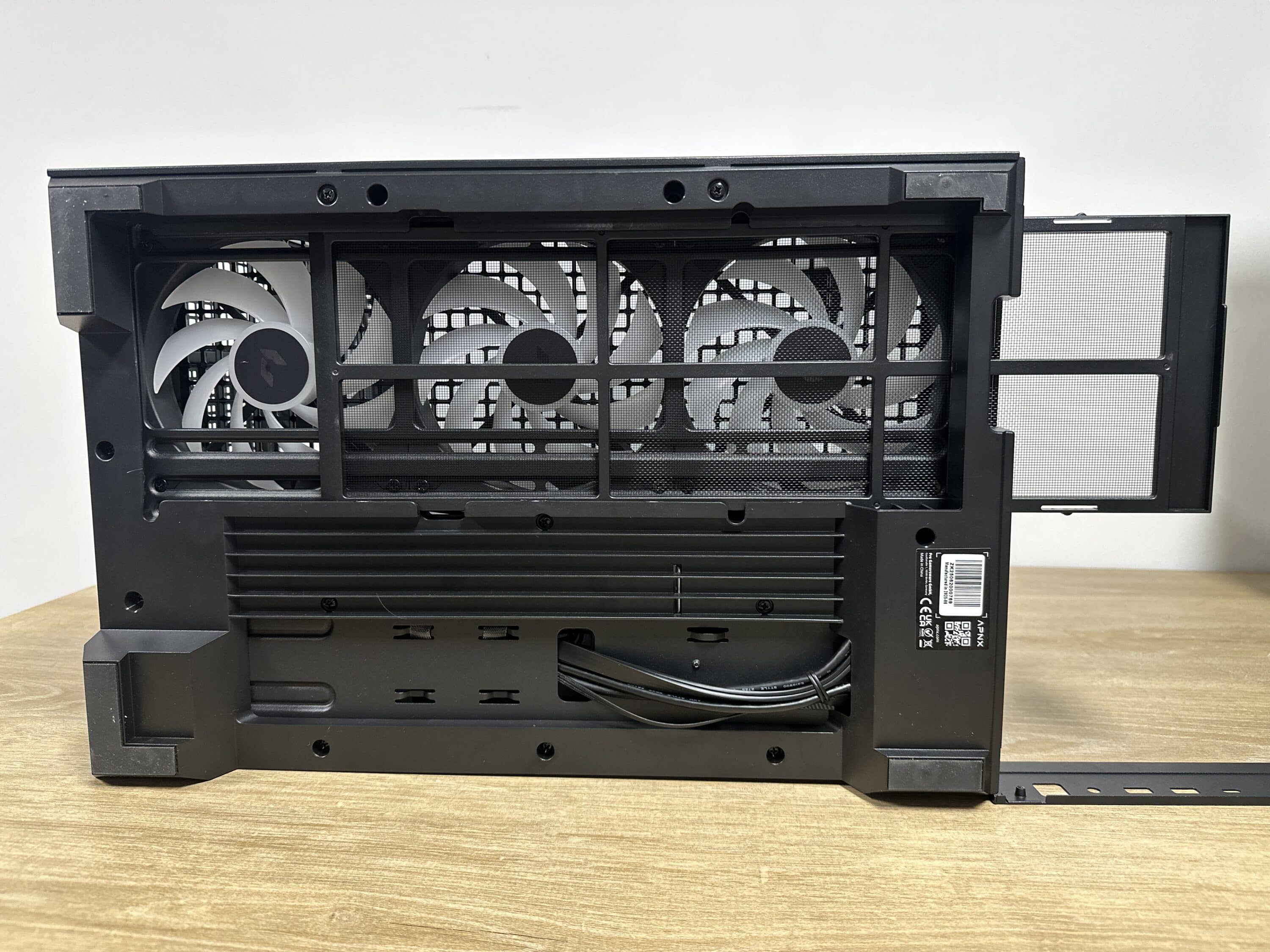
The dual-chamber layout is particularly striking and can be seen from the outside: a clear separation between the main chamber and the cable/PSU channel remains visible behind the glass front. This design not only underlines the tidy look, but also contributes to optimized cooling.
Interior impression
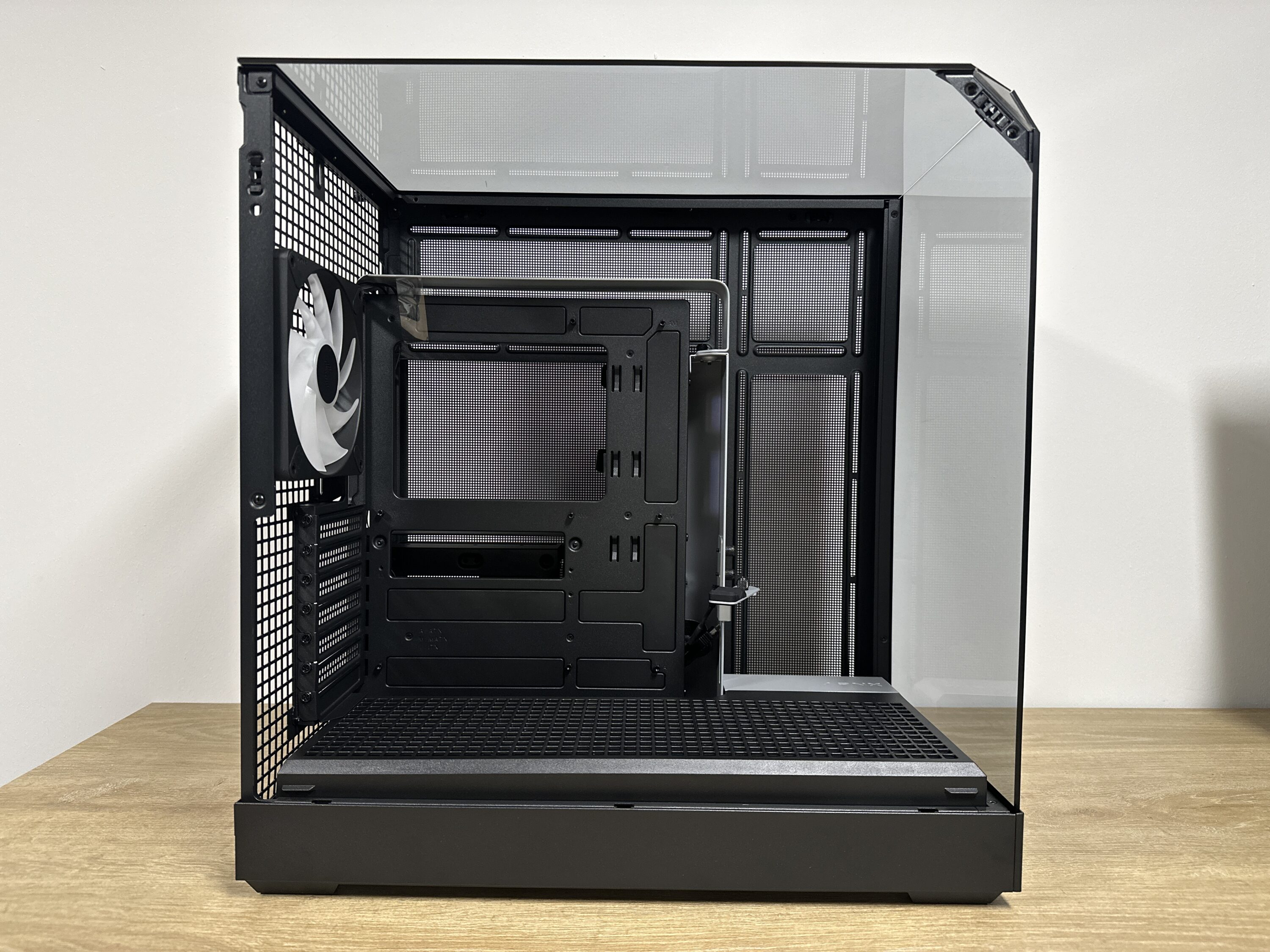
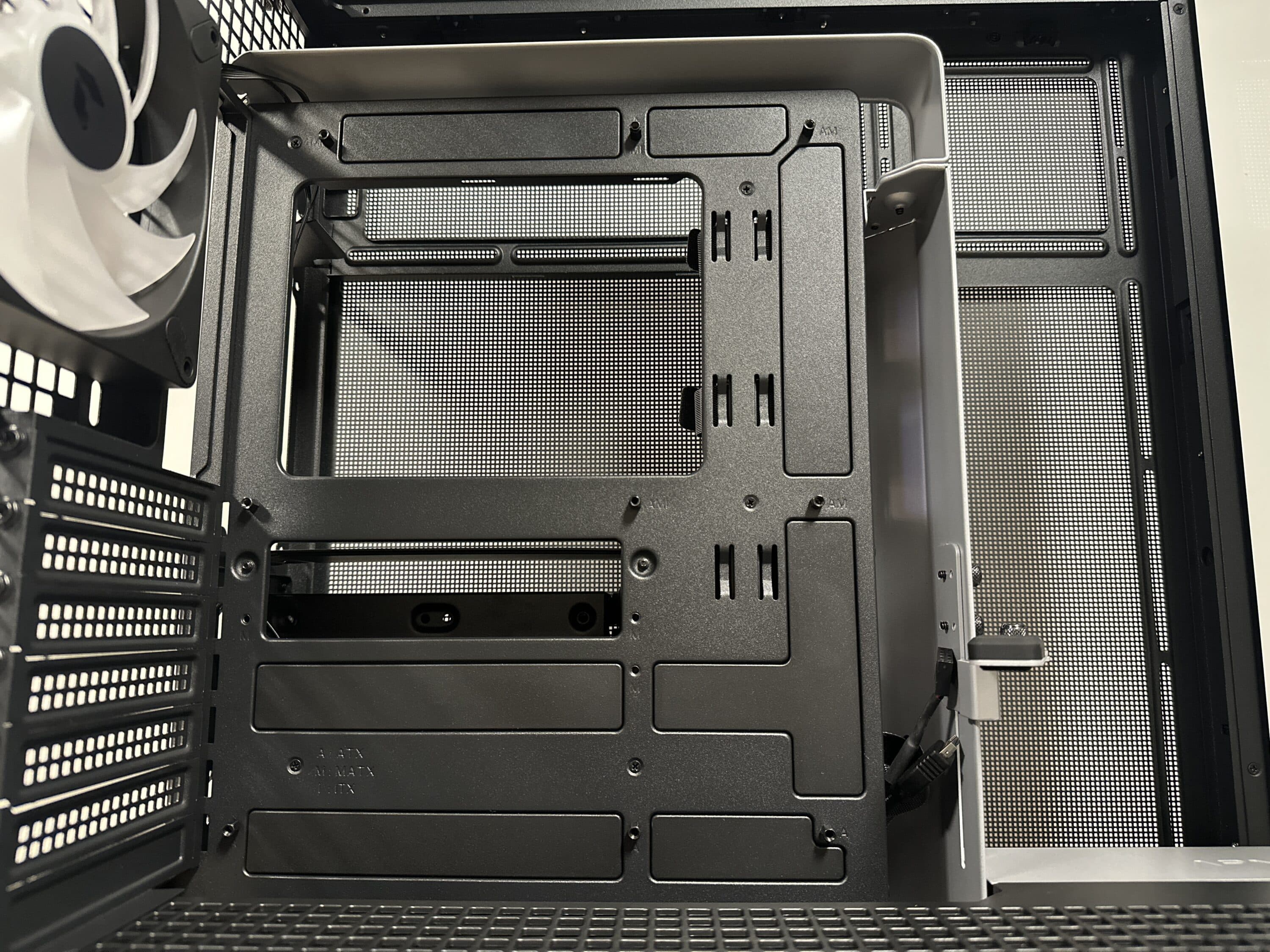
Inside, the APNX V2 clearly shows that it was developed for demanding hardware builds. The generous dual-chamber layout ensures a clear separation between the main chamber and the PSU or cable duct, which not only contributes to a tidy appearance, but also improves air circulation. The interior is generously dimensioned and allows the installation of even particularly long graphics cards up to 445 millimeters as well as massive CPU coolers with a height of up to 183 millimeters. There is also sufficient space for power supply units, as models with a length of up to 270 millimeters can be easily installed without restricting cable routing.
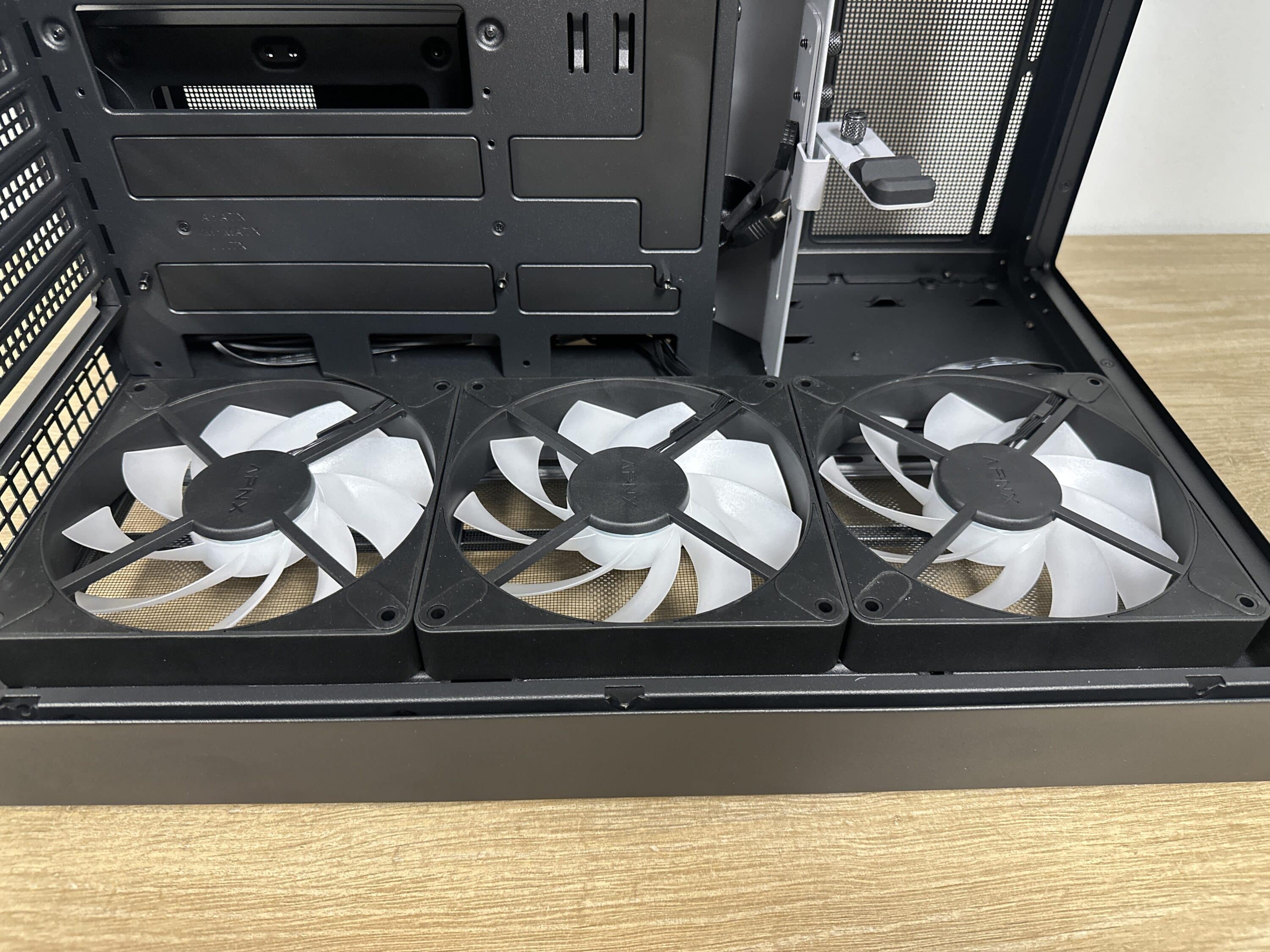
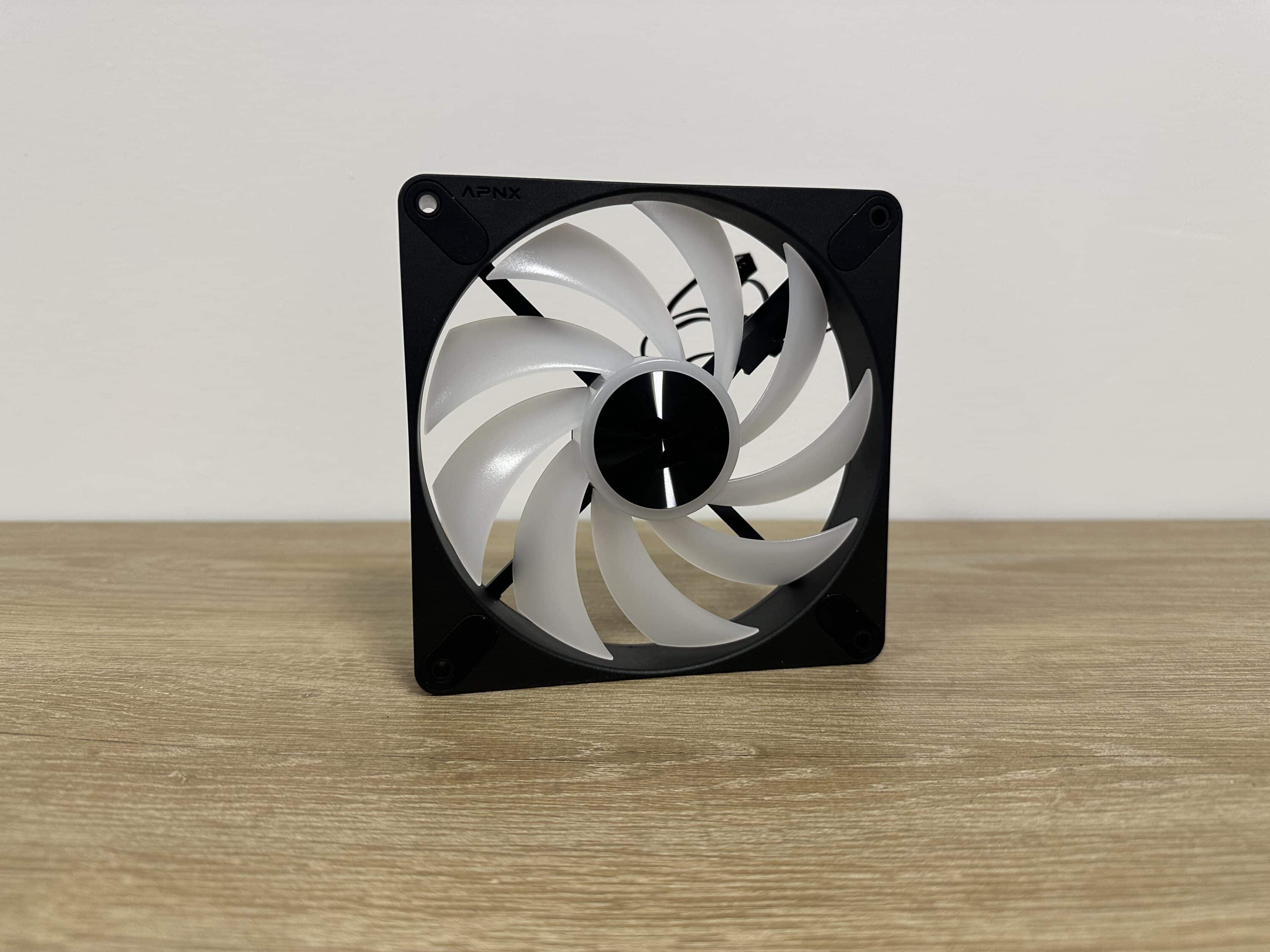
The cooling options are undoubtedly one of the V2’s greatest strengths. Four 140-millimeter fans from the in-house FP3 series are installed at the factory, meaning that a powerful airflow is already available ex works. A total of up to thirteen fans can be accommodated, with the case even supporting the rarely offered 160-millimeter models. The V2 offers an exceptionally wide range of options for water cooling: Radiators with up to 360 millimeters can be installed at the front, in the lid as well as in the base. Added to this is the innovative X-Pand Flow design, which expands the space behind the mainboard and also allows a 240 millimeter radiator to be installed there – a unique selling point that will appeal to custom loop enthusiasts in particular.
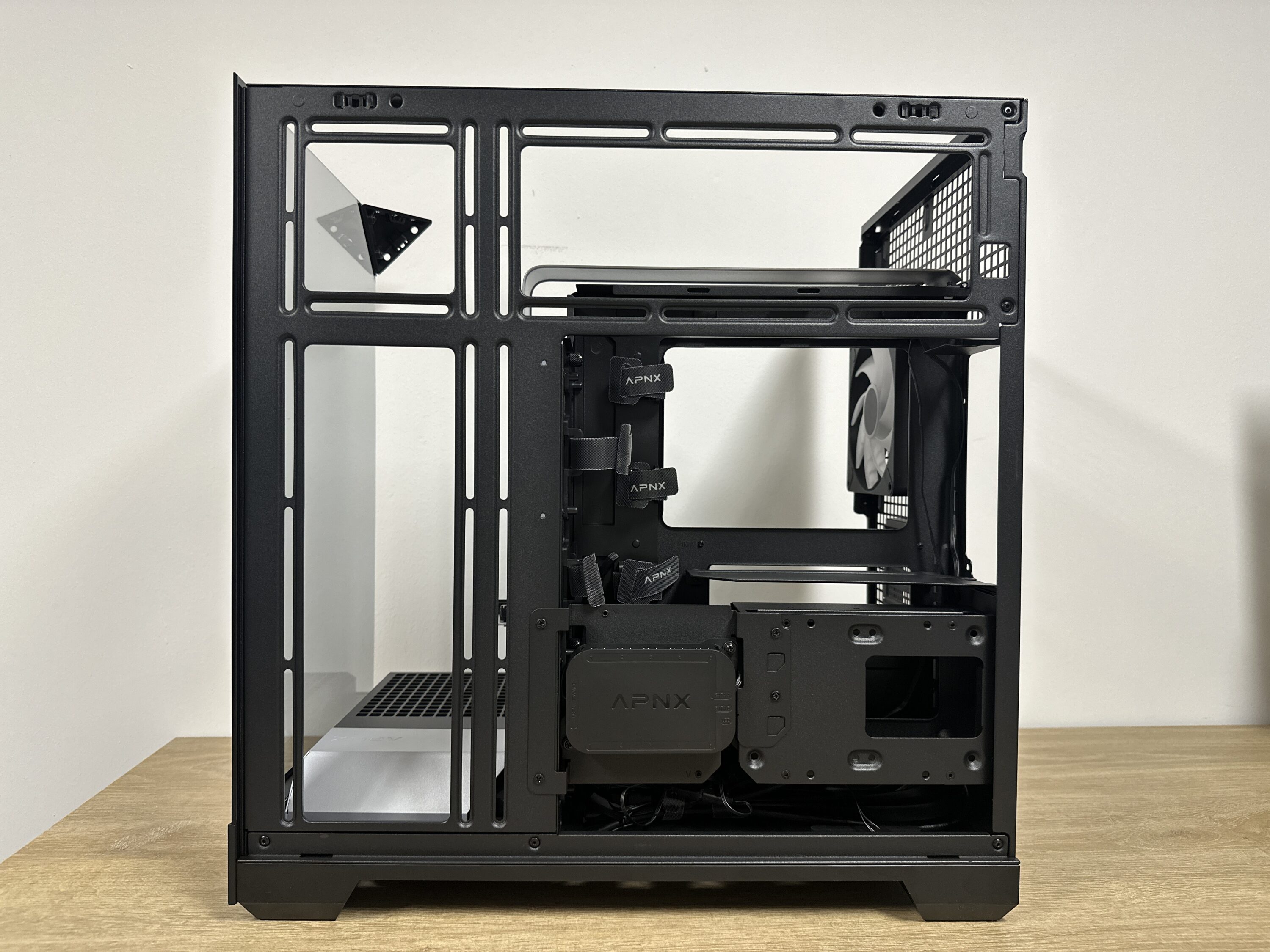
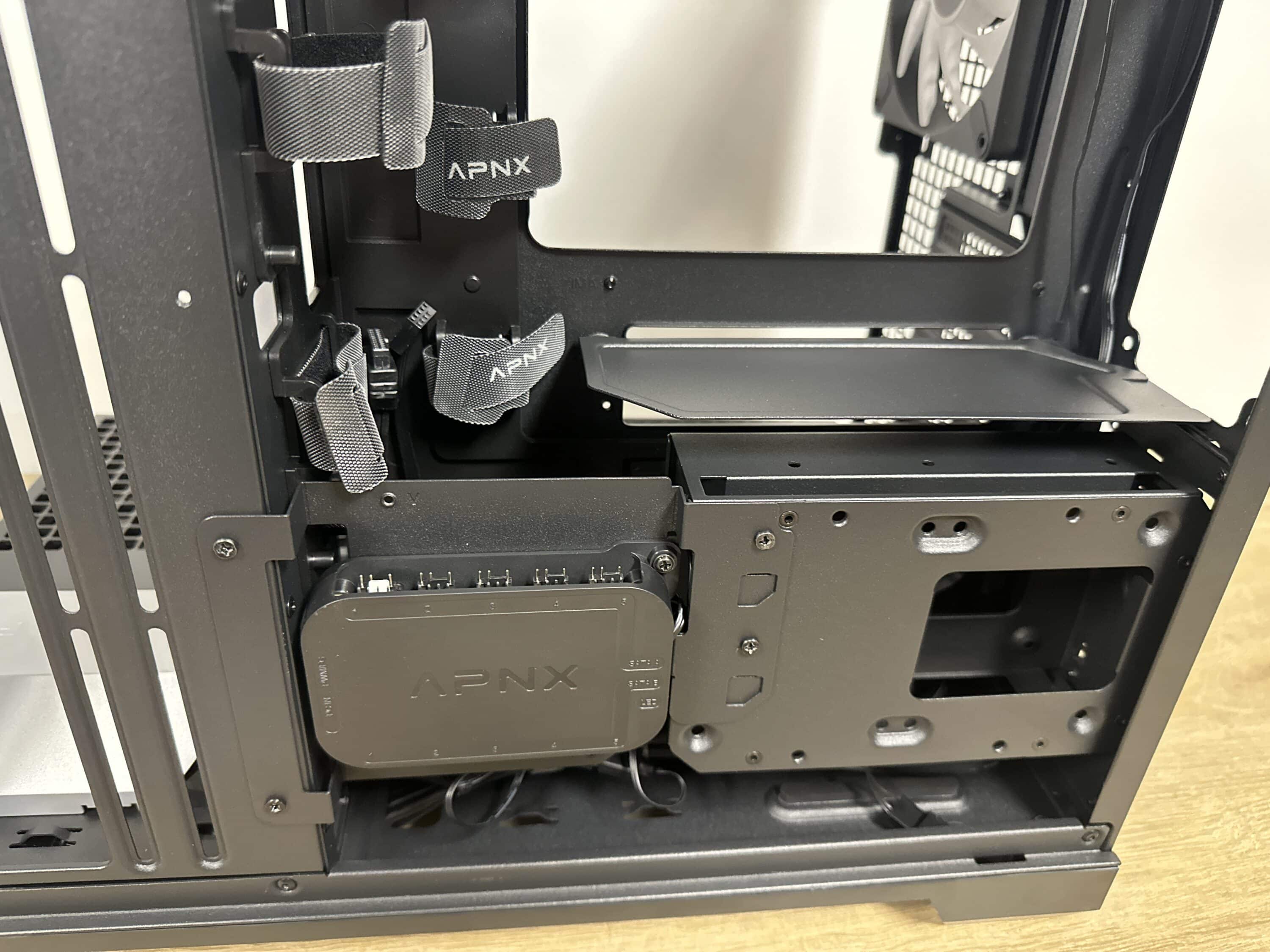
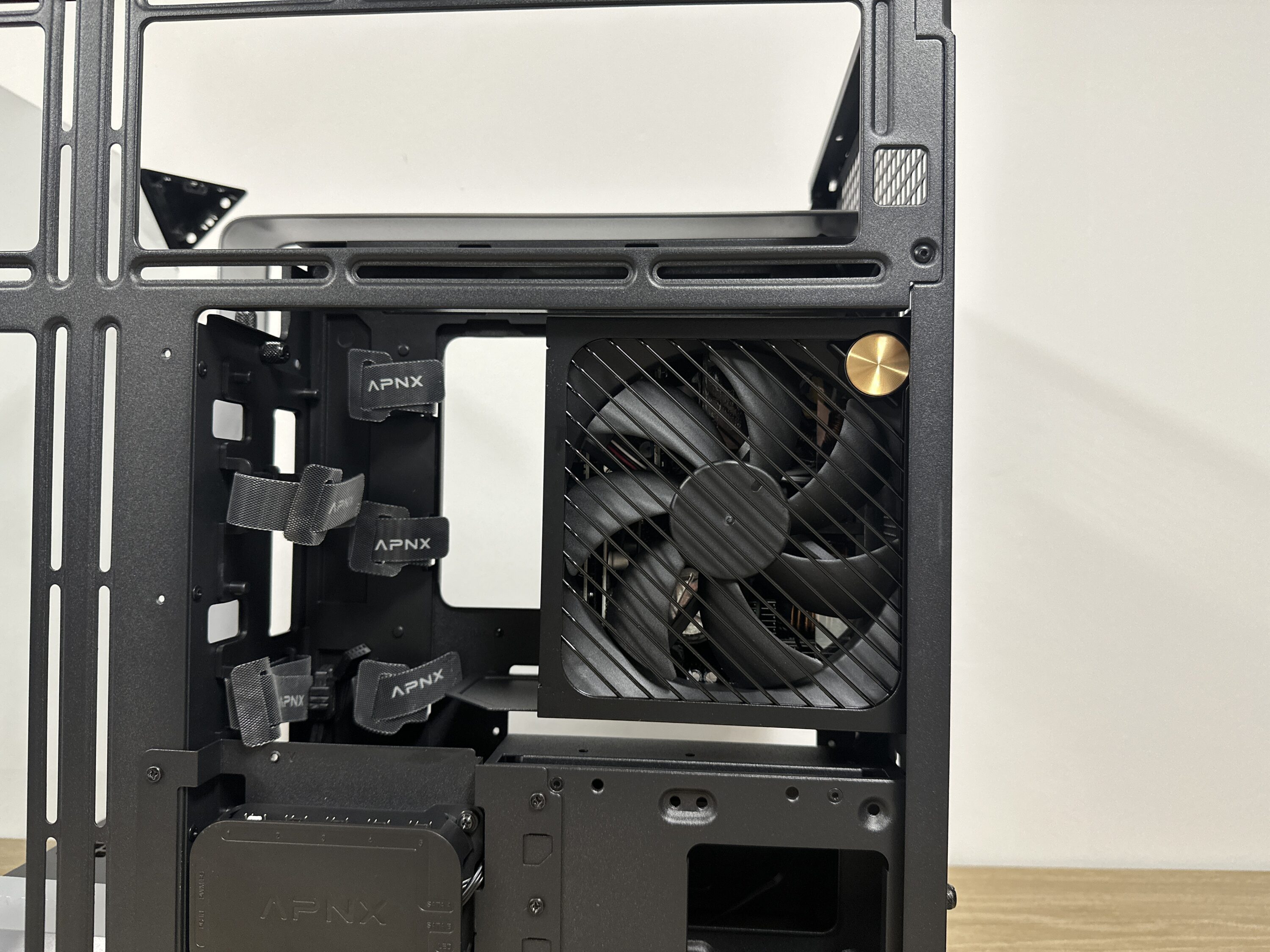
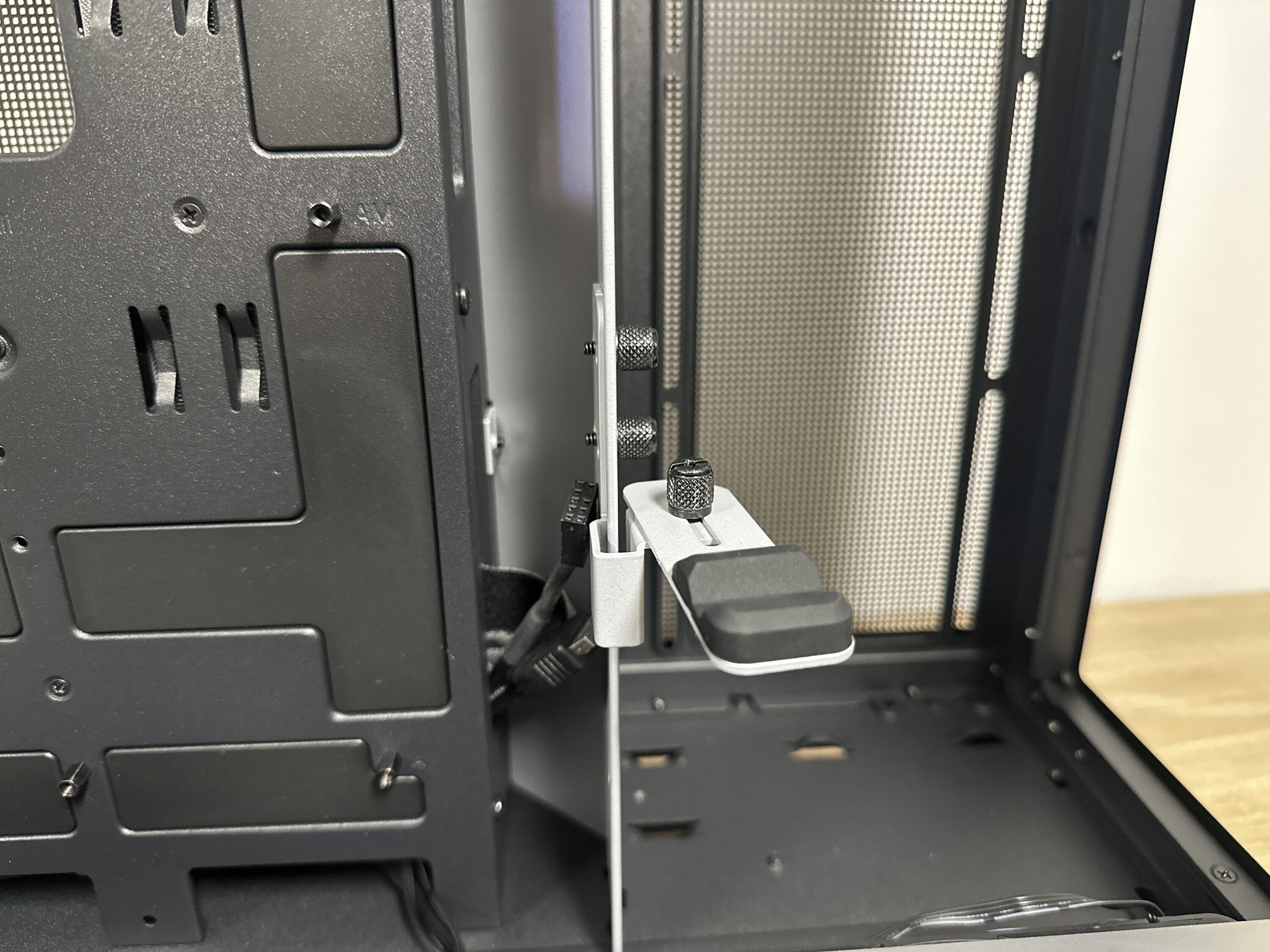
The case is also well thought out when it comes to cable management. With a depth of 99 millimetres at the rear and an included ARGB/PWM hub for up to ten devices, cabling is not only neat but also efficient. The modular trays for the power supply unit and hard disks increase flexibility and allow the setup to be individually adapted to your own requirements. Additional stability is provided by an integrated GPU bracket, which reliably supports heavy graphics cards and prevents them from sagging.
Workmanship
The workmanship of the APNX V2 leaves a thoroughly positive impression. The 0.8 millimeter thick steel construction appears robust and torsion-resistant, while the transitions between glass and metal are precisely crafted. The large tempered glass panels sit neatly in their mounts and are flush with the frame, so there are no noticeable gaps or uneven edges. Even with repeated opening and closing of the side panels, the mechanism remains stable and reliable.
Cable bushings are deburred, which not only makes installation easier, but also protects against damage. Screws, threads and brackets are of high quality and leave no room for criticism. From the very first contact, the V2 gives the impression of a premium case that is built to last.
Overall, the build quality can best be summarized in one word: Top. APNX delivers a case that can easily keep up with established brands in its price range in terms of stability and manufacturing quality.
Assembly and installation
Test system:
| Processor: | AMD Ryzen 7800X3D* |
| Graphics card: | AMD Radeon RX6900XT |
| Power supply: | APNX Max G1 1200 Watt |
| Memory: | Corsair Vengeance RGB DDR5 32GB 6000MHz* |
| Mainboard: | MSI MPG B650 Tomahawk* |
| CPU cooler: | Arctic Freezer 36 Black* |

Installation in the APNX V2 is extremely convenient. Thanks to the spacious interior, even large-format components can be easily installed without any bottlenecks. Graphics cards can be conveniently inserted, with the integrated bracket providing additional support and reliably preventing the typical “sagging” of heavy models. Even massive tower coolers or long power supply units can be fitted without restriction.
Cable management benefits from the well thought-out dual-chamber layout and the generous cable routing depth of 99 millimetres. Cables can be neatly routed at the rear and numerous attachment points ensure that cables can be neatly secured. The supplied ARGB/PWM hub not only simplifies the cabling of the pre-installed fans, but also allows the central control of additional fans and RGB components – a clear advantage over conventional solutions that require multiple controllers.
The installation of cooling systems is also flexible. Radiators up to 360 millimetres can be installed both at the front and at the bottom, while the X-Pand Flow design behind the mainboard opens up an additional position for a 240-millimetre radiator. This makes it possible to implement even complex custom loop setups without major adjustments.
The entire assembly is supported by clearly structured, illustrated instructions, which also make installation easier for less experienced users. All in all, the APNX V2 offers an installation experience that leaves little to be desired in its class: plenty of space, high flexibility and a well thought-out structure that both enthusiasts and beginners will appreciate.
Fan and lighting
The fan setup of the APNX V2 deserves special attention, as four FP3 fans are pre-installed ex works. These belong to the manufacturer’s latest generation and not only make a high-quality impression visually, but also technically. The rotor blades are sturdily made, run quietly and convey an overall feeling of longevity.
Controlling the fan speed is straightforward: it can be adjusted either directly via the BIOS or via the mainboard manufacturer’s software. In combination with the supplied ARGB/PWM hub, this results in a central solution that enables simple control for both beginners and experienced users.
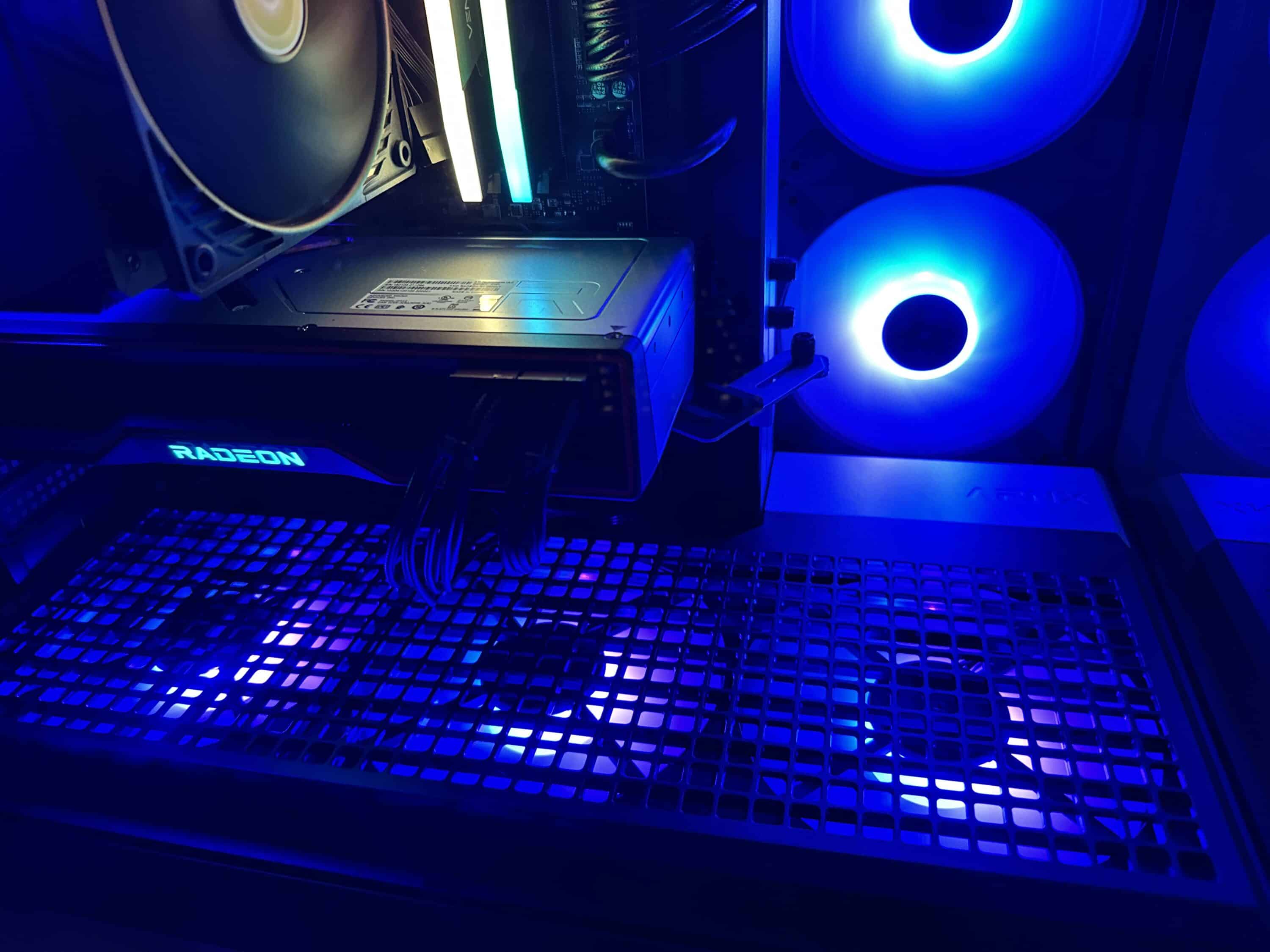
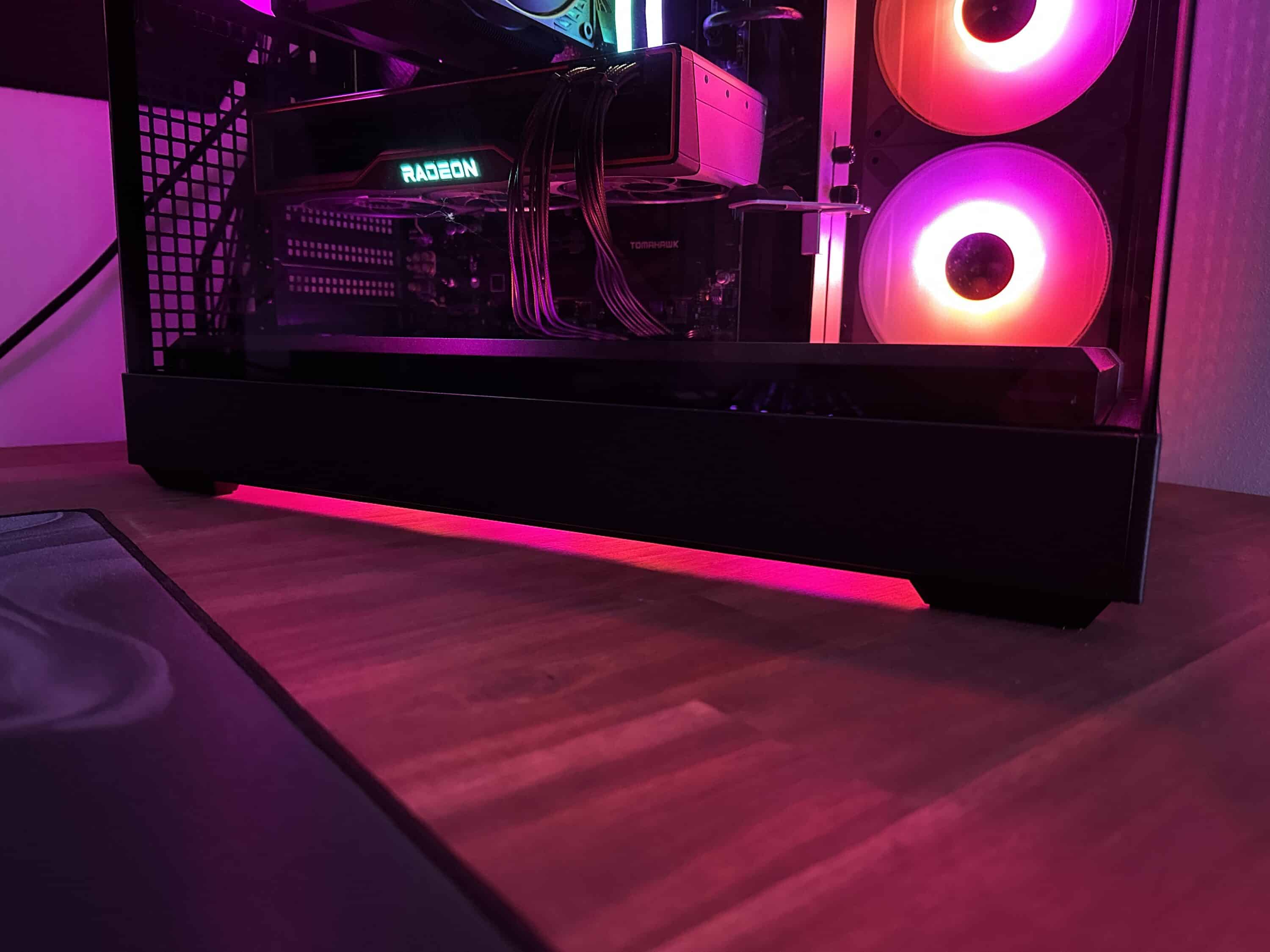
The lighting is also impressive. The ARGB effects of the FP3 fans are rich, powerful and appear very vivid without drifting into exaggeration. The interaction with the case is particularly positive: The three fans installed at the bottom not only illuminate the hardware inside, but also create a subtle effect on the underside of the case at the same time. This indirect lighting effect is almost reminiscent of underbody lighting in a car and gives the V2 an eye-catching but stylish visual touch.
Overall, the FP3 fans make an excellent impression in combination with the integrated lighting. They offer a successful balance of performance, controllability and design and contribute significantly to the APNX V2 being able to develop its full effect as a showcase enclosure.
Performance and practical test
In the practical test, the APNX V2 shows that the generous layout and clever fan placement bring real advantages for the airflow. The large interior prevents constrictions so that the air can circulate freely around all components. The three fans at the bottom in particular ensure a constant supply of fresh air, while a rear fan and three side-mounted models reliably transport the heated air to the outside. The concept works: A stable, directed air flow is created that does not break off even under load.
The temperature values underpin this impression. In idle mode, the components remain pleasantly cool, with 51 °C at the CPU and 57 °C at the GPU. Under load, tested as an example in a longer round of Battlefield 2042, the temperatures rose only moderately. The CPU reached 56 °C, while the GPU stabilized at 74 °C – a value that is absolutely uncritical in practical gaming use and testifies to a good fresh air supply.
It is worth noting that these results were achieved with rather moderate fan speeds. Neither the factory-installed FP3 fans nor the CPU cooler used ran at maximum performance, but in a balanced profile that ensures a background noise level suitable for everyday use. The APNX V2 thus demonstrates that it offers very good temperature management even without aggressive fan tuning and creates ideal conditions for both air and water cooling.
APNX V2 Review: Conclusion
With the V2, APNX has made a remarkable debut in the upper class of showcase cases. The case combines an elegant, modern design with an exceptionally large proportion of glass and is therefore clearly aimed at enthusiasts who want to impressively showcase their hardware. At the same time, it is not only visually impressive, but also functional: the innovative X-Pand Flow design opens up flexible radiator options that go far beyond the standard, and the spacious interior ensures excellent airflow.
The concept is confirmed in practical tests: the cooling works reliably even under load and keeps the CPU and GPU at a low temperature level suitable for everyday use. The background noise remains pleasantly moderate, even without aggressive fan tuning. Added to this are the high-quality FP3 fans, which not only impress with their strong performance, but also with their vivid ARGB lighting. The lighting of the bottom fans in particular, which almost looks like underbody lighting, sets the scene for the case.
The workmanship and ease of installation also leave no room for criticism. The sturdy steel frame, the precisely fitted glass panels and the neat cable routing make assembly a pleasure. With the included accessories package and the integrated PWM/ARGB hub, APNX also offers features that put many established competitor models in the shade.
All in all, the APNX V2 presents itself as a high-quality, versatile and visually spectacular case that appeals to gamers and modders alike. It is a showcase that successfully combines performance and design – making it a serious alternative to top dogs such as Lian Li or Hyte.

VORTEILE
- Excellent cooling performance thanks to large interior and X-Pand Flow design
- Huge glass surfaces (86.5 % visibility) for impressive hardware presentation
- Four high-quality FP3 ARGB fans included + 10-port hub
NACHTEILE
- High proportion of glass can impair noise insulation
- Space requirement (71 liter volume) makes it less suitable for compact builds
- Strong focus on appearance: less suitable for simple, unobtrusive systems
Fazit
The APNX V2 is convincing across the board and shows that a showcase enclosure can not only shine visually, but can also set technical and functional standards.