


The Taiwanese PC component manufacturer FSP Fortron is particularly well known for its power supply units, which are also manufactured for a number of other brands. However, FSP is also active in other areas, including the manufacture of coolers. In the FSP MP7 Black test, we take a look at the new twin-tower air cooler from the range. This is the black version. Alternatively, FSP manufactures a version with RGB lighting, which we will not discuss in this review.
Specifications
| Supported sockets | Intel LGA 1200 / 1700 / 1851 AMD AM4 / AM5 |
| Heatpipes | 6 x 6 mm |
| Heat sink material | Copper with aluminum fins |
| Overall size | 123.8 x 123.5 x 153 mm |
| weight | 905 g |
| Fan | 2 x 120 x 120 x 25 mm |
| Fan speed | 800 – 1800 RPM |
| Fan bearing | Fluid Dynamic Bearing |
| price | € 69.10 * |
Packaging and scope of delivery
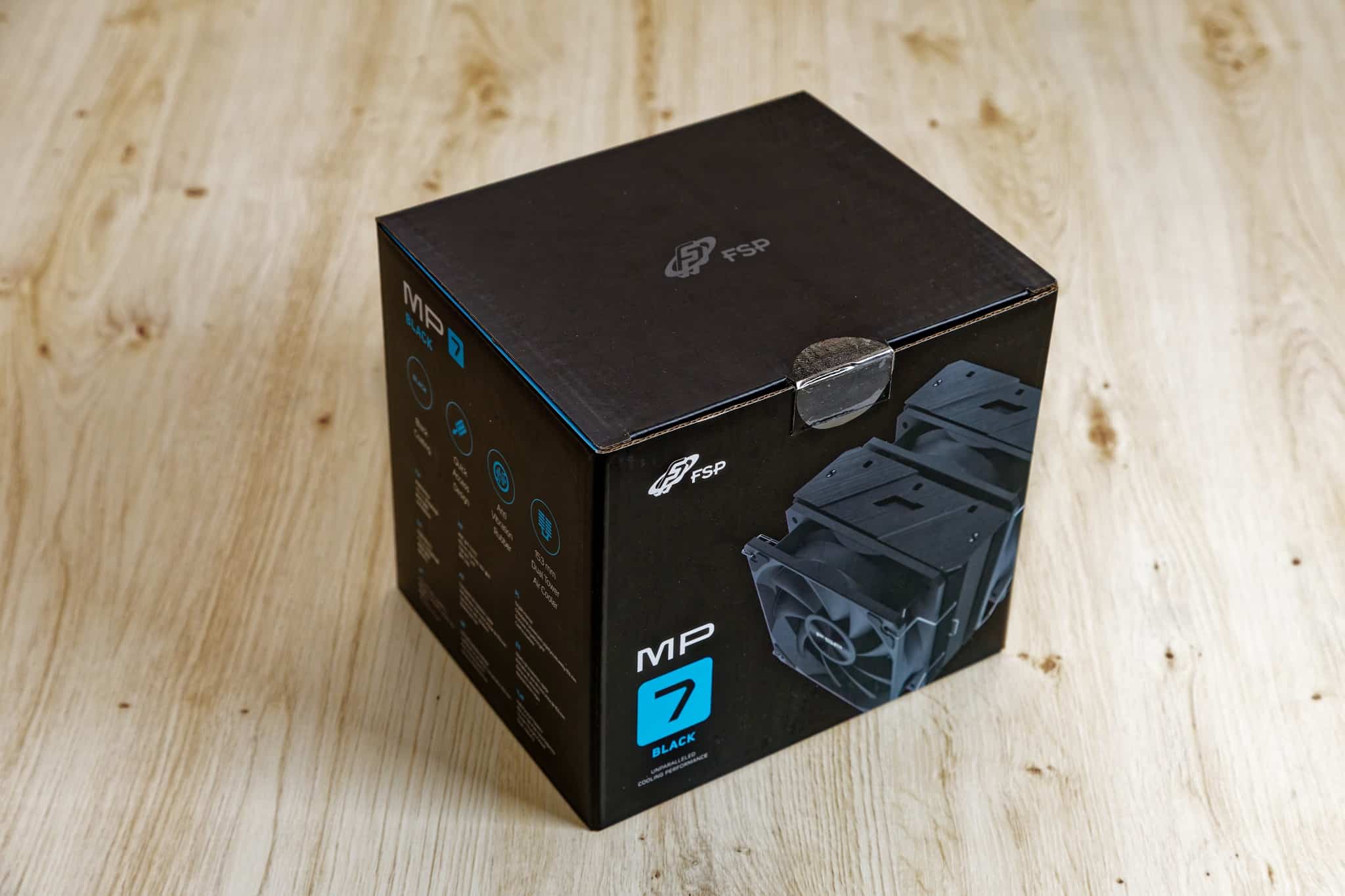
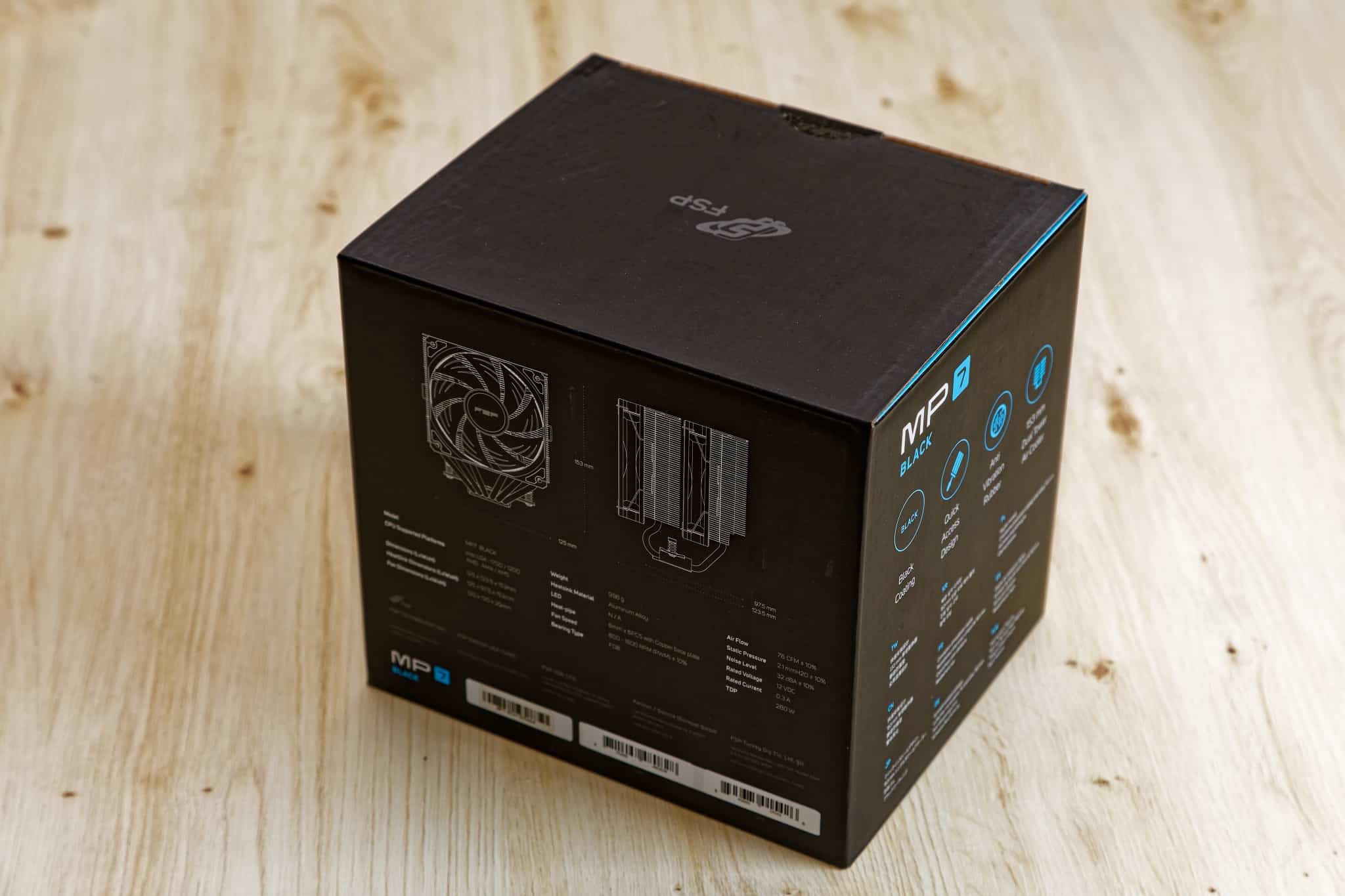
- Simple, attractive and compact packaging
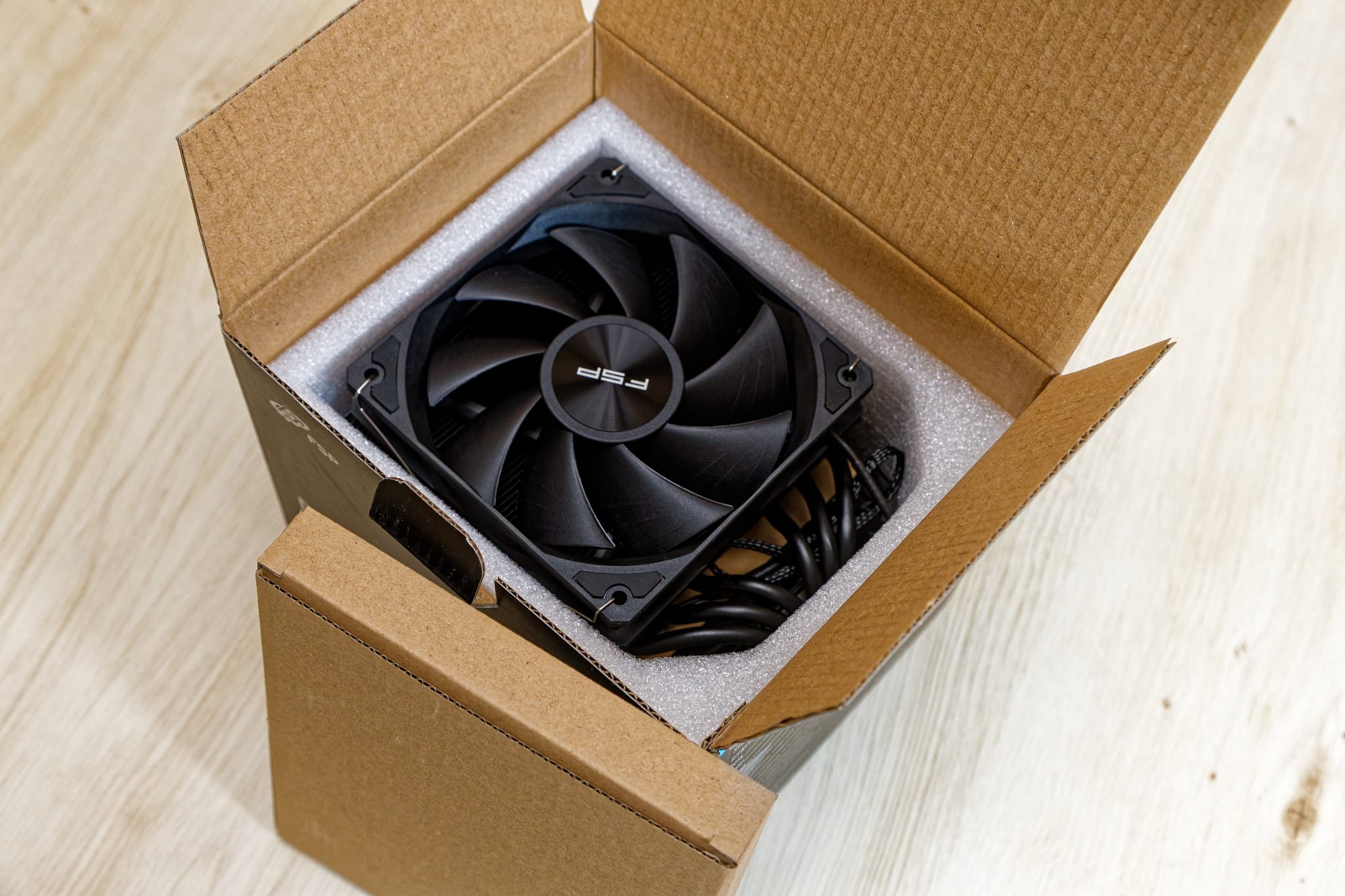
- Compact and protected by foam
The packaging of the FSP MP7 Black is inconspicuous. A dark design with a product imprint does not stand out much, but overall it is a respectable design without being overloaded. Overall, the packaging looks adequate but not spectacular. When you open it, the first thing you see is the accessories box. Underneath is the cooler, which is held in place and protected by foam.
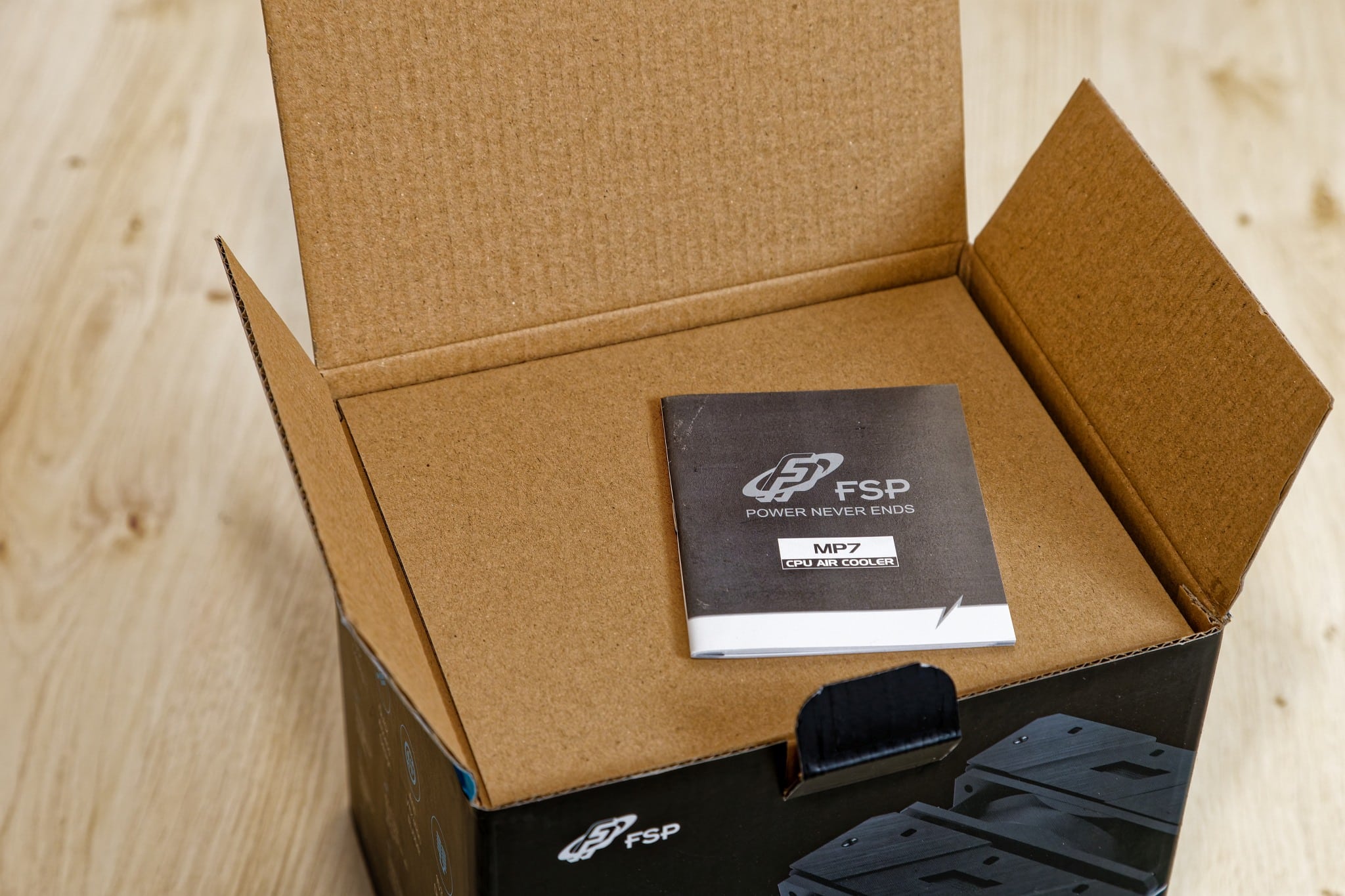
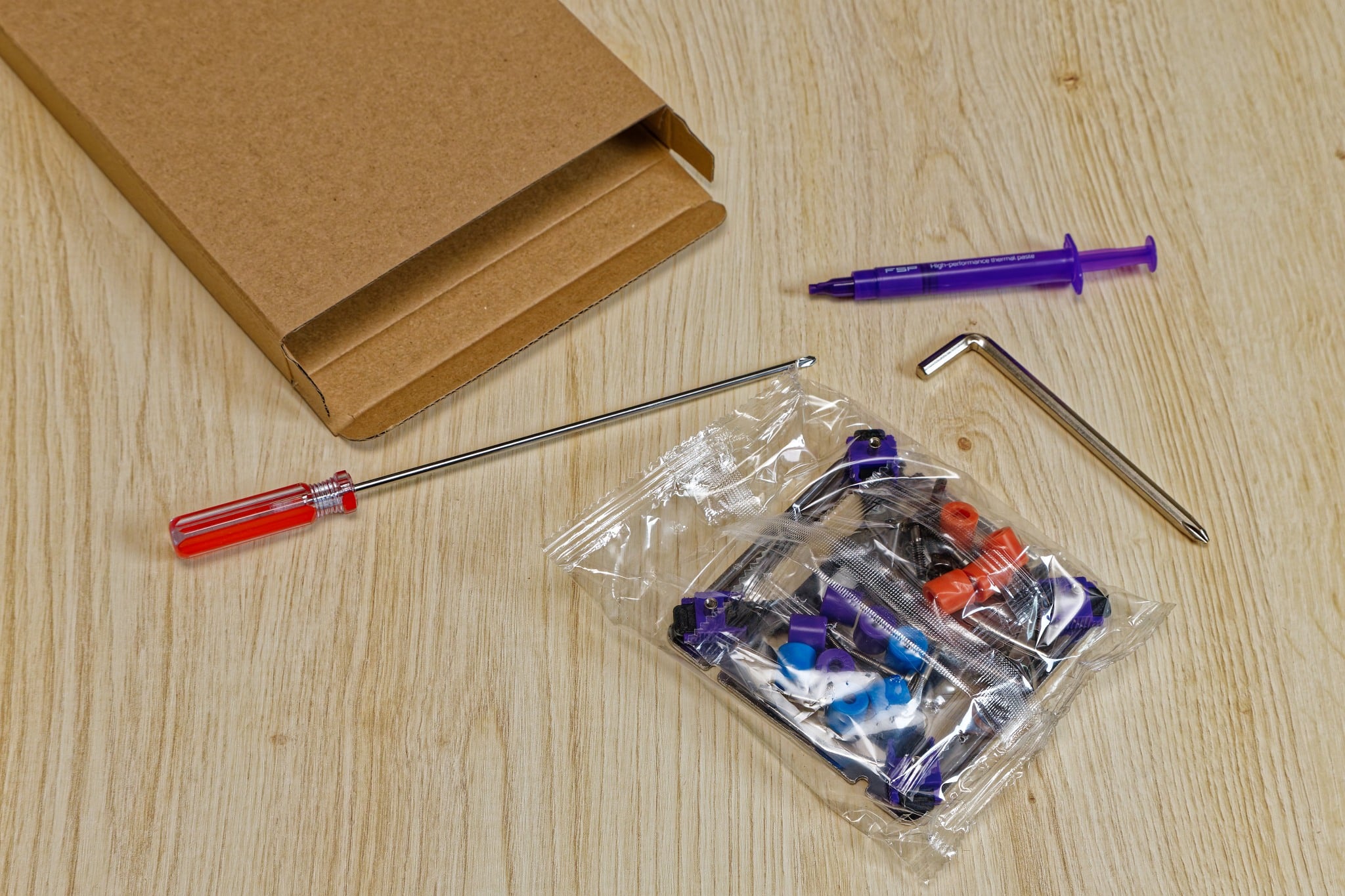
As for the accessories, it looks good. There is mounting material for all current mainstream sockets. A suitable screwdriver is of course also included. The load of thermal paste, which is sufficient for multiple assembly, is very nice.
Design
- Matt black design
- Black covers for fins and heatpipe ends
- No lighting
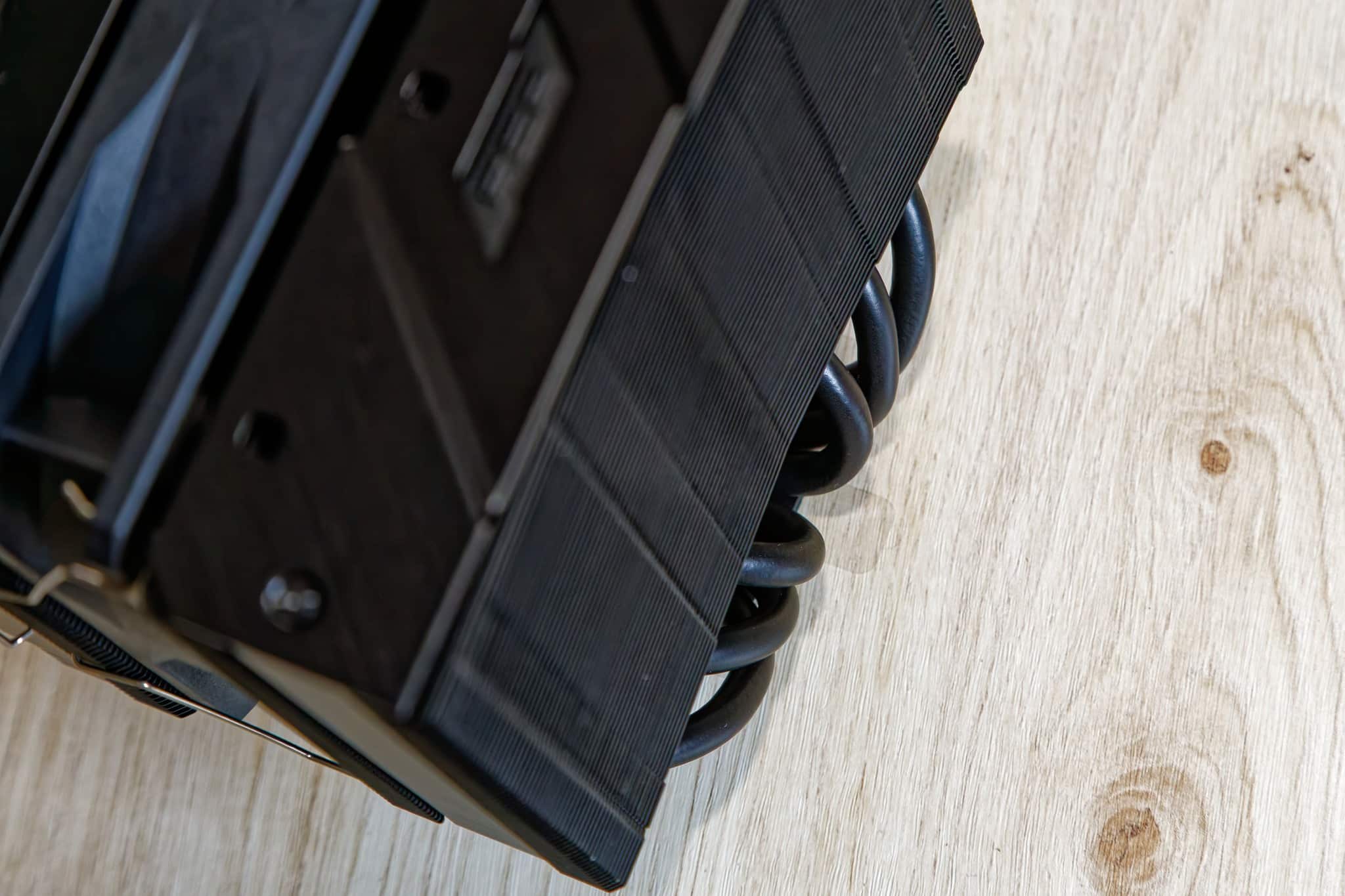
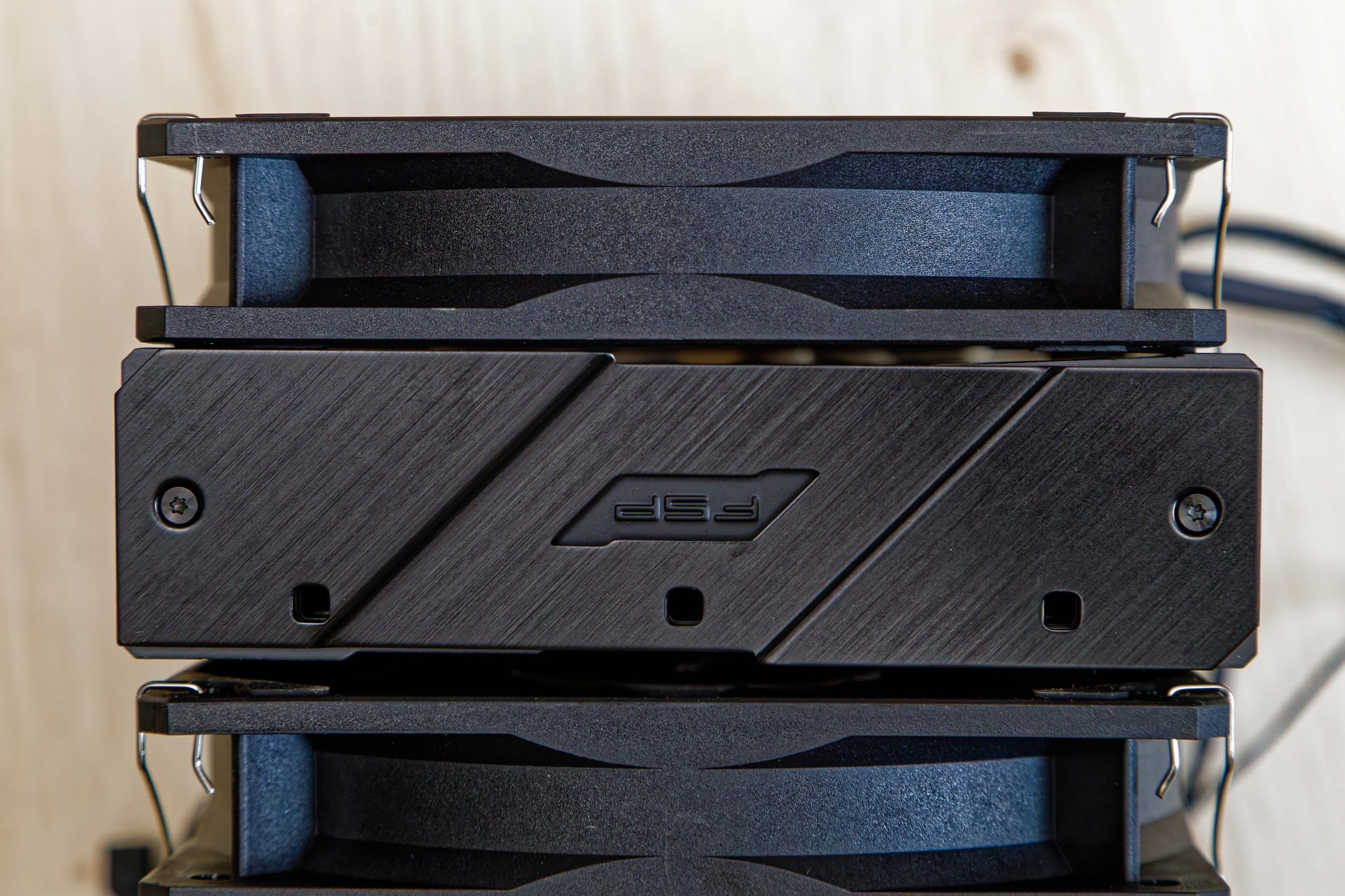
The design of the FSP MP7 Black is very cool. In contrast to the RGB version, there is of course no lighting. Instead, a matt black design is used, whereby the fins are also covered with a metallic cover. There is a small window inside, which allows a view of the FSP logo without being too obtrusive.
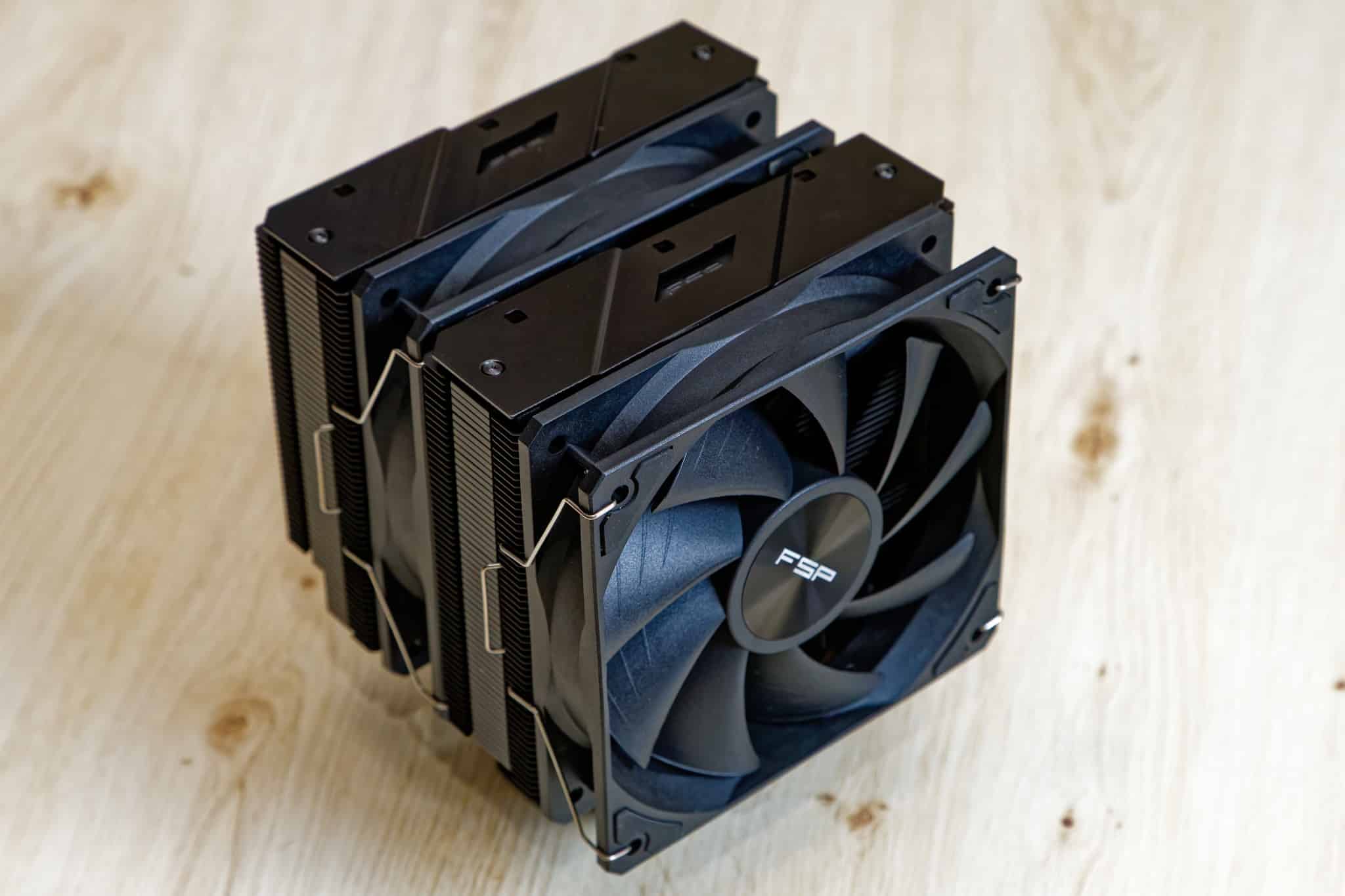
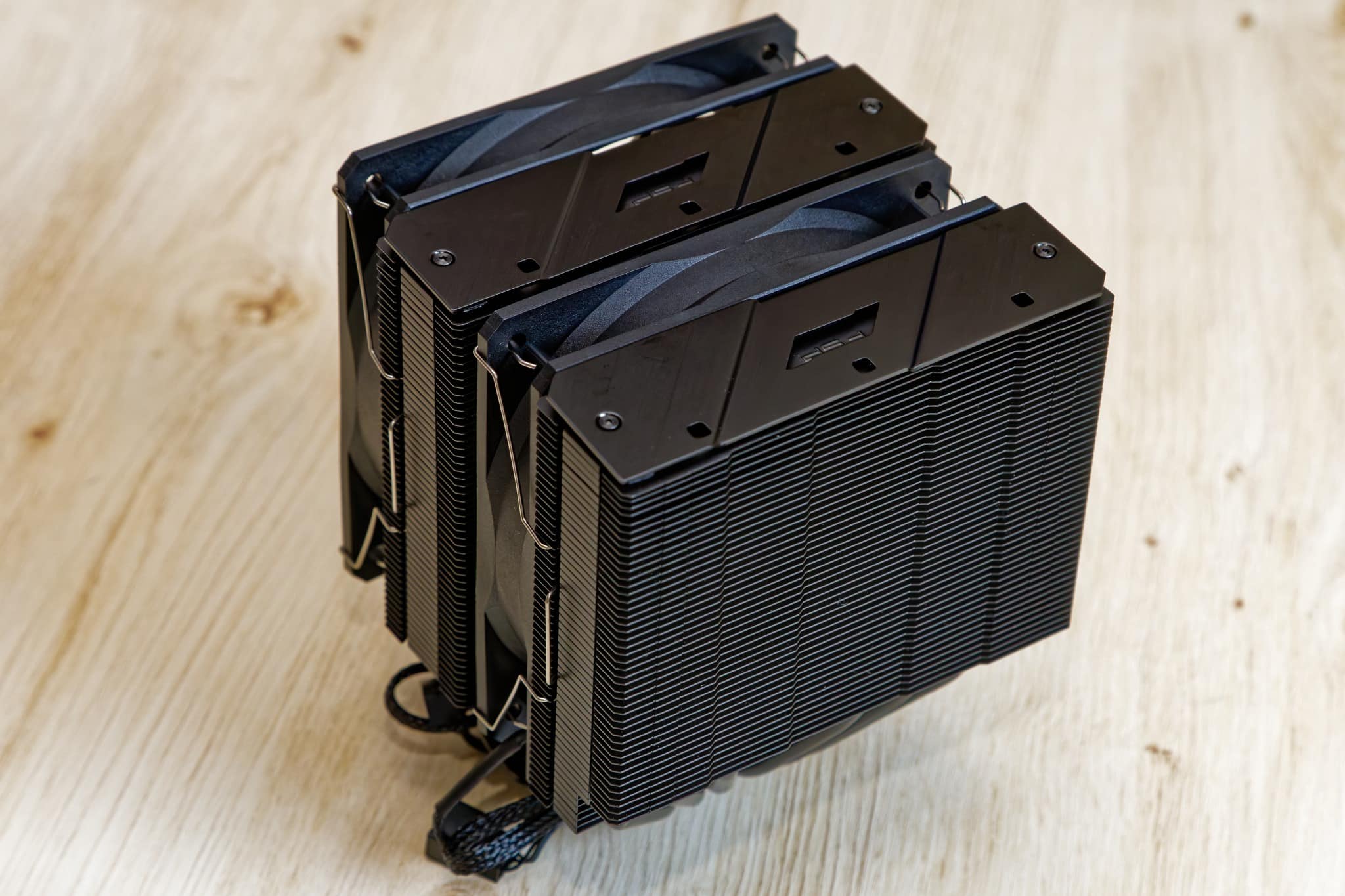
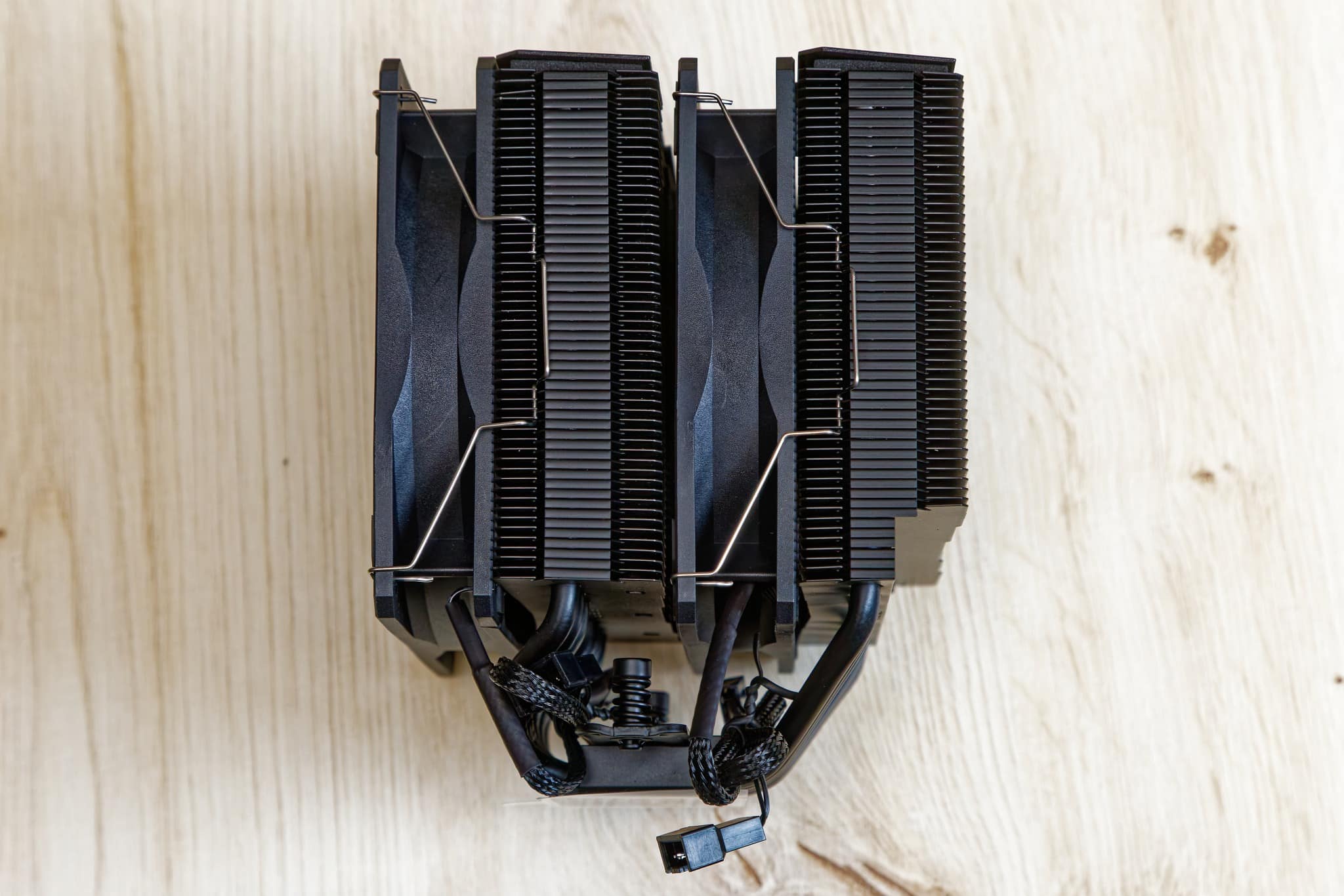
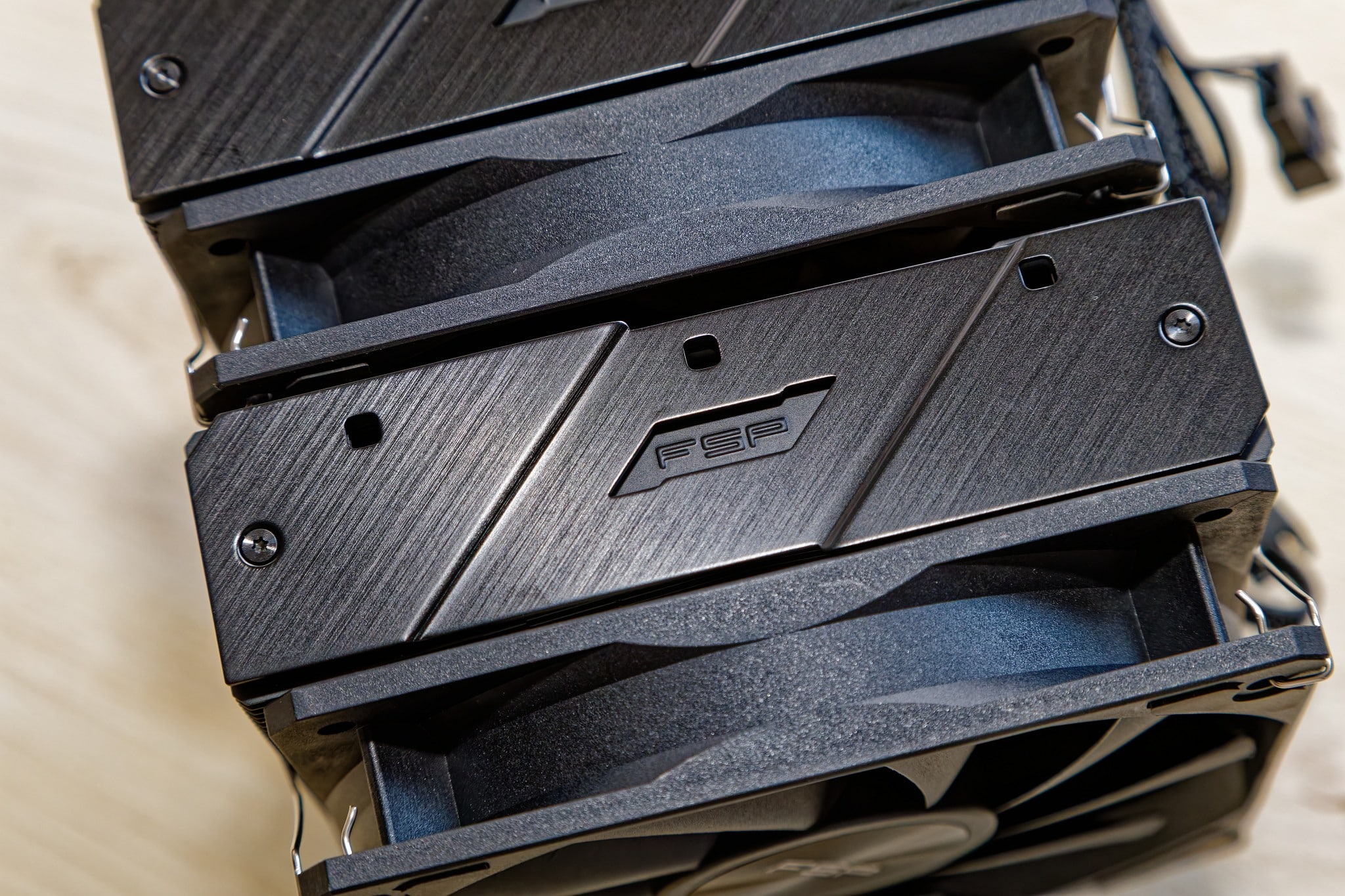
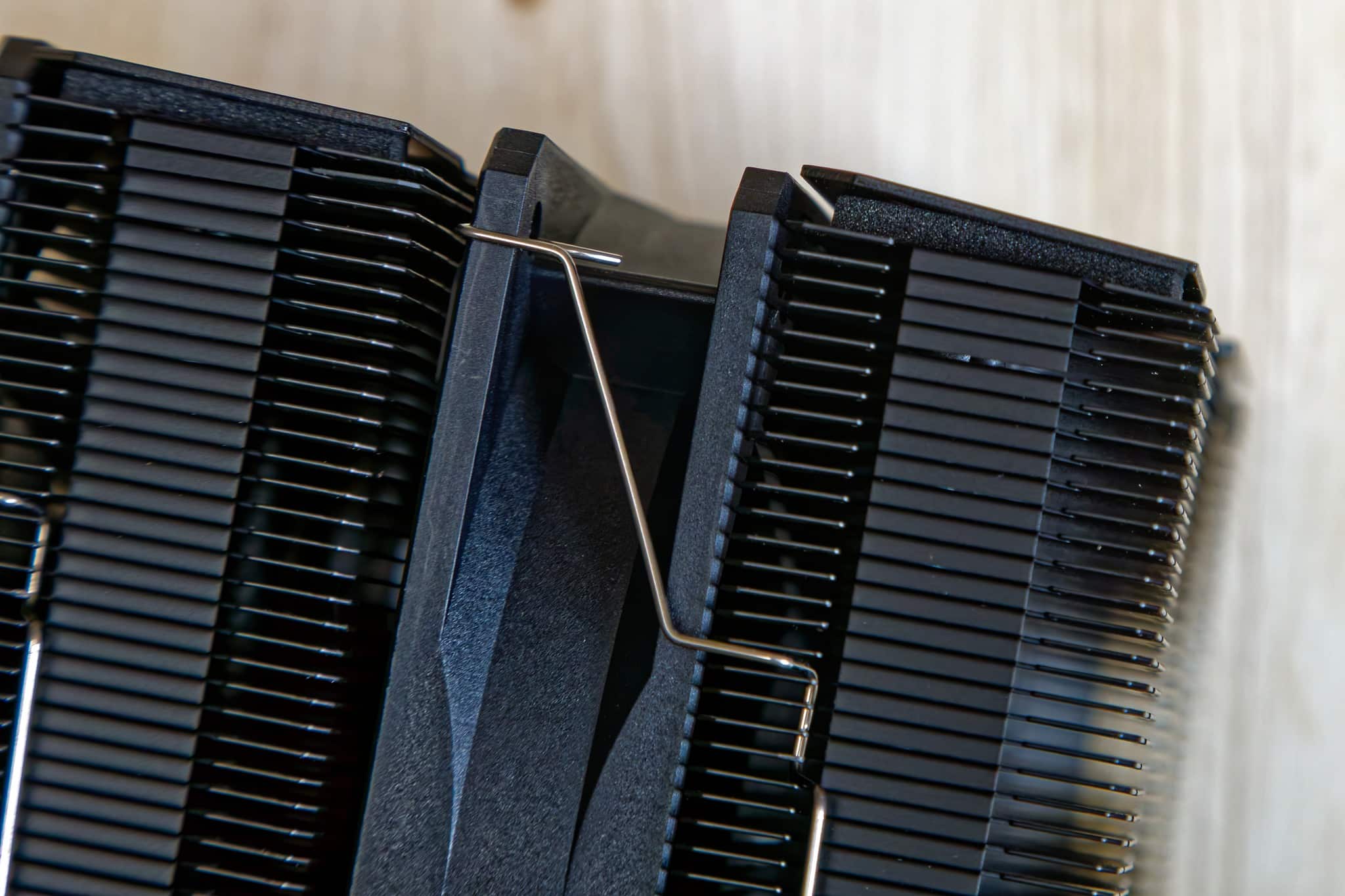
The two fans look unspectacular and are, as usual, attached to the fins with metal clips. What is interesting is the shape of the fins, which creates a small gap between the fans and the fins, especially towards the center. This is not really visually noticeable, but can certainly have a positive influence on the volume.
Processing quality
- Cheap-looking fans
- Not clean-looking contact surface
- Cover padded with foam on the top side
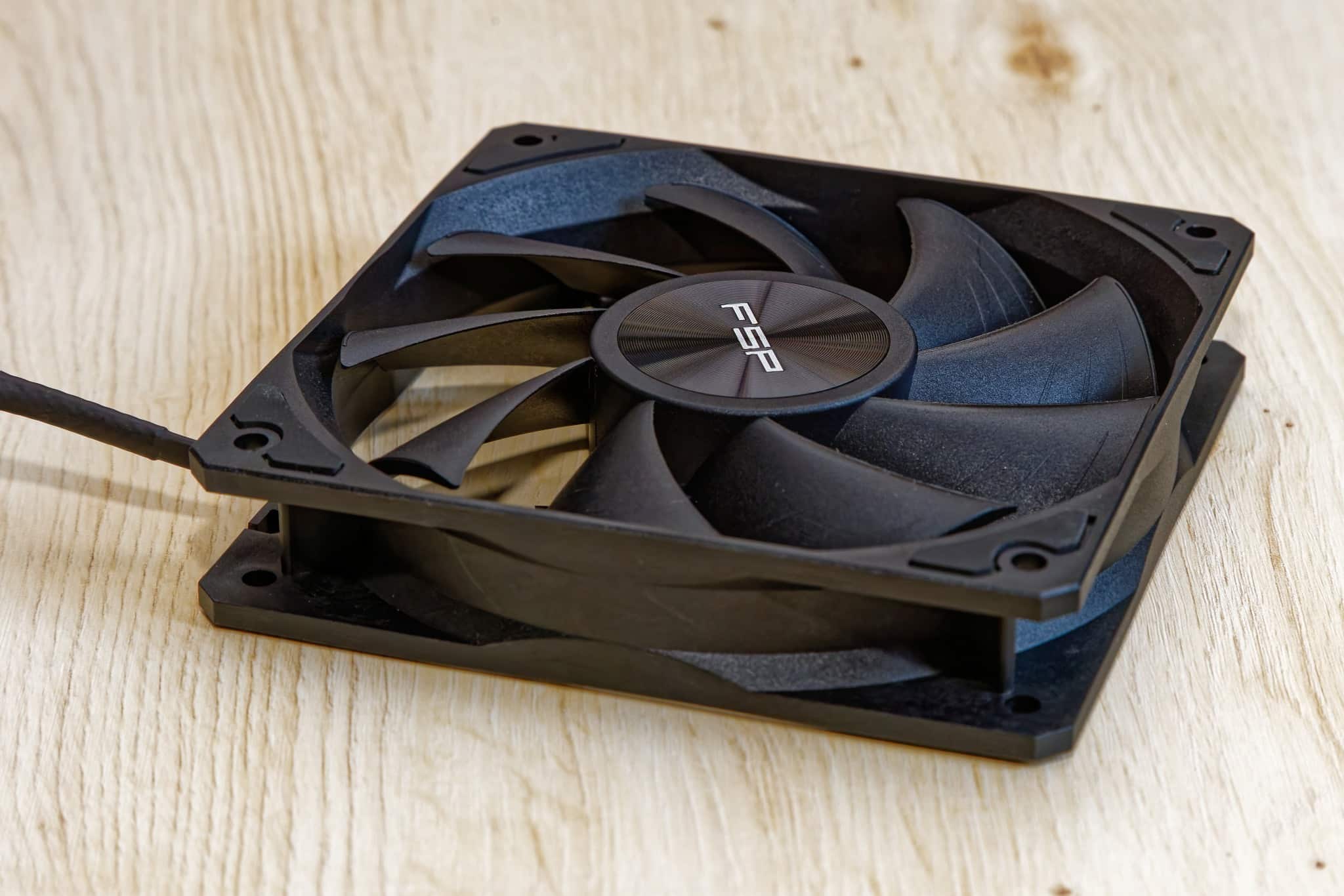
I’m not entirely enthusiastic when I look at the build quality of the FSP MP7 Black. The fans make a rather simple impression and are remotely reminiscent of the Xilence XPF120X.B.PWM. Sure – the cables are sheathed and they each have a male and a female connection. This makes daisy-chaining possible, so you only need one fan connection on the mainboard to operate both fans. And in principle, because both fans have corresponding connections, you can also connect a third fan. Otherwise, the fans are unspectacular and have no special features. The housing looks like simple mass-produced goods and the fan blades don’t have any special features either. This doesn’t have to be negative: an unspectacular visual and haptic impression doesn’t have to be accompanied by a lack of performance. The test will follow later.
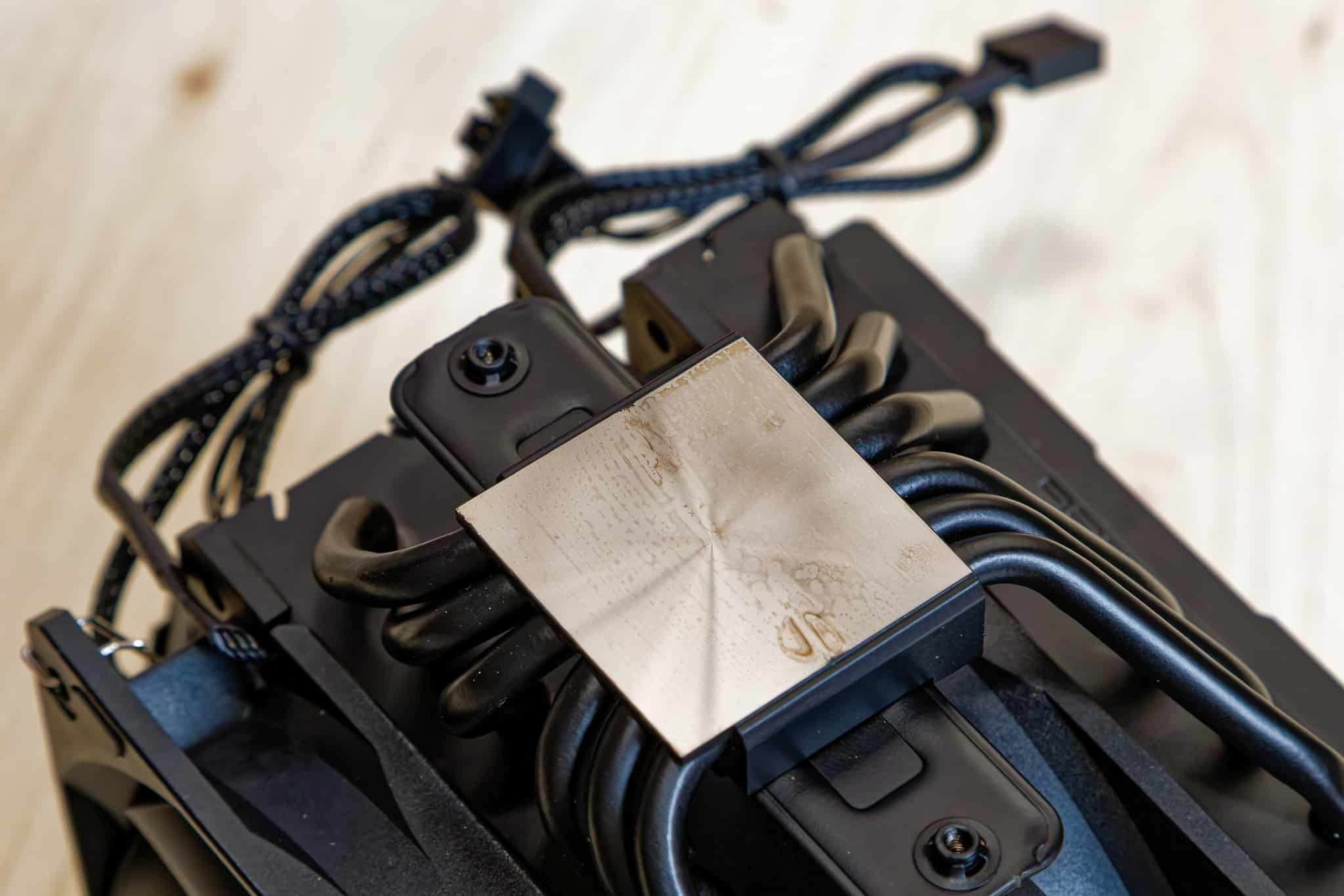
The contact surface of the heat sink also looks strange. After removing the protective film, it immediately makes a somewhat greasy impression. I have never seen this with any other cooler. Here too: This doesn’t necessarily have a negative impact on performance, but it doesn’t look really satisfactory either.
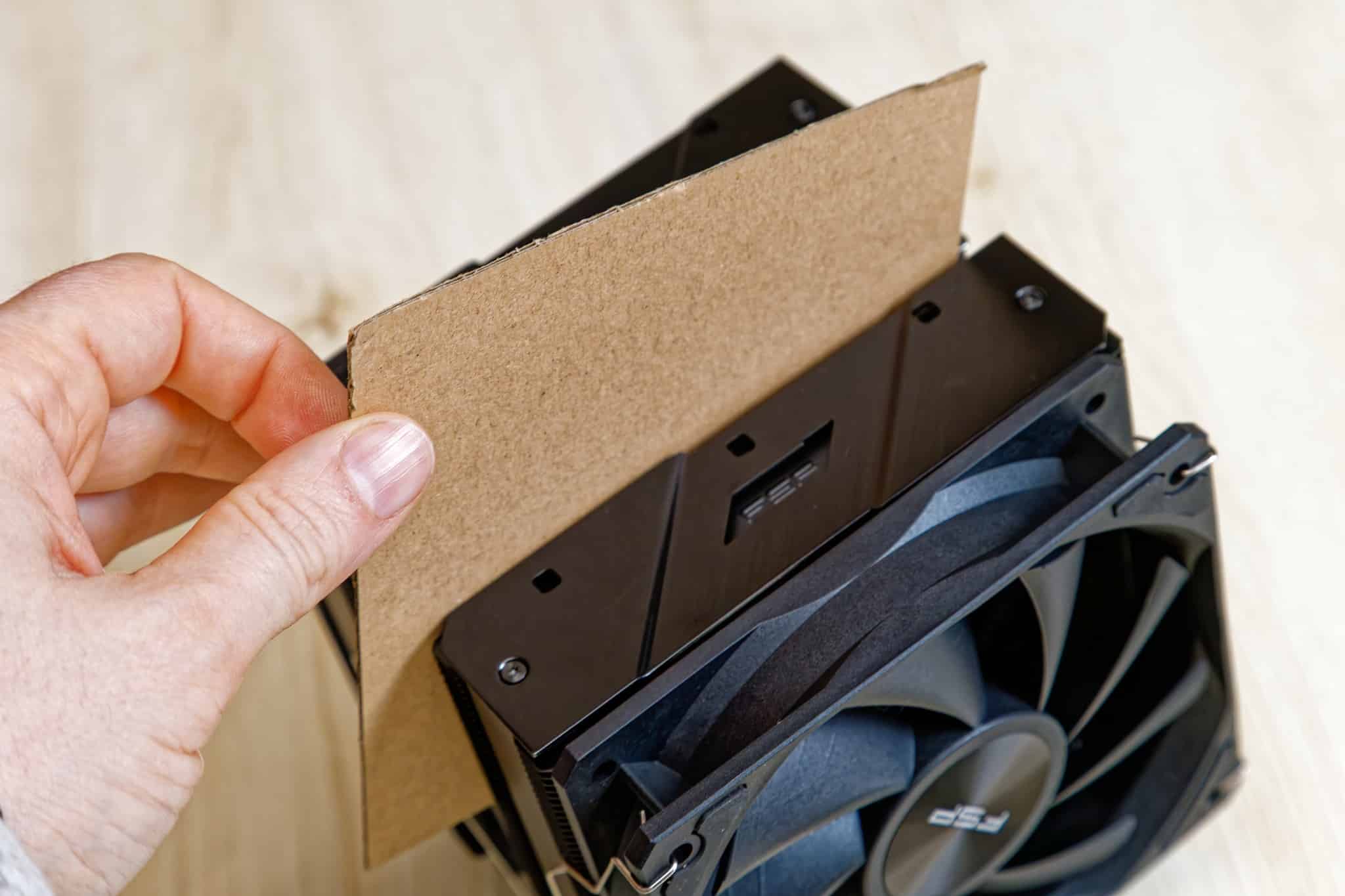
Finally, a look at the covers of the fins and heatpipe ends: These look cool in principle, but are a little slanted – further up towards the front than towards the rear. Is that intentional? Hard to say. In any case, there is a small foam strip underneath, presumably for acoustic damping.
View of the fans
- Relatively simple fan frame
- Daisy chaining possible
The two fans of the FSP MP7 Black officially reach a speed range of 800 to 1800 RPM. The lower end is therefore still relatively fast, but should still be quiet. The upper end ends in a range that does not usually escalate in terms of volume.
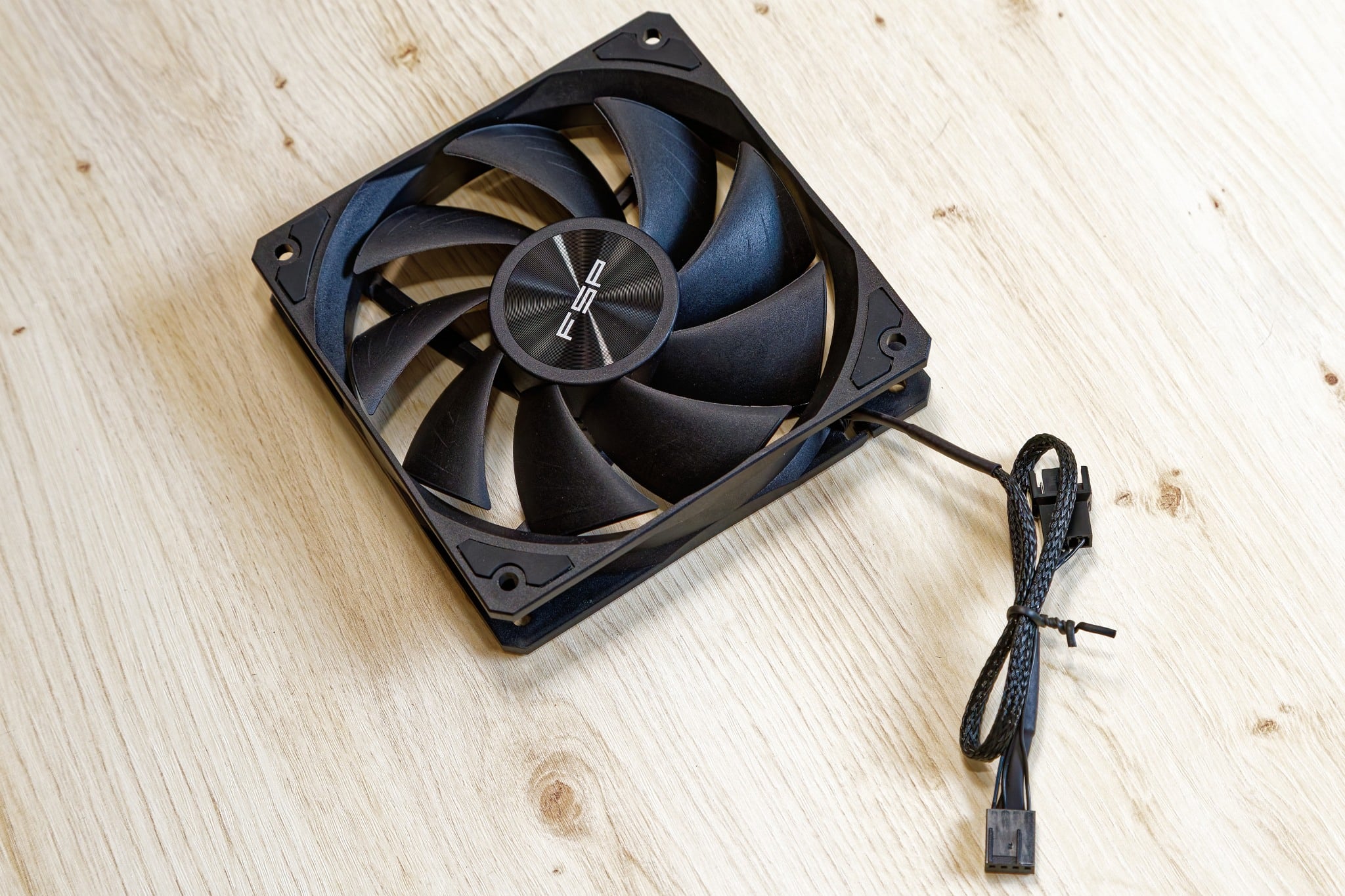
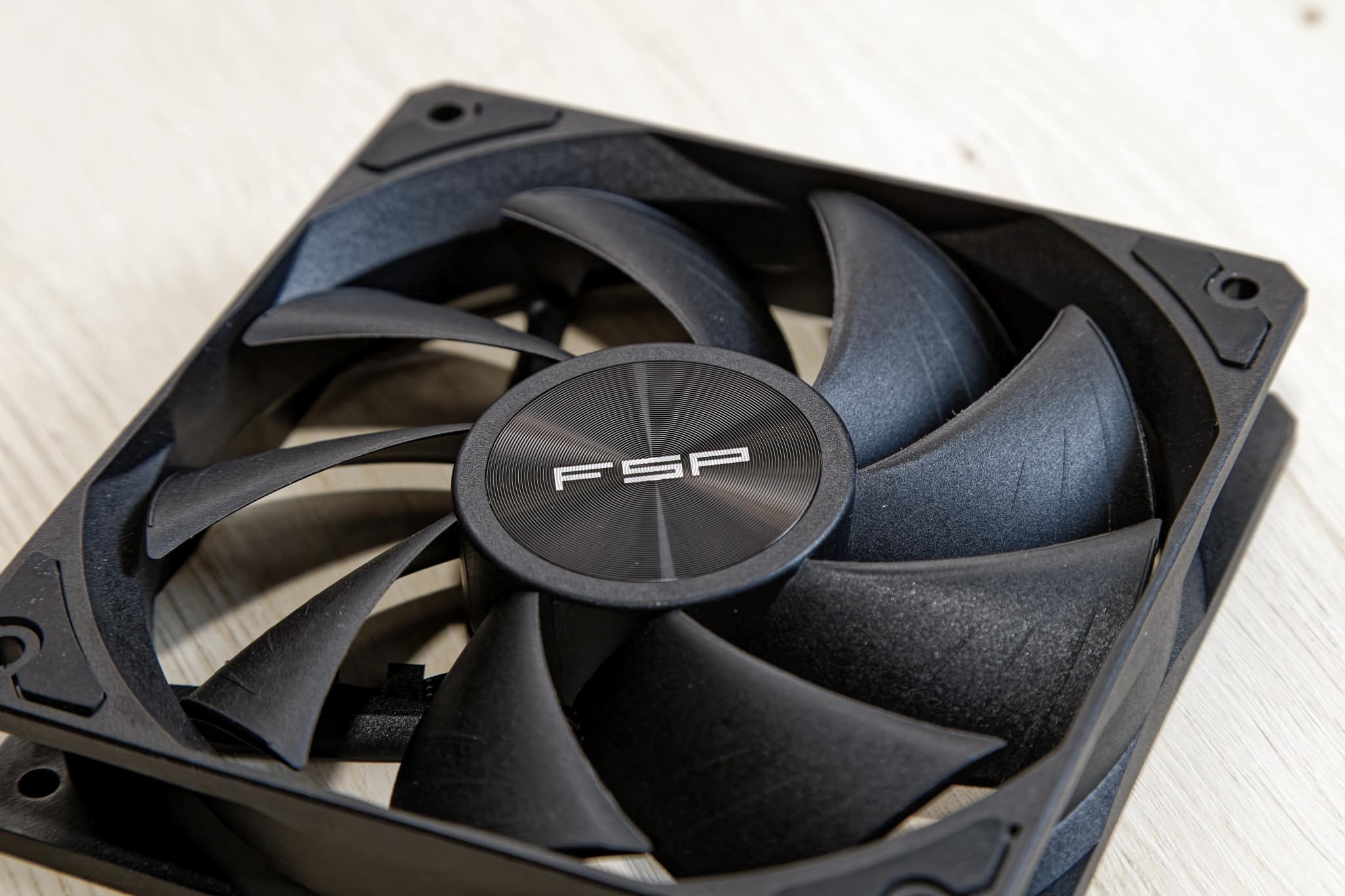
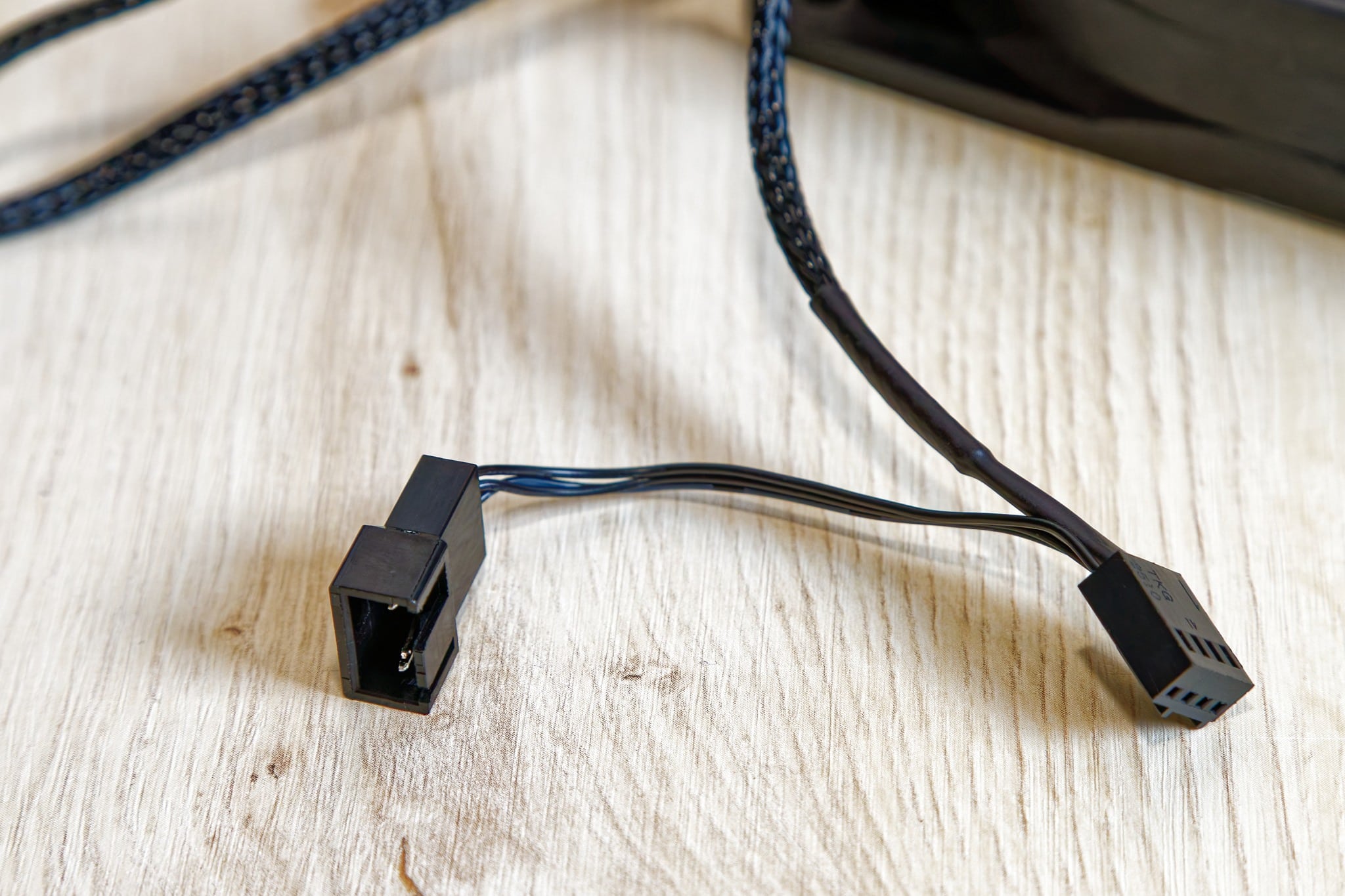
As already mentioned: In principle, the frame looks like standardized mass-produced goods, as used in many fans. But at least it comes in a version with rubberized contact surfaces, which dampens the transmission of vibrations, which is a sensible choice on an air cooler. The fan blades are neatly finished and a special design feature is the cover of the fan motor with the FSP logo, which looks like textured metal.
In addition, the cable is sheathed and also has an integrated splitter so that both fans can be plugged together. This means that both fans can be controlled via daisy chaining from a single mainboard header. As both fans have such a header, you could in principle connect a third fan, for example to operate a case fan above the radiator via the same motherboard header. That’s a cool thing – especially with cheaper mainboards, which often don’t have too many fan headers on the mainboard.
Mounting
- Relatively simple mounting
- Can be rotated in all directions depending on the brackets selected
- Special screwdriver should not be lost
When mounting the FSP MP7 Black, it is actually possible to rotate it in all directions. And not only with Intel, where it is almost always possible anyway due to the square frame, but also with AMD you can choose from different frames.
For Intel, a backplate is included for both older sockets 1200 and 115x as well as the newer sockets 1700 and 1851. No backplate is included for AMD’s AM4 and AM5; here you have to use the original backplate.
The test shows that the assembly for Intel and AMD is largely identical. With Intel, you only have to adjust the spacing of the backplate to the holes in the mainboard depending on the socket. For older Intel sockets up to 1200, for the newer ones from 1700 and for AMD sockets, there are now differently colored spacers that have to be fitted. The test system runs on AM4.

Once all the spacers are in place, either the AMD brackets or the large frame, which works for both AMD and Intel, can be selected.
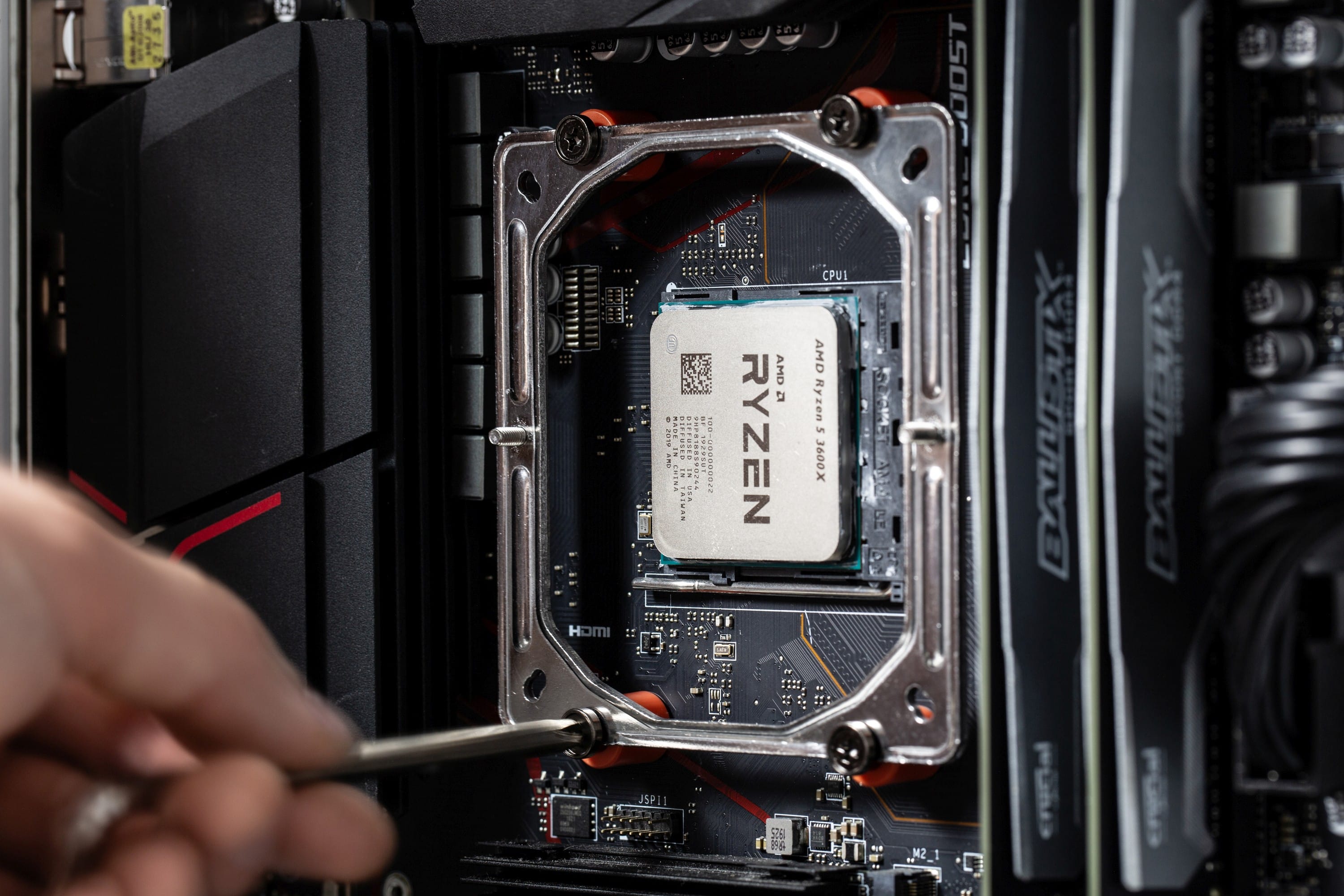
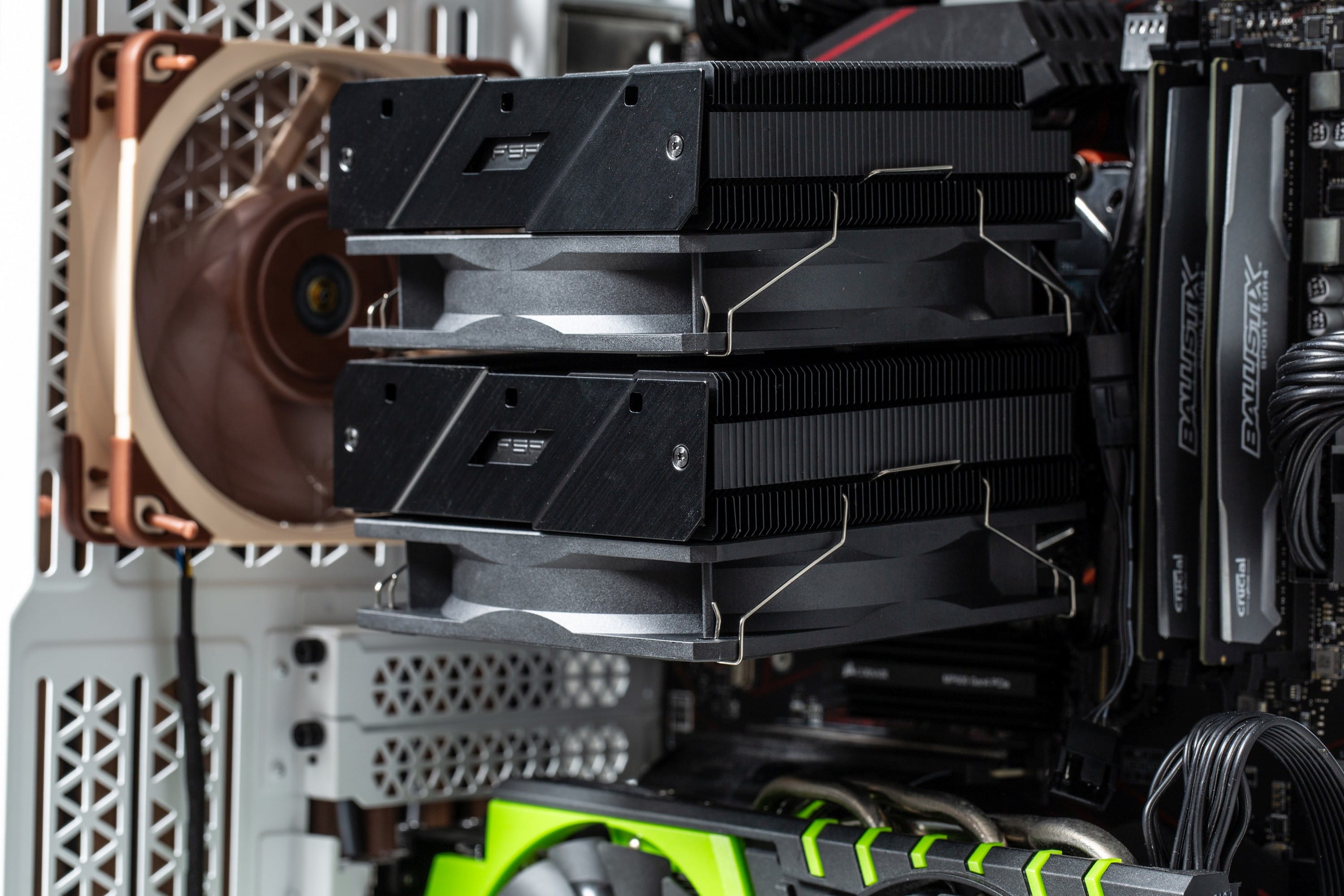
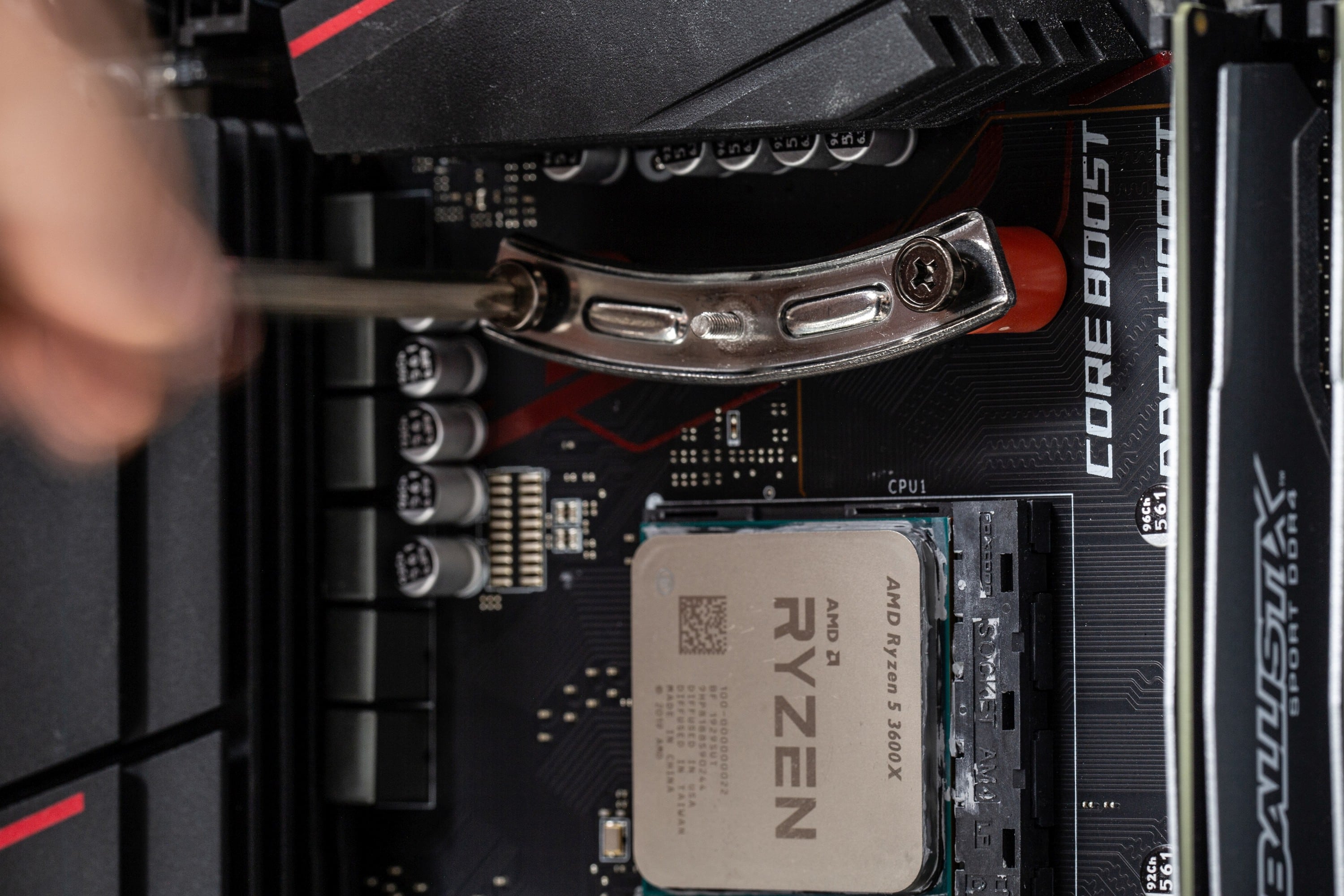
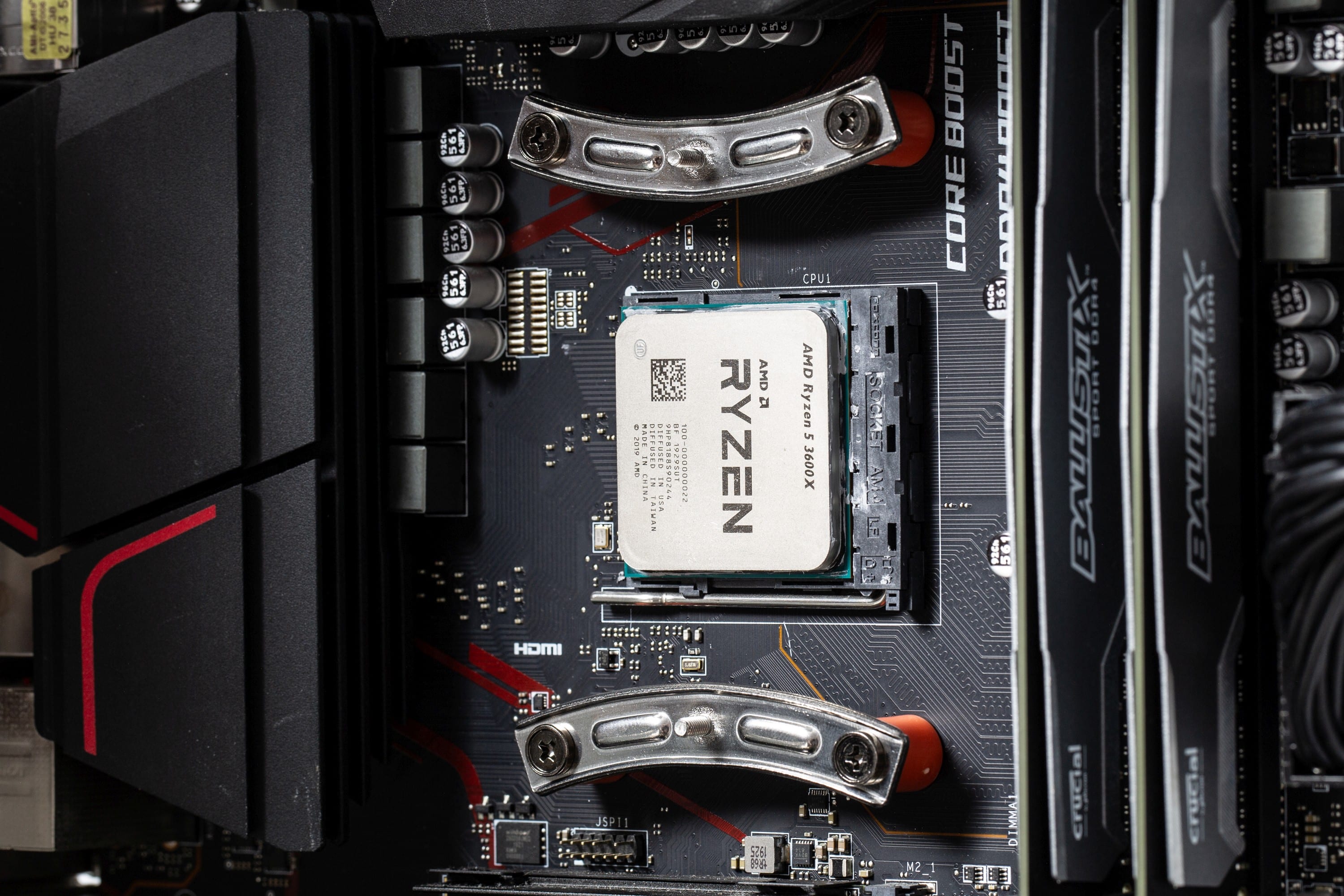
We strongly recommend mounting the system horizontally, as there are a lot of parts that need to be held in place at the same time. The spacers and brackets are only secure when the screw engages in the thread of the backplate.
As soon as the brackets are in place, the thermal paste is applied to the processor, the protective film is removed from the contact surface of the cooler and the cooler is then fitted and tightened through the holes in the cooler using the small, thin screwdriver.

The problem is that you should never misplace this very long, thin screwdriver if you want to remove the cooler again at some point. This is because it cannot simply be replaced with another screwdriver.
Performance and volume
- Test against a similarly priced cooler with comparable specifications
- Test of the fans compared to the Noctua NF-A12x25
When looking at the test results, please note that I measure the difference between the processor temperature and the room temperature. This compensates for fluctuations in the room temperature. For example, if a measurement result is 30.7 K, you would have to add the room temperature, e.g. 23°C. The measurement result would be 53.7°C. However, as far as the temperature is concerned, the lower the better. The same applies to the noise level – you want to achieve good cooling with as little noise as possible.
An AMD Ryzen 5 3600X is used for the test, which is heated up for 8 minutes per run with Cinebench R23 until the average temperature is measured for the span of one minute. Cinebench corresponds to a very high load, but this is still within the realistic load range for video editing and 3D rendering and therefore corresponds to the maximum heat development that can realistically be expected under an all-core continuous load.
Test setup
- Test against a similarly priced cooler
- Fan comparison with Noctua reference fans
For the performance test, I’m throwing the DeepCool AK620 into the mix, which is comparable in price. This is also a twin-tower air cooler with 120 mm fans, which already demonstrated very good performance a few years ago. The case fans in the test case, the Corsair 6500D Airflow, are the Noctua NF-A12x25 – but only one at the front and one at the rear and at a largely inaudible speed of 900 RPM. This ensures a certain supply of fresh air without taking a lot of work from the air coolers. Apart from the test against the DeepCool AK620, I also test the fans of the FSP MP7 Black by pitting them against the aforementioned Noctua NF-A12x25 (in the chromax.black version).
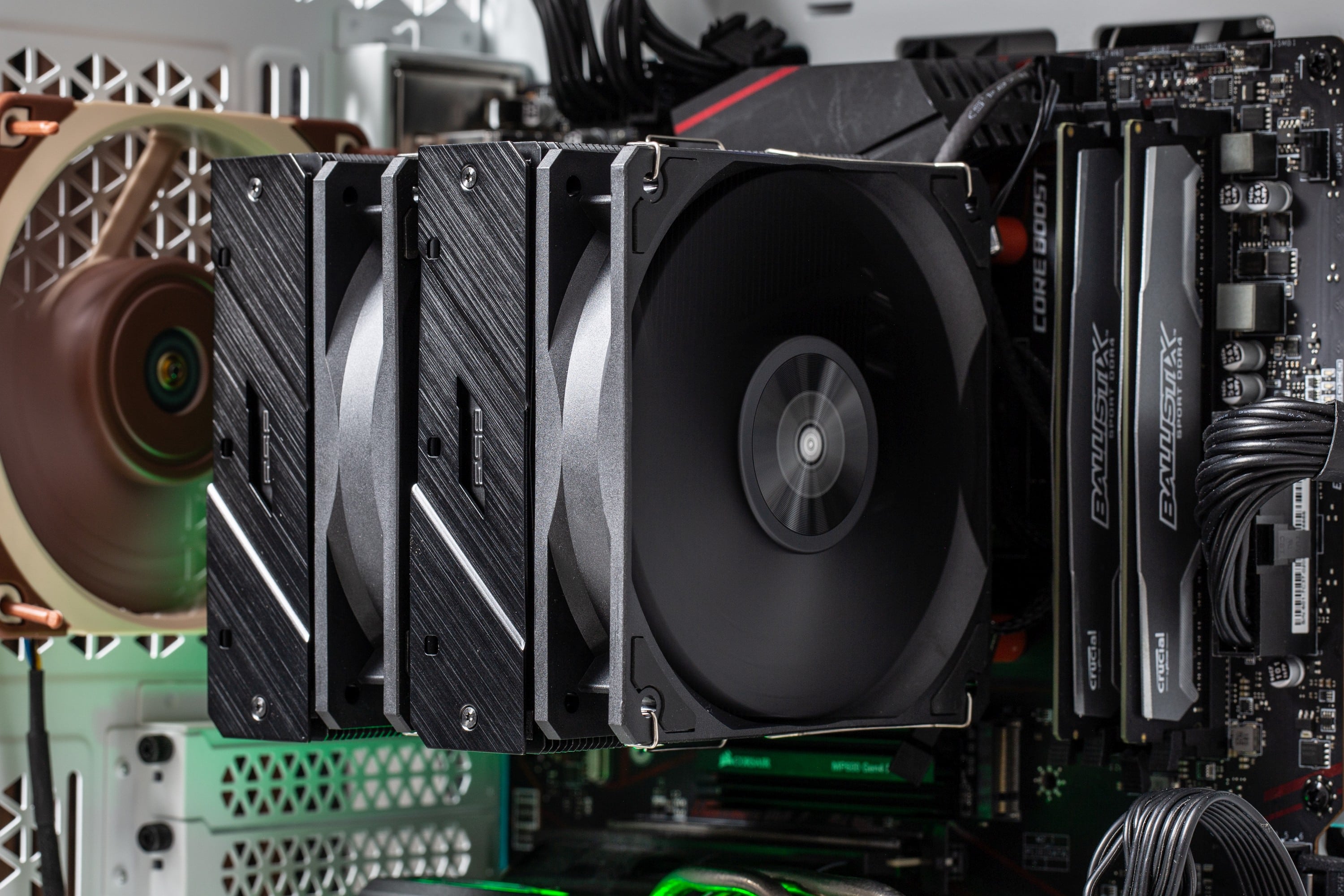
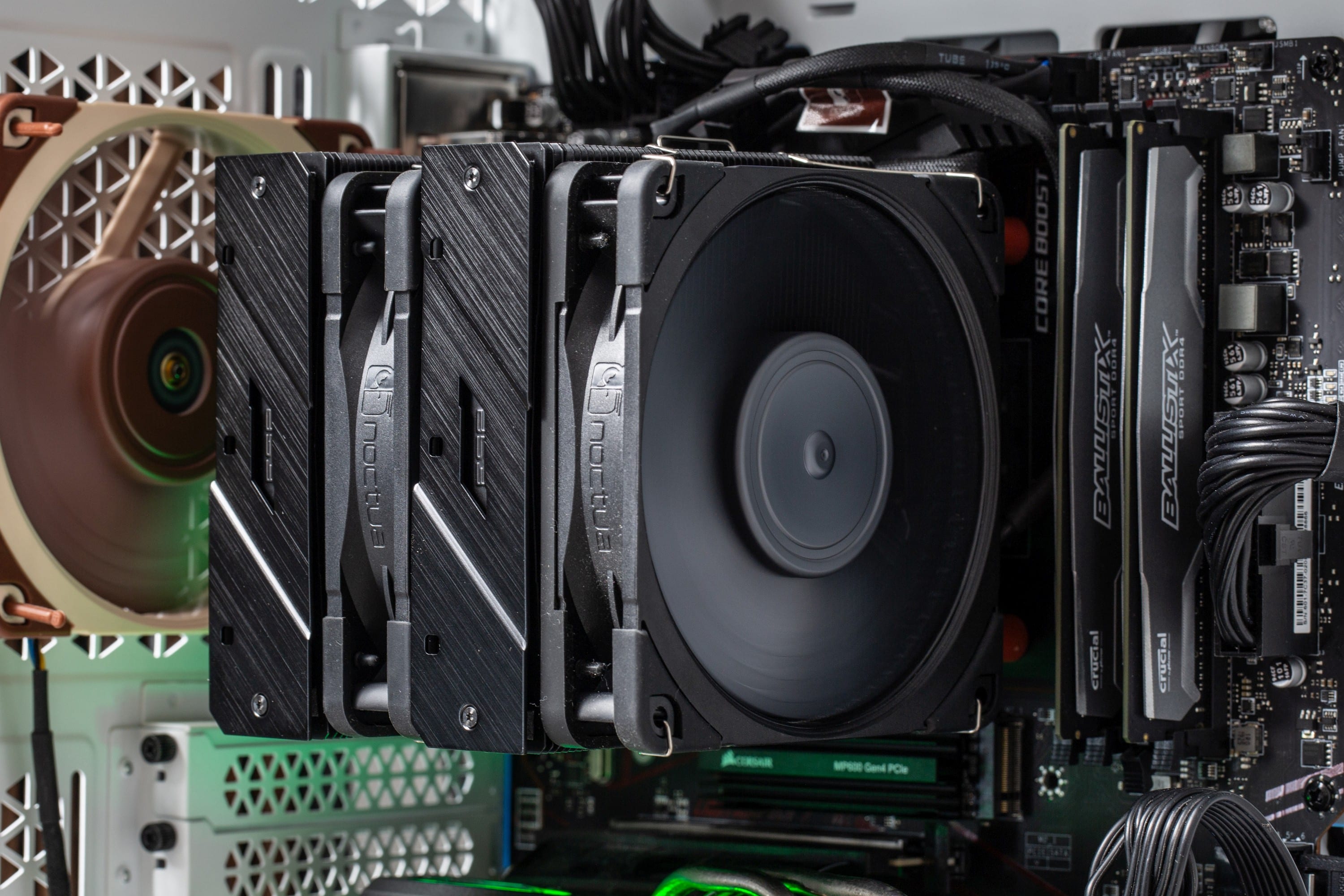
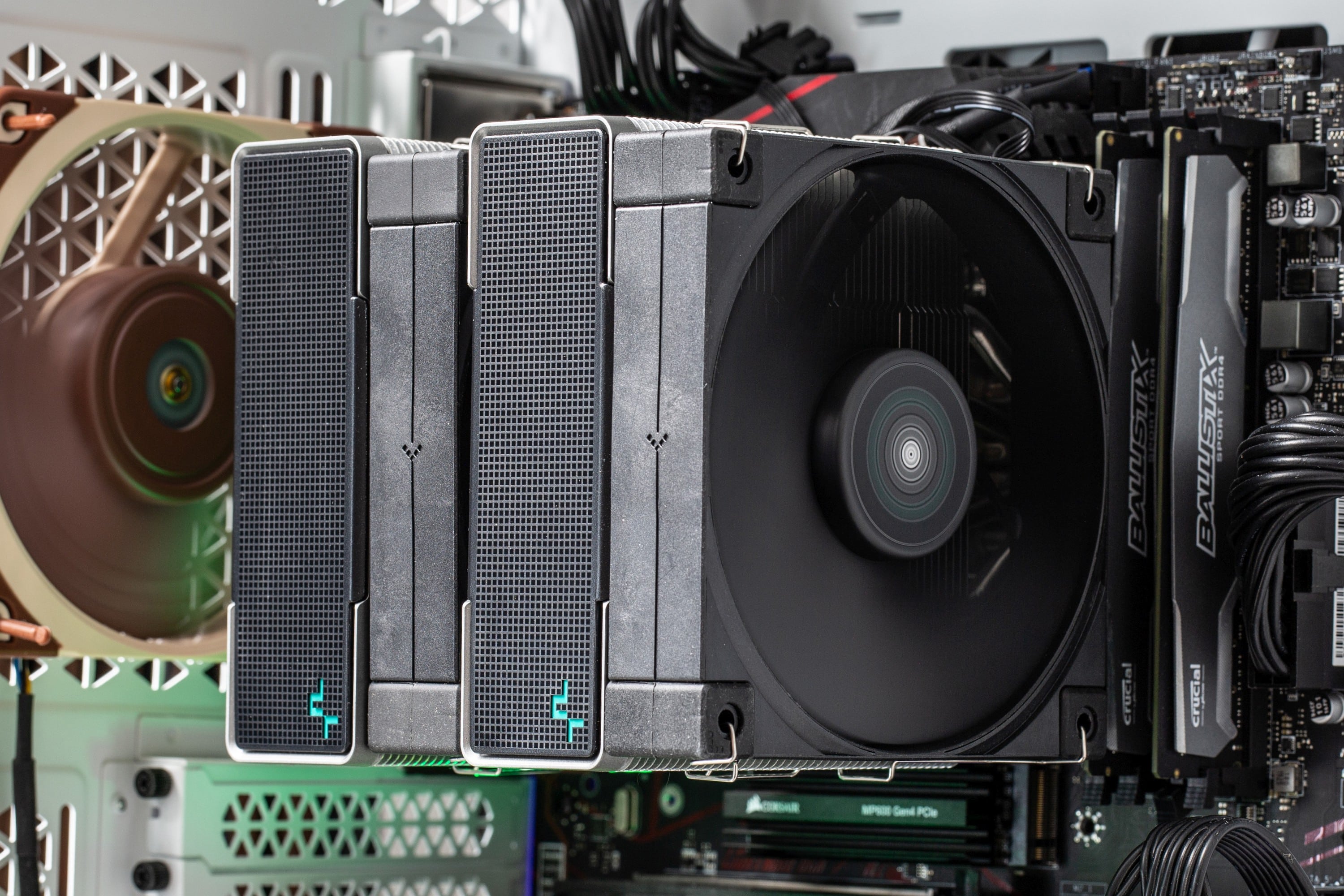
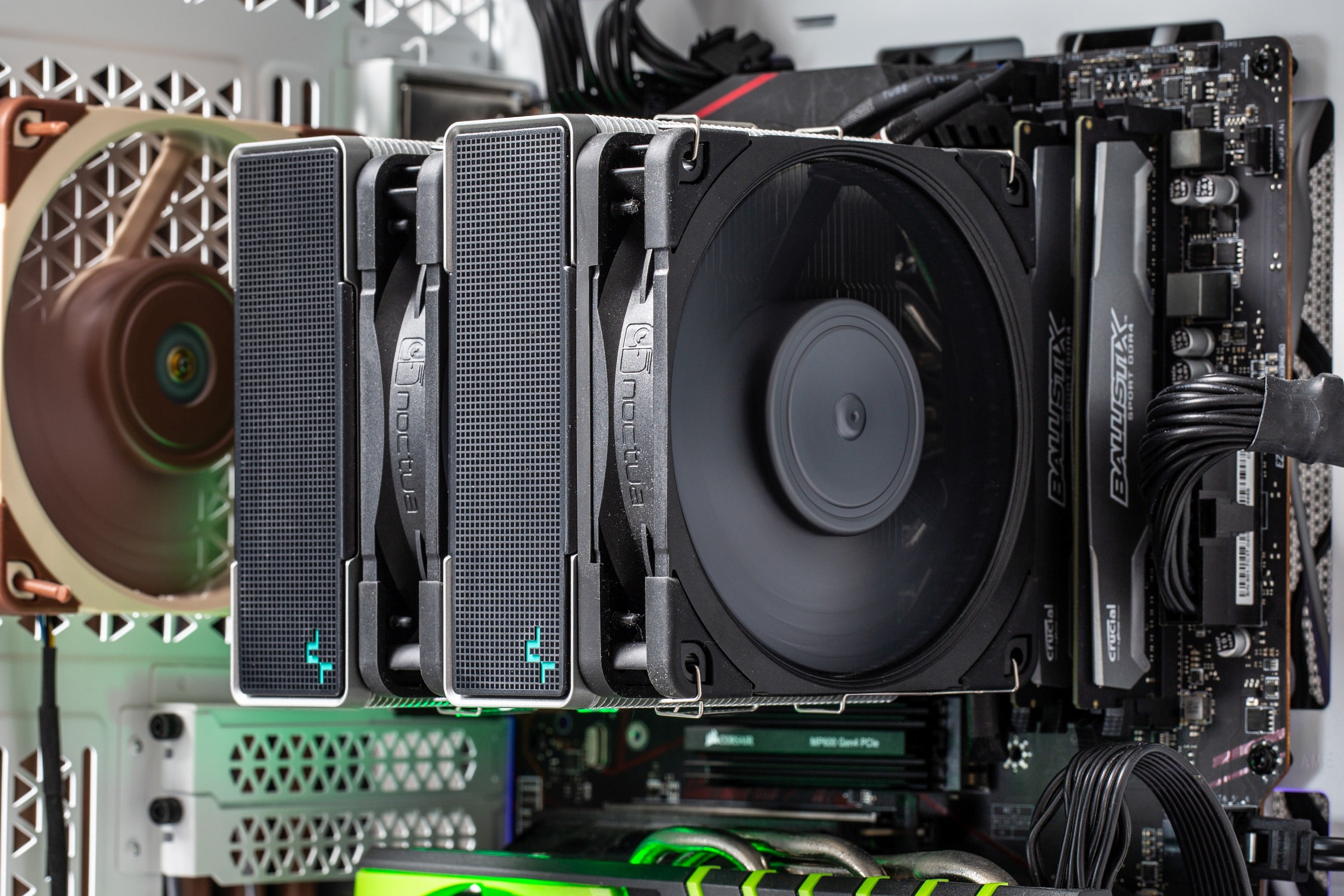
Alphacool Subzero is used as the thermal paste for both coolers.
Test results
| Cooler | Minimum speed | Audibility limit | Maximum power |
| FSP MP7 Black | 48,7 K 960 RPM, < 30dB(A) Throttling 3 W / 50 Mhz |
48,5 K 1100 RPM, 30 dB(A) |
46,2 K 1830 RPM, 43.2 dB(A) |
| FSP MP7 Black + Noctua NF-A12x25 |
56,2 K 480 RPM, < 30dB(A) Throttling 10 W / 125 Mhz |
48,5 K 1280 RPM, 30 dB(A) |
46,9 K 2010 RPM, 38.9 dB(A) |
| DeepCool AK620 | 52,3 K 540 RPM, < 30dB(A) Throttling 8 W / 75 Mhz |
47,2 K 1180 RPM, 30 dB(A) |
46 K 1860 RPM, 40.9 dB(A) |
| DeepCool AK620 + Noctua NF-A12x25 |
55 K 470 RPM, < 30dB(A) Throttling 10 W / 125 Mhz |
47,5 K 1260 RPM, 30 dB(A) |
46,2 K 2010 RPM, 38.9 dB(A) |
Analysis of the test results
- Good cooling performance
- DeepCool cooler is slightly more powerful and quieter at the same time
- Fan delivers decent performance, but can get quite loud
The results are actually quite unspectacular. The FSP MP7 Black has a fairly powerful fan, but it is also significantly louder than that of the DeepCool AK620 or even the Noctua NF-A12x25 as a possible replacement fan. Apart from the volume, however, the practical difference in performance is minimal and if you run the fan of the FSP MP7 at a low speed, the volume is also perfectly fine. Although the minimum speed of the FSP MP7 fan is quite high, which means that it is never really completely inaudible, it does provide a certain minimum performance.
In terms of measurements, the performance of the DeepCool AK620 is a little better, but the differences are so small that it makes no significant difference in practical everyday use which cooler you choose. With the caveat that the DeepCool cooler is also quieter. And apart from the pure performance, I also find the installation more pleasant.
Conclusion
It’s not that easy for me to draw a conclusion here. In principle, the FSP MP7 Black is definitely a good cooler that offers appropriate performance in the mid-range price category and can easily keep a large number of processors under control. But when I compare it with the DeepCool AK620, which is in a very similar price range, then I find it difficult to recommend the FSP cooler, because the AK620 is slightly ahead in all respects: cleaner workmanship, more convenient installation, slightly better performance with slightly lower noise levels.
But of course it also depends on how the prices develop. As long as the two coolers are less than €5 apart, I wouldn’t really recommend the FSP MP7 Black. However, if the price gap increases, the FSP cooler will become more interesting again, as the difference remains small in practice. If you already have the FSP MP7 Black in use, you don’t need to worry either: The performance is good.

VORTEILE
- Good price
- Stylish black design
- Cooler can be aligned as desired
NACHTEILE
- Mediocre build quality
- Special screwdriver should not be lost for maintenance or replacement
Fazit
The FSP MP7 Black is a good twin-tower cooler, but it doesn't stand out in any particular respect.


