


Samsung officially unveiled its new foldable generation in mid-July. The top model in the form of the Samsung Galaxy Z Fold7 has not only become significantly more powerful and lighter, but is also thinner than ever before. In our test, we find out whether the flagship model is worth its high price.
Technical data
| The product | Z Fold7 |
| Processor | Qualcomm Snapdragon Elite for Galaxy |
| Operating system | Android 16; One UI 8 |
| Display |
|
| Camera |
|
| Memory | 12 GB LPDDR5 RAM; 256/512/1,000 GB UFS 4.0 flash memory |
| network | SIM card slot (nano SIM); 5G |
| Connectivity | USB-C; Wi-Fi 7, NFC, Bluetooth 5.4 |
| Dimensions and weight |
|
| Battery capacity | 4,400 mAh; 25W charging (cable); 15W charging (wireless) |
| Prices (RRP) | € 2,079.00 * |
Samsung Galaxy Z Fold7 review: Slimmer than ever
- incredibly thin
- Very light for a foldable
- high-quality workmanship
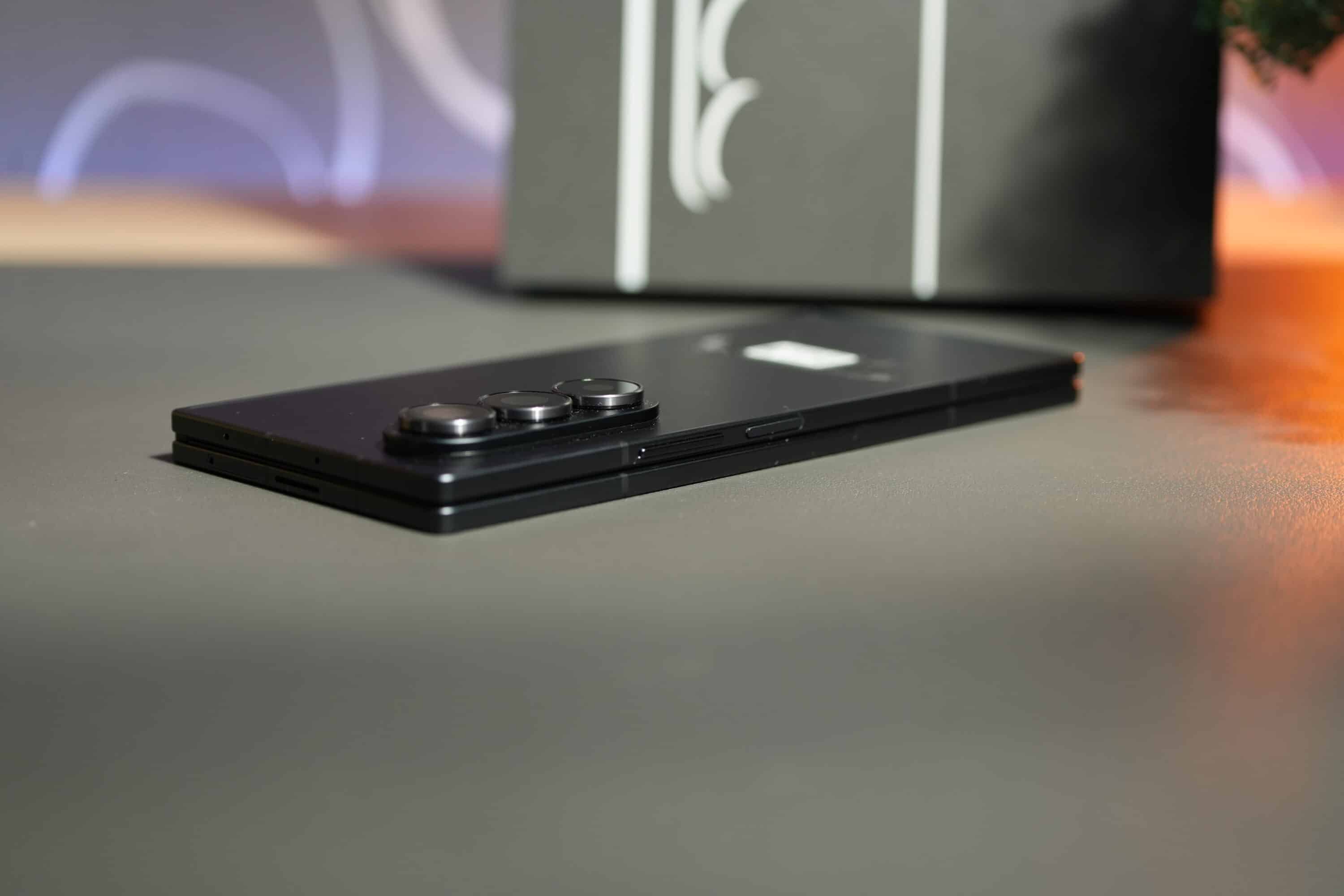
Samsung’s Z Fold models have never been particularly thin, especially when compared to the best folding smartphones. Fortunately, this has now changed with the seventh model generation: The Samsung Galaxy Z Fold7 has been slimmed down considerably.
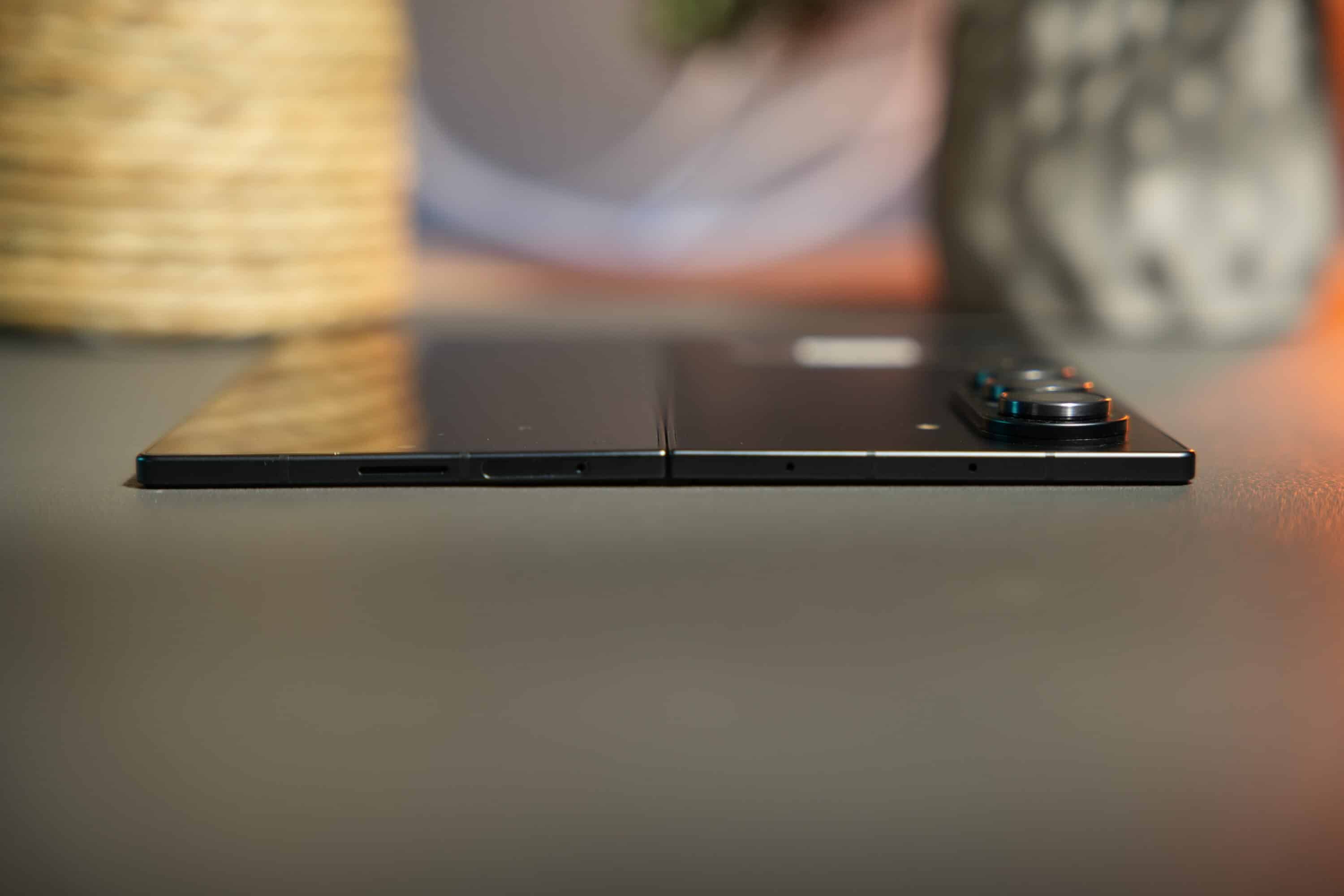
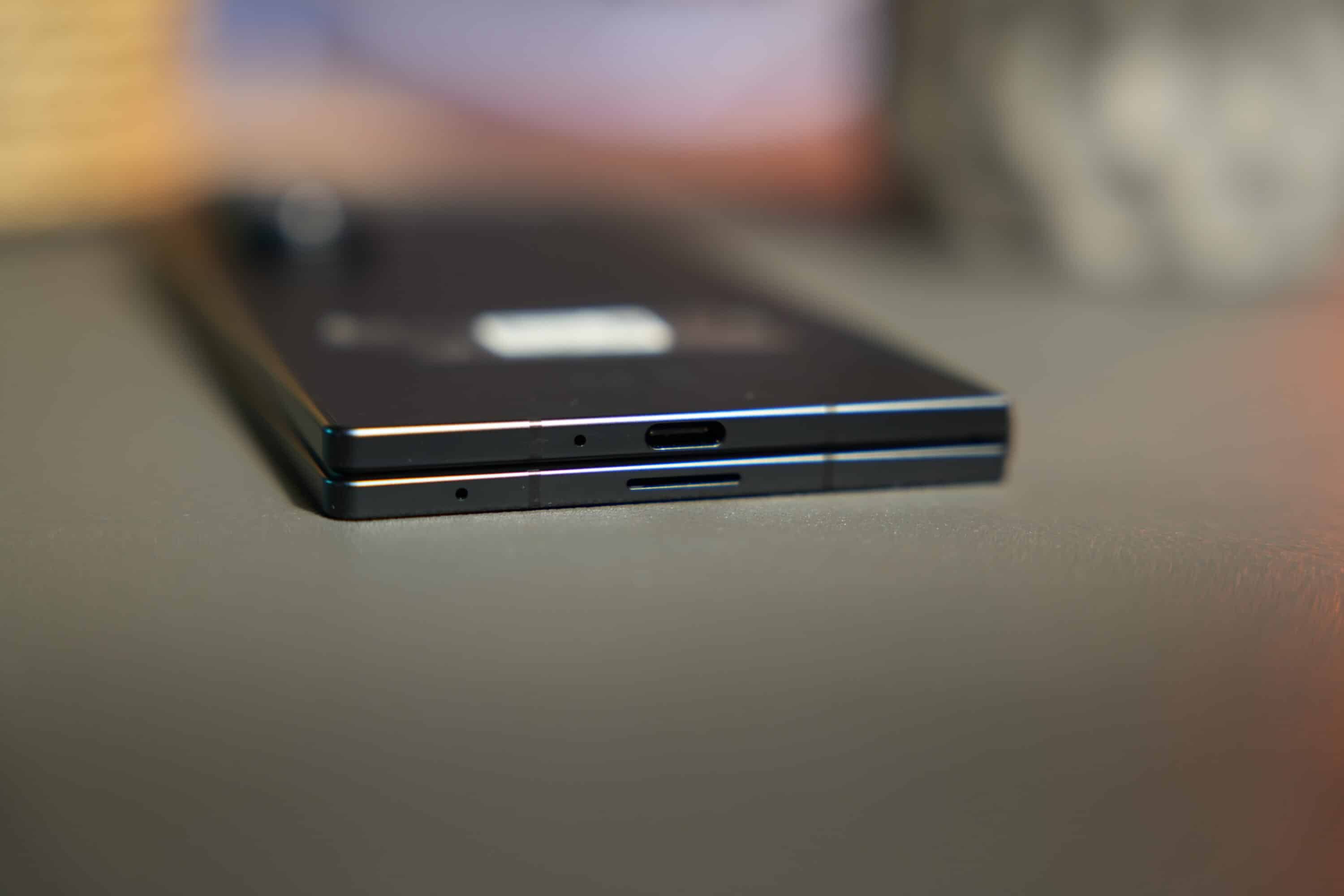
With a thickness of just 8.9 mm when closed and 4.2 mm when unfolded, and weighing just 215 g, it approaches the format of a classic smartphone – astonishing compared to its significantly thicker predecessor. For comparison: The HONOR 400 Pro (our test), for example, is 8.1 mm thick as a classic smartphone, while the Xiaomi 14 Ultra (our test) is almost as thick as the Samsung foldable at 8.8 mm. Quite impressive, especially as the weight of 215 grams is barely more than that of classic flagship smartphones.
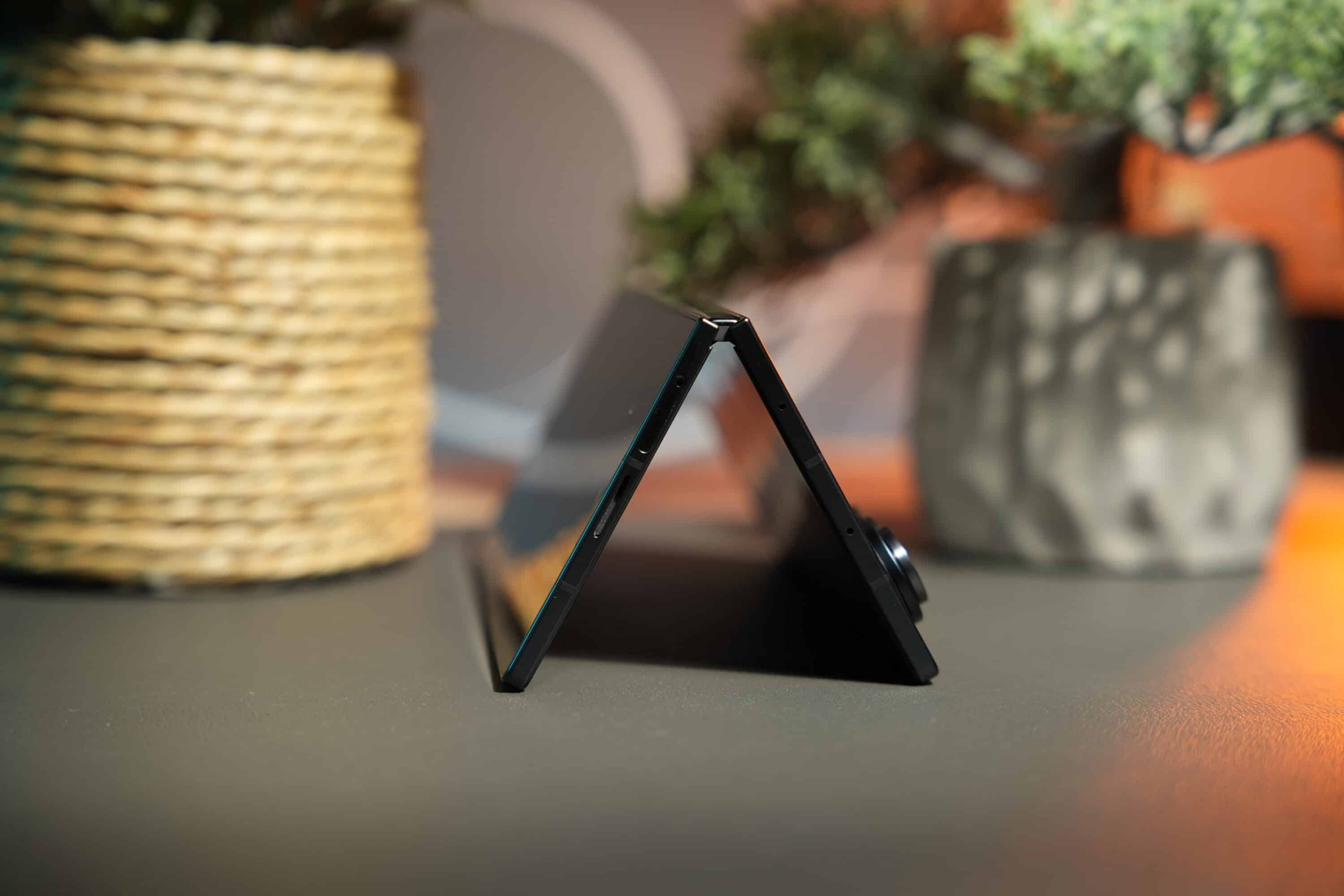
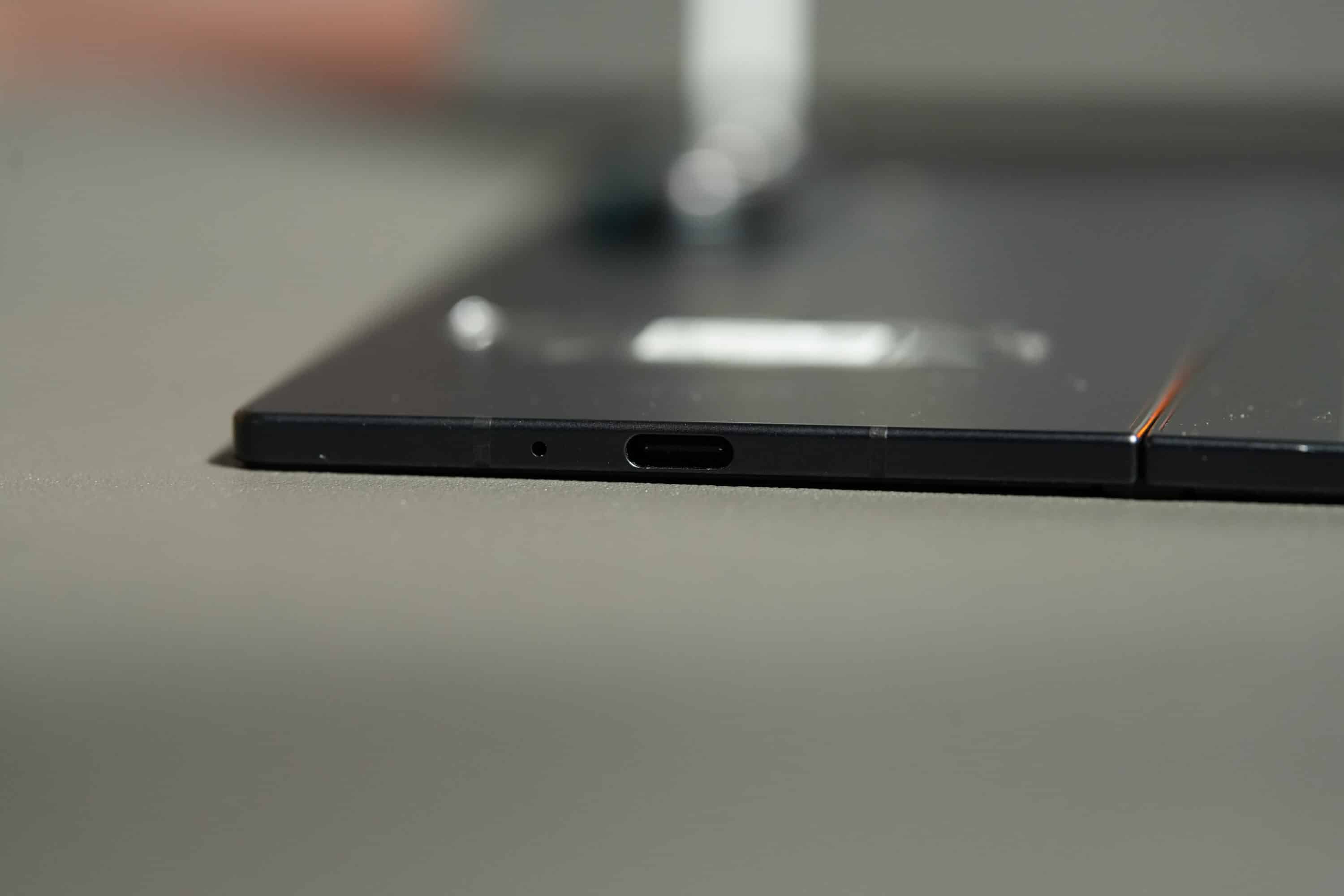
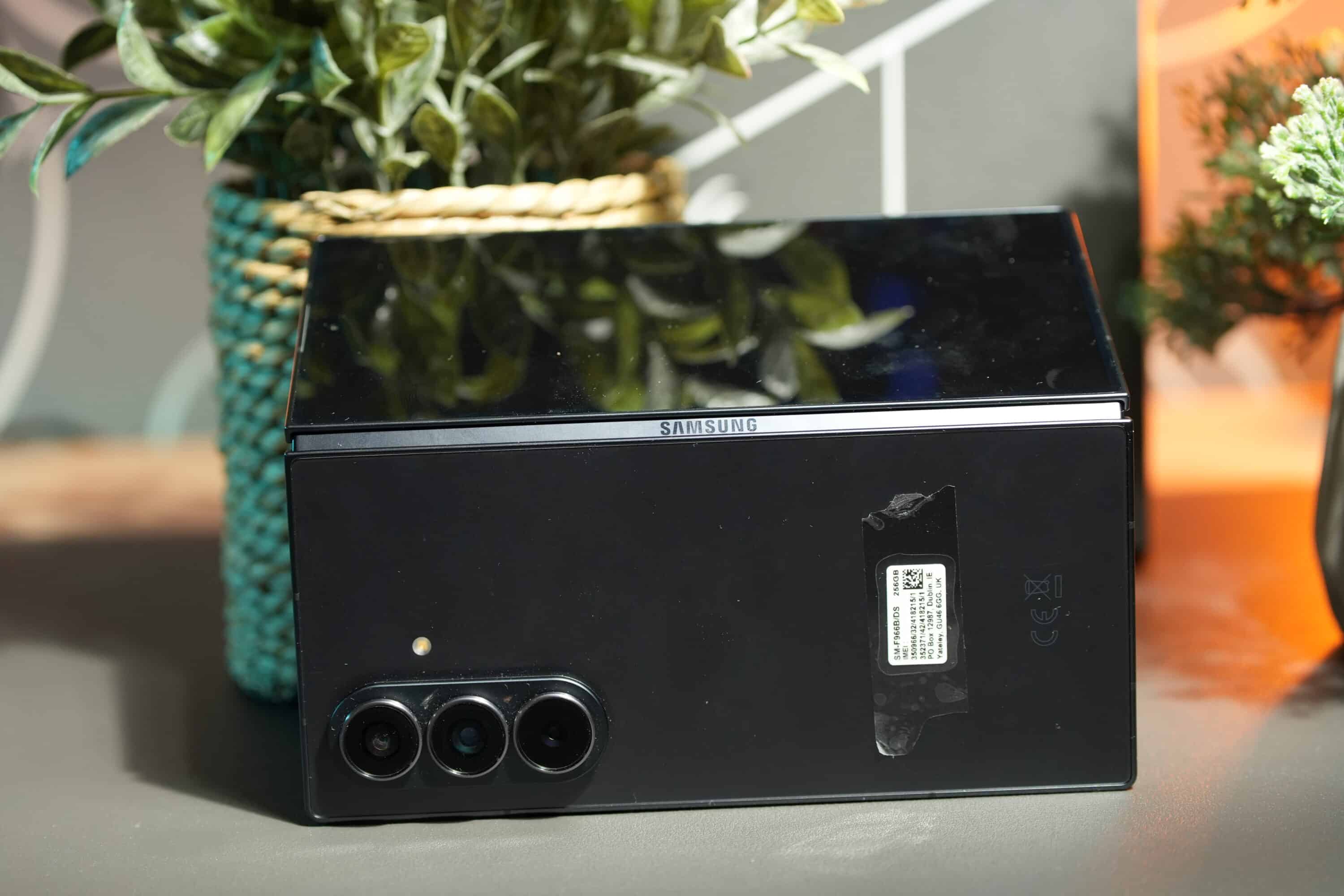
When unfolded, the Z Fold7 is so thin that there is just enough space in the frame for the USB-C port. What I don’t like, however, is how far the three camera elements protrude at the back. This makes the folding smartphone very wobbly on surfaces if you don’t place it on the display side.

This makes the device feel very natural in the hand and its angular aluminum design (Advanced Armor Aluminum) gives it a solid, high-quality feel – the material is said to be significantly more robust than previous alloys.
The fact that the fold in the middle is now virtually non-existent naturally has a positive effect on the thickness of the device. However, in my opinion, this makes it more difficult to open the Foldable, as both sides rest on top of each other with no space in between. Especially as the hinge is quite stiff, which makes it even more difficult to open. This could be a little tricky, especially for people with large hands.
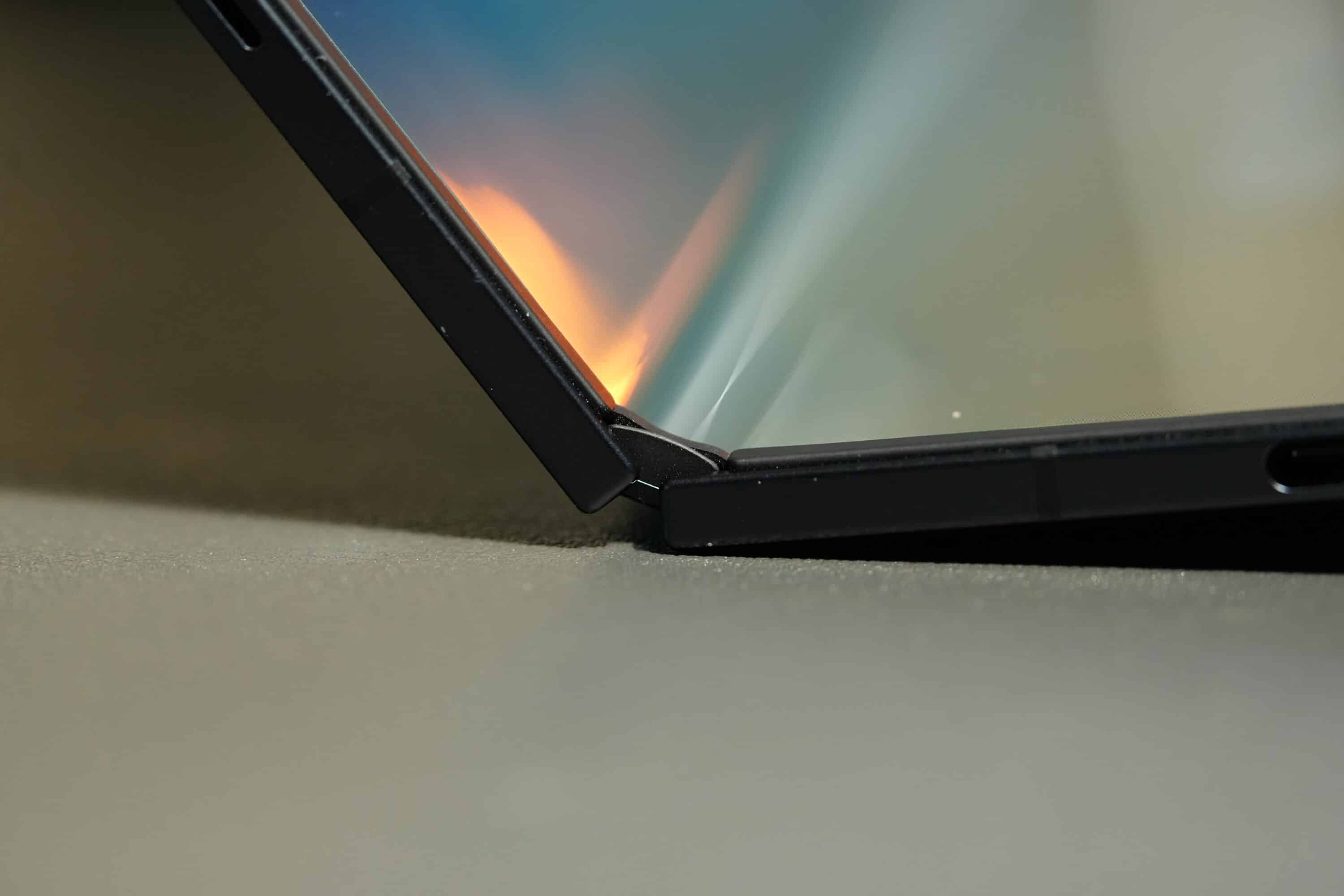
With dimensions of 158.4 mm in length x 143.2 mm in width or 72.8 mm in width when closed, the Z Fold7 fits very well in the hand. The new 21:9 form factor makes the foldable much easier to grip in everyday use, especially when closed, which noticeably improves its practicality.
Powerful displays in the Samsung Galaxy Z Fold7
- dynamic 120 Hz AMOLED displays
- successful 21:9 form factor
- average brightness
As befits a foldable smartphone, the Samsung Galaxy Z Fold7 has two displays. The outer cover display has a 21:9 aspect ratio and a screen diagonal of 6.5 inches. It has a resolution of 2,520 x 1,080 pixels in Full HD+ and offers a frame rate of up to 120 Hz, which is dynamically adjusted between 1 Hz and 120 Hz thanks to LTPO.
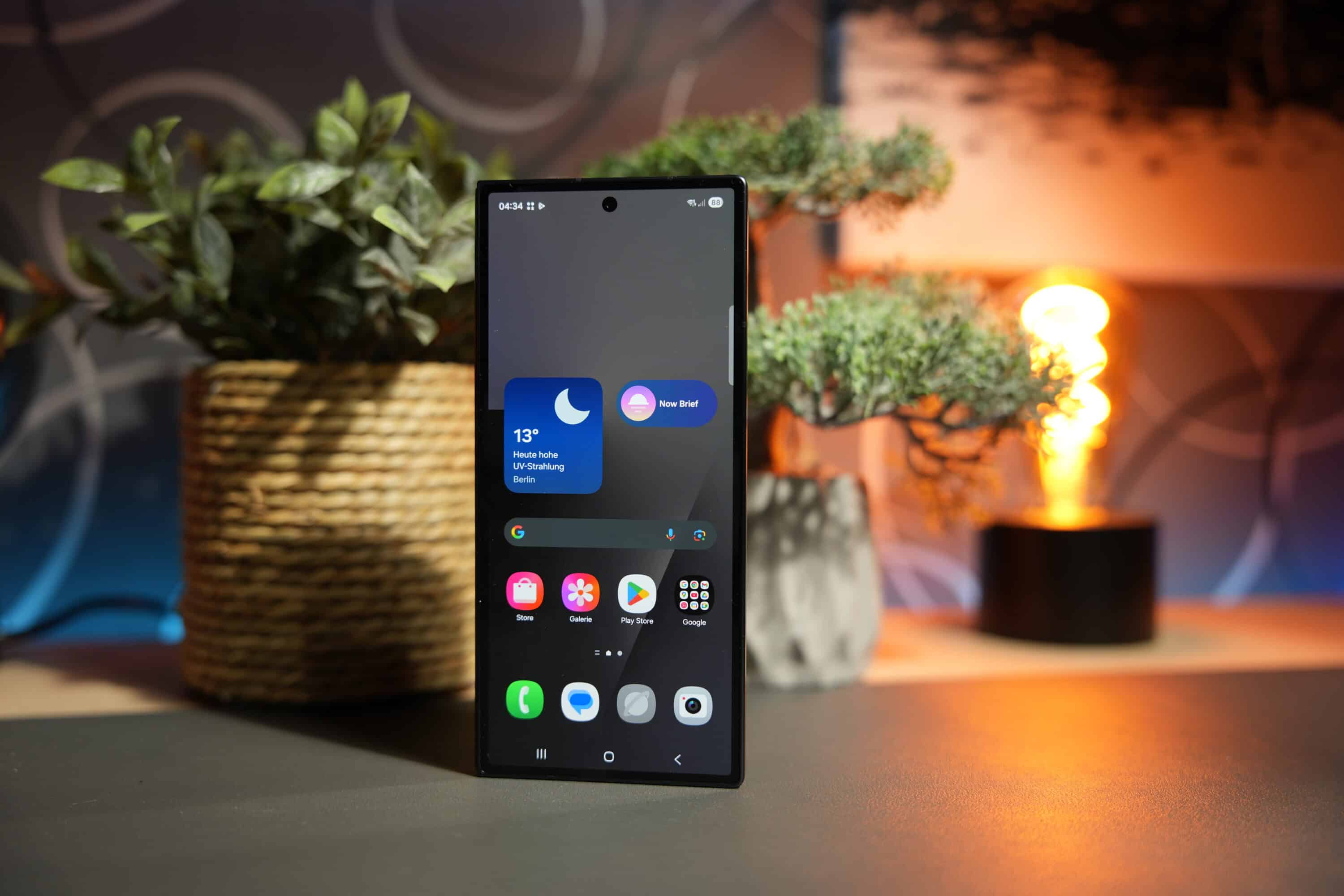
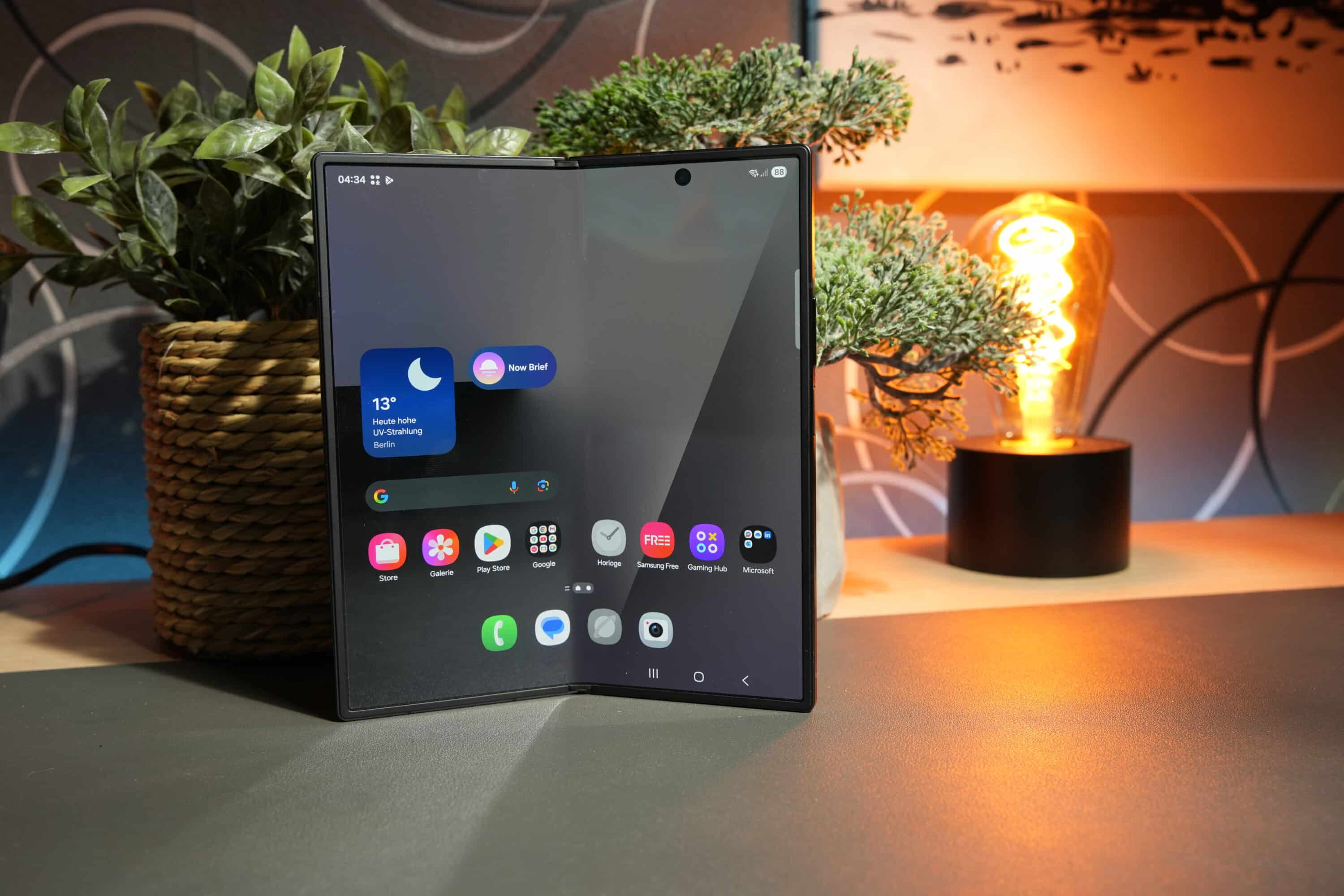
The foldable display inside, on the other hand, is 8 inches in size and has a resolution of 2,184 x 1,968 pixels in QXGAS+. Here, too, there is a dynamic frame rate of up to 120 Hz. Thanks to Samsung’s Dynamic AMOLED 2x technology, both screens impress with great black tones, excellent contrast and rich colors, but the maximum brightness cannot keep up with classic smartphone displays.
A maximum of 1,200 nits outside and 1,300 nits inside are offered. That’s good, even for outdoor use, but current flagships sometimes achieve twice that, which improves outdoor readability.
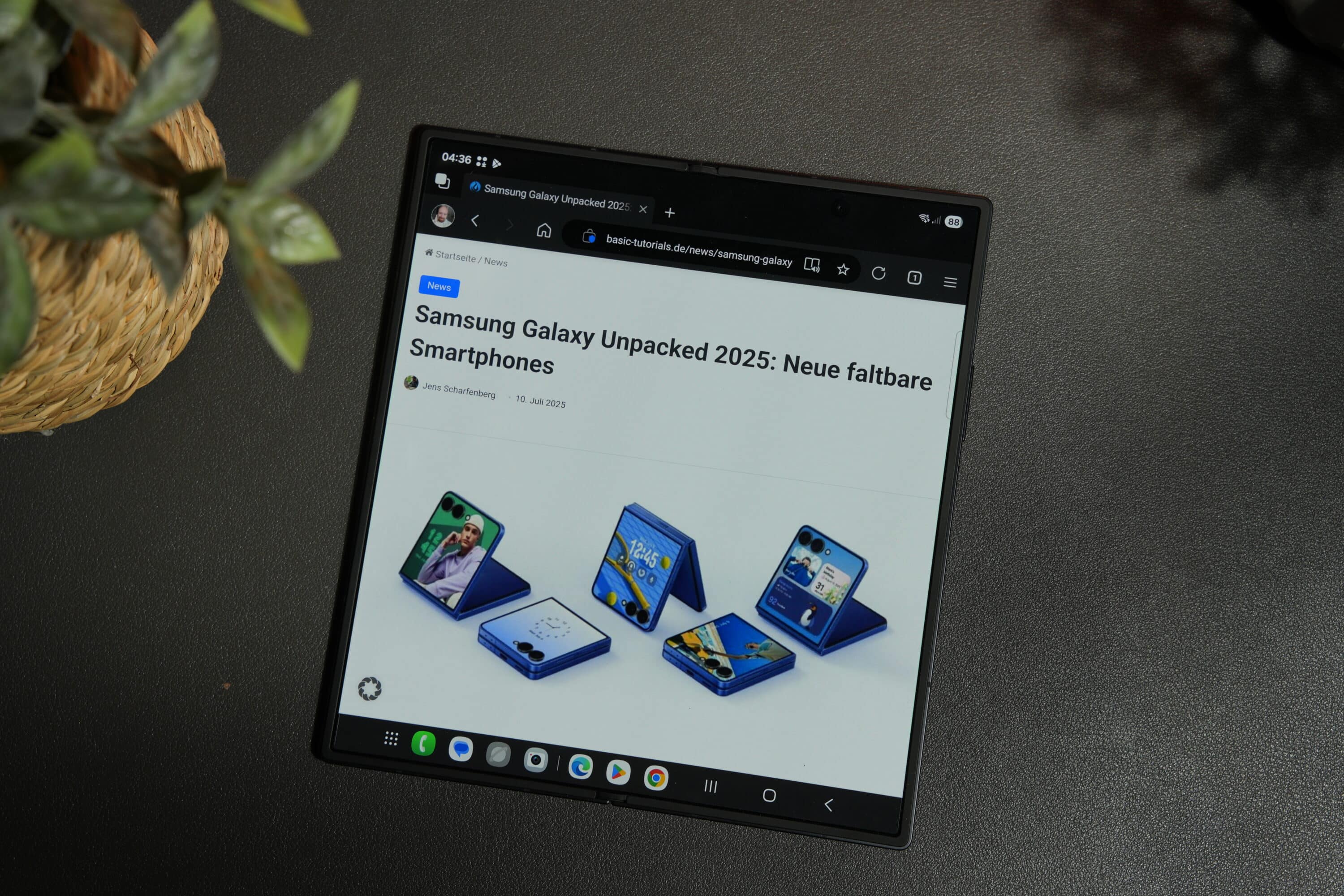
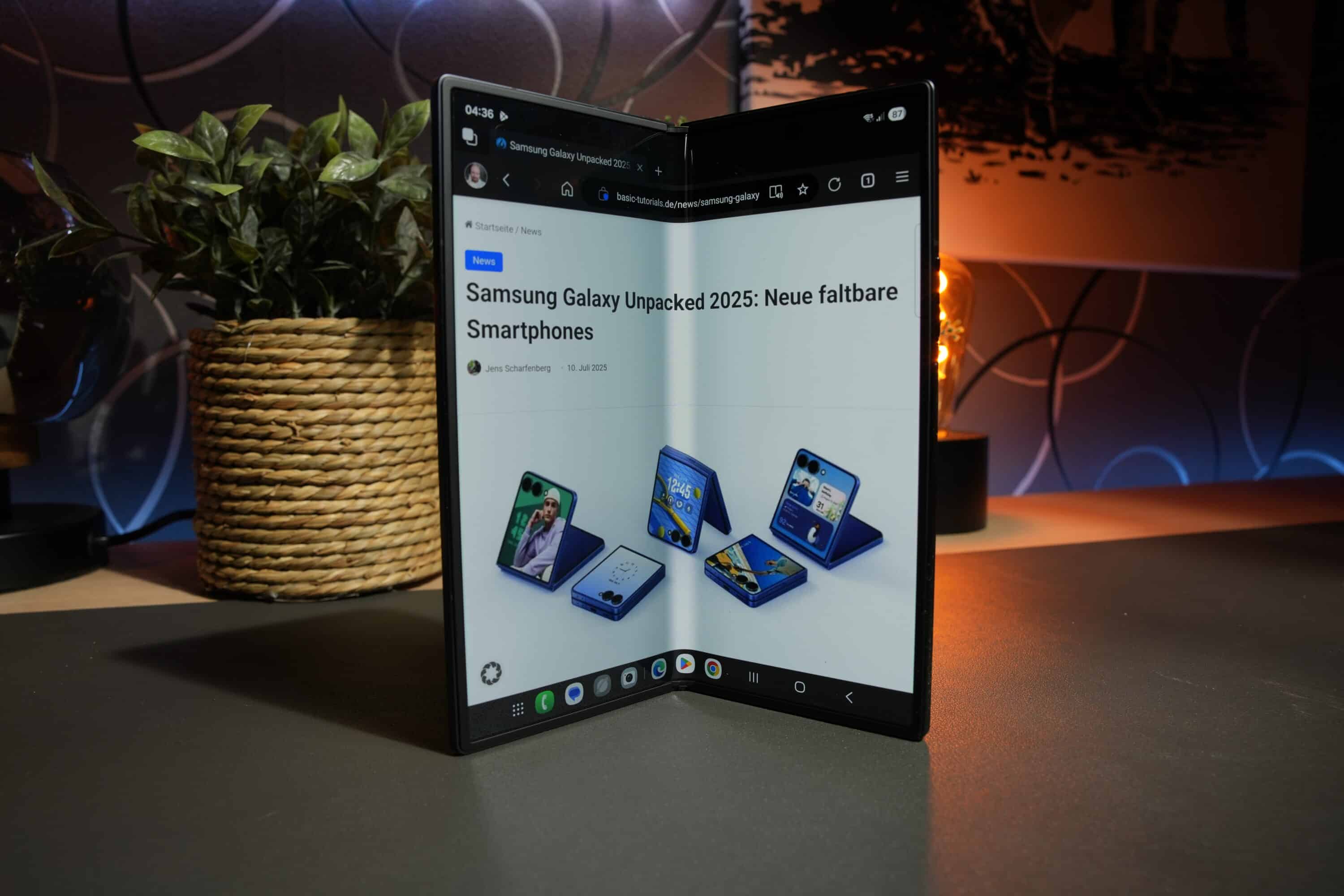
Nevertheless, this is absolutely sufficient in practice. The inner screen is of course particularly practical if you want to consume media, multitask or play games. The generous screen area offers plenty of space, but typing texts is now noticeably more comfortable on the 21:9 external display.
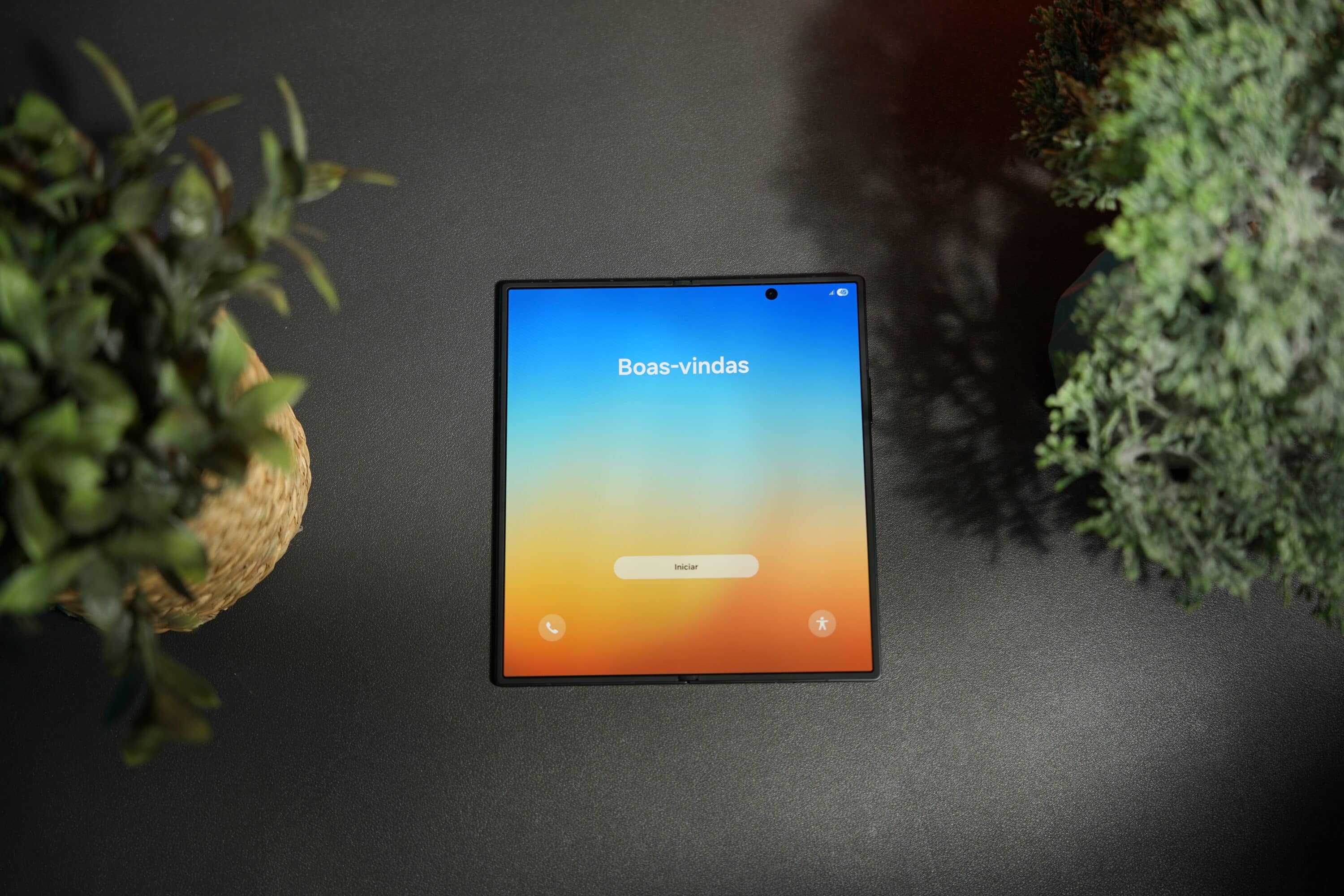
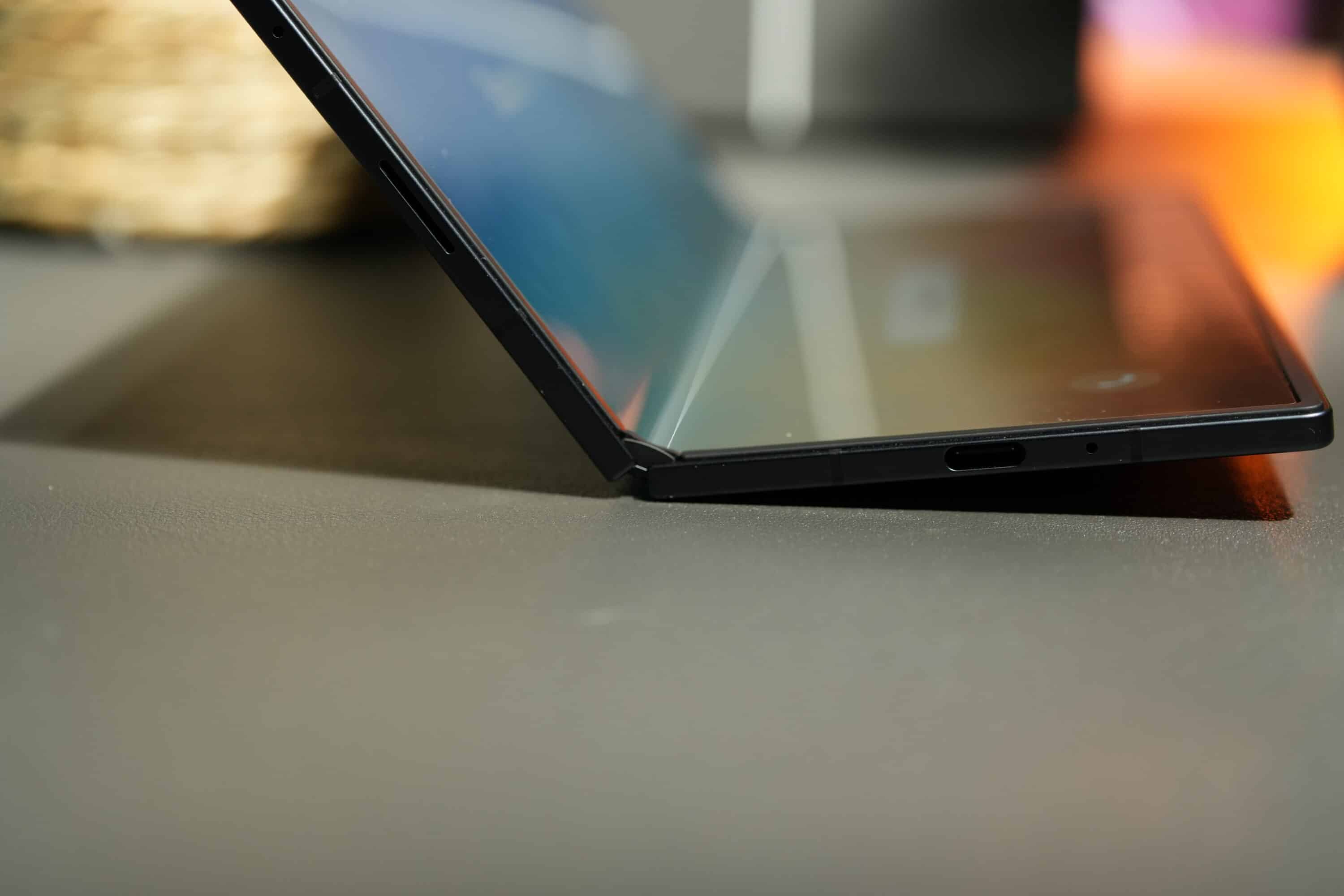
Depending on the incidence of light, the fold is sometimes more, sometimes less visible. At least when fully unfolded. When folded in a little, it is much more clearly visible, but I didn’t find this really annoying during the test.
Features and performance at flagship level
- outstanding performance
- strong AI features
The built-in Snapdragon 8 Elite for Galaxy offers top performance at flagship level – including significantly improved NPU (AI performance), CPU and GPU compared to Fold 6, enabling sophisticated AI features and multitasking. Models are available with 12 GB RAM (256/512 GB) or 16 GB RAM (1 TB) – enough for productive work, even with several apps simultaneously.
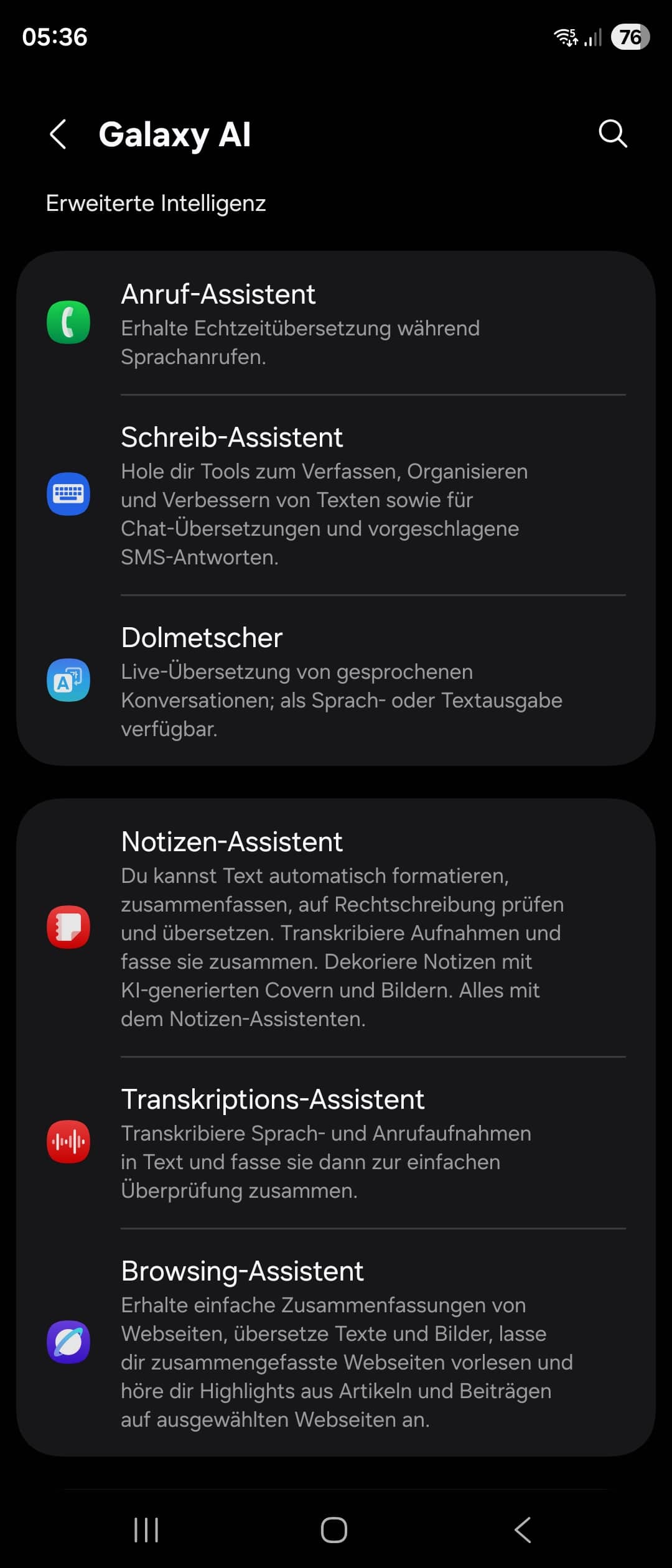
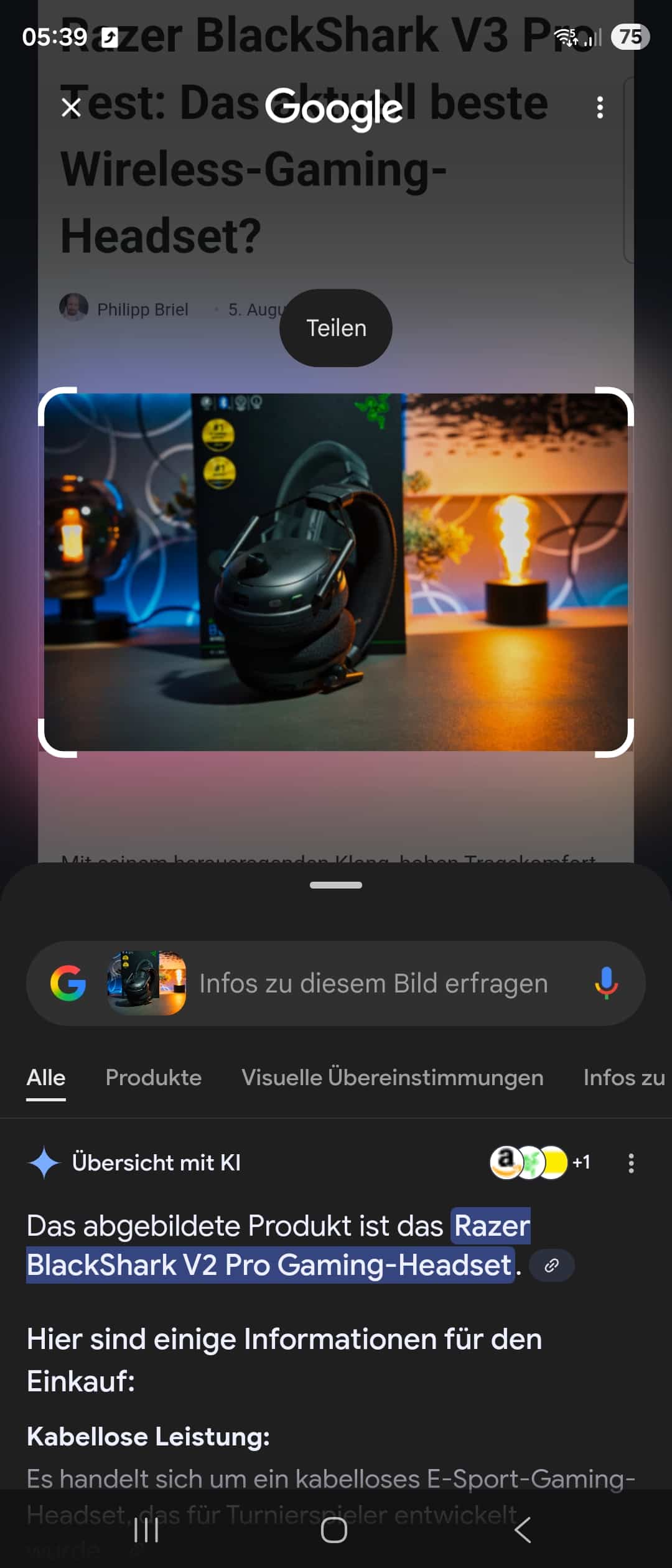
One UI 8 (Android 16) deeply integrates Galaxy AI features such as Generative Edit (image editing), Audio Eraser, Circle to Search, intelligent drag & drop assistants and greatly improved multitasking interaction through “AI Results View”. Samsung also guarantees 7 years of updates, with support until October 2032.
Performance impressions from hands-on tests show: responsive, smooth and well optimized. Official benchmarks were not allowed at events, but the impression corresponds to the Galaxy S25 Ultra level. Multitasking, modern games, intensive applications and AI: all no problem for the Z Fold7
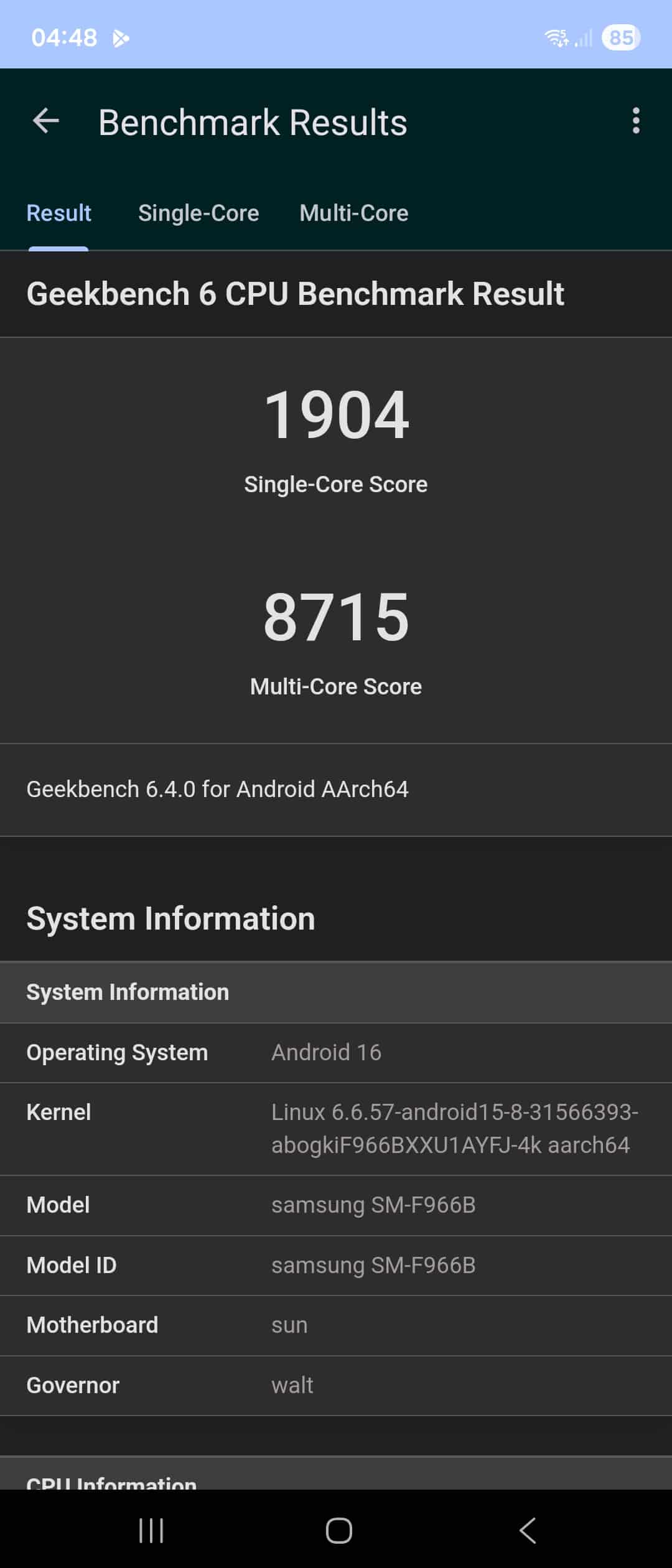
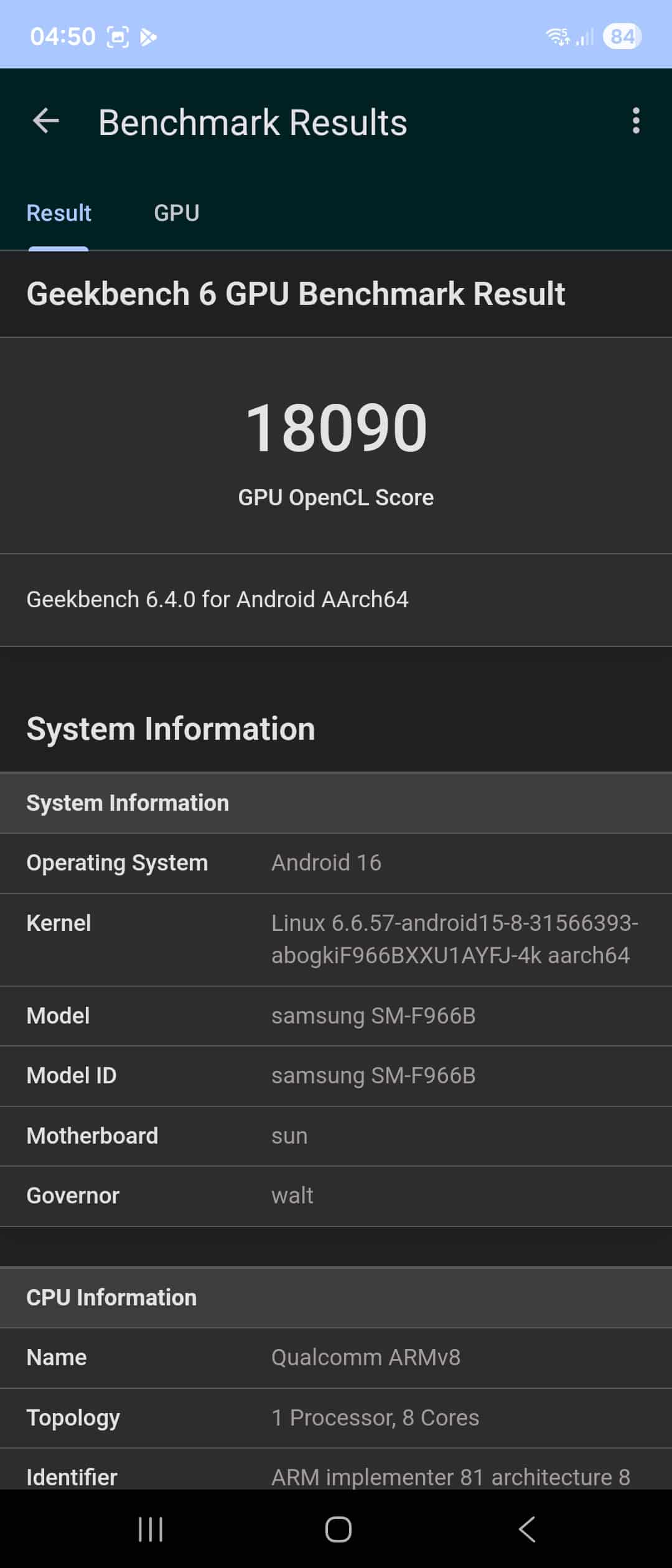
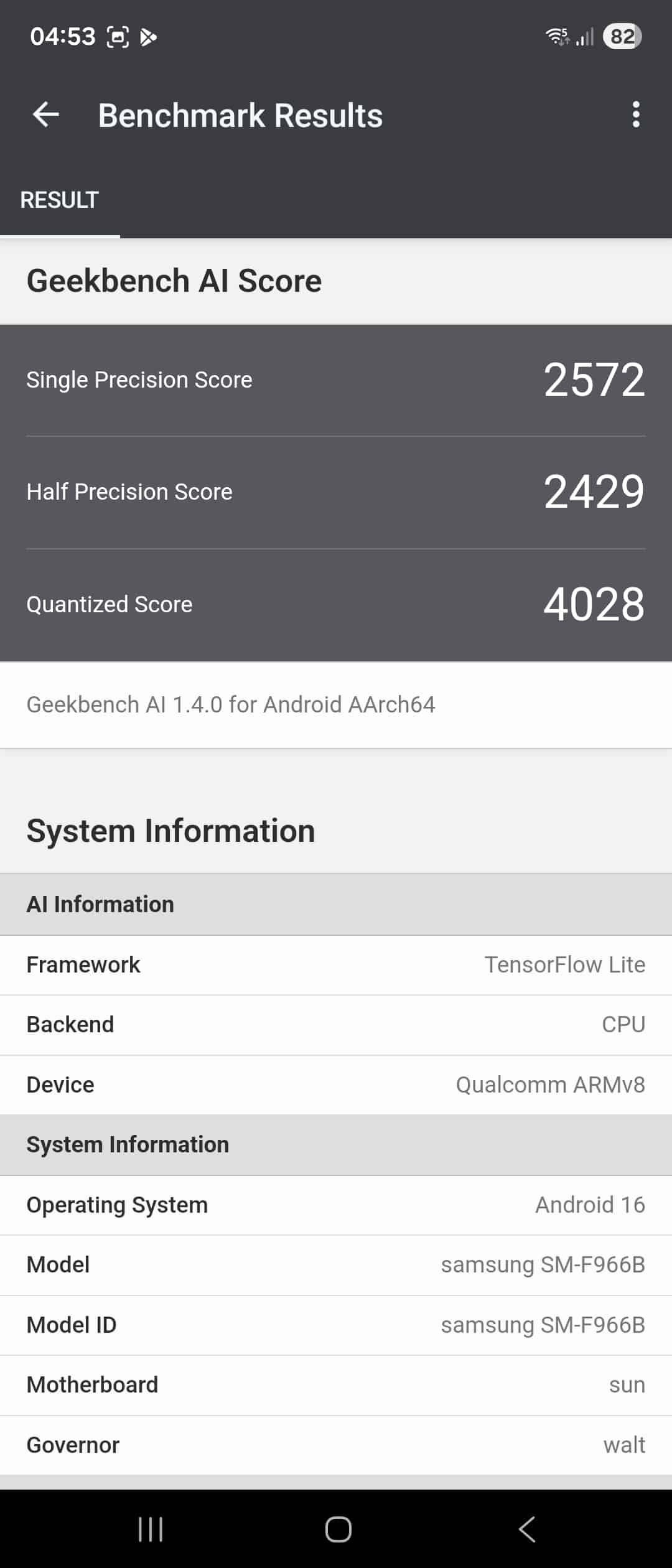
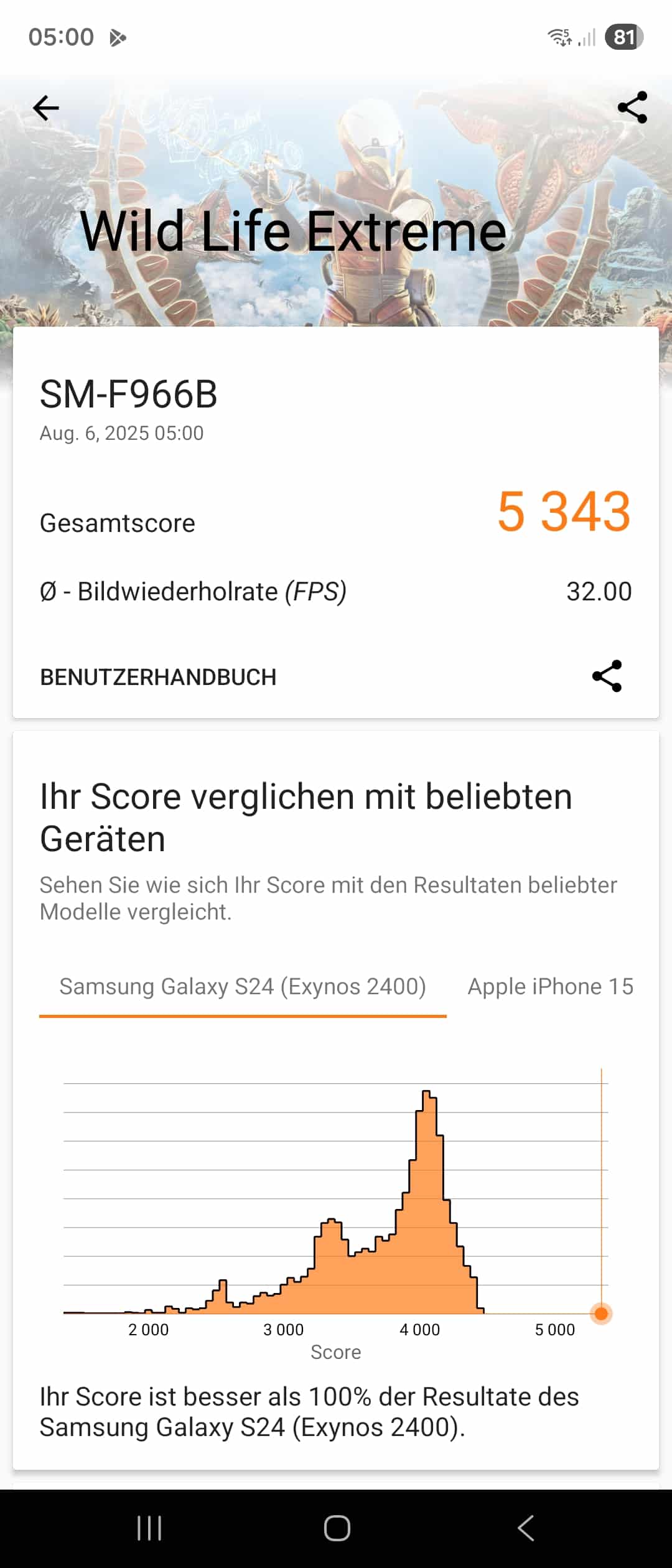
| benchmark | Result |
| Geekbench 6 single-core | 1,904 pts. |
| Geekbench 6 Multi-Core | 8,715 pts. |
| Geekbench 6 GPU | 18,090 pts. |
| Geekbench AI | 2,572 pts. / 2,429 pts. / 4,028 pts. |
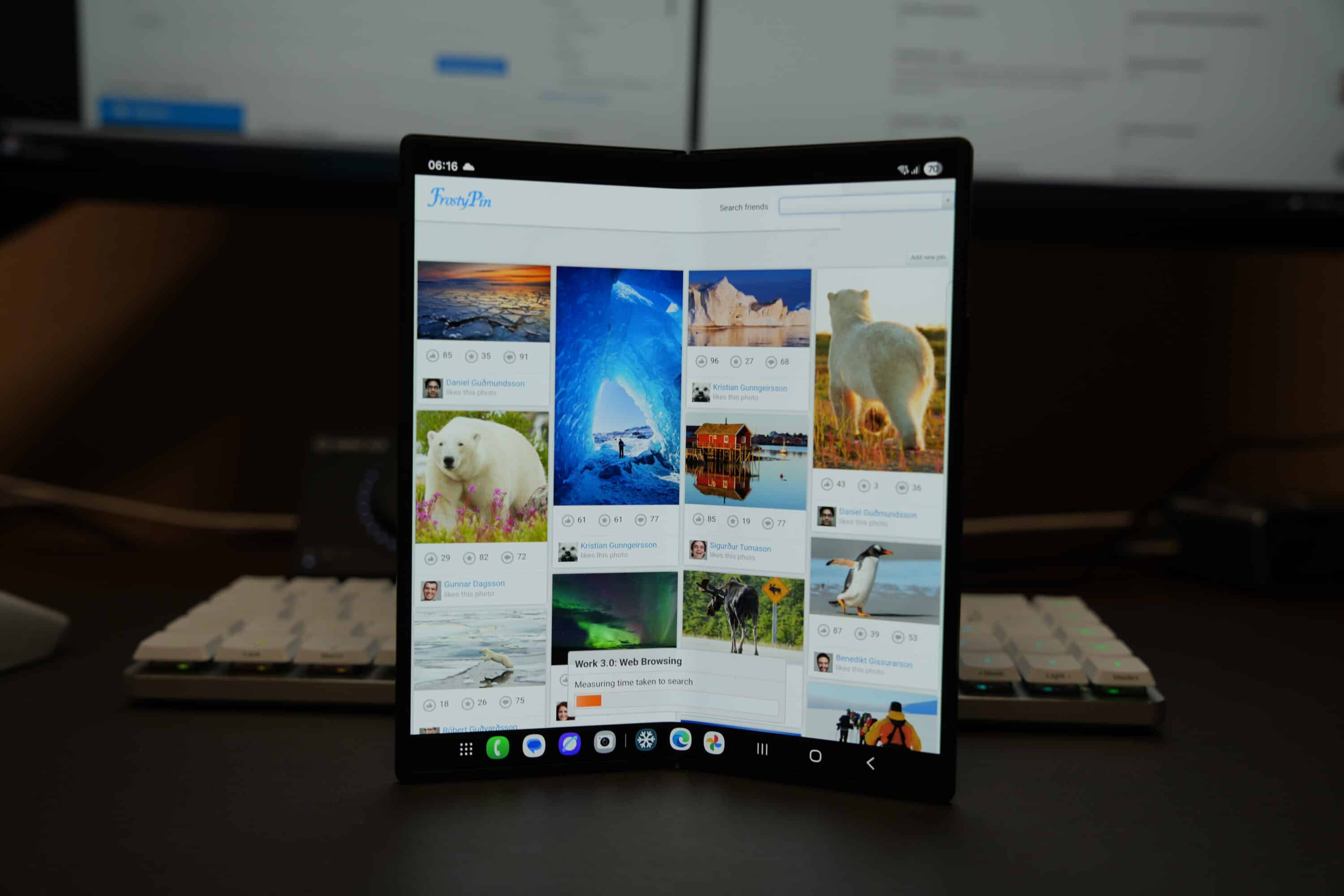
| PCMark Work 3.0 | 16,038 pts. |
| 3DMark Wild Life Extreme | 5,343 pts. |
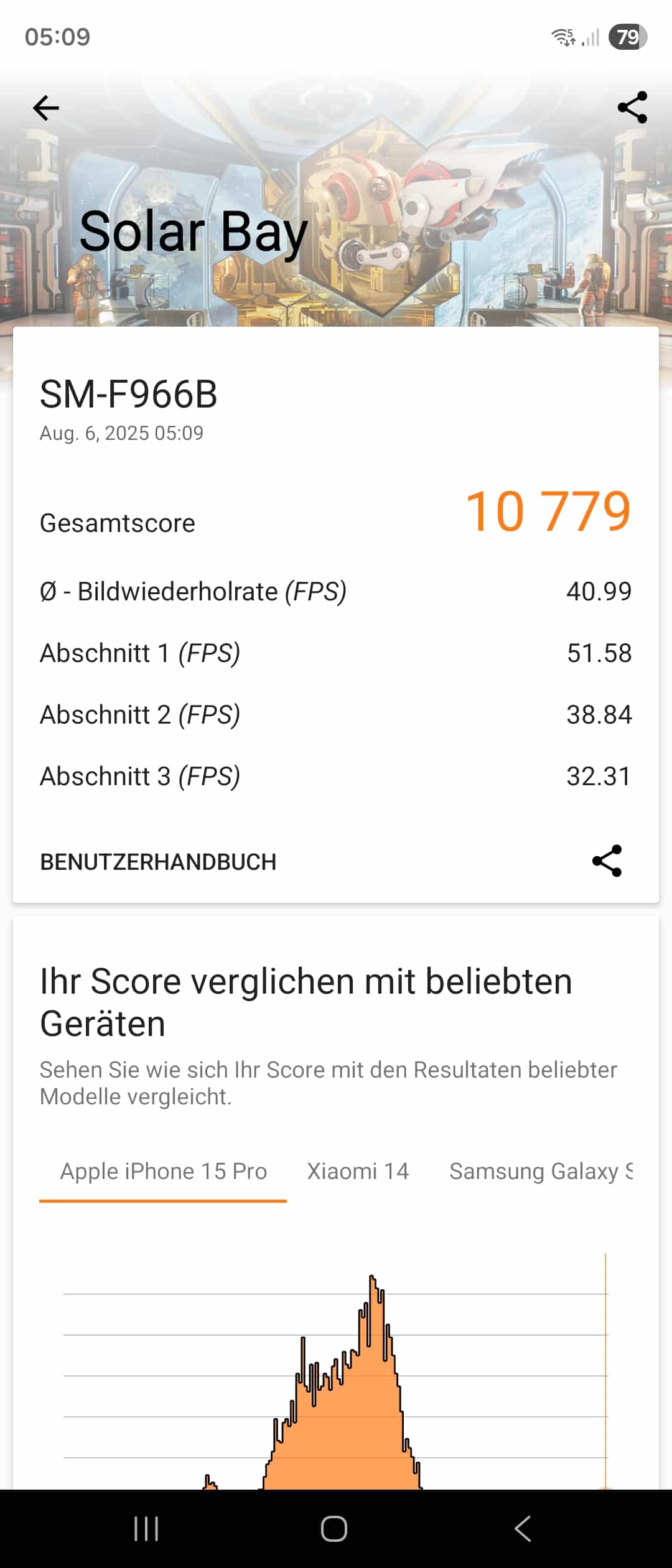
| 3DMark Solar Bay | 10,779 pts. |
| 3DMark Steel Nomad Light | 2,142 pts. |
| 3DMark Steel Nomad Light Stress | 99.4 percent |
In terms of connectivity, the Z Fold7 leaves nothing to be desired: Wi-Fi 7 is included, as well as Bluetooth 5.4, NFC, UWB, 5G and USB-C 3.2. There is a very reliable fingerprint sensor in the power button, as well as equally reliable facial recognition.
However, the reduced support for the S-Pen is a sour note, which robs the Samsung Galaxy Z Fold7 of some great functions. On the other hand, there is a revised DeX desktop mode that enhances Google’s Android 16 desktop experience with Samsung-specific additional functions. Very practical if you want to use the foldable as a desktop replacement.
Battery: Thickness has its price
- 4,400 mAh, but…
- … mixed runtimes
- moderate charging speed
Although the Samsung Galaxy Z Fold7 is significantly slimmed down, Samsung uses the same capacity for the battery. 4,400 mAh are available, which is of course significantly less than in normal smartphones.

Despite the same capacity, the test results are rather mixed. In the practical test, the battery life usually lasts throughout the day – with closed, moderate use. However, the battery can run low in the opened 8″ mode with 120 Hz. In terms of benchmarks, this is currently difficult to measure, as the PCMark 10 battery test cannot currently be performed.
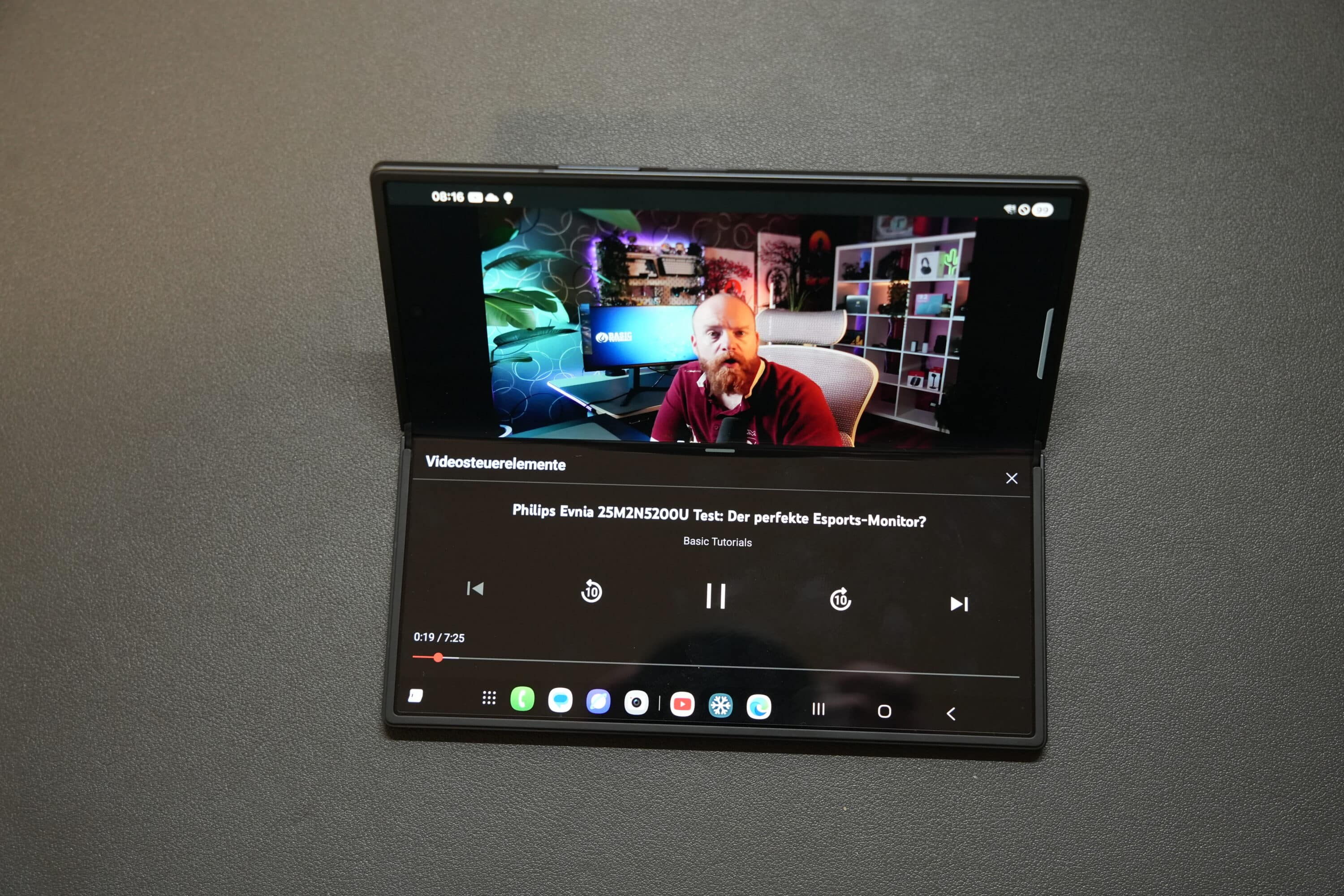
When it comes to pure media streaming, however, the Z Fold7 ranks behind its predecessors, the Fold6 and Fold5. The same applies to web surfing. Here you have to accept significant compromises compared to the current flagship smartphones such as the Pixel 9 Pro, Galkaxy S25 Ultra or iPhoone 16 Pro.
The charging time is similar: 25 watts via cable and 15 watts wirelessly, while reverse wireless charging is also supported with a maximum of 4.5 watts. A full charge takes around 85 minutes, which is okay. In 30 minutes, around 52 percent energy is pumped into the foldable, which is a high average. Even the slow-charging Pixel 9 Pro is fully charged faster.
Software
The Fold7 comes with Android 16 + One UI 8 and includes extensive Galaxy AI functions that are specifically tailored to the foldable form factor – such as drag & drop of AI results, photo editing on a large screen and context assistants.
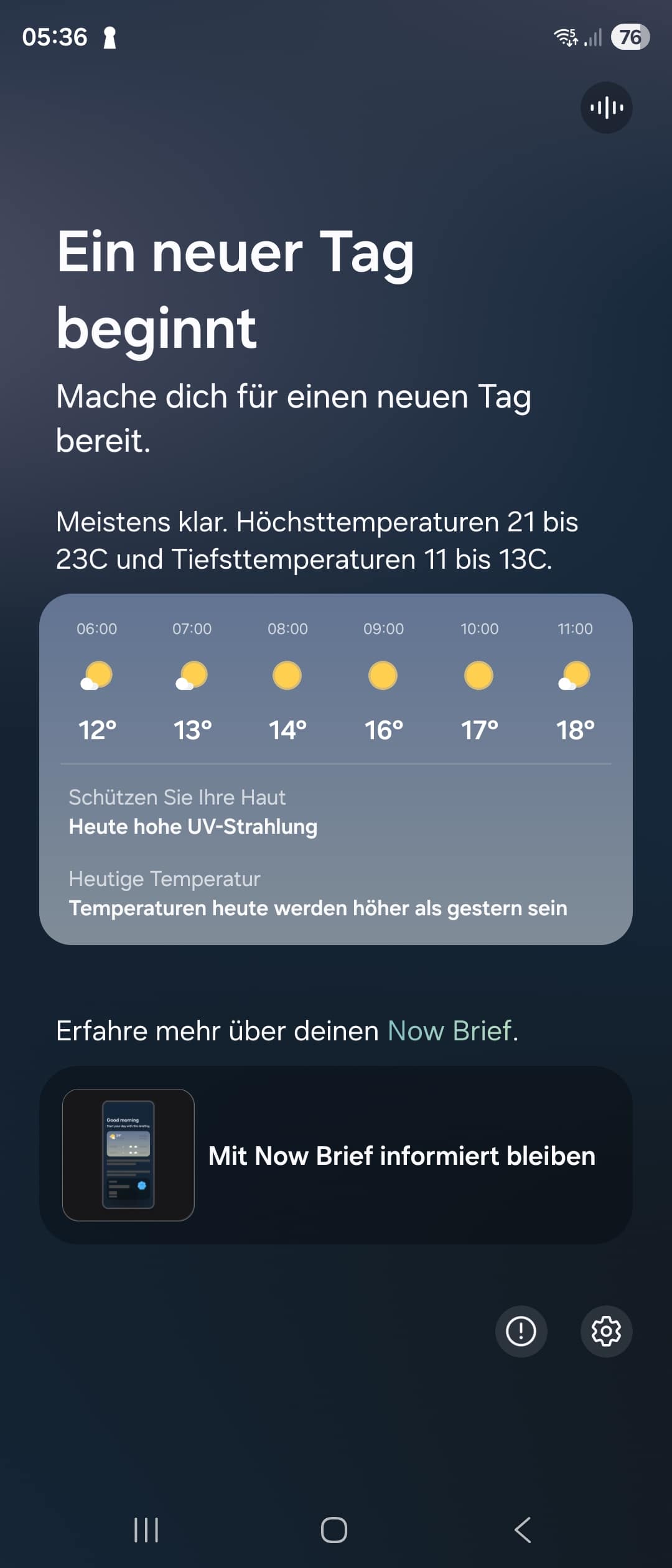
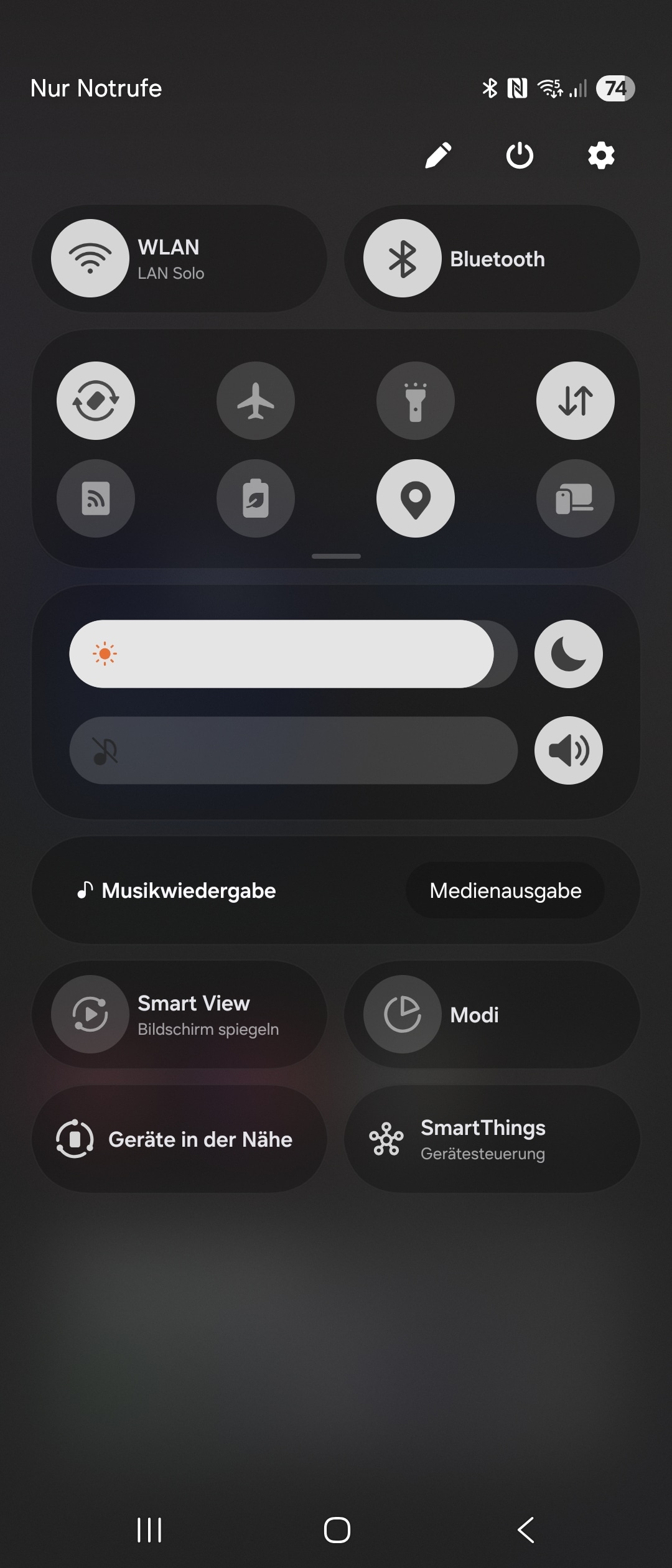
Integrated tools such as Generative Edit, Audio Eraser, Circle to Search and Gemini are seamlessly anchored in the system – more productivity without a physical S-Pen. The update guarantee until 2032 provides additional security and future orientation – especially for a premium device in this class.

How good are the cameras?
- excellent cameras across all lenses
- detailed, vivid images
- very good video functions
While previous Z Fold generations had to accept compromises in the cameras, this should no longer be the case with the Samsung Galaxy Z Fold7. Samsung promises “Ultra” level quality, i.e. the same quality as the Galaxy S25 Ultra.

On the back, you get a 200 MP main camera (f/1.7), a 12 MP ultra wide-angle lens (f/2.2) and a 10 MP telephoto camera (f/2.4) – which unfortunately only has a 3x optical zoom. The selfie camera inside and outside is identical: 10 megapixels with f/2.2 aperture.
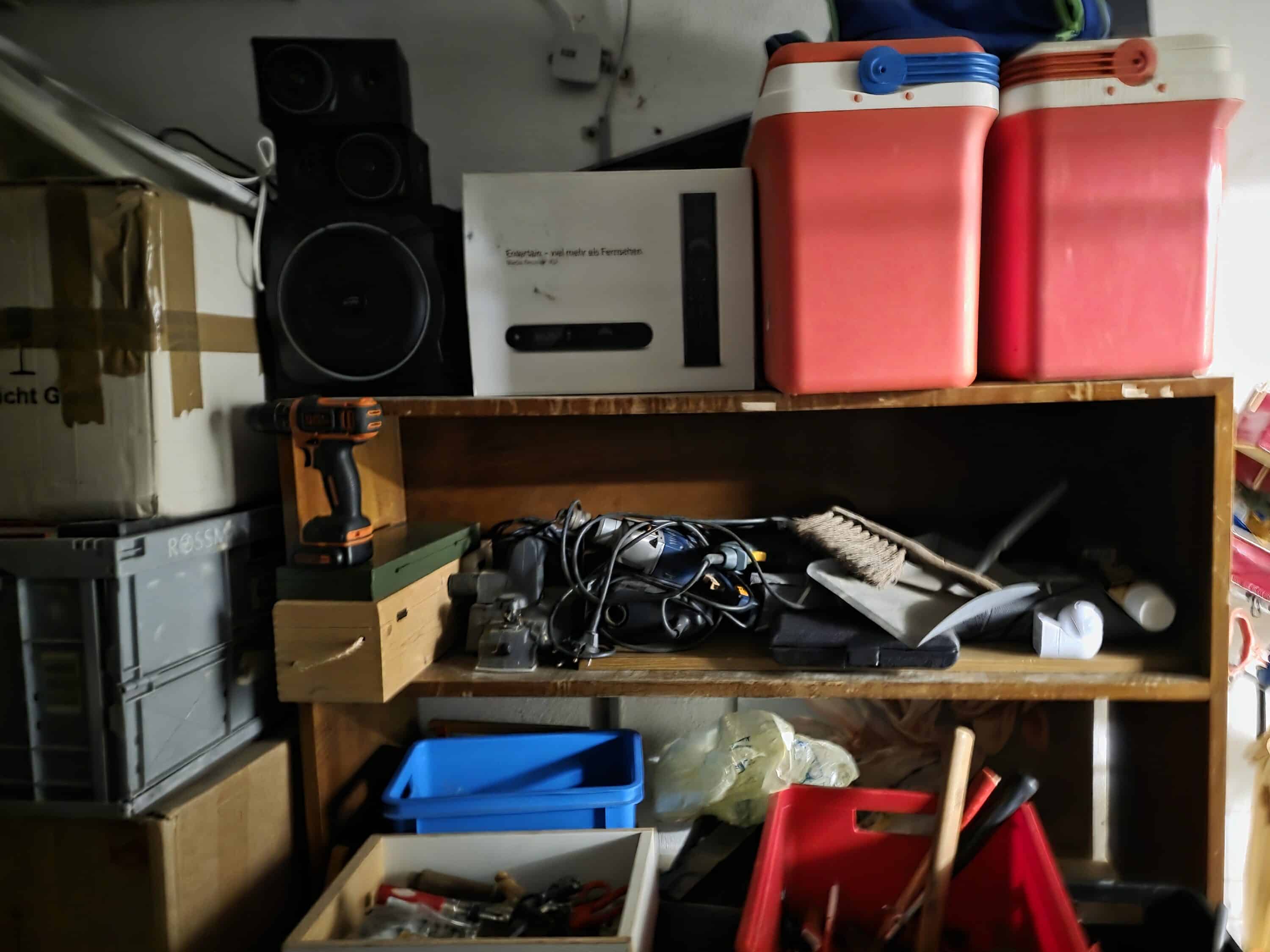
The main camera in particular delivers excellent, crisp and detailed images, which are downscaled to 12 megapixels using pixel binning. Alternatively, you can use 50 megapixels or the full resolution.

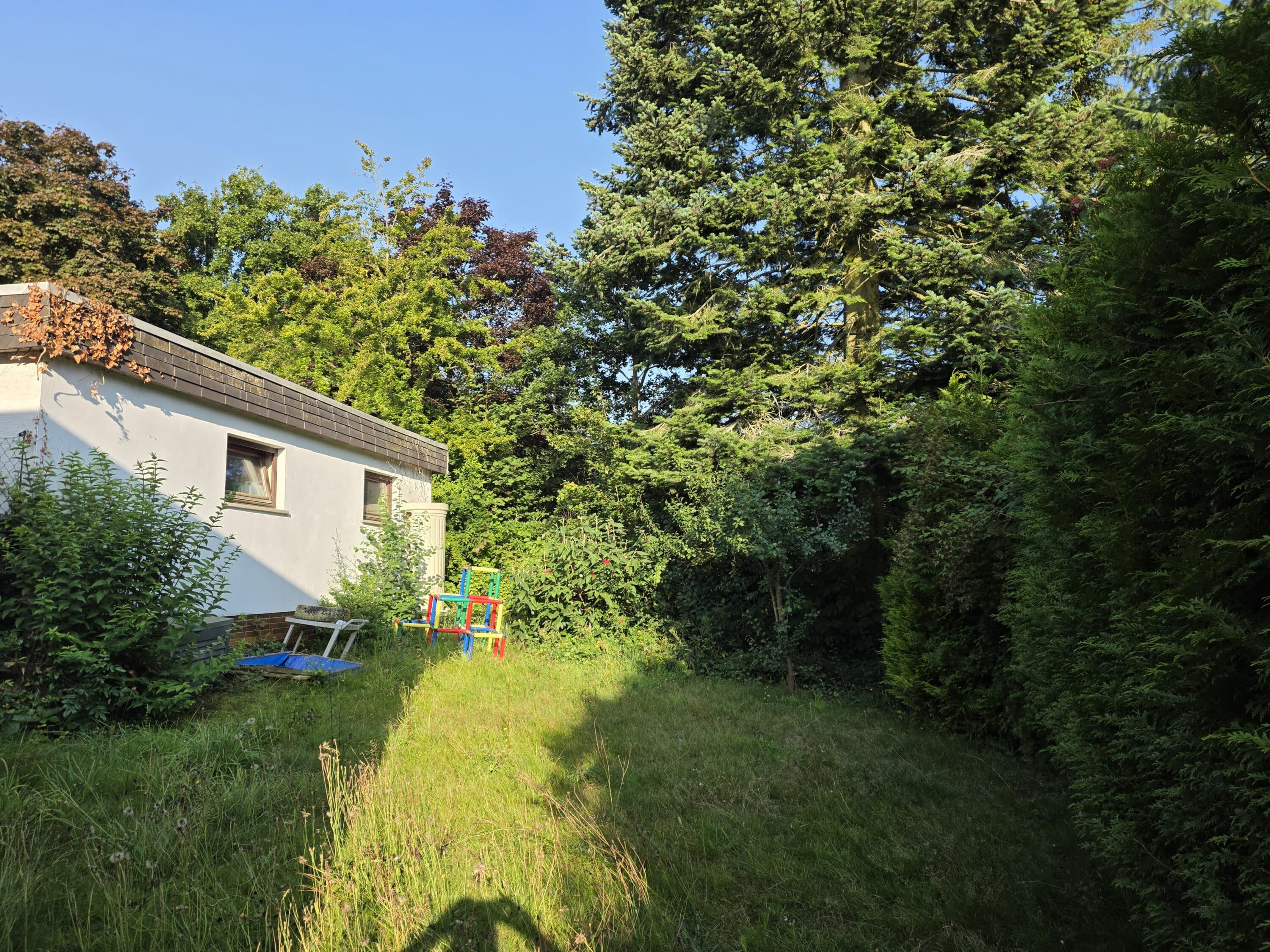
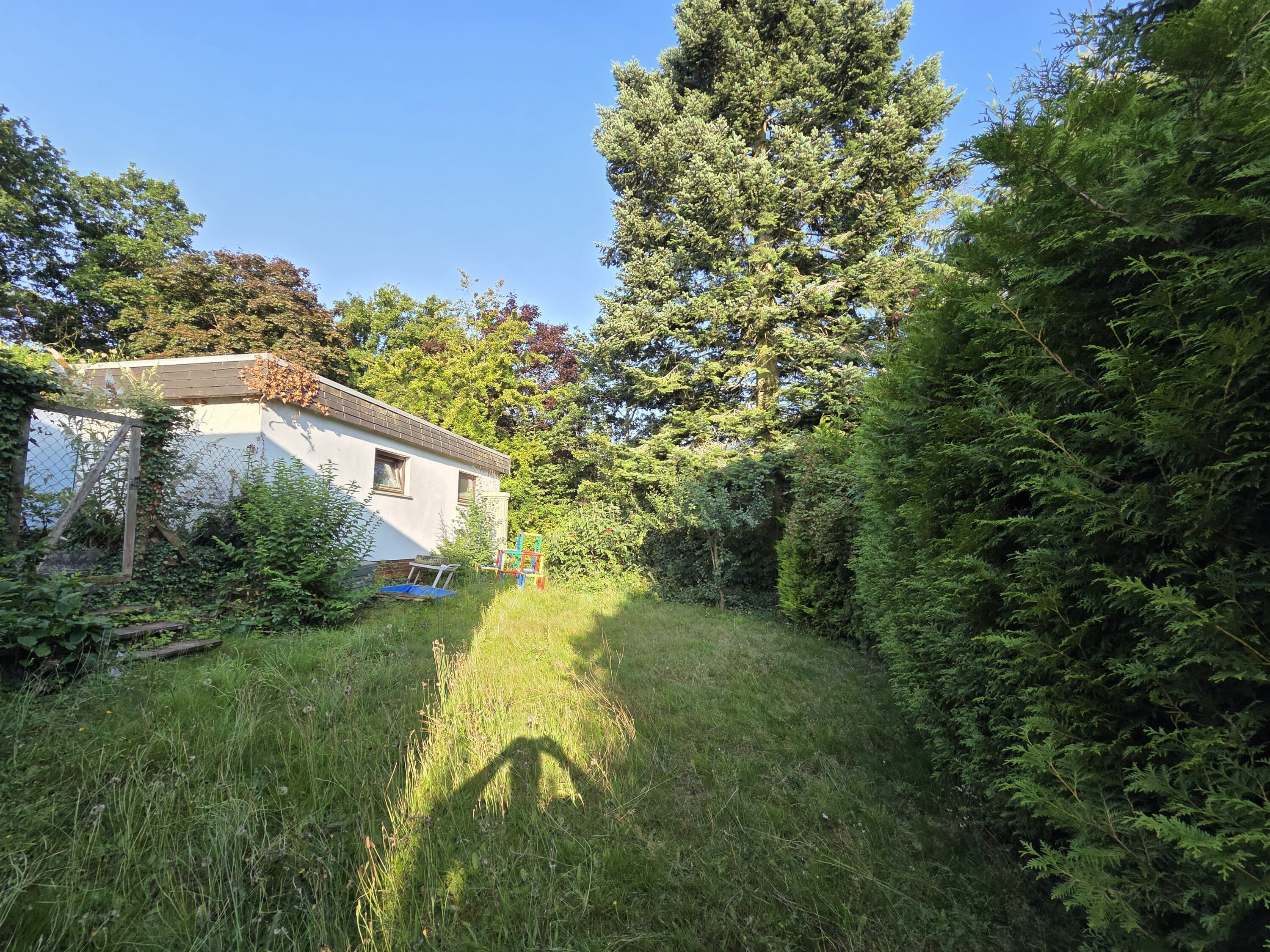
The results of the ultra wide-angle camera are also quite impressive, and there is also a macro mode for detailed shots, which delivers significantly better results than its predecessor. However, the 25 Ultra, as well as the current iPhone and Google Pixel, show significantly more detail in ultra wide-angle mode.


The telephoto camera is somewhat disappointing. Not necessarily in terms of image quality, but in terms of the zoom factor, which has been significantly reduced to 3x. However, this is not surprising, as a 10x zoom would hardly have fitted into the compact housing.
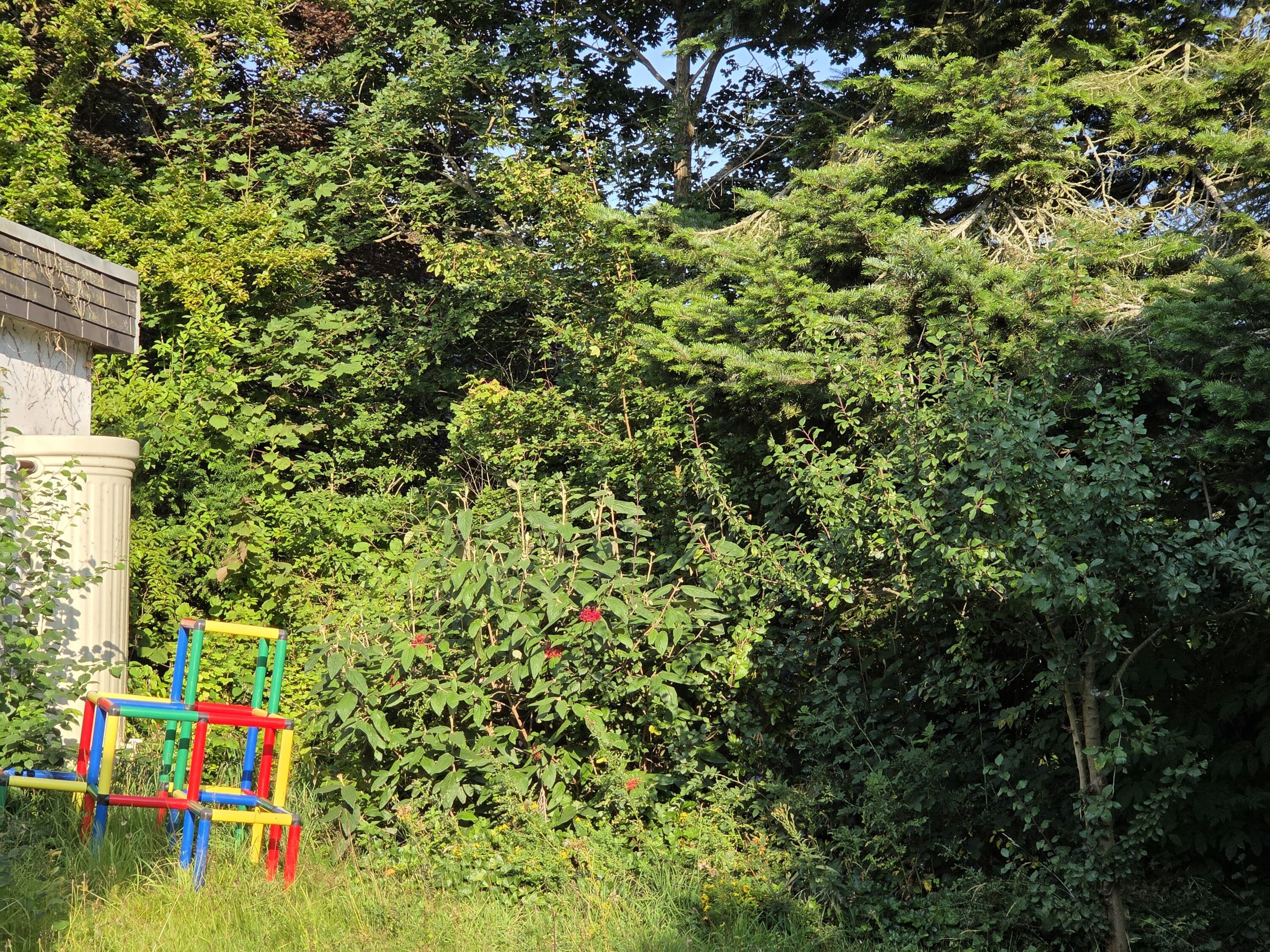

Basically, the Samsung Galaxy Z Fold7 delivers excellent image and video quality, which has been significantly improved compared to its direct predecessor. However, the most visible improvement is undoubtedly the selfie cam, which now captures significantly more details, calculates a better bokeh and delivers more realistic skin tones.


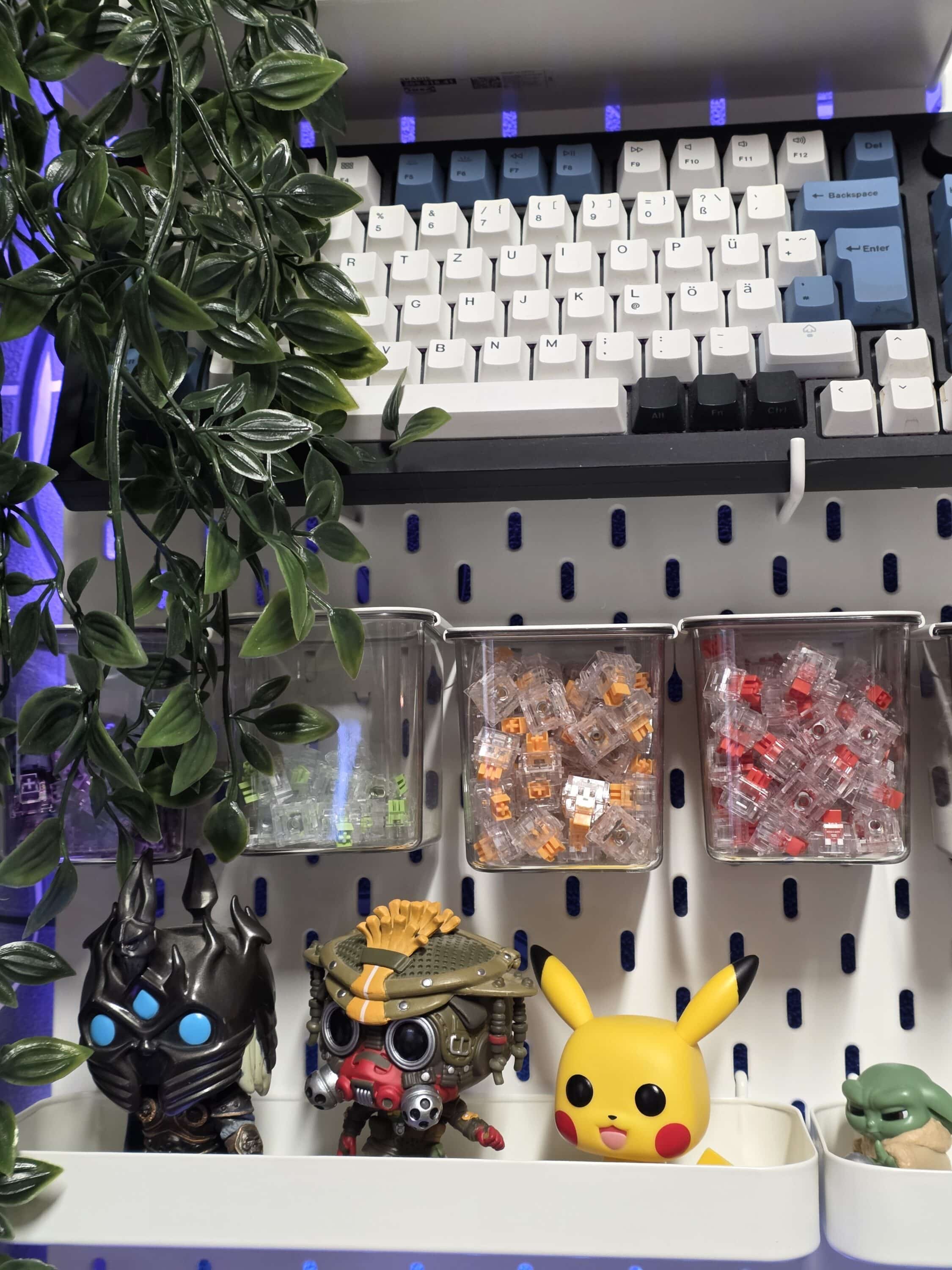
Although the overall package is nowhere near as good as the best camera smartphones, you get consistently very good image quality with all lenses.
Samsung Galaxy Z Fold7 Review: Conclusion
The Samsung Galaxy Z Fold7 is so much more than a simple upgrade. In my eyes, Samsung has created the first foldable that really appeals to me. It is so thin when folded that it is hardly more bulky than a classic smartphone. Unfolded, on the other hand, you get a great, fast and colorful 8-inch screen, which is of course especially great for media or gaming.
Everything about the Z Fold7 looks noticeably better, more modern and of higher quality than its predecessors. Performance, software and update promises deliver absolute flagship level, and there are now finally really powerful cameras that don’t feel like a downgrade – with the exception of the 3x zoom.
However, this is not without compromises either. The displays are nowhere near as bright, the battery life is only average and the lack of S-Pen support weighs quite heavily. Added to this is the really steep price of around 2,000 euros, which you really have to be willing to accept – because the Galaxy S25 Ultra is currently available for half that price and, with the exception of the non-existent foldable display, it is ahead in almost all categories.
However, if you are particularly keen on the foldable form factor, the Samsung Galaxy Z Fold7 is perhaps the best option on the market at the moment.

VORTEILE
- Incredibly thin
- Lightweight construction
- Bigger, better displays
- Strong AI functions
- Great performance
- Very good cameras
NACHTEILE
- Sinfully expensive
- Moderate battery life
- Only 3x zoom
- No S-Pen support
Fazit
Incredibly thin, incredibly fast and greatly improved: the Samsung Galaxy Z Fold7 is perhaps the best foldable smartphone currently on the market.


