


The dishwasher is undoubtedly one of the most helpful appliances in the kitchen. After all, it saves you from time-consuming washing of plates, cups, pans and the like. Those who get a dishwasher into their house for the first time may be a bit confused. After all, a dishwasher displays signs whose meaning is a closed book for some people. Understanding them, however, is of elementary importance for smooth operation. We put an end to it and explain to you in the following once, which meaning the symbols have.
Dishwasher sign: salt and rinse aid
Who does not know it. If you have a brand new dishwasher, it works perfectly. After every rinse cycle, you get wonderfully shiny dishes here. Over time, however, this changes. Here and there, you may get ugly streaks or even dirt residue. To change that and keep the cleaning performance at a high level, salt and rinse aid should be refilled regularly. Modern dishwashers indicate this with appropriate notifications. But what do these look like in detail and what needs to be refilled and when?
Dishwasher salt
Sooner or later, the time comes when the double arrow reminiscent of the letter “S” flashes on the dishwasher. This stands for the salt. Older machines may sometimes have a different symbol. For example, some manufacturers depicted several small cubes or an S in combination to form a cup. Fortunately, a uniform representation has been agreed upon in the meantime. This prevents confusion. If the symbol lights up, you need to refill the salt in the dishwasher. Some people may wonder what the purpose of salt in the dishwasher is. First and foremost, it is to prevent limescale from forming on the dishes. But not only that.

The machine itself can also suffer from too much lime over time. Those who neglect refilling then risk a defect of the entire dishwasher sooner or later. For this reason, it is one of the most important parts of a fully comprehensive maintenance of the dishwasher. To supply the dishwasher with salt, you need to open the flap at the bottom of the interior. Here you will pour salt until the container is filled again. When filling, make sure that you don’t catch any gums or other components inside with salt. If this is the case, simply clean it up. It’s best if you run a short program right after filling to remove any residue.
Clear rinse
By the way, clearly more self-explanatory is the sign for the rinse aid. Here, manufacturers have agreed on a star reminiscent of a snowflake. This is intended to reflect the radiance of clean dishes. To make it clear that this is a liquid, the star is not drawn with continuous lines. Instead, there are interruptions that turn the lines into drops. If you have an old dishwasher, you may sometimes find a picture of a drop. The rinse aid, contrary to the opinion of many users, is not an additional cleaning liquid that cleans the dishes in addition to the dishwashing detergent.

Rather, it is a means to reduce the drying time of plates, glasses, cups and cutlery. The advantages of keeping drying time as short as possible are obvious. For example, you won’t drip your kitchen full of the water residue that remains on the dishes after cleaning. But it is much more important that the water does not remain on the dishes themselves for too long. After all, there is a risk of limescale deposits here as well. The rinse aid is simply placed in liquid form in the appropriate compartment of the dishwasher. As soon as the mostly blue liquid begins to overflow, the compartment is full.
Watch the water hardness!
There is no general way to tell how much salt or rinse aid you should put in your dishwasher. The machine itself cannot give you any information about this. It only reports when the fill level reaches a critical limit. How much of either of these essential dishwashing aids you should add varies from place to place. This is due to regional differences in water hardness. You should use this as a guide when determining the correct amount of rinse aid and salt. You can usually find out the hardness of your local water quite easily. For example, BWT offers a search function on its website that uses your zip code to determine water hardness. If in doubt, you can of course also simply contact the water supplier in your region. Modern devices now allow you to set the water hardness in advance. Then the machine always doses salt and rinse aid optimally.
Avoid double doses
Of course, not only rinse aid and salt belong in the dishwasher. To achieve the cleanest possible result, you also need a detergent. This is available either as a powder or as tabs. But not all tabs are the same: While conventional detergents only clean, multi-tabs perform several tasks, as their name suggests. They not only contain detergent, but also salt and rinse aid. In this case, you don’t have to add salt or rinse aid yourself. Otherwise, the surplus would end up in the wastewater and could harm the environment. Exceptions prove the rule. There are cases in which you should prefer a combination of cleaning powder and rinse aid or salt. Especially in regions characterized by extremely soft or hard water, it is better to dose yourself. This not only ensures better cleaning results, but also gives your dishwasher a longer life.
Dishwasher Sign: The cleaning programs
While a washing machine has different washing programs, a dishwasher usually offers different cleaning programs. These provide targeted cleaning and can sometimes save water and electricity. If you have celebrated a big barbecue and have to deal with dried ketchup and a crusted grill grate, you should use a strong program with high temperature. If, on the other hand, you only want to clean a few plates and glasses with little soiling, a weak program can sometimes be completely sufficient. Here, too, dishwasher manufacturers rely on pictograms that are supposed to clarify individual programs for you. We have the most common once listed in ascending order of intensity.
Pre-rinse
The so-called pre-rinse represents the weakest stage in the vast majority of dishwashers. Whether you can select this as a separate program depends on the particular model at.

In many dishwashers, it is just an intermediate step, which is signaled to you in the form of a symbol. In most cases, this involves a plate with jets of water.
Quick program
For light soiling, your dishwasher does not need to work for several hours. That would not only be a waste of electricity, but also of money.

If you only have plates with a few crumbs on them and glasses from which water was drunk, a quick program will do. This usually works at 45°C and is over after just under an hour. To symbolize the short runtime, a clock is usually used here.
Standard program
Conventional soiling or a mixture of light and heavy soiling should lead you to choose the normal or standard program. This usually operates at 65°C, which promises not only an effective cleaning of food residues.
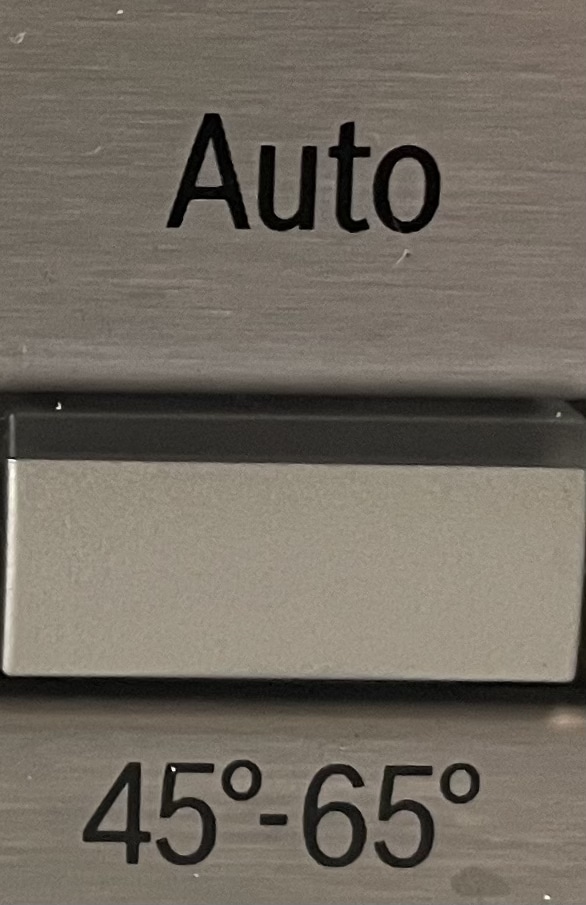
On top of that, the high temperature ensures that all bacteria are effectively killed. Most often, manufacturers depict their normal program with a picture combination consisting of two plates and a bowl.
Intensive program
You’ve conjured up a three-course meal for Christmas? Then the dishes are undoubtedly your final opponent. As delicious as the meal may have been, crusted meat remains in the roaster and dried sauce in the small pot are annoying. Dishwasher manufacturers have set up their performance program specifically for this purpose.

A proud 70°C ensures that even stubborn residues are reliably removed. Since pots and pans are primarily used in food preparation, this is also reflected in the corresponding symbol. So you can often recognize pan and pot in the intensive program.
Dishwasher Symbols: Special symbols
In addition to the standard symbols, other special programs have also developed over the years. These are often not based on the level of soiling in question. Instead, the dishwasher works a little more independently here. What used to be reserved only for top models has now become almost standard. We show you times, which special programs there are.
Eco mode
If you want to save not only electricity and water costs, but also protect the environment, use the Eco mode. Here, your dishes are washed at a lower temperature than in the standard program. In order to still achieve a good cleaning performance, the Eco programs usually last longer.

In most cases, you can hardly miss the button for the Eco mode due to the lettering “Eco”. Some top machines offer several energy-saving modes, which is indicated by an additional number. This depicts the temperature at which the machine washes the dishes.
Glass program
In order for a dishwasher to clean your glasses without streaks and, most importantly, without lime scale, quick drying is essential.

In many machines, this is ensured by a special glass program. The same can be easily identified by the image of one or more glasses.
Hygiene program
Parents in particular are always keen to keep their offspring’s dishes as free as possible from bacteria and pathogens. For this, a high temperature is essential.

Before you select this manually, you can also select a special hygiene program on some machines. This is appropriately often symbolized in the form of a baby bottle. In this program, the temperatures are 60°C and higher.
Fast drying
If there’s one thing that’s annoying when cleaning out the dishwasher, it’s residual liquid on plates, glasses and cups. To avoid this, you can activate a quick dry feature on many machines at the touch of a button.

Here, the machine uses more rinse aid to speed up the drying process. Usually, the manufacturer visualizes this with three waves and a plus sign.
Night program
The mode titled night program can, of course, also be used during the day. Here, the dishwasher works more quietly than in the other programs. This is not just to promote a good night’s sleep.
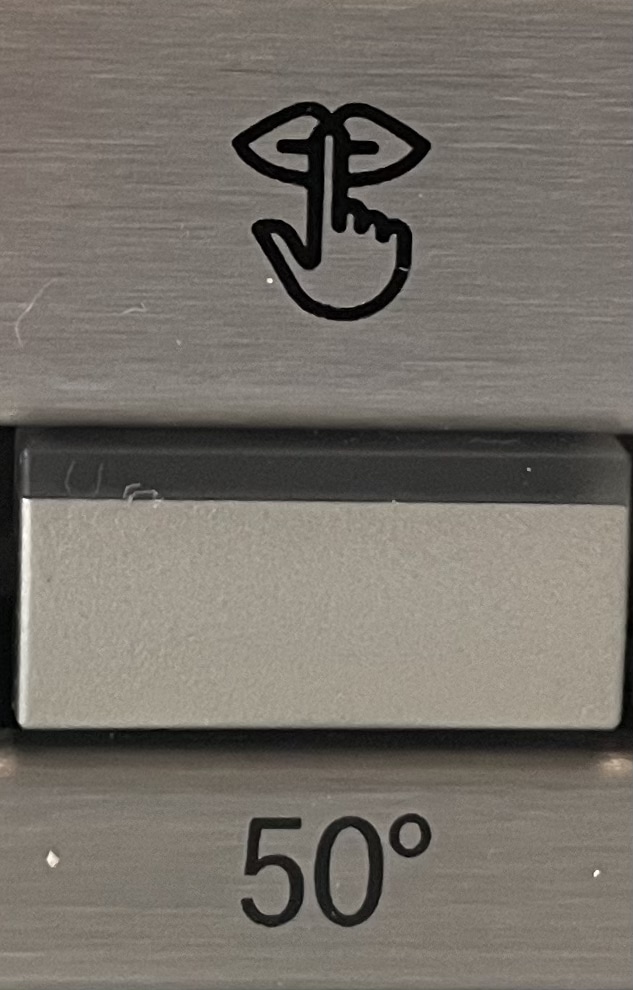
Silent mode is also golden in the increasingly popular eat-in kitchens, where the kitchen and living room are in the same room. Appropriately, the whole thing is often visualized by a mouth with a forefinger held out.
More household tips:
Dishwasher Signs: Warnings
So that you can benefit from the support of your dishwasher for as many years as possible, you should pay attention to comprehensive maintenance. This includes not only the regular filling with salt and rinse aid. You should also urgently observe warnings to prevent damage.
Missing water supply
Of course, electricity alone is not enough to use a dishwasher. Without water, nothing works here. If the water supply is limited or non-existent, the dishwasher will not work properly either.
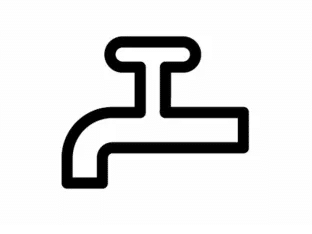
If there are any problems here, many devices display a glowing faucet. Here, laymen should definitely seek assistance from an expert.
Machine care
Without adequate care, your dishwasher will sooner or later become a real bacteria hotbed. But this can be prevented. For example, you can buy special dishwasher cleaners, with the help of which the interior is hygienically clean again. Modern appliances also offer a special program for machine care.
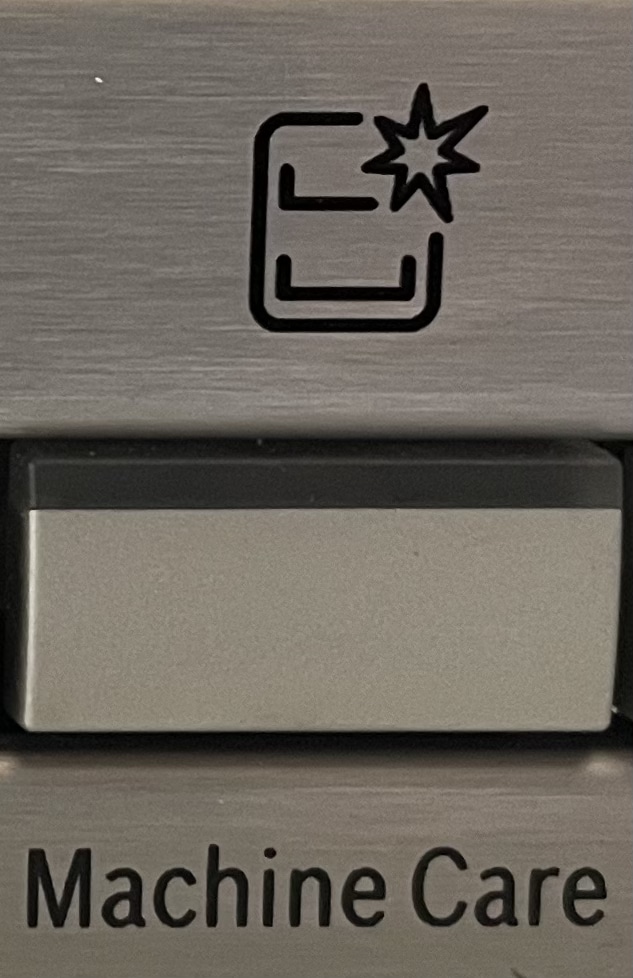
Here, it is already enough for the device to flush all the hoses and seals with hot water. So you avoid the use of special cleaners. The prerequisite, however, is that you use the care program in time. Otherwise, you will not be able to avoid the cleaner. It is usually symbolized by the picture with dishwasher and star.
Conclusion: listen to your dishwasher
Understanding the symbols on your dishwasher is not difficult. Especially with the pictures of the individual programs, you can try out in a pinch and work out the one that suits you over time. However, it is important that you can correctly identify the warnings. Especially the symbols for missing salt and rinse aid are important. But you should also never ignore a missing water supply or a pending cleaning. Otherwise, the service life of your dishwasher may be limited.


